Trade
Basic
Futures
Futures
Hundreds of contracts settled in USDT or BTC
TradFi
Gold
Trade global traditional assets with USDT in one place
Options
Hot
Trade European-style vanilla options
Unified Account
Maximize your capital efficiency
Demo Trading
Futures Kickoff
Get prepared for your futures trading
Futures Events
Participate in events to win generous rewards
Demo Trading
Use virtual funds to experience risk-free trading
Earn
Launch
CandyDrop
Collect candies to earn airdrops
Launchpool
Quick staking, earn potential new tokens
HODLer Airdrop
Hold GT and get massive airdrops for free
Launchpad
Be early to the next big token project
Alpha Points
Trade on-chain assets and enjoy airdrop rewards!
Futures Points
Earn futures points and claim airdrop rewards
Investment
Simple Earn
Earn interests with idle tokens
Auto-Invest
Auto-invest on a regular basis
Dual Investment
Buy low and sell high to take profits from price fluctuations
Soft Staking
Earn rewards with flexible staking
Crypto Loan
0 Fees
Pledge one crypto to borrow another
Lending Center
One-stop lending hub
VIP Wealth Hub
Customized wealth management empowers your assets growth
Private Wealth Management
Customized asset management to grow your digital assets
Quant Fund
Top asset management team helps you profit without hassle
Staking
Stake cryptos to earn in PoS products
Smart Leverage
New
No forced liquidation before maturity, worry-free leveraged gains
GUSD Minting
Use USDT/USDC to mint GUSD for treasury-level yields

More


AI
Artificial Intelligence (AI) enables computers to mimic human thought and action. It's regarded as a key catalyst for the latest wave of tech revolution and industry shift. In the realm of Web3, various initiatives have engaged with the AI sector, pioneering new approaches through decentralized frameworks.
Articles (515)

Beginner
What Is AINFT (NFT)? From AI-Evolving NFTs To A Web3-Native Large-Model Aggregation Platform
AINFT is a Web3 platform built within the TRON ecosystem. Its core concept is to natively embed artificial intelligence capabilities into the NFT structure, transforming digital assets from static ownership certificates into intelligent assets that can learn, interact, and continuously evolve. Unlike traditional NFTs, whose content is fixed once minted, AINFT combines AI models with on-chain assets, enabling NFTs to dynamically adapt based on data inputs and user behavior. These NFTs can execute tasks, generate content, and even act on behalf of their holders as digital entities.
2026-03-02 08:47:22

Beginner
How Does AI Power NFTs? The Structural Evolution from Static Collectibles to Web3 Digital Agents
How does AI power NFTs? The key lies in breaking through the traditional NFT framework that focuses only on ownership verification and scarcity, and instead embedding intelligence directly into the asset structure itself. The original purpose of Non-Fungible Tokens was to solve the problem of digital ownership and uniqueness. Through blockchain technology, artworks, music, and virtual items gained verifiable ownership for the first time. However, this design also defined a structural limitation. Once minted, an NFT's content and functionality are permanently fixed, causing most NFTs to resemble on-chain certificates rather than assets that can be actively used or continuously evolve. As a result, their value depends heavily on narratives and market sentiment.
2026-03-02 08:40:53

Beginner
A Web3-Native AI Model Aggregation Platform: How AINFT Rethinks AI Access and Payments
A Web3-native AI model aggregation platform integrates multiple AI model capabilities into on-chain architecture and redefines access rights and value distribution through decentralized identity and usage-based payment mechanisms. In the Web2 era, AI services have primarily existed as centralized platforms, where users must register accounts, link payment methods, and obtain model access through subscription plans. While this model accelerated early AI adoption, it has gradually revealed structural limitations, including fragmented models, non-transferable access rights, a severe mismatch between costs and actual usage frequency, and full ownership and control retained by platform providers. These characteristics fundamentally conflict with Web3 principles of sovereignty, composability, and assetization.
2026-03-02 08:37:11

Beginner
AINFT vs. Traditional NFTs: How AI Is Redefining the Value and Utility of NFTs
The key difference between AINFT and traditional NFTs lies in their underlying design. AINFT embeds AI capabilities directly into the asset structure, creating intelligent NFTs, while traditional NFTs are static digital assets centered on ownership verification. Traditional NFTs (Non-Fungible Tokens) derive their core value from establishing ownership. Through blockchain technology, they create verifiable and tamper-resistant proof of ownership for digital content, fundamentally addressing the question of who owns an asset. Once minted, the content and functionality of these NFTs are typically fixed, with limited ability to respond to changes in environment, data, or time. As a result, they function more like on-chain digital collectibles. In contrast, AINFT does not represent a surface-level enhancement of the NFT format. By embedding AI capabilities into the NFT structure itself, AINFT transforms NFTs from static ownership markers into intelligent assets capable of understanding, responding, and taking acti
2026-03-02 08:33:14

Beginner
GateAI: Rebuilding Decision-Making in an Overloaded Crypto Market
The crypto market is inundated with information, but the real challenge lies in the ability to make sense of it. As on-chain data, community sentiment, and real-time news converge, traders are confronted not just with information asymmetry, but with cognitive imbalance resulting from information overload. GateAI was designed to tackle this issue—not by adding more signals, but by empowering users to reconstruct their analytical framework.
2026-03-02 02:45:04

Beginner
When AI Enters Secure Networks: Technological Breakthroughs, Institutional Boundaries, and the Redefinition of Power Structures
OpenAI has teamed up with the U.S. Department of Defense to implement AI solutions on classified networks, prompting extensive debate about national security, the limits of technology, and evolving power dynamics. This article examines the institutional implications and long-term trends associated with the integration of AI into military infrastructure.
2026-02-28 09:07:45

Beginner
SBF Raises the AI Payments Question: As Machines Begin to Transact, Will Crypto Become the Underlying Infrastructure?
This article offers a comprehensive analysis of SBF’s comments on "whether AI will adopt cryptocurrencies," exploring the long-term implications of AI and cryptocurrency integration through the lenses of identity architecture, payment infrastructure, and regulatory frameworks.
2026-02-27 07:55:04

Intermediate
The AI doomsday theory is a huge short-selling opportunity
While the stock market lost $800 billion in value following Anthropic’s breakup, this article offers a counter-perspective by dissecting the so-called AI doom loop—layoffs, weakened consumer spending, and more automation. Through a historical lens of productivity expansion and its effects on GDP, the article contends that commoditizing AI cognition will compress service costs, lower the threshold for entrepreneurship, broaden aggregate demand, and potentially contribute to geopolitical stability.
2026-02-26 11:01:04

Beginner
Gate AI Feature Explained: An Intelligent Market Assistant Designed for Real Trading Scenarios
The Gate AI Market Assistant is now seamlessly integrated into the core pages of the Gate App. Leveraging real-time data analysis and risk boundary design, it empowers users to grasp the underlying logic of market volatility and enhances information efficiency in navigating complex market environments.
2026-02-26 01:47:44

Beginner
Where Is Humanity Headed in the AI Era? Structural Reflections Beyond “The 2028 Global Intelligence Crisis”
A comprehensive analysis of the "2028 Global Intelligence Crisis" report, offering a reasoned evaluation of whether AI could lead to a systemic economic collapse. The discussion also examines humanity’s future path in the context of technological diffusion, changes in employment structure, and the reconfiguration of wealth distribution.
2026-02-25 12:38:38
Intermediate
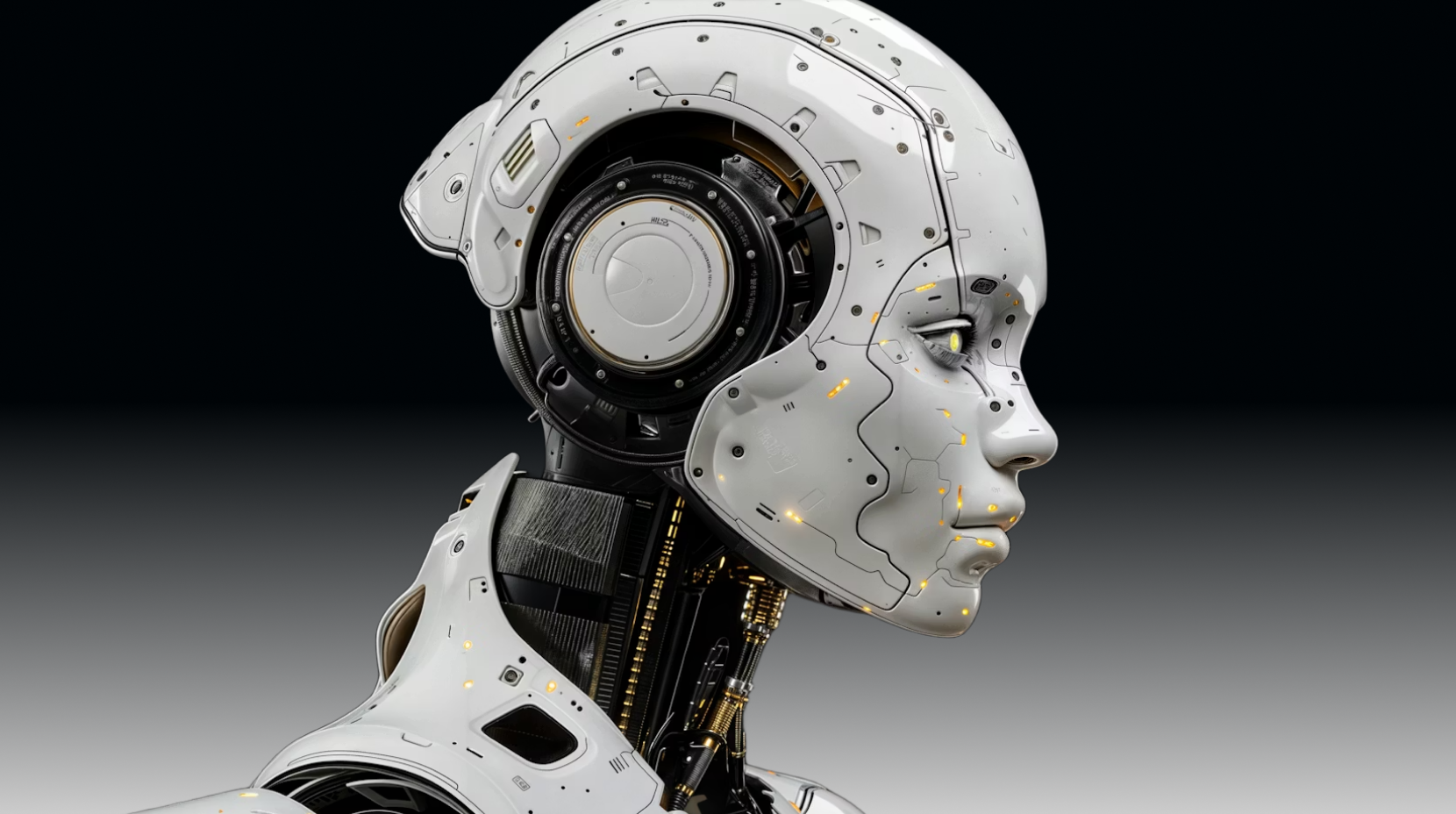
2026 Robotics Track Practice: Who's Building Roads, Who's Mining, and Who's Creating Systems?
This article employs a data-driven approach to compare FDV risks, highlighting DePIN's shift from speculative hype to practical implementation through a positive feedback cycle. It offers investors a thorough analysis of the machine economy's complete ecosystem.
2026-02-25 10:10:47

Beginner
Gate AI: Transforming Trading Decisions with Intelligent Insights
In today’s fast-moving, information-rich markets, manual analysis alone can no longer keep pace with trading opportunities. This article examines how Gate AI uses data integration and trend recognition tools to empower traders across all skill levels to streamline their decision-making, marking the official transition into the era of intelligent trading.
2026-02-25 01:58:11

Intermediate
The "No-KYC" Crypto Card Is a Lie
This article examines the structural fate behind the recurring failures of no-KYC crypto cards. It analyzes the inevitable cycle—honeypot attraction, regulatory scrutiny, and eventual exit scams or forced KYC—and offers genuinely practical solutions.
2026-02-24 08:31:06

Beginner
Immutable Contribution Vault (ICV): The On-Chain Collaboration Layer for AI Development
Immutable Contribution Vault (ICV) is an on-chain contribution and revenue sharing mechanism designed for collaborative AI development. Its core idea is that contribution itself is an asset. By writing processes such as model updates, data submissions, feature development, and behavior design directly onto the blockchain, ICV creates immutable contribution records. This transforms development activities that were previously difficult to quantify or track into verifiable and traceable on-chain assets, while providing a transparent and reliable basis for future revenue distribution.
2026-02-13 05:31:50

Beginner
How Does Virtuals Protocol Work? Turning AI Agents into Investable On-Chain Assets Through IAO
IAO (Initial Agent Offering) is a new Web3 asset issuance model designed specifically for AI agents. It represents a shift in asset issuance logic from earlier fundraising focused models such as ICOs and IDOs toward an on-chain economic model centered on digital labor. Under this framework, the AI agent itself becomes the core asset. Its functionality, revenue rights, and governance rights can all be tokenized and discovered by the market, allowing AI to evolve from a simple tool into an on-chain entity capable of economic activity.
2026-02-13 05:25:06

Your Gateway to Crypto World, Subscribe to Gate for a New Perspective