As Web3 applications grow more complex, static NFTs struggle to support interaction, decision making, and service-oriented roles. New architectures are beginning to integrate artificial intelligence directly into the asset itself, allowing NFTs to read data, respond to their environment, and adjust behavior over time. AINFT, for example, takes this approach within the TRON ecosystem by treating AI as a built-in module of the NFT rather than an external tool. This transforms NFTs from passive markers into intelligent units that can be authorized to perform tasks, introducing a true functional layer to on-chain assets.
This article starts by explaining why traditional NFTs are inherently limited by static structures. It then explores how AINFT integrates AI into NFT asset design, analyzes the shift from asset markers to digital agents, and examines how multimodal AI expands real-world NFT use cases. Finally, it introduces AINFT’s structural role within the APENFT ecosystem, helping readers fully understand how AI-powered NFTs can establish a more practical and sustainable digital asset foundation for Web3.
Why Traditional NFTs Are Inherently Limited by Static Structures
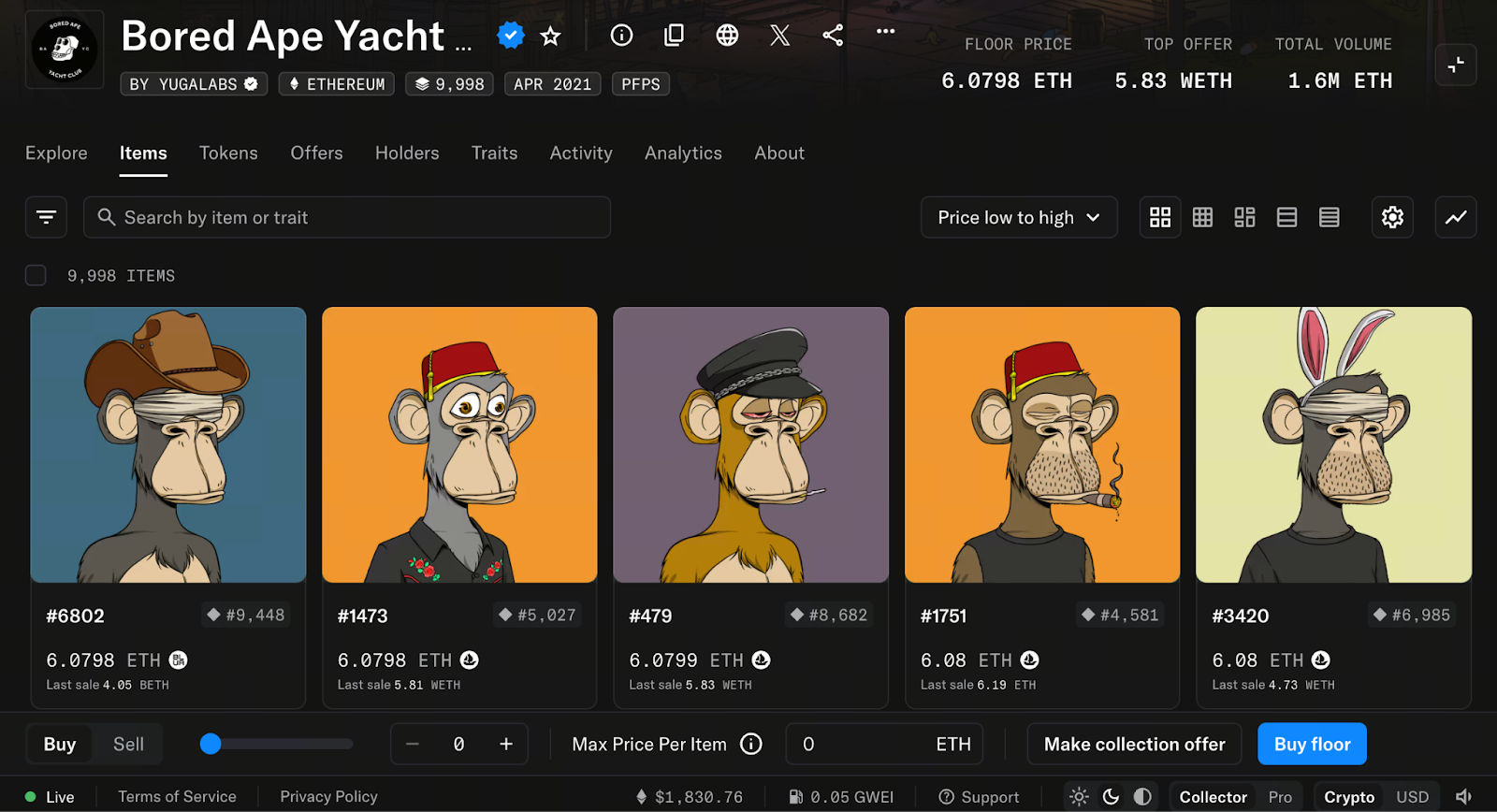
The first generation of NFTs emerged to address the lack of ownership and scarcity in digital content. By using blockchain technology, creators could issue assets with verifiable provenance. At the same time, this design established a hard ceiling for what NFTs could do. Once minted, the NFT’s metadata, behavior, and capabilities remain unchanged.
(Source: OpenSea)
As a result, most NFTs behave like immutable certificates rather than functional assets. They cannot perceive external conditions, respond to user behavior, or accumulate capabilities over time. Their value relies heavily on storytelling, liquidity, and speculative demand rather than ongoing utility. This structural limitation is one of the core reasons behind the extreme volatility observed in NFT markets.
How AINFT Embeds AI into the NFT Asset Structure
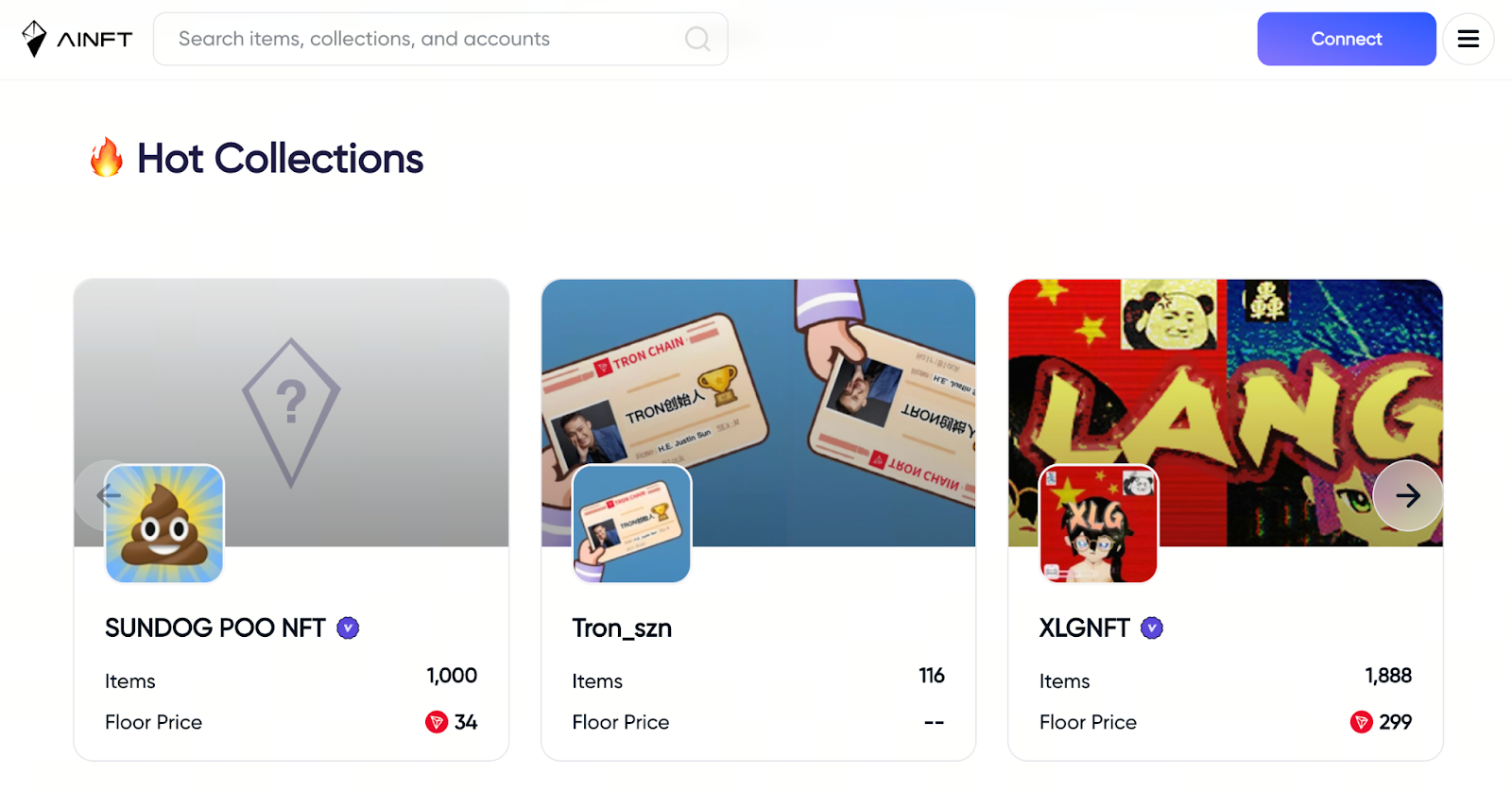
AINFT‘s core innovation is its treatment of AI as an intrinsic capability of the NFT itself rather than an external service. In this model, AI is not merely an API that can be called on demand. Instead, it is a core module bound to the NFT, turning each NFT into an intelligent unit capable of computation and response.
(Source: marketplace.ainft)
Leveraging the high throughput and low transaction costs of the TRON ecosystem, AINFT enables NFTs to read on-chain data in real time while also incorporating off chain information for analysis. This allows NFTs to move beyond passive existence and continuously adjust their behavior based on environmental changes, creating a dynamic asset state that evolves over time.
From Asset Markers to Digital Agents
Once NFTs gain the ability to interpret data and respond to instructions, their role changes fundamentally. In the AINFT framework, NFTs are no longer objects that are merely owned. They can be authorized to execute tasks and act as delegated agents for their holders. These intelligent NFTs can support information analysis, assist with strategy formation, or provide decision input in DAO and DeFi environments.
The emphasis is not on full automation. Instead, the goal is to make NFTs schedulable intelligent roles that help humans navigate increasingly complex on-chain systems and make better informed decisions.
How Multimodal AI Expands NFT Use Cases
AINFT’s support for multimodal AI further removes functional boundaries for NFTs. When an NFT can process text, images, audio, and video, it is no longer limited to art or collectibles. It can operate in content creation, gaming, social interaction, and educational contexts. This cross media capability allows NFTs to shift from single purpose objects to digital entities that adapt their role depending on context. Value is no longer derived from a one-time transaction but from long term usage and continuous interaction.
AINFT’s Structural Role Within the APENFT Ecosystem
(Source: AINFT)
As an extension of APENFT, AINFT is not designed to replicate marketplace functions. Its role is to fill a long standing gap in the NFT ecosystem by introducing an intelligence layer. APENFT focuses on asset issuance and circulation, while AINFT enables those assets to perform actions. This division of responsibilities allows the NFT ecosystem to evolve beyond art trading toward utility and service oriented applications, laying a sustainable functional foundation for future Web3 development.
Conclusion
The true value of AI powered NFTs does not lie in making assets appear more complex, but in making them genuinely useful. When NFTs can be assigned tasks, evolve over time, and generate real utility, they cease to be purely speculative instruments. Instead, they become schedulable, trustworthy digital agents within the Web3 ecosystem, capable of supporting real economic and organizational activity.