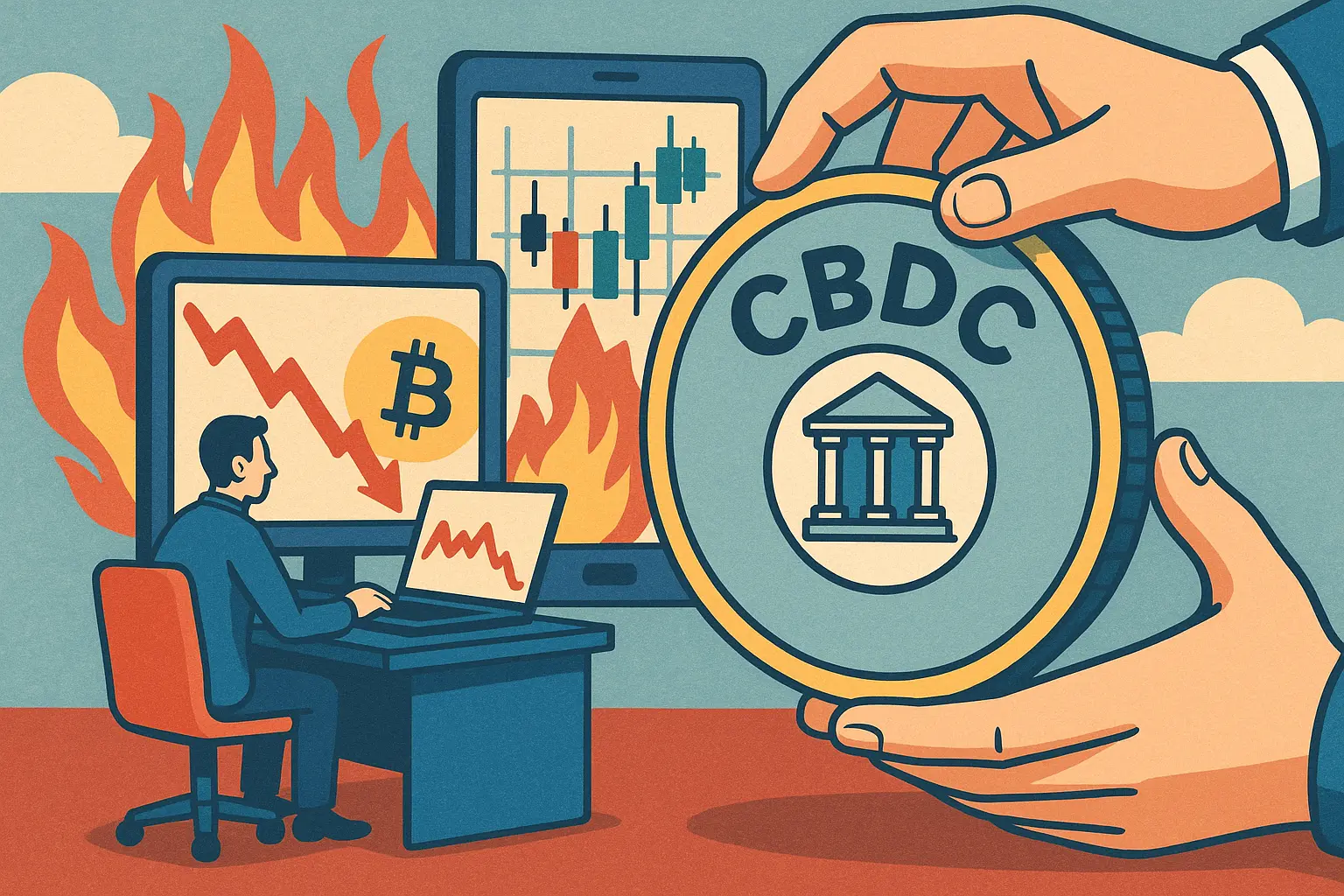
In its annual Payment and Settlement report released on April 13, the Bank of Korea (BOK) recommended introducing a Circuit Breaker mechanism similar to that used in stock markets to the crypto asset industry, to prevent abnormal transactions and human error. On the same day, BOK Governor nominee Shin Hyun-soon said in a written statement submitted to a parliamentary personnel hearing that the central bank’s digital currency (CBDC) and commercial banks—based on the deposit tokens they issue—should become the core of the digital currency ecosystem.
Circuit Breaker Proposal: The Bithumb Mispayment Incident Exposes Structural Vulnerabilities
In the report, the Bank of Korea used this year’s February incident at the Bithumb exchange as a starting point to explain the urgency of introducing stricter risk-control mechanisms to the crypto industry. In that incident, when employees of Bithumb paid activity bonus rewards, they mistakenly set the payment unit to Bitcoin instead of Korean won, resulting in the actual distribution of 620k Bitcoins (about 60 trillion won) rather than the 620k won–equivalent amount in Bitcoins that should have been issued—the difference before and after amounts to tens of trillions of won. The Bank of Korea’s analysis indicated that this incident revealed three key structural vulnerabilities:
The Three Structural Vulnerabilities Behind the Bithumb Mispayment Incident
Lack of an Upper-Level Approval Process: Employees can carry out digital asset transfers on their own without obtaining upper-level approval or confirmation from a monitoring department
Insufficient Ledger Reconciliation Frequency: The exchange checks only once per day the internal ledger and blockchain wallet balances, making it impossible to detect anomalies in real time
Lack of an Anomaly Interception Mechanism: There are no systematic measures to proactively detect and block excessive limits or abnormal transfers before trades are executed
To address the above issues, the Bank of Korea proposed three improvement directions: building a dual-confirmation system to intercept human error; developing an IT system that can automatically reconcile ledgers and blockchain balances in real time; and introducing a Circuit Breaker mechanism similar to that in stock markets, which would automatically pause trading when large abnormal orders or sudden, severe volatility occurs in crypto asset prices.
New Governor Nominee: CBDC’s Core Position and Staged Openness for Stablecoins
In its written statement, Governor nominee Shin Hyun-soon laid out a systematic position on the digital currency ecosystem. He stated clearly that the CBDC and commercial banks’ deposit tokens, based on the tokens they issue, should serve as the foundation infrastructure of the digital currency framework.
On the issue of Korean won stablecoins, Shin Hyun-soon said he fundamentally supports introducing them, believing that in the future stablecoins can coexist with deposit tokens in a “complementary and competitively viable” way. However, on the issue of issuing entities, he argued for a cautious phased approach to opening—because Korea is not a reserve-currency country, regulatory compliance capability is crucial. Therefore, he suggested first allowing alliances centered on banks to issue Korean won stablecoins, with non-bank entities able to participate, and then gradually expanding later.
He also stated explicitly that crypto assets, including stablecoins, cannot meet the three core functions of money (unit of account, medium of exchange, store of value), and therefore fundamentally cannot replace existing fiat currencies.
Plan for the 2027 Offshore Korean Won Settlement System
The Bank of Korea also announced that it plans to officially launch an offshore Korean won settlement system in 2027, using real-time gross settlement (RTGS) to replace the current delayed net settlement (DNS) method, in order to effectively reduce credit risk and improve payment reliability. The new system will be built independently from the existing large-value payment infrastructure, “BOK-Wire+ (Bank of Korea Financial Network),” to maintain the latter’s functional stability. It is currently undergoing connection testing and preparation for business continuity planning.
Frequently Asked Questions
Why does the Bank of Korea recommend that the crypto industry introduce a Circuit Breaker mechanism?
In its annual report, the Bank of Korea used the February 2026 Bithumb misissuance of 620k Bitcoins (about 60 trillion won) as an example. It pointed out that the crypto industry has structural vulnerabilities such as lack of upper-level approval, insufficient ledger reconciliation frequency, and no abnormal interception mechanism, and recommended introducing a Circuit Breaker mechanism to block abnormal transactions.
What is the position of the Bank of Korea’s new governor nominee on CBDC and stablecoins?
Shin Hyun-soon believes that the CBDC and deposit tokens should be the core of the digital currency ecosystem. He is broadly supportive of Korean won stablecoins, but argues that issuance should prioritize alliances centered on banks. At the same time, he emphasized that crypto assets cannot replace fiat currencies, and he takes a reserved view on claims that blockchain can improve foreign-exchange efficiency.
What are the features of the offshore settlement system the Bank of Korea plans to roll out in 2027?
The new system adopts real-time gross settlement (RTGS), with each transaction completing final settlement in real time. This can eliminate the credit and liquidity risks inherent in the current delayed net settlement approach. At the same time, it will be built independently from the existing BOK financial network to ensure the functional stability of both systems.
Disclaimer: The information on this page may come from third parties and does not represent the views or opinions of Gate. The content displayed on this page is for reference only and does not constitute any financial, investment, or legal advice. Gate does not guarantee the accuracy or completeness of the information and shall not be liable for any losses arising from the use of this information. Virtual asset investments carry high risks and are subject to significant price volatility. You may lose all of your invested principal. Please fully understand the relevant risks and make prudent decisions based on your own financial situation and risk tolerance. For details, please refer to
Disclaimer.
Related Articles
CME FedWatch: Federal Reserve to Hold Rates Steady in April, June Rate Cut Odds at Just 1.7%
CME FedWatch shows a 100% probability of no rate change in April, with zero chance of a 25 bp hike; by June a 1.7% chance of a 25 bp cut and a 98.3% likelihood rates stay flat.
GateNews1h ago
US Stocks Fall as Middle East Tensions Offset Strong Earnings and Retail Sales
Gate News message, April 21 — US stocks closed lower on April 21 as renewed concerns about the Middle East conflict outweighed optimism from solid corporate earnings and strong economic data. The Dow Jones Industrial Average (U.S. benchmark equity index) fell 293.18 points, or 0.59%, to 49,149.38; t
GateNews3h ago
Fed Chair Nominee Warsh Backs Crypto Assets at Senate Hearing, Discloses $100M Portfolio
Gate News message, April 21 — US Federal Reserve Chair nominee Kevin Warsh expressed support for digital assets during his Senate Banking Committee confirmation hearing today, stating that cryptocurrencies are "already part of the fabric of our financial industry."
During the nearly 3-hour public s
GateNews3h ago
Fed Governor Waller Says Traditional Incremental Approach to Regional Bank Operations Insufficient
Abstract: In a Gate News message on April 21, Federal Reserve Governor Christopher Waller argued that the traditional incremental approach to operating the Fed's regional banks is inadequate for current conditions, signaling a potential overhaul of the central bank's operating structure.
Summary: Waller says the Fed’s traditional incremental mode for operating regional banks is inadequate for the current environment, signaling a need to overhaul the central bank’s operating framework.
GateNews4h ago
Fed Chair Nominee Barr Says Specific Balance Sheet Size Figures Not Yet Determined
Gate News message, April 21 — Barr, the nominee for U.S. Federal Reserve chairman, stated that specific figures for the balance sheet size have not yet been determined.
GateNews7h ago
U.S. Federal Reserve Chair Nominee Wosh: Digital Assets Already Part of U.S. Financial System
Gate News message, April 21 — During a Senate hearing on April 22, U.S. Senator Cynthia Lummis asked Federal Reserve chair nominee Wosh whether digital assets should be integrated into the nation's financial system to provide Americans with new investment opportunities and consumer protections.
Wos
GateNews7h ago


