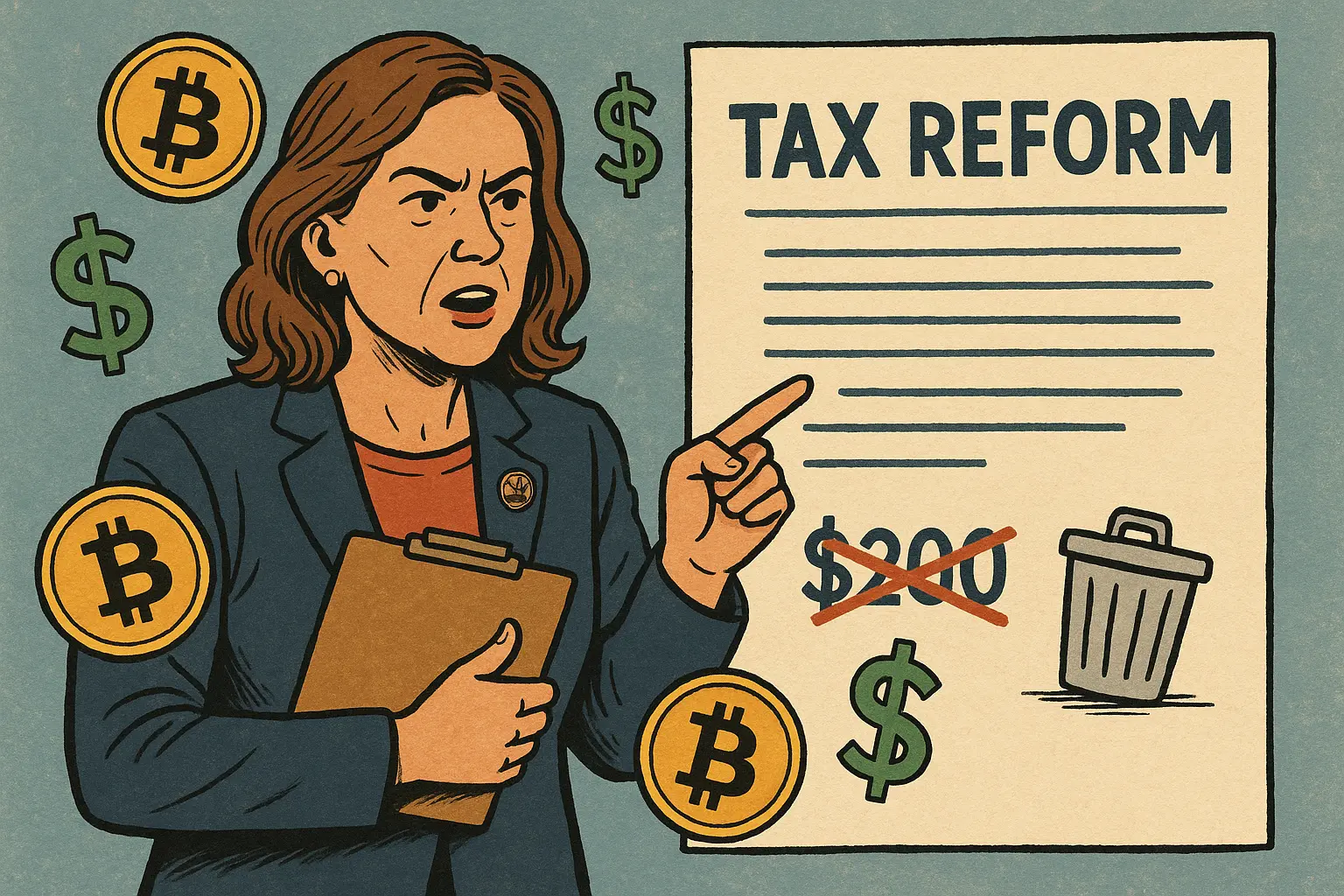
U.S. Representatives Steven Horsford and Max Miller have recently reintroduced the “Protecting, Accounting, Regulation, Innovation, Taxation, and Revenue Act” (PARITY Act), aiming to comprehensively update the framework of existing U.S. cryptocurrency tax policies. The latest version removes the $200 small-transaction de minimis threshold, formally introduces wash sale rules for digital asset transactions, and clearly distinguishes “passive staking” from active trading and participation.
Legislative Background of the PARITY Act: A Bipartisan Attempt at Crypto Tax Reform
Current U.S. cryptocurrency tax policy requires holders to report the capital gains or losses from all digital asset transactions, even routine small payments, which the industry widely criticizes as an overly burdensome administrative requirement and as a disincentive to promoting cryptocurrencies as a payment tool.
The PARITY Act is being advanced by lawmakers from both parties. Its bipartisan nature is seen as a strategic attempt to build broad support for the crypto industry during tax policy debates. Over the next few months, the U.S. Congress will broadly discuss tax matters, and industry insiders expect that any tax legislation that could potentially become law will strongly push to include provisions related to cryptocurrencies.
Three Major Core Amendments: Substantive Changes in the Latest Version
Removal of the $200 De Minimis Threshold: The original draft set a $200 de minimis threshold for transactions involving “regulated payment stablecoins,” but the latest version deletes it. The replacement is: as long as the taxpayer’s cost basis in regulated payment stablecoins is not less than 99% of the redemption value, no gain or loss will be recognized upon sale; for exchange-traded transactions, there is a presumed cost basis of $1
Introducing Wash Sale Rules for Digital Assets: The latest draft explicitly provides that cryptocurrency transactions will be subject to wash sale rules (Wash Sale Rule), preventing investors from manufacturing tax losses by quickly selling and then buying back the same asset. This is not a highly controversial position—similar provisions were already included in Senator Cynthia Lummis’s tax bill last year
Distinguishing Passive Staking from Active Trading: The bill clearly distinguishes “passive staking” from active participation activities such as buying, selling, and trading, establishing a differentiated tax treatment framework for different types of cryptocurrency income.
Legislative Outlook: Timing Is Unclear, but the Industry Is Moving Fast
The legislative progress of the PARITY Act remains unclear for now. Although there are rumors in the industry that Congress may introduce a “Reconciliation Bill” that includes tax measures, President Trump has also already released his 2027 fiscal year budget request, but whether any cryptocurrency provisions can ultimately be included in any enacted tax legislation remains highly uncertain.
That said, signals from within the industry are clear: once any tax legislation that could become law is on the table, the cryptocurrency industry will fully push for the inclusion of related provisions. The PARITY Act’s reintroduction lays a more concrete documentary foundation for the industry’s policy demands during this tax legislative cycle.
Frequently Asked Questions
Why did the PARITY Act remove the $200 small de minimis threshold?
In the December 2025 draft, the $200 threshold originally mainly applied to regulated payment stablecoins and was associated with the GENIUS Act. The March 2026 version changed the standard for determining whether to not recognize gains or losses to “cost basis not less than 99% of the redemption value,” which in substance provides a broader de minimis framework for eligible stablecoin transactions and no longer relies on a fixed dollar threshold.
What specific impact would wash sale rules have on investors after they apply to cryptocurrencies?
Wash sale rules prohibit investors from buying back the same or substantially similar asset within 30 days after selling at a loss, and using that loss for tax deductions. Currently, this rule is applied in the U.S. stock market, but cryptocurrencies have not yet been included. If the bill passes, investors would not be able to indefinitely generate book tax losses through wash sale operations at year-end, and existing tax planning strategies would need to be adjusted accordingly.
How far is the PARITY Act from becoming law right now?
The bill is still at the discussion draft stage and has not entered the formal legislative process. Progress depends on how quickly the U.S. Congress advances overall tax legislation and whether cryptocurrency provisions can be included in a tax reconciliation bill that could be advanced. The industry plans to actively lobby during the upcoming tax legislative cycle, but specific outcomes are still difficult to predict.
Disclaimer: The information on this page may come from third parties and does not represent the views or opinions of Gate. The content displayed on this page is for reference only and does not constitute any financial, investment, or legal advice. Gate does not guarantee the accuracy or completeness of the information and shall not be liable for any losses arising from the use of this information. Virtual asset investments carry high risks and are subject to significant price volatility. You may lose all of your invested principal. Please fully understand the relevant risks and make prudent decisions based on your own financial situation and risk tolerance. For details, please refer to
Disclaimer.
Related Articles
US Sanctions Iran-Linked Crypto Wallets Holding $344M Frozen by Tether
U.S. Treasury Secretary Scott Bessent announced sanctions on multiple wallets linked to Iran as part of President Donald Trump's efforts to increase economic pressure on the country amid an ongoing ceasefire, according to CNN. The action followed Tether's freeze of $344 million in USDT on Tron,
CryptoFrontier23m ago
CFTC Faces Enforcement Crisis as 24% Staff Cuts Hit Insider Trading Oversight in Crypto and Prediction Markets
Gate News message, April 26 — The U.S. Commodity Futures Trading Commission (CFTC) has cut 24% of its workforce since Donald Trump returned to office, leaving the agency at its lowest staffing level in 15 years amid growing insider-trading risks across crypto, oil futures, and prediction markets. Th
GateNews33m ago
Brazil Bans Polymarket, Kalshi, 26 Other Prediction Platforms
Brazil has enacted a sweeping ban on prediction markets and betting platforms, according to local media and government filings. The two leading prediction markets, Polymarket and Kalshi, were confirmed inaccessible to researchers based in the country, with the Banco Central do Brasil publishing a fo
CryptoFrontier1h ago
Justin Sun Skips Trump Memecoin Event Amid Legal Dispute with World Liberty
Gate News message, April 26 — Justin Sun, one of the largest investors in the TRUMP token, notably did not attend a memecoin-themed event hosted by US President Donald Trump at Mar-a-Lago in Florida this year, marking a significant shift from his prominent appearance at a similar event last year.
T
GateNews2h ago
U.S. Military Confirms Bitcoin Node Operations as Multiple Nations Adopt Crypto for Statecraft
Gate News message, April 26 — Admiral Samuel Paparo, Jr., who leads U.S. forces across the Indo-Pacific, told a Senate panel that Bitcoin matters to national security. The Pentagon is running its own Bitcoin node and conducting operational tests to secure and protect networks using the Bitcoin
GateNews3h ago
Tennessee Bans Crypto ATMs Statewide, Second State After Indiana
Tennessee has become the second U.S. state to outright ban crypto ATMs, with Governor Bill Lee signing House Bill 2505 into law on April 13, 2024, after it passed both chambers unanimously. The ban will take effect July 1, 2024, and makes it a misdemeanor to operate or host the machines anywhere in
CryptoFrontier4h ago


