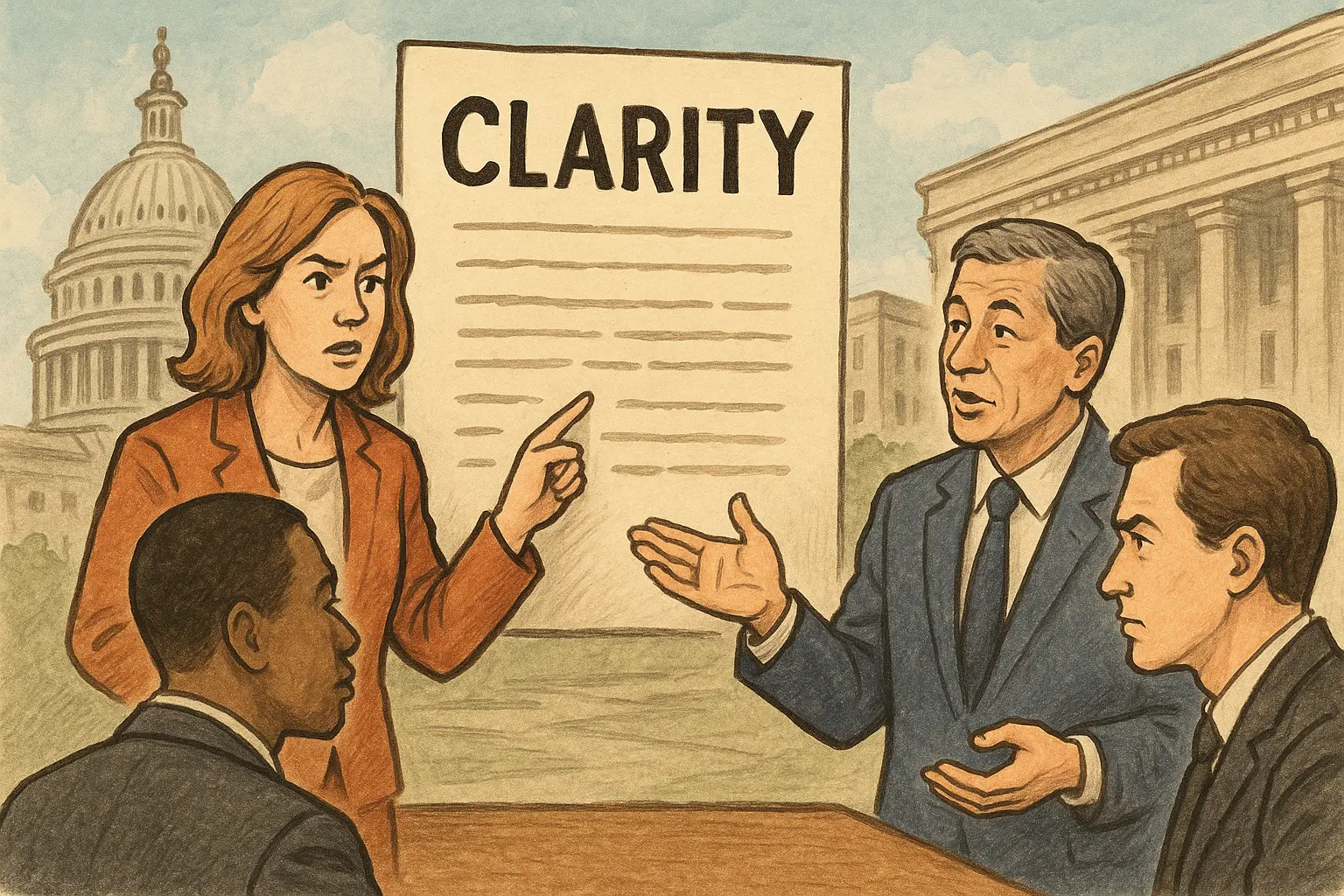
JPMorgan Chase published a report on Wednesday saying that negotiations on the U.S. “CLARITY Act” are nearing the end, and that the number of disputed items—originally as many as a dozen—has been reduced to “2 to 3”; the report also noted that the issue of “stablecoin yield” is moving in a more optimistic direction. The “CLARITY Act” is intended to establish a regulatory framework for the cryptocurrency industry, including delineations of jurisdiction between the SEC and CFTC, stablecoin rules, and more.
Key Findings from the JPMorgan Chase Report
According to JPMorgan Chase’s report released on Wednesday, discussions between lawmakers and regulators show that disputed items have been reduced from the original dozen-plus to “2 to 3.” A statement from a Senate staffer cited in the report said that the legislative draft “is nearing completion,” and that the remaining disputes mainly focus on DeFi regulation and token classification. JPMorgan Chase said in its report that the latest version of the draft may gain support from both the cryptocurrency industry and traditional financial institutions.
The Three Core Regulatory Issues of the CLARITY Act
Based on publicly available information, the core regulatory direction of the “CLARITY Act” is:
Jurisdictional split: clearly defining the boundary of responsibilities between the SEC and the CFTC in regulating crypto assets
Stablecoin rules: covering compliance requirements for stablecoin issuers, including whether it’s allowed to offer yield incentives to users
DeFi platform rules: setting regulatory standards for decentralized finance platforms
Background on the Stablecoin Yield Dispute and Legislative Timeline Risks
According to the JPMorgan Chase report, the stablecoin yield issue previously faced opposition from the traditional banking sector. Banks believed that allowing stablecoin issuers to offer yield incentives to users, without equivalent regulatory requirements, amounts to a disguised deposit-taking business. JPMorgan Chase’s latest report said that the issue is currently moving in a more optimistic direction.
Regarding legislative timeline risks, JPMorgan Chase said in its report that the final text of the “CLARITY Act” has not been released, and Congress has not scheduled a specific voting timeline. The report also mentioned that there is uncertainty surrounding the 2026 midterm elections, and based on market expectations, Democrats could potentially regain control of the House of Representatives, which may affect the legislative priority order for crypto-related legislation at that time.
Frequently Asked Questions
What are the main findings of the JPMorgan Chase report?
According to the report JPMorgan Chase published on Wednesday, negotiations on the “CLARITY Act” are nearing the end, with disputed items reduced from more than a dozen to “2 to 3.” A Senate staffer statement cited in the report said the draft is “nearing completion,” and that the remaining disputes focus on DeFi regulation and token classification.
What core regulatory issues does the “CLARITY Act” cover?
Based on publicly available information, the core regulatory direction of the “CLARITY Act” includes: the jurisdictional split between the SEC and CFTC for crypto asset oversight; compliance rules for stablecoin issuers (including the yield issue); and regulatory standards for DeFi platforms.
What is the main focus of the stablecoin yield dispute?
According to the JPMorgan Chase report, the traditional banking sector believes that allowing stablecoin issuers to offer yield incentives to users, without equivalent regulatory requirements, constitutes disguised deposit-taking; JPMorgan Chase’s latest report said that the issue is currently moving in a more optimistic direction.
Disclaimer: The information on this page may come from third parties and does not represent the views or opinions of Gate. The content displayed on this page is for reference only and does not constitute any financial, investment, or legal advice. Gate does not guarantee the accuracy or completeness of the information and shall not be liable for any losses arising from the use of this information. Virtual asset investments carry high risks and are subject to significant price volatility. You may lose all of your invested principal. Please fully understand the relevant risks and make prudent decisions based on your own financial situation and risk tolerance. For details, please refer to
Disclaimer.
Related Articles
Chainalysis: EU's New Sanctions on Russia Mark 'a New Era' of Crypto Enforcement
The blockchain intelligence agency highlighted that the recently issued sanctions package against Russia was perhaps the most comprehensive crypto-focused action by the EU, targeting the whole Russian cryptocurrency sector rather than individual actors, including the digital ruble in full and the
Coinpedia2h ago
IMF's Former Chief Economist Warns Double Deregulation Could Trigger Systemic Financial Crisis
Gate News message, April 27 — Kenneth Rogoff, former chief economist of the International Monetary Fund, has warned that the Trump administration's push for financial deregulation—particularly loosening bank capital requirements and regulatory transparency—is significantly raising the risk of a
GateNews3h ago
Mike Novogratz: The 《CLARITY Act》 was submitted to the committee for review in May, with an estimated approval rate of 50%
Galaxy Digital CEO Mike Novogratz said in a podcast episode he posted on YouTube on April 25 that the U.S. “CLARITY Act” will be submitted to a Senate committee for review during the first week of May, and it is expected that Trump will complete the signing in June. Alex Thorn, head of research at the firm, estimates the probability that the bill will pass in 2026 at 50%.
MarketWhisper4h ago
Japan's FSA Outlines Dual-Track Strategy for Digital Assets: Investor Protection and Financial Infrastructure
Gate News message, April 26 — Japan's Financial Services Agency is pursuing a two-pronged approach to digital asset regulation, balancing investor protection with infrastructure innovation, according to remarks by Shigeru Shimizu, Head of Risk Analysis at the FSA, delivered April 21 at a
GateNews6h ago
Tennessee Becomes Second U.S. State to Ban Crypto ATMs Statewide
Gate News message, April 26 — Tennessee has become the second U.S. state to outright ban cryptocurrency ATMs, with Gov. Bill Lee signing House Bill 2505 into law on April 13 after unanimous passage in both chambers. The law will take effect on July 1 and makes it a misdemeanor to operate or host
GateNews6h ago
Study: Only 3% of Polymarket Traders Are Skilled; Minority Captures 30%+ of All Gains
Gate News message, April 27 — A new academic paper analyzing all Polymarket transactions from 2023 through 2025 concludes that the platform's accuracy reflects "the wisdom of an informed minority, not the wisdom of the crowd." The working paper, revised April 25, was authored by Roberto Gómez-Cram,
GateNews6h ago


