


Bitcoin ETF institutions reduce holdings by $1.6 billion, while parent companies and the government increase holdings against the trend
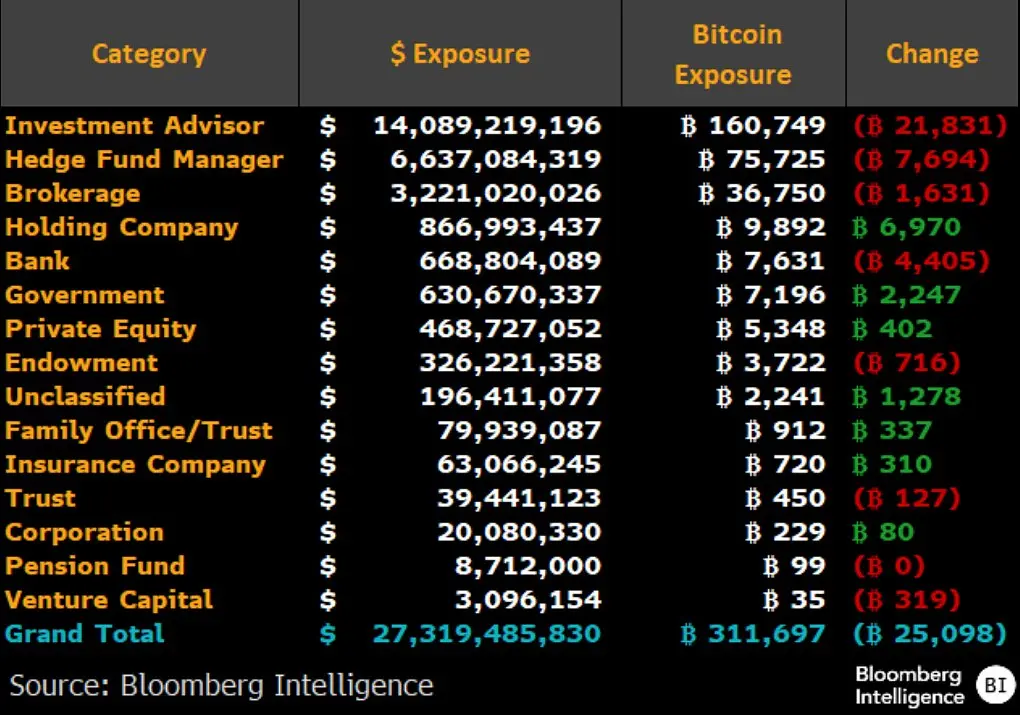
Bloomberg analyst analysis shows that after reviewing the Q4 2025 13F filings, large institutional investors reporting to the U.S. Securities and Exchange Commission (SEC) collectively reduced their Bitcoin ETF holdings by approximately 25,000 BTC during that quarter, representing a risk exposure of nearly $1.6 billion. Data reveals that the main sellers are concentrated among investment advisors and hedge funds, while holding companies and government-related entities increased their positions counter to the trend during the same period.
13F Filings Reveal: Major Selling Groups and Reduction Sizes in Q4
(Source: Bloomberg Intelligence)
13F filings are mandatory quarterly disclosures for institutional investors managing over $100 million, showing actual holdings at the end of each quarter. When an institution’s 13F shows a decrease in Bitcoin ETF holdings, it indicates they sold at some point during the previous quarter, but does not necessarily mean they sold physical Bitcoin on exchanges.
Net Reduction in Bitcoin ETF Holdings by Category in Q4 2025
Investment Advisors: approximately -21,831 BTC, the largest decrease among all categories
Hedge Fund Managers: approximately -7,694 BTC
Brokerages and Banks: also reduced holdings, specific data pending compilation
These three categories account for the majority of the overall net reduction, explaining why, despite short-term rebounds in Bitcoin prices, the market continues to face downward pressure—institutions selling near highs create a structural selling force.
Contrarian Buyers: Which Institutions Increased Bitcoin ETF Holdings in Q4?
Not all institutions are retreating. Data shows that holding companies and government-related entities increased their Bitcoin ETF holdings in Q4 2025, acting as a counterforce in the market.
This divergence reveals an important logic: the purpose of holding Bitcoin ETFs varies fundamentally by institution type. Investment advisors and hedge funds tend to use Bitcoin ETFs for short-term trading, hedging, or arbitrage, making their holdings highly sensitive to market sentiment shifts. In contrast, the increased holdings by holding companies and government-related entities likely reflect more strategic, long-term allocation rather than bets on short-term market movements.
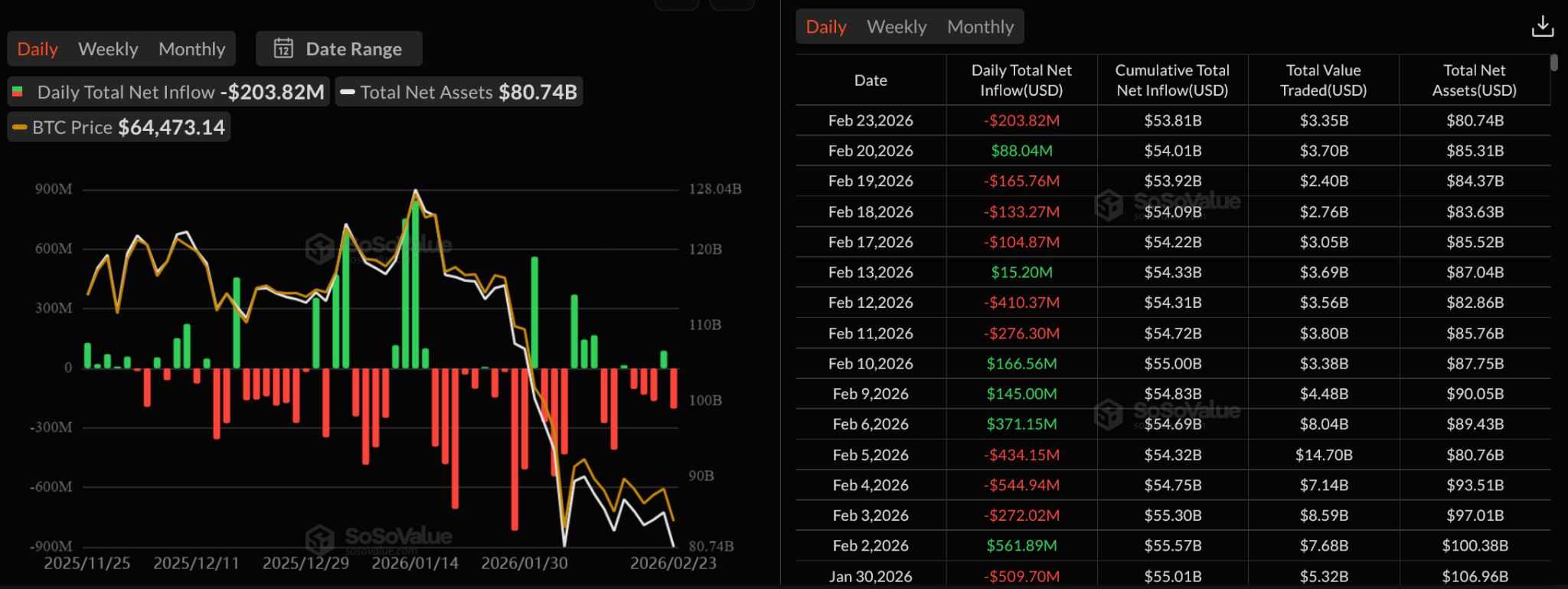
ETF Capital Flows: Continued Outflows in February Intensify Short-term Pressure
(Source: SoSoValue)
Data from SoSoValue shows that in February 2026, Bitcoin ETF daily capital flows experienced multiple significant outflow days, corroborating the overall contraction in institutional holdings. Consecutive days of outflows suggest that the ETF inflow pipeline has yet to see sustained replenishment.
Based on current observations, if daily ETF capital flows do not turn positive and stabilize over several trading days, Bitcoin’s current phase is closer to a “fragile rebound” rather than a confirmed trend reversal. The structural pressure from institutional selling needs new buying momentum to offset it before a positive capital flow cycle can re-establish.
Frequently Asked Questions
Does institutional reduction in 13F filings mean Bitcoin is being directly sold off?
Not necessarily. 13F filings reflect changes in institutional holdings of Bitcoin ETFs, not direct sales of physical Bitcoin. A decrease in ETF shares indicates institutions sold ETF positions, but this mechanism differs from direct spot market sales. ETF trading occurs in the secondary market; only when large redemptions trigger the ETF’s physical delivery process does it directly impact the supply of actual Bitcoin.
Why are investment advisors and hedge funds the main sellers, rather than long-term holders?
Investment advisors and hedge funds often use Bitcoin ETFs as portfolio adjustment tools, engaging in short-term trading, hedging, or arbitrage, rather than long-term value investing. Their holdings are thus more sensitive to market sentiment. In contrast, long-term holders like pension funds or sovereign wealth funds tend to have strategic allocations and are less reactive to short-term price movements.
What does the increased holding of Bitcoin ETFs by government-related entities imply?
Increased holdings by government-related entities generally indicate more strategic asset allocation decisions, often with longer holding periods. Such increases are sometimes viewed as a recognition of Bitcoin as a reserve asset, but the scale of these holdings is still limited relative to the overall market, and currently insufficient to offset the selling pressure from advisors and hedge funds.
Related Articles
Three newly created wallets received 1,298.46 bitcoins from BitGo, approximately worth 86.4 million US dollars.
BTC drops 0.99% in 15 minutes: Short-term selling driven by a sudden decline in macro risk appetite and on-chain fund withdrawals
A revenge attack funded by cryptocurrency has emerged in South Korea, with the suspect receiving a reward of $300-$600.