WLFI is a token launched by World Liberty Financial. It was originally designed as a governance asset for the community. In 2025, following a vote that passed with 99.94% support, WLFI gradually became tradable, positioning it to serve as a core driver of the ecosystem.
By combining DeFi functionality, token governance, and incentive mechanisms, the project aims to build a comprehensive platform for decentralized finance and digital asset interaction. The WLFI ecosystem is still evolving, and its utility, incentive model, and associated risks merit careful examination.
WLFI’s Role Within the Ecosystem
WLFI was initially positioned as the governance token of the World Liberty Financial ecosystem. It grants holders voting rights on key matters such as protocol upgrades and token release strategies. This governance function means early holders are not merely investors; they also participate directly in shaping the ecosystem’s direction. After the 2025 community vote, WLFI began transitioning from a pure governance token into a tradable asset with a more complex role in platform development.
Beyond governance, WLFI serves as the primary incentive and value carrier within the ecosystem. It is designed to encourage user participation, liquidity contributions, and engagement with ecosystem services, thereby supporting the protocol’s long term sustainability.
Main Uses and Application Scenarios
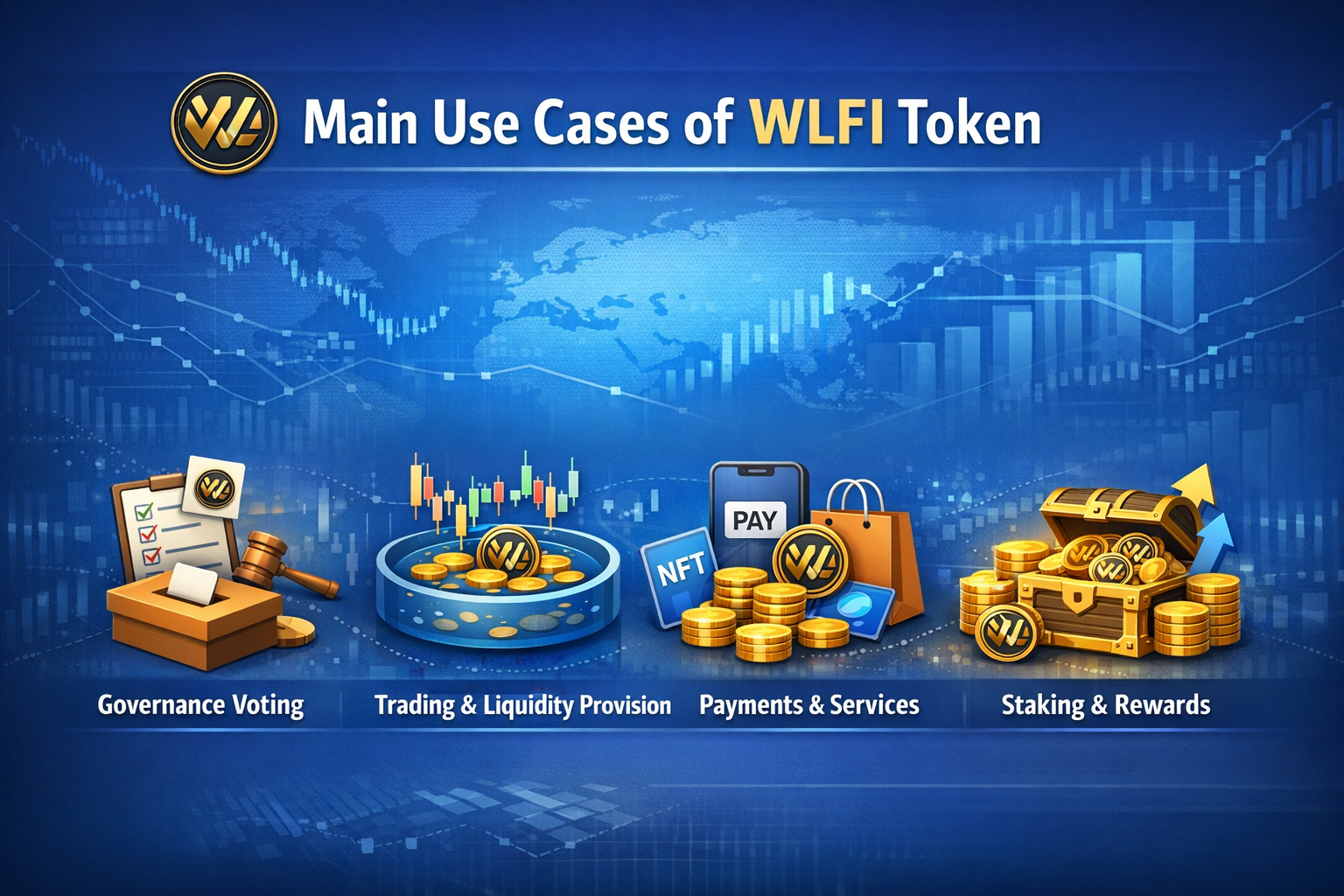
WLFI’s primary functions within the ecosystem include:
- Governance voting: Holding WLFI allows users to participate in decisions such as token release schedules and adjustments to reward mechanisms.
- Trading and liquidity provision: WLFI can be traded on supported platforms and used to provide liquidity in decentralized pools, improving market depth and trading activity.
- Payments and service access: Within the World Liberty Financial ecosystem, WLFI can be used as a payment medium to purchase digital assets, NFTs, or other services.
- Reward distribution and staking: Users who lock WLFI to participate in ecosystem activities may earn rewards or revenue shares, increasing the token’s practical utility.
These use cases show that WLFI is not only a governance tool but also a central mechanism for value exchange and incentives within the ecosystem.
How Users Earn Incentives by Participating
WLFI’s incentive structure operates through several channels:
- Staking rewards: Users who lock WLFI to support network security or provide liquidity can receive additional token rewards.
- Liquidity provision rewards: Users who contribute funds to WLFI related liquidity pools on decentralized exchanges may earn a share of trading fees as well as extra WLFI incentives.
- Ecosystem activity rewards: Participation in community campaigns, governance votes, and promotional tasks may also generate rewards, offering contributors additional income streams.
These mechanisms are designed to stimulate engagement, increase user retention, and strengthen overall participation within the WLFI ecosystem, forming a key engine for growth.
How WLFI Supports Long Term Platform Development
WLFI’s design fundamentally aligns with long term ecosystem development:
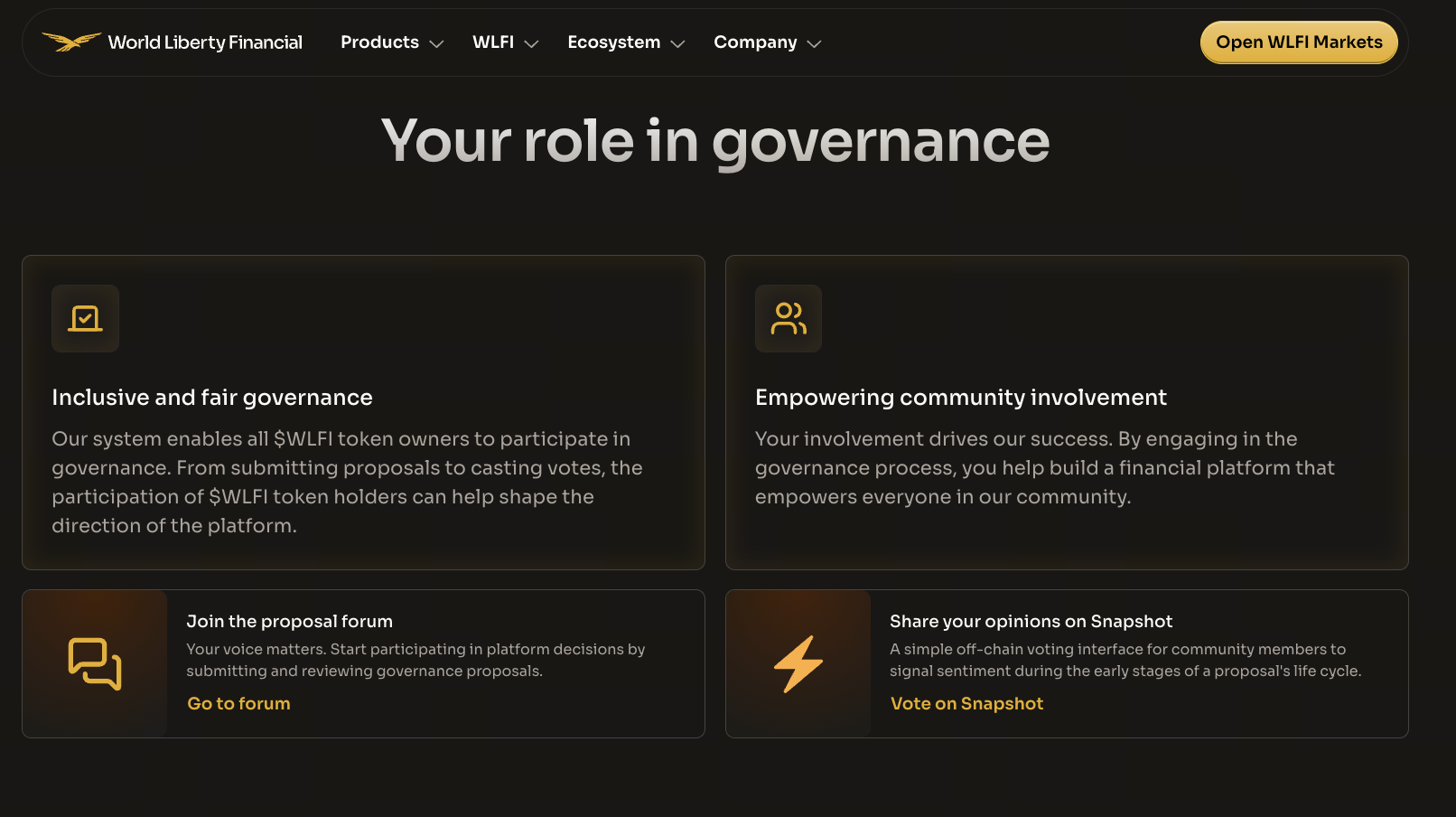
- Governance ensures active community participation: Token holders vote on key parameter adjustments, reinforcing the protocol’s decentralized nature.
- Phased token unlocking reduces short term selling pressure: A staged release strategy helps mitigate price volatility caused by sudden increases in supply.
- Incentives promote value circulation: Staking and liquidity rewards encourage internal value flow, contributing to a stable and growing user base.
Together, these mechanisms create a structural foundation that supports sustained development of WLFI ecosystem rather than reliance on a single incentive model.
Overview of Token Supply and Distribution
WLFI Token Distribution
- 33.893% — Token Sales: Approximately 33.893% of WLFI tokens are allocated to eligible participants in the token sale. This allocation aims to broaden community participation, allowing holders to directly engage in WLF Protocol governance and ecosystem development, thereby establishing a decentralized foundation at an early stage.
- 32.6% — Community Growth and Incentives: Around 32.6% of the tokens are reserved for community incentives and ecosystem expansion. This includes governance participation rewards, liquidity incentives, protocol usage rewards, and long term user retention programs. These tokens are typically released gradually according to predefined rules, supporting sustained protocol development rather than entering the market all at once.
- 30% — Co Founder Allocation: 30% of WLFI tokens are allocated to entities associated with the project’s co founders, including DT Marks, AMG, and WC Digital Fi, LLC. This portion is generally tied to the project’s long term development, with release schedules closely linked to governance rules and lockup mechanisms, aligning core builders with the ecosystem’s long term goals.
- 3.507% — Team and Advisors: Approximately 3.507% of tokens are allocated to core team members, advisors, service providers, and contributors involved in developing and operating the WLF Protocol. This relatively modest share helps reduce short term selling pressure from concentrated team holdings while still providing long term incentives.
Token Release and Governance Mechanisms
In terms of token release, WLFI does not follow a strictly fixed linear inflation model. Instead, it combines community governance with phased unlocking:
- Phased releases: Certain allocations, particularly those tied to incentives and ecosystem growth, are unlocked gradually based on development milestones to prevent sudden supply surges.
- Governance driven decisions: WLFI holders can vote on key matters such as release schedules and adjustments to incentive structures.
- Mitigation of short term selling pressure: Lockups, delayed unlocks, and governance constraints are designed to reduce the impact of market volatility on token price and ecosystem stability.
Overall, WLFI’s supply and allocation framework appears structured around long term ecosystem objectives rather than maximizing immediate circulation, reflecting its ambition to build a sustainable financial protocol.
Impact of WLFI’s Incentive Mechanisms on Ecosystem Growth
WLFI’s incentive system has several notable effects on ecosystem expansion:
- Stronger user engagement: Staking and reward programs encourage more active participation.
- Greater liquidity and market depth: User provided liquidity improves trading efficiency and attracts additional participants.
- Enhanced community consensus: Governance rights motivate holders to focus on long term strategy rather than short term speculation.
At the same time, incentive mechanisms must be carefully calibrated to avoid excessive inflation or imbalances that could dilute value.
Risks to Consider When Investing or Participating in WLFI
Although WLFI offers multiple utilities and incentive channels, several risks should be taken into account:
- High price volatility: Like most crypto tokens, WLFI’s market price may experience significant fluctuations.
- Liquidity and trading risks: Early stage trading may face limited liquidity, leading to bid-ask spreads or failed transactions.
- Security risks and fraud: Fake contracts and phishing websites exist in the market. Participants should verify contract addresses and rely on official channels.
- Governance concentration risk: While governance rights empower users, large holders may exert disproportionate influence, potentially centralizing decision making.
Anyone considering investing in or participating with WLFI should carefully review the contract details, security safeguards, and overall project transparency.
Potential Future Expansions of WLFI Utility
Looking ahead, WLFI’s applications may expand into areas such as:
- Cross chain interoperability: As cross chain technologies mature, WLFI could be used across a broader range of blockchain ecosystems and asset transfers.
- Integration into DeFi services: WLFI may become embedded in additional DeFi products such as lending, derivatives, and insurance.
- Tokenization of real world assets: The ecosystem may eventually support on-chain tokenization of real world assets, with WLFI serving as a medium of exchange.
These potential developments could enhance WLFI’s role within a broader financial ecosystem, though their realization will depend on the pace of ecosystem expansion and user adoption.
Conclusion
WLFI has evolved from a pure governance token into a tradable core asset within its ecosystem, serving multiple functions including trading, payments, incentives, and governance. Through community participation, structured incentives, and phased supply releases, its design seeks to support sustainable long term growth. Nevertheless, participants must remain aware of price volatility, security concerns, and liquidity risks. If successfully expanded into cross chain DeFi services and real world asset tokenization, WLFI may unlock additional pathways for ecosystem value creation.







