UK 100, (also known as FTSE 100 Index, Financial Times Stock Exchange 100 Index) is the most representative stock index in the United Kingdom. It includes the 100 largest companies by market capitalization listed on the London Stock Exchange and serves as a barometer of the overall health of the UK economy. Since its launch in 1984, the FTSE 100 has remained one of the most closely watched benchmarks among global investors and is widely regarded as a key indicator of market sentiment in the UK.
As global financial markets have evolved, investors now have multiple ways to gain exposure to UK 100, whether for short term price speculation or long term portfolio allocation. This article takes a comprehensive look at how to trade UK 100, outlining the various investment approaches, leverage mechanisms, and risk management techniques that can help investors build a clear and structured trading framework.
The guide focuses on several key areas: direct investment in constituent stocks, ETF participation, Contract for Difference (CFD) trading, futures and options markets, emerging crypto-based derivative formats, leverage opportunities and risks, macroeconomic influences, and practical risk management strategies.
Direct Investment in UK 100 Constituent Stocks
The FTSE 100 itself is not a tradable security. However, investors can gain direct exposure by purchasing the individual stocks that make up the index. These include leading companies across sectors such as finance, energy, pharmaceuticals, and consumer goods. By buying shares through a brokerage account, investors obtain direct ownership in the underlying companies.
This approach is generally suited to long term investors who want exposure to UK corporate fundamentals and potential dividend income. It requires building and maintaining a portfolio that reflects the index composition, including periodic rebalancing to align with index weight changes. Investors must also account for transaction costs such as brokerage commissions and taxes.
Participating in UK 100 Through ETFs
Another passive investment method is to buy exchange traded funds that track the FTSE 100. These ETFs replicate the index composition and can be bought or sold on an exchange just like individual stocks.
The advantages of ETF investing include relatively low costs, built in diversification, and no need for manual portfolio rebalancing. Common examples include the Vanguard FTSE 100 UCITS ETF and the iShares Core FTSE 100 UCITS ETF, both of which are widely used for long term holdings and asset allocation strategies. Some brokers and trading platforms also allow speculative trading on ETF prices via derivatives such as CFDs.
Key Features of Trading UK 100 with CFDs
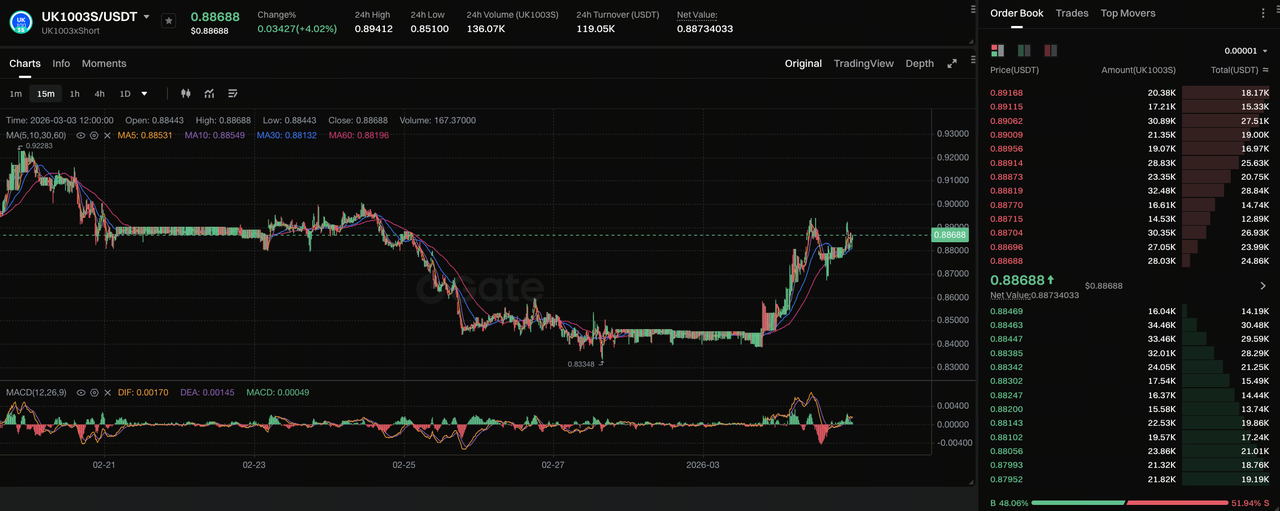
Source: Gate Market Data Page
Contracts for Difference, or CFDs, are among the most popular ways to trade indices. They allow investors to speculate on price movements of UK 100 index price without owning the underlying asset. CFD trading is typically combined with leverage, enabling traders to control a larger market position with a relatively small capital outlay.
Key characteristics of CFD trading include:
- Two way trading, allowing both long and short positions
- Leverage, which can amplify both profits and losses
- Extended trading hours, often close to 24 hours a day during the trading week
- Costs mainly consisting of spreads and overnight financing fees
However, CFDs carry significant risk. Because leverage magnifies exposure, losses can accumulate quickly. Retail investors should fully understand the mechanics and risks before engaging in CFD trading.
Futures and Options Markets for UK 100
UK 100 can also be traded through regulated exchange listed derivatives. For example, FTSE 100 index futures are traded on major derivatives exchanges such as Eurex. A futures contract is a standardized agreement to buy or sell the index at a predetermined price on a specified future date. These instruments are commonly used for hedging or directional speculation.
Options, on the other hand, grant the holder the right, but not the obligation, to buy or sell at a certain price. They enable more advanced strategies, such as protective puts or bullish spreads. Compared with CFDs, futures and options have clearly defined expiration dates, standardized settlement procedures, and transparent margin requirements, making them more suitable for experienced or professional traders.
UK 100 on Crypto Derivatives Platforms
In recent years, the development of digital asset markets has led to experimentation with combining traditional financial instruments and crypto derivatives. For example, London based digital asset derivatives platform GFO-X reflects growing interest in bridging crypto markets and traditional financial products.
At present, most mainstream crypto derivatives platforms focus primarily on perpetual contracts and futures tied to digital assets. Traditional equity indices such as UK 100 are still relatively uncommon in crypto derivative form. Investors considering this route should carefully verify contract liquidity, settlement mechanisms, and regulatory compliance.
Leverage Trading Opportunities and Risks
Leverage trading improves capital efficiency and lowers the initial capital required to open positions. However, it also increases both potential returns and potential losses. In CFD and futures markets, leverage ratios can range from 1:10 to 1:200 or even higher. The greater leverage ratios, the more sensitive the position becomes to price fluctuations.
Investors must understand margin requirements, the risk of forced liquidation, overnight financing costs, and liquidity conditions. High leverage may be appropriate for short term traders with disciplined risk control, but beginners or those with limited risk tolerance should use it cautiously.
Macroeconomic Influences on Trading Strategy
The performance of UK 100 is closely tied to macroeconomic conditions. UK GDP growth, interest rate changes, inflation data, and political developments can all affect the earnings outlook of constituent companies. For instance, a shift in monetary policy by the Bank of England may significantly influence financial sector expectations, thereby driving movements in the FTSE 100.
In addition, global market sentiment, energy prices, and supply chain dynamics can create short term volatility. Incorporating macroeconomic analysis into trading decisions is essential for building a robust and resilient strategy.
How to Develop a UK 100 Risk Management Strategy
Effective risk management reduces potential losses and improves long term trading consistency. Common risk control measures include:
- Setting stop loss and take profit levels
- Limiting capital exposure per trade
- Avoiding excessive leverage
- Diversifying across instruments and time horizons
- Adjusting strategies based on market volatility
Risk management is not a single tactic but a systematic discipline that integrates capital allocation, market analysis, and emotional control.
Summary
UK 100, or the FTSE 100 Index, offers a wide range of participation methods. Investors can gain exposure through direct stock ownership, ETFs, or derivatives such as CFDs, futures, and options. Each approach has its own characteristics and suitability.
Understanding the mechanics of each trading instrument, the implications of leverage, and the influence of macroeconomic factors is fundamental to building an effective trading strategy. Whether you are a long term investor or an active trader, aligning your approach with your risk tolerance and investment objectives, and consistently applying disciplined risk management, is essential.
FAQ
Q1: What is UK 100?
UK 100 refers to the FTSE 100 Index, which represents the 100 largest companies by market capitalization listed on the London Stock Exchange.
Q2: Can I buy the UK 100 index directly?
You cannot purchase the index itself, but you can gain exposure through ETFs or by buying its constituent stocks.
Q3: What are the risks of trading UK 100 via CFDs?
Risks include amplified losses due to leverage, overnight financing costs, and market liquidity risks.
Q4: What is the main difference between futures and CFDs?
Futures contracts have fixed expiration dates and are exchange cleared, whereas CFDs are typically traded over the counter and do not have fixed maturities.
Q5: Can UK 100 be traded on crypto platforms?
Most traditional crypto platforms focus on digital asset derivatives. Index based crypto derivatives remain relatively limited, and investors should verify platform compliance and product structure before trading.







