Navigating Macroeconomic Uncertainty as the New Normal
The pace of global economic recovery varies, with inflation pressures, policy shifts, and geopolitical forces interacting to drive market sentiment between caution and risk appetite. In this landscape, metals often emerge as a critical choice for reallocating capital.
Each metal serves a distinct role: some are preferred for defensive positioning, while others act as barometers for economic cycles. This dynamic ensures metals remain a focal point regardless of market conditions.
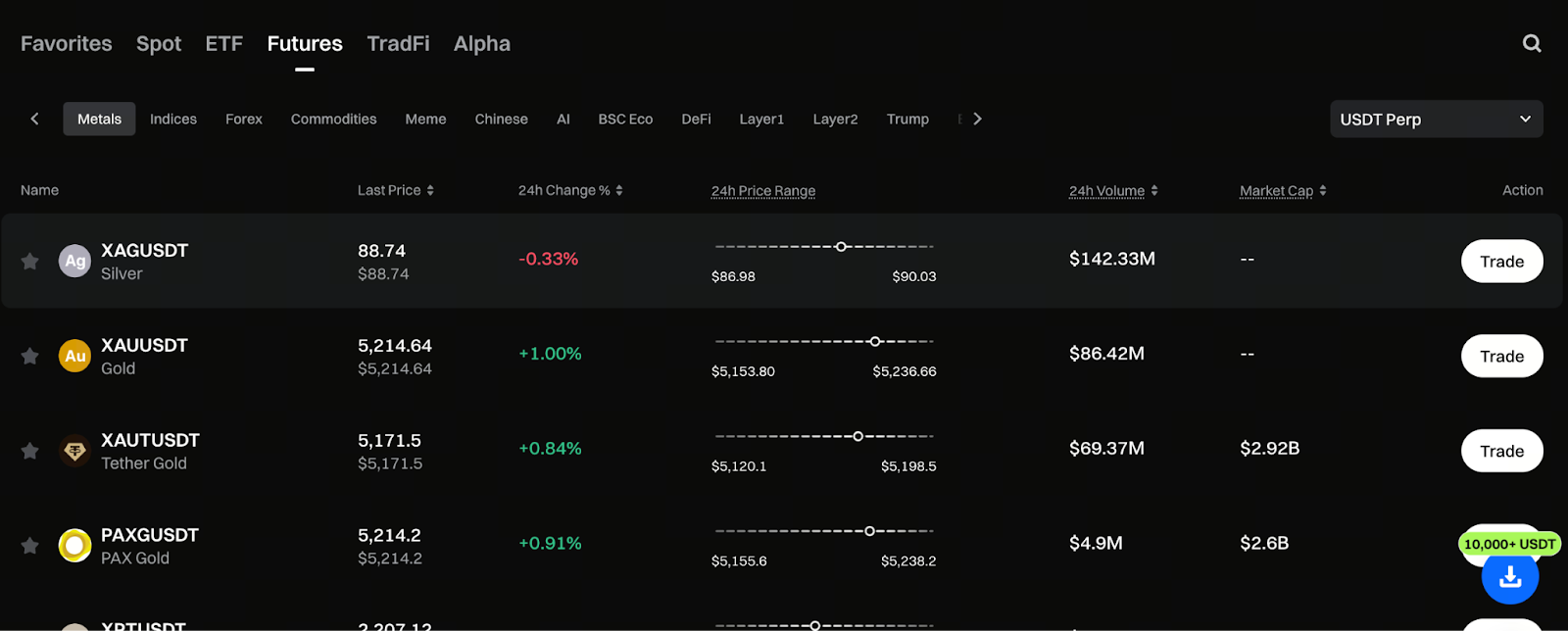
Precious metals, for example, have long been trusted as stores of value—Gold, in particular, attracts heightened attention during periods of market risk or shifting monetary policy. Silver uniquely offers both safe-haven and industrial utility, so its price reflects demand from both investors and manufacturers.
Industrial metals, on the other hand, offer a direct pulse on the real economy. Copper is widely recognized as an economic bellwether, closely tied to infrastructure and manufacturing demand, while Aluminum finds broad applications in transportation and construction. When markets anticipate economic expansion, prices for these metals typically move ahead of the cycle.
Explore metals trading on Gate’s dedicated platform: https://www.gate.com/price/futures/category-metals/usdt
The Multi-Layered Forces Behind Price Swings
Metals markets have recently seen swift, volatile price action—a product not of isolated incidents, but of several forces at play:
-
Frequent revisions in global economic data continually reshape demand forecasts
-
Fluctuating energy and logistics costs impact mining and refining expenses
-
Policy shifts and changing interest rates redirect capital flows
-
Institutional and algorithmic trading strategies accelerate market reactions to new information
When major data releases or policy pivots occur, markets often reprice rapidly, amplifying volatility.
Trading Patterns in a Volatile Market
As volatility intensifies, trading rhythms in metals shift:
-
Price ranges form and break down more quickly
-
Sector rotation accelerates
-
Capital moves swiftly across different metal categories
Success in this environment demands sharper information awareness and execution speed—without them, participants can quickly lose their advantage.
With the ongoing digitalization of commodity markets, trading has moved beyond traditional physical exchanges. Integrated platforms now enable investors to monitor and trade metals seamlessly. Gate, for instance, consolidates all metals products into one section, minimizing the friction of switching across platforms. When markets move fast, a robust information framework and reliable matching engine are essential for smooth execution.
Digital trading also extends market access. When macro policy changes or international events break outside conventional hours, market participants can adjust positions instantly, without waiting for scheduled market sessions.
From a portfolio strategy perspective, metals retain significant value. Their fundamental roles include:
-
Hedging against inflation
-
Diversifying investment risk
-
Capturing the upside of economic cycles
While digital participation continues to evolve, the intrinsic value of metals remains steady. The main changes are the diversity of trading instruments and the speed of information flow.
Conclusion
As markets reassess risk and growth prospects, metals offer a blend of defensive and opportunistic potential. Precious and industrial metals address different macro conditions, ensuring continued appeal in volatile markets. In an era where volatility is the status quo, understanding price drivers and leveraging digital trading infrastructure will sharpen decision-making. Whether as a hedge or a play on economic cycles, metals are an essential component of a diversified investment strategy.







