Why the Metals Section Is Essential in Today’s Market Environment
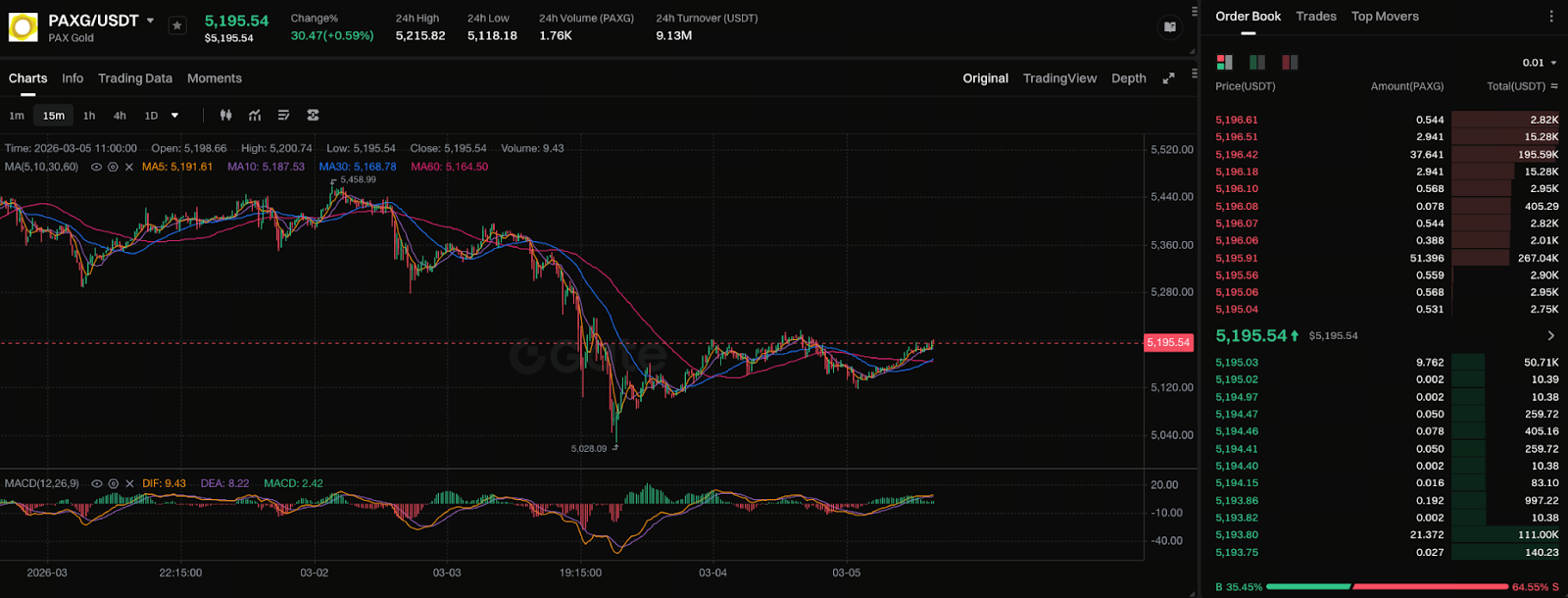
Image: https://www.gate.com/trade/PAXG_USDT
Precious metals have consistently served as safe havens and stores of value in the global financial system. The recent market has seen pronounced capital rotation and heightened volatility. Restrictions during traditional trading hours and operational costs across platforms hinder traders from executing strategies quickly. By integrating metals like gold (XAU) and silver (XAG) into a unified trading system, investors can hedge, conduct swing trading, and manage cross-asset allocations more efficiently on a single platform. This also highlights the practical need for connecting TradFi and Crypto: offering standardized, tradable contracts that bring traditional assets into the crypto trading experience.
Core Mechanisms and Product Design of Gate Metals Section
- Contract Structure: Metals are introduced to Gate’s contract system via perpetual contracts, eliminating the time constraints of expiration dates and allowing flexible entry and exit.
- Settlement Unit: USDT-based settlement reduces conversion costs across currencies and markets, improving clarity in capital management.
- Pricing and Risk Control: Utilizes a composite index price and a multi-layered risk control framework to ensure stable price discovery and enforceable risk management.
- Trading Entry Experience: The dedicated section enables users to switch metals contracts, adjust leverage, and set stop-loss orders directly from the contract page, reducing friction from frequent market switching.
3. Marginal Gains and Cost Considerations of 24/7 Trading
Round-the-clock trading provides greater flexibility during volatile periods, especially when macro news, geopolitical events, or data releases occur. Investors can instantly adjust positions and implement stop-loss or take-profit strategies. However, 24/7 trading demands stricter capital management, especially in high-volatility phases where leverage and slippage costs may rise. Prudent position control, stop-loss strategies, and hedging approaches are therefore crucial to maximizing the benefits of this section.
4. Risk Control Framework: Margin, Forced Liquidation, and Funding Rate Dynamics
The Metals Section on Gate adopts the platform’s established risk control logic, including:
- Margin Management: Dynamically maintains position safety boundaries to prevent forced liquidation caused by short-term volatility.
- Forced Liquidation Mechanism: Activates forced liquidation when funds are insufficient, protecting both account and market stability.
- Funding Rate: Long-term holding costs fluctuate with market funding conditions, so monitoring rate changes and their impact on trading costs is essential.
For traders, understanding and monitoring these mechanisms is fundamental to achieving stable returns in volatile environments.
5. User Profiles and Practical Strategies (Beginner to Advanced)
- Beginner/Conservative: Use small positions and low leverage for swing trading, focusing on learning the trading interface and risk control settings while gradually building discipline.
- Intermediate/Hedging: Use metal perpetual contracts as hedging tools for existing investment portfolios, combining with other assets for cross-market hedging and risk management optimization.
- Advanced/Strategic: Explore cross-asset arbitrage, cross-market pricing spreads, and strategies with forex or index derivatives, seeking excess returns under strict risk control.
- Key Points: Set clear stop-loss and target levels, build positions in stages, monitor real-time funding rates and order depth, and avoid excessive leverage expansion.
6. Synergy with Traditional Financial Assets and Future Outlook
The launch of the Metals Section expands Gate’s asset matrix and marks a concrete step toward deep integration between TradFi and Crypto. As more standardized derivatives from traditional asset classes enter the crypto trading ecosystem, users will further enhance their capabilities for multi-asset allocation, risk management, and strategy execution on a single platform.







