I. Project Overview and Industry Background
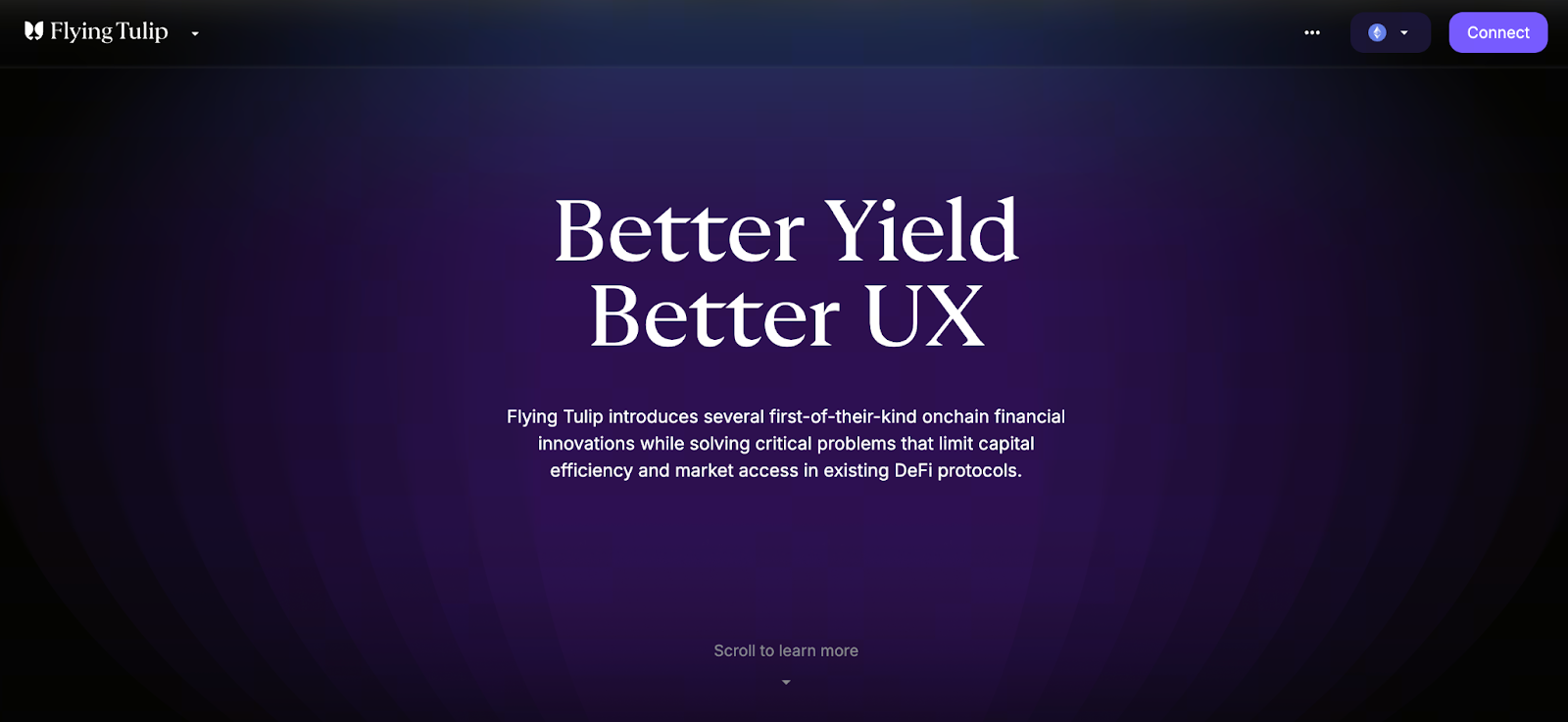
Image: https://flyingtulip.com/
Flying Tulip, an innovative initiative led by prominent DeFi developer Andre Cronje, has recently drawn considerable attention across the market. Designed as a unified on-chain financial infrastructure protocol, Flying Tulip seeks to integrate spot trading, perpetual contracts, lending, stablecoins, and insurance into a single comprehensive architecture.
With decentralized finance advancing toward greater performance, reduced friction, and institutional-grade applications, Flying Tulip embodies the long-term convergence between TradFi and DeFi. The project’s central aim is to deliver a highly modular, composable platform that enables complex on-chain strategy execution, driving overall capital efficiency and significantly enhancing the user experience.
II. Funding Structure and Key Data Analysis
Based on publicly available and authoritative disclosures, Flying Tulip’s cumulative funding has reached $225.5 million to date, broken down as follows:
- Series A private token funding of approximately $25.5 million, with participation from Amber Group, Fasanara Digital, Paper Ventures, and other funds representing both crypto and traditional finance backgrounds;
- Seed round funding completed in September 2025, totaling $200 million;
- $50 million raised through Impossible Finance’s Curated platform.
The project’s current fully diluted valuation (FDV) stands at roughly $1 billion. Notably, Flying Tulip has received investment interest amounting to approximately $1.36 billion. With existing allocations not yet fully distributed, there remains about $400 million in potential fundraising capacity. This figure underscores market demand that far surpasses the project’s current funding, highlighting exceptionally strong institutional and capital interest.
III. FT Token Pricing Mechanism and Investment Features
The native FT token of Flying Tulip utilizes a rare unified pricing mechanism across all phases. Both private placements and subsequent public sales are set at a fixed price of $0.10 per token. This approach minimizes price competition between early and later participants, promoting more stable and equitable market expectations.
Furthering its innovation, the FT token features an on-chain “Perpetual Put” redemption mechanism. This allows holders to burn FT tokens at any time and redeem their invested assets at the original price, independent of secondary market liquidity or project buybacks.
From a risk management perspective, this mechanism provides investors with notable downside protection and addresses the liquidity-dependent risks typical of traditional token investments. It marks a significant advancement in DeFi token economic models.
IV. CoinList Public Sale Key Points
The Flying Tulip team has confirmed the FT token public sale on CoinList, with the following arrangements:
- Public sale size of approximately $200 million, representing 20% of the total FT token supply;
- Sale period from February 3, 00:00 (UTC) to February 6, 21:00 (UTC);
- Minimum participation amount of about $100, lowering the entry barrier for retail investors;
- Public sale tokens also include the perpetual put option, transparently executed on-chain.
This CoinList public sale is a major fundraising milestone for the project and serves as a critical opportunity for Flying Tulip to validate its economic model and market acceptance among a broader audience.
V. Market Focus and Development Outlook
Flying Tulip’s design and funding structure highlight three prevailing trends in the current DeFi market:
- Capital is concentrating in integrated protocols: Compared to single-function solutions, multi-functional platforms are better positioned to attract long-term institutional capital and sophisticated strategic funds.
- Risk structure and liquidity mechanism innovation: Mechanisms such as the perpetual put option introduce risk hedging principles familiar in TradFi, enhancing asset security for token investors.
- Investment interest far exceeds actual fundraising: With over $1.3 billion in soft commitments, high-quality DeFi infrastructure continues to demonstrate strong capital attraction.
In the coming period, the outcome of the FT public sale, protocol development milestones, and the real-world performance of risk management and liquidation mechanisms will be central factors in the market’s reassessment of Flying Tulip’s long-term value.
VI. Summary and Risk Disclosure
In summary, Flying Tulip—leveraging Andre Cronje’s reputation, clear product definition, and distinctive token economics—has emerged as one of the most closely watched infrastructure projects in DeFi. This article provides a structured overview of its funding structure, token mechanisms, and public sale plan to help readers build a comprehensive understanding.
Nonetheless, it is essential to recognize that DeFi projects remain subject to uncertainties in technical implementation, market volatility, and regulatory changes. The information presented here is for research and informational purposes only and does not constitute investment advice. Participants should carefully evaluate their own risk tolerance before making decisions.







