Bitcoin’s Shift Toward the Post-Quantum Era: Why It’s “Not Hard” but Could Take 5–10 Years

2025-12-22 03:50:22
Beginner
Quick Reads
As quantum computing advances rapidly, Bitcoin's cryptographic security faces potential threats. This article examines why, from a technical standpoint, migrating Bitcoin to a post-quantum era is relatively straightforward. However, challenges related to governance, compatibility, and user migration could extend the process over the next 5 to 10 years. The article also discusses how these factors may affect Bitcoin's price and overall market confidence.

Why Bitcoin Faces Quantum Computing Challenges
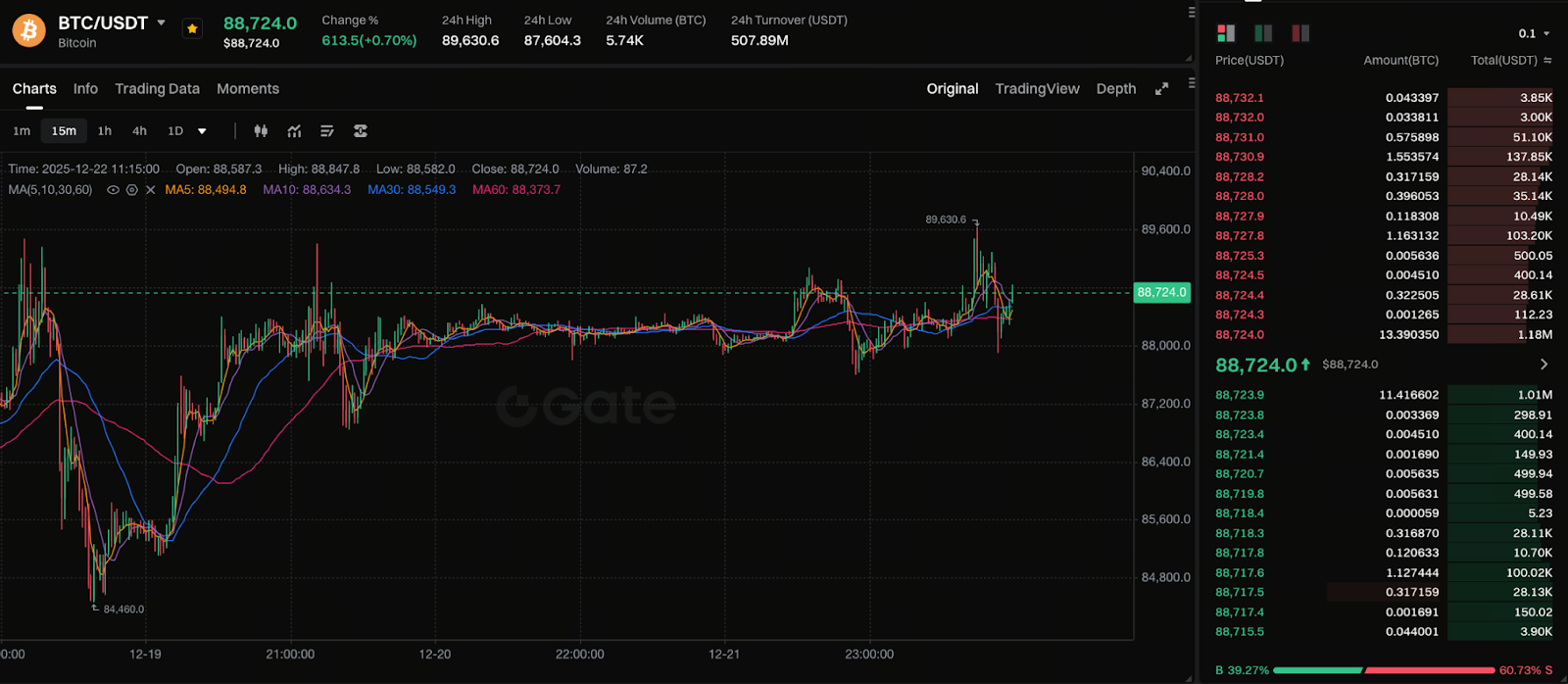

Image: https://www.gate.com/trade/BTC_USDT

Bitcoin’s security relies on modern cryptography, with hash functions and the Elliptic Curve Digital Signature Algorithm (ECDSA) at its core. In conventional computing environments, these algorithms are virtually immune to brute-force attacks. However, the rise of quantum computing has disrupted this assumption.

In theory, a sufficiently advanced quantum computer could use Shor’s algorithm to derive private keys at a fraction of the computational cost required by traditional methods. Once this technology matures, Bitcoin addresses with exposed public keys could become vulnerable. Although quantum computing remains in its infancy, its long-term implications are already a central topic in the crypto industry.

What Is Bitcoin in the “Post-Quantum Era”?

“Post-quantum migration” does not mean Bitcoin must be completely redesigned. Instead, it refers to the gradual adoption of post-quantum cryptography (PQC) in the future to replace or enhance current signature mechanisms.

Today, the global cryptography community has proposed several quantum-resistant algorithms, such as those based on lattice cryptography or hash-based signatures. These approaches are theoretically resilient to quantum attacks and offer technical pathways for future Bitcoin security upgrades.

Is It Really “Easy” from a Technical Perspective?

From a technical perspective, adding support for new cryptographic algorithms in Bitcoin is not inherently difficult. The protocol is designed to be upgradeable, allowing new signature rules to be implemented through a soft fork or hard fork. As a result, some developers argue that “migrating Bitcoin to the post-quantum era is not technically complex.”

However, Bitcoin is not governed by a single authority. Any protocol upgrade requires widespread consensus among miners, nodes, wallet providers, and users. While the technical changes may be straightforward, achieving social coordination is much more challenging.

Why Migration Still Requires 5–10 Years

Industry experts generally estimate that Bitcoin’s post-quantum migration will take 5–10 years for several key reasons:

1. Bitcoin prioritizes stability, so any modifications to its security core demand extensive, long-term testing and auditing.

2. With hundreds of millions of addresses and wallets worldwide, migration must proceed gradually, requiring old and new systems to coexist for years.

3. User education and infrastructure upgrades are also time-intensive, as exchanges, custodians, and hardware wallet providers all need to synchronize their updates.

Therefore, even though quantum threats are not imminent, the Bitcoin community prefers to plan proactively and advance cautiously.

Potential Impact on Bitcoin Price and Market

From a market standpoint, quantum risk is more of a long-term variable than a short-term bearish factor. Rational investors typically view it as part of technological progress, not a sign of systemic failure.

If the Bitcoin community provides a clear upgrade roadmap, it could strengthen market confidence. Conversely, a prolonged lack of solutions could heighten market volatility during periods when quantum computing becomes a hot topic.

How Investors Should Rationally View Quantum Risk

For most investors, quantum computing does not warrant immediate action. Instead, it’s more important to monitor the progress of discussions among Bitcoin’s core developers and the broader community, recognizing that this is a gradual, long-term process.

In the coming years, quantum security is likely to act as a slow-moving variable, gradually shaping market perceptions rather than abruptly changing the foundation of Bitcoin’s value.

Author:  Max
Disclaimer
* The information is not intended to be and does not constitute financial advice or any other recommendation of any sort offered or endorsed by Gate.
* This article may not be reproduced, transmitted or copied without referencing Gate. Contravention is an infringement of Copyright Act and may be subject to legal action.

Share

Crypto Calendar
Tokenların Kilidini Aç
Wormhole, 3 Nisan'da 1.280.000.000 W token açacak ve bu, mevcut dolaşımdaki arzın yaklaşık %28,39'unu oluşturacak.
W
-7.32%
2026-04-02
Tokenların Kilidini Aç
Pyth Network, 19 May'da 2.130.000.000 PYTH tokenini serbest bırakacak ve bu, mevcut dolaşım arzının yaklaşık %36,96'sını oluşturacak.
PYTH
2.25%
2026-05-18
Tokenların Kilidini Aç
Pump.fun, 12 Temmuz'da 82,500,000,000 PUMP token'ı kilidini açacak ve bu, mevcut dolaşımdaki arzın yaklaşık %23,31'ini oluşturacak.
PUMP
-3.37%
2026-07-11
Token Kilidi Açma
Succinct, 5 Ağustos'ta mevcut dolaşımdaki arzın yaklaşık %104,17'sini oluşturan 208,330,000 PROVE token'ını serbest bırakacak.
PROVE
2026-08-04
sign up guide logosign up guide logo
sign up guide content imgsign up guide content img
Sign Up

Related Articles

What is Fartcoin? All You Need to Know About FARTCOIN
Intermediate

What is Fartcoin? All You Need to Know About FARTCOIN

Fartcoin (FARTCOIN) is a representative meme coin within the Solana ecosystem based on an AI-driven narrative. Its core concept originated from an experiment aimed at exploring the "boundaries between AI Agents and humor." More than just a digital asset with social attributes, the project deeply couples absurd humor culture with on-chain financial logic by integrating autonomous AI interaction models.
2026-03-04 05:38:51
Gold Price Forecast for the Next Five Years: 2026–2030 Trend Outlook and Investment Implications, Could It Reach $6,000?
Beginner

Gold Price Forecast for the Next Five Years: 2026–2030 Trend Outlook and Investment Implications, Could It Reach $6,000?

Analyze current gold price trends alongside authoritative five-year forecasts, integrating an evaluation of market risks and opportunities. This gives investors insight into the potential trajectory of gold prices and the main drivers expected to shape the market over the next five years.
2026-01-26 03:33:33
2026 Silver Price Forecast: Bull Market Continuation or High-Level Pullback? In-Depth Analysis of Silver Candlestick Chart
Beginner

2026 Silver Price Forecast: Bull Market Continuation or High-Level Pullback? In-Depth Analysis of Silver Candlestick Chart

2026 Silver Price Forecast: Latest Outlook This article integrates current market trends, silver candlestick chart analysis, and momentum factors to assess the potential key support and resistance levels, upside targets, and pullback risks for silver prices. The goal is to help investors make informed, rational decisions.
2026-01-28 08:36:39
Crypto Future Profit Calculator: How to Calculate Your Potential Gains
Beginner

Crypto Future Profit Calculator: How to Calculate Your Potential Gains

Crypto Future Profit Calculator helps traders estimate potential earnings from futures contracts by considering entry price, leverage, fees, and market movement.
2025-02-09 17:28:28
Crypto Futures Calculator: Easily Estimate Your Profits & Risks
Beginner

Crypto Futures Calculator: Easily Estimate Your Profits & Risks

Use a crypto futures calculator to estimate profits, risks, and liquidation prices. Optimize your trading strategy with accurate calculations.
2025-02-11 02:25:44
What is Oasis Network (ROSE)?
Beginner

What is Oasis Network (ROSE)?

The Oasis Network is driving the development of Web3 and AI through smart privacy technology. With its privacy protection, high scalability, and cross-chain interoperability, the Oasis Network is providing new possibilities for the future development of decentralized applications.
2025-05-20 09:41:15





