Comprehensive Identity Verification for Every Transaction

(Source: CoinDesk)
Atlanta-based Bitcoin Depot announced that users will now need to complete identity verification for every transaction conducted via its cryptocurrency ATMs.
The company reported that this measure began phased rollout earlier this month. Unlike the previous policy in October 2023—which required only new users to submit identification on their first transaction—the new approach extends verification to every transaction.
CEO Scott Buchanan stated that real-time and ongoing identity checks help detect abnormal patterns missed during initial registration, further enhancing fraud prevention and user security.
Targeting Account Sharing and Fraud

(Source: Bitcoin_Depot)
Bitcoin Depot explained that mandatory verification for each transaction is designed to address the following risks:
- Account sharing
- Identity theft
- Account takeover
The company emphasized that this policy is part of its compliance upgrade, with the goal of reducing fraud and illegal activity via ATMs.
Bitcoin Depot currently operates about 8,800 ATMs across North America, focusing on enabling cash purchases of Bitcoin. These devices, however, have also become targets for fraud schemes, particularly those aimed at older adults.
Multiple State Attorneys General File Lawsuits, Heightening Legal Pressure
Earlier this month, Massachusetts Attorney General Andrea Campbell filed suit against Bitcoin Depot, alleging the company knowingly allowed its ATMs to be used for scams while weakening safeguards and misleading investors. The complaint notes that prior to the October 2023 policy change, purchasing small amounts of Bitcoin required only a phone number.
Last year, the Iowa Attorney General also sued the company, alleging it charged hidden markup fees. The Massachusetts suit goes further, seeking a court order to force the company to change its business model, including:
- Prohibiting transactions over $10,000 unless additional risk screening is conducted
- Establishing a refund mechanism for fraud victims
Fraud Issues Continue to Escalate
FBI data projects that losses to crypto ATM scams in the US could reach $333 million in 2025. Most schemes target seniors, using pretexts like government assistance or tech support to direct victims to deposit funds into crypto ATMs. Because blockchain transactions are irreversible, recovering those funds is nearly impossible.
In 2024, losses in Arizona exceeded $177 million, prompting a warning from the state attorney general. The AARP also reported that 14 states have enacted laws targeting crypto ATMs, with states like California and Texas imposing strict transaction caps.
Company Stock Price and Market Response
Under mounting regulatory and legal pressure, Bitcoin Depot’s stock price had fallen about 6.77% to $5.37 as of press time. Over the past six months, the stock has declined roughly 80%.
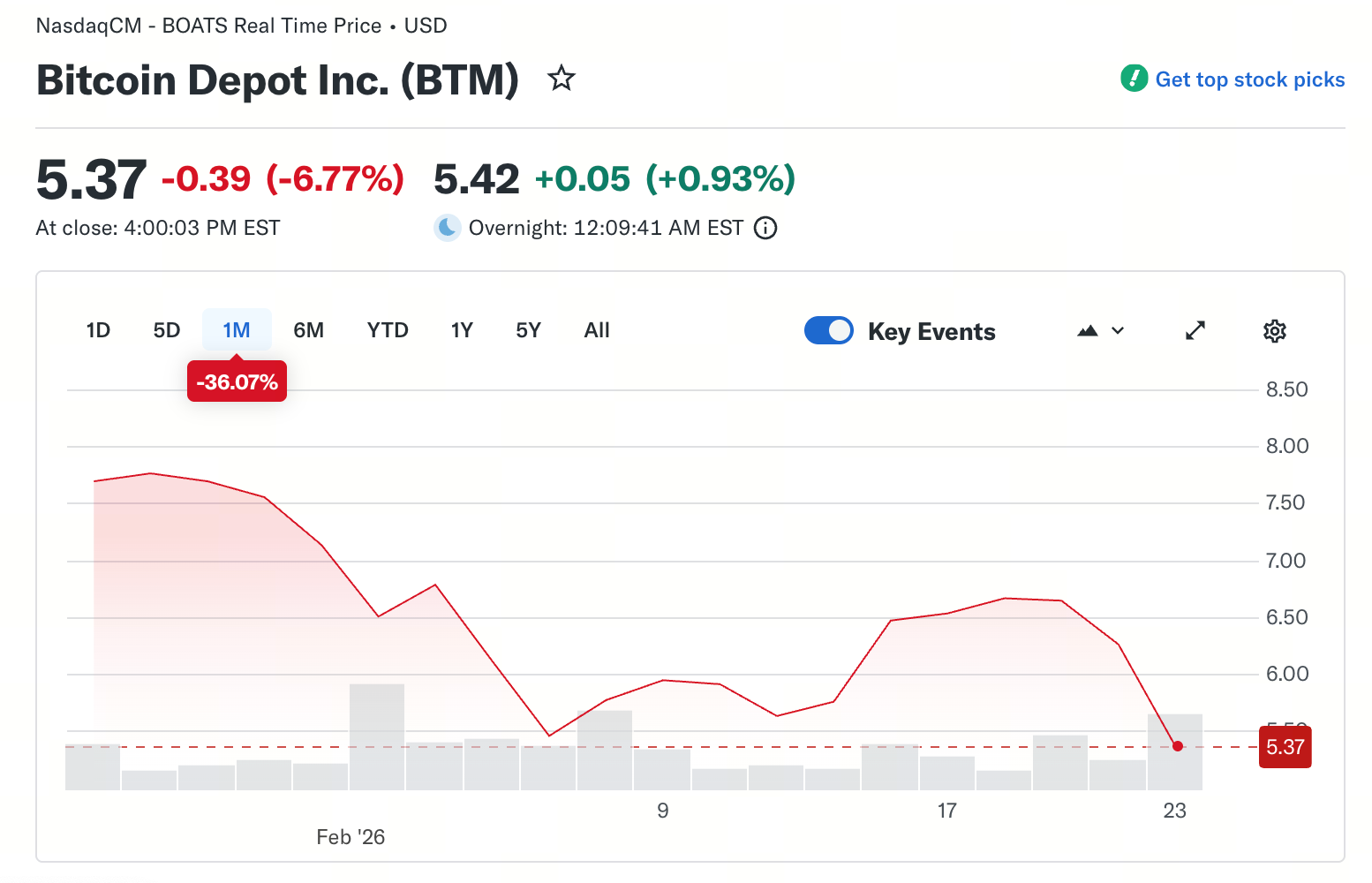
(Source: finance.yahoo)
Despite these challenges, the company stated it will continue to cooperate with law enforcement in tracking down fraud. However, enforcement actions have sometimes been controversial—for example, in Texas, officers forcibly damaged ATMs in attempts to recover funds.
Prior Legal Cases and Settlements
In 2024, the Iowa Supreme Court ruled that Bitcoin Depot could retain ATM deposits tied to fraud, as users must declare ownership of a Bitcoin wallet before transacting. Last month, however, the company reached a $1.9 million settlement with the Maine Bureau of Consumer Credit Protection and agreed to refund fraud victims.
Summary
With state regulators increasing oversight of crypto ATMs, Bitcoin Depot is responding to public concerns by implementing comprehensive identity verification. Whether these measures will effectively reduce fraud and restore market confidence remains to be seen, but one thing is clear: the crypto ATM industry is entering a new era of stricter compliance.







