Background of Bitcoin Price Predictions
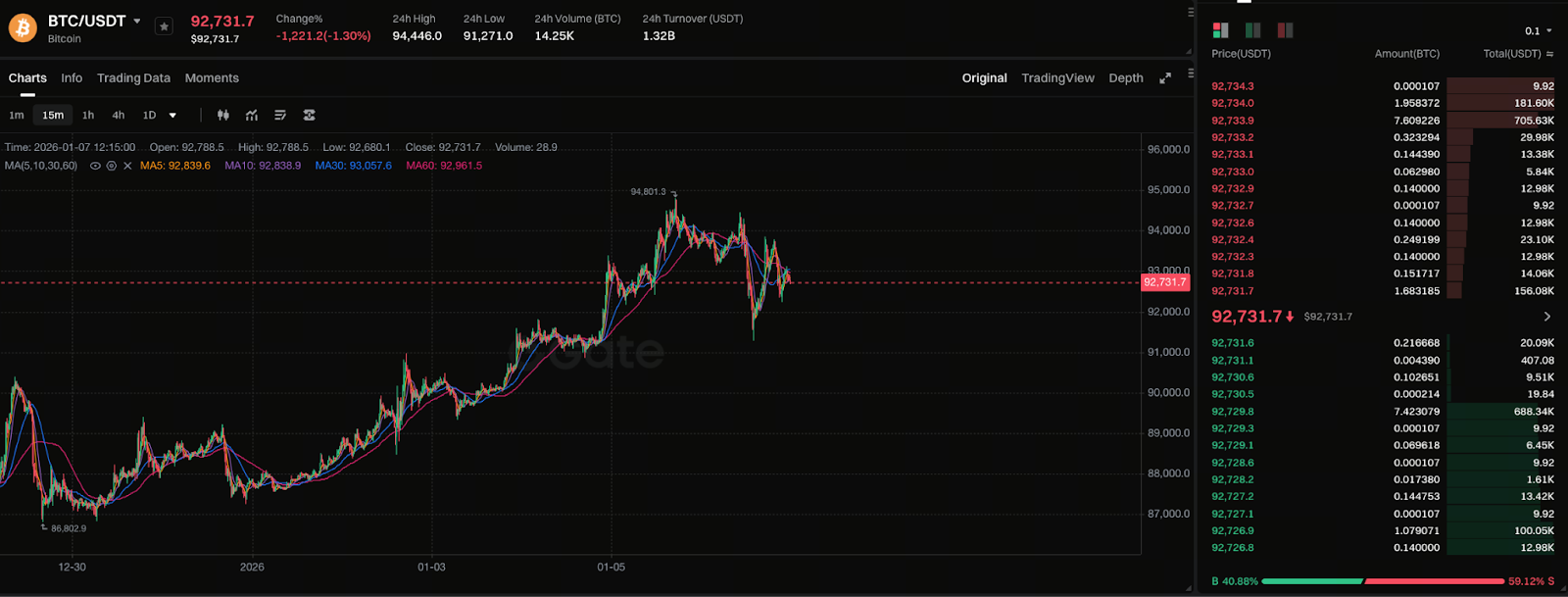
Image: https://www.gate.com/trade/BTC_USDT
As we move into 2026, Bitcoin (BTC) remains one of the most closely watched assets in the global crypto market. In 2025, BTC hit a new local high before entering a clear correction. Market sentiment shifted from extreme optimism to a more rational stance, and opinions on the future trajectory of BTC began to diverge.
Today, Bitcoin price forecasts rely on more than just technical analysis or supply-demand models. Macroeconomic trends, regulatory developments, institutional capital flows, and ETF inflows all play critical roles. As a result, expectations for Bitcoin’s 2026 price span a much wider range than in previous years.
Institutional and Analyst Target Price Ranges
Recent perspectives from leading institutions and analysts show that the market remains broadly optimistic about Bitcoin’s long-term value, but there are clear disagreements over the pace of any potential price surge.
Optimistic Forecast Range
Bulls such as Fundstrat and Tom Lee argue that, given ongoing institutional adoption and steady spot ETF inflows, Bitcoin could reach $200,000 to $250,000 in 2026. Some extremely bullish models suggest even higher targets are possible.
Neutral Forecast Range
Some Wall Street firms—including CitiGroup, JPMorgan, and Standard Chartered—offer more conservative projections. They expect BTC to trade between $140,000 and $190,000, with the price largely dependent on global liquidity conditions and shifts in risk appetite.
Cautious and Conservative Views
Other analysts take a more cautious approach, projecting that Bitcoin may mostly fluctuate between $110,000 and $135,000. Some models even warn of potential corrections if liquidity tightens or sentiment turns negative.
Despite the wide range of forecasts, a clear consensus is emerging: Bitcoin entering the six-figure price range is now the mainstream expectation.
Key Catalysts for BTC to Reach $250,000
For Bitcoin to hit or surpass $250,000 in 2026, the market generally agrees that several key conditions must be met at the same time:
1. Sustained Large-Scale Institutional Capital Inflows
If long-term capital from pension funds, insurers, or sovereign wealth funds begins systematically allocating to Bitcoin, it will drive structural demand and provide medium- and long-term price support.
2. Loose or Improving Macro Liquidity Conditions
In a global environment with ample liquidity and stable interest rate expectations, investors are more likely to allocate to risk assets. As a high-beta asset, Bitcoin stands to benefit significantly from these conditions.
3. Clearer, More Favorable Regulatory Framework
A transparent and predictable regulatory landscape reduces uncertainty, encourages institutional and long-term capital participation, and enhances overall market valuation logic.
Bitcoin is likely to see a breakout rally only when these factors align.
Market Risks and Potential Headwinds
While most institutions are bullish on Bitcoin’s long-term outlook, the path to higher prices in 2026 remains uncertain due to several factors:
- Macroeconomic volatility: Persistent inflation or renewed rate hikes could weigh on risk asset valuations
- Sharp shifts in market sentiment: Excessive optimism or panic can amplify price swings
- Technical correction risk: If BTC breaks key support levels, it may trigger automated and sentiment-driven selling
These risks suggest that Bitcoin’s upward trajectory is unlikely to be a straight line and will likely involve high volatility and multiple pullbacks.
Investor Strategies and Response Approaches
From a medium- and long-term perspective, Bitcoin is still regarded as both a store of value and an inflation hedge. However, price volatility remains significant. Prudent strategies include:
- Implementing robust risk controls, with clear stop-losses and position sizing
- Monitoring key fundamentals, such as ETF flows, institutional holdings, and macro policy signals
- Avoiding emotional buying at highs and maintaining discipline and patience during market corrections
Summary
Bringing together institutional forecasts and macro analysis, it is possible for Bitcoin to reach $250,000 in 2026, but only if multiple positive factors align. The potential for high returns comes with considerable uncertainty and volatility risk.
For investors, rationally assessing risk tolerance and adjusting expectations dynamically is likely more important than focusing on a single price target.







