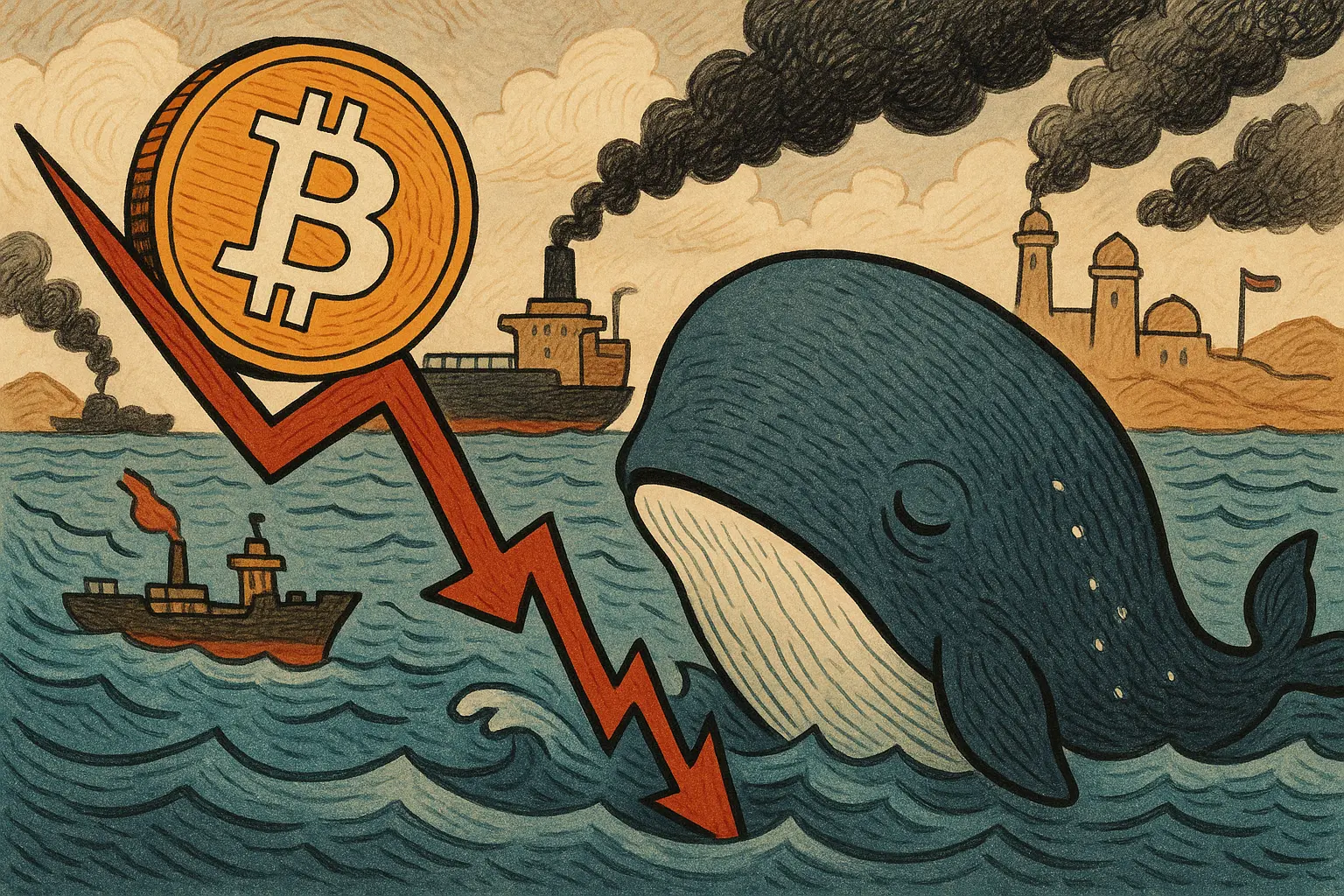
Bitcoin has recently dropped sharply from its highs, currently trading around $69,500. The market is under pressure from on-chain supply shocks and geopolitical tensions. Over 44,000 Bitcoins were transferred to exchanges in a single day, totaling up to $3.15 billion; conflicts in the Middle East have triggered intense volatility in energy markets, and global risk sentiment has cooled rapidly.
Historic Supply Shock: Who Is Selling in Large Quantities Right Now?
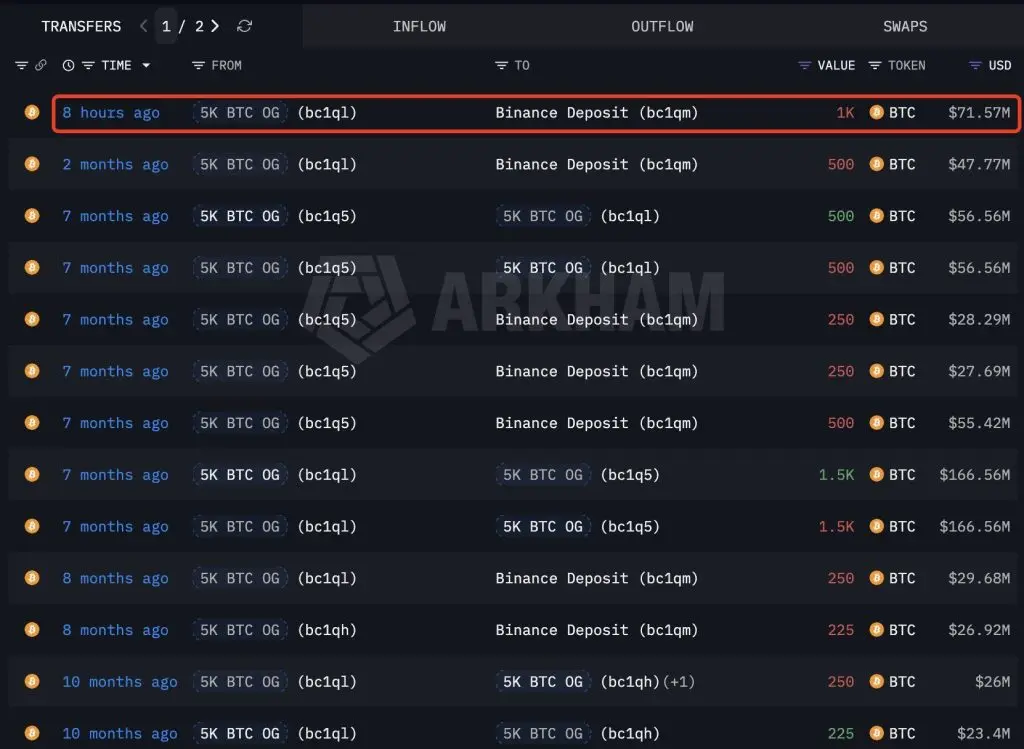
The reason for Bitcoin’s decline today lies in on-chain data. In just 24 hours, 44,459 BTC moved from various wallets to exchanges, worth approximately $3.15 billion, marking the largest single-day inflow recently. When selling pressure exceeds the market’s immediate absorption capacity, a downtrend becomes difficult to resist.
Three Main Forces Behind This Selling Wave
(Source: Arkham)
Revival of Dormant Wallets from 2013: An early address dormant for over eleven years suddenly liquidated 3,500 BTC, cashing out $442 million, with a return of 266 times. This single move triggered market panic.
Early Investor Owen Gunden Cashing Out: Transferred $46.3 million to Kraken, a typical long-term profit-taking move, exerting a chain reaction of bearish sentiment.
Bhutan’s National Reserves Continually Shrinking: Sovereign holdings have fallen below 4,500 BTC, signaling coordinated withdrawal at the institutional and national levels, which is particularly sensitive.
All three forces point to the same issue—large, long-standing holders are choosing to cash out heavily at this moment. Regardless of their motives, this scale of supply release has a direct and tangible impact on short-term prices.
Middle East Geopolitical Crisis: How Energy Market Turmoil Is Transmitting to Bitcoin
The macro impact and on-chain selling are intensifying simultaneously, deepening Bitcoin’s decline today. Israel’s airstrikes on Iranian gas fields and the increased risk of closing the Strait of Hormuz caused oil prices to spike to $119 per barrel during trading. However, as Israel’s diplomatic efforts helped reopen the shipping lanes, energy markets reversed sharply—WTI crude oil plunged 5% to $94.59, and Brent crude fell 4% to $102.88.
Mike Sommers, CEO of the American Petroleum Institute, stated: “Reopening the Strait of Hormuz is a top priority for the Trump administration, and there are currently no alternatives.” This clearly reveals the fragility of the current situation—any diplomatic misstep could reignite secondary shocks in energy markets.
Volatility in energy markets often signals broader risk-off sentiment. Although the Federal Reserve maintained interest rates between 3.50% and 3.75%, the neutral monetary policy tone offers no buffer against current selling pressures. The macro environment’s indecision will likely prolong consolidation.
Technical Analysis: $64,000 Is the Last Battlefield for Bulls and Bears
(Source: TradingView)
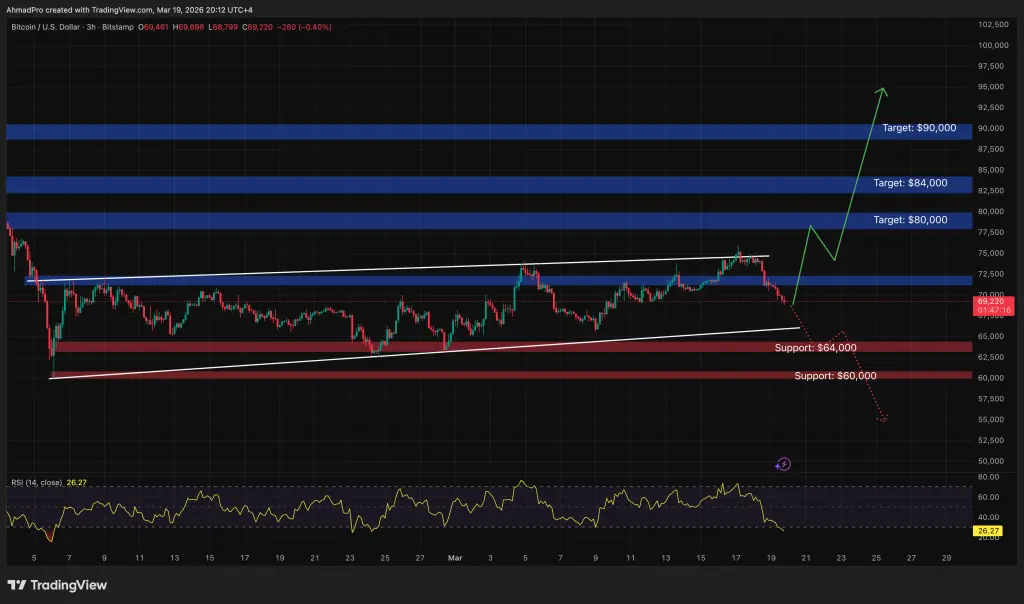
The chart shows a clear warning signal. Bitcoin has broken below the ascending wedge’s lower boundary formed since early February and lost the $72,000 support—previously acting as a “resistance turned support,” now completely invalidated. Any rebound attempts will face immediate resistance here.
The current downtrend path is clear: the main target is $64,000, which is the convergence point of the wedge’s bottom trendline and a historically critical support zone that has twice provided key support. If this level breaks, $60,000 will become the final line of defense before structural collapse, and higher timeframes’ bullish logic will face a fundamental challenge.
The only condition for reversal is a daily close above $72,000. If achieved, upward targets at $80,000, $84,000, and even $90,000 will reopen. Until then, every rebound appears more like a brief respite under pressure rather than a true trend reversal signal.
Frequently Asked Questions
Q: Why did Bitcoin fall today? What are the main reasons?
A: The decline is due to multiple factors: the on-chain supply shock from 44,459 BTC inflow, profit-taking by several early holders (including a wallet dormant for over 11 years), the lack of easing from the Federal Reserve’s rate decision, and technical breakdown below the $72,000 support.
Q: Does the liquidation of an 11-year dormant Bitcoin wallet pose systemic risk?
A: A single wallet liquidation does not inherently pose systemic risk, but during fragile market sentiment, large early holdings selling can trigger herd effects. The recent case of 3,500 BTC with a 266-fold return highlights that long-held dormant coins are entering circulation, and short-term supply pressure should not be ignored.
Q: Can $64,000 serve as an effective support level?
A: $64,000 is the convergence zone of the ascending wedge’s bottom trendline and has historically acted as a key demand area twice. Whether this support holds depends on trading volume and buying strength at that level.
Disclaimer: The information on this page may come from third parties and does not represent the views or opinions of Gate. The content displayed on this page is for reference only and does not constitute any financial, investment, or legal advice. Gate does not guarantee the accuracy or completeness of the information and shall not be liable for any losses arising from the use of this information. Virtual asset investments carry high risks and are subject to significant price volatility. You may lose all of your invested principal. Please fully understand the relevant risks and make prudent decisions based on your own financial situation and risk tolerance. For details, please refer to
Disclaimer.


