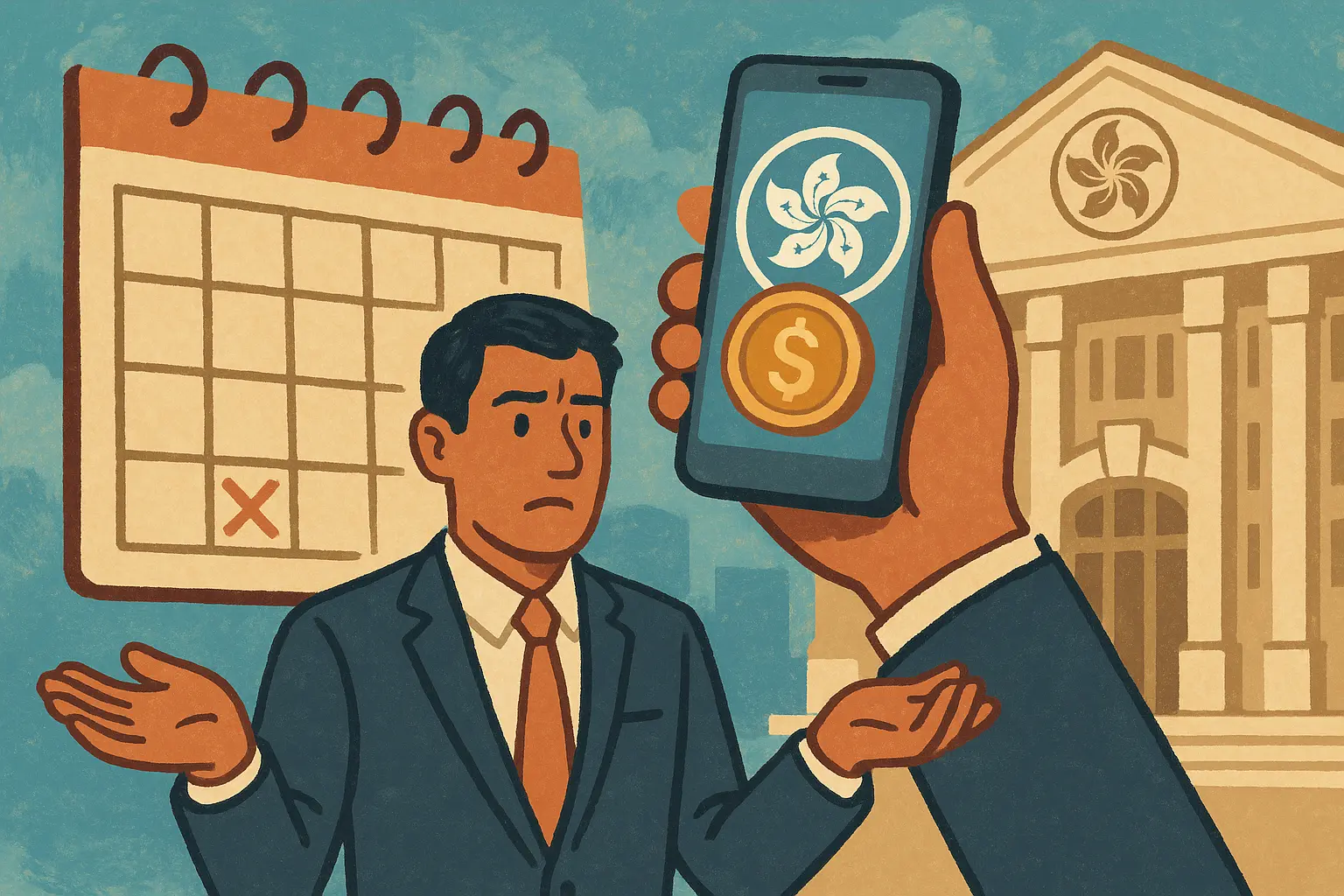
The Hong Kong Monetary Authority (HKMA) failed to issue the first batch of Hong Kong stablecoin licenses by the end of March as scheduled. In a statement, an HKMA spokesperson said, “We are actively working on the licensing matters and will announce more details at an appropriate time,” but did not provide any revised timeline. As of the time of publication, the HKMA’s publicly available register still shows no approved stablecoin issuers. This delay occurred against the strategic backdrop of Hong Kong actively seeking to become a global hub for crypto and financial technology.
March Deadline Missed: The HKMA’s Timeline Commitments and Current Official Response
HKMA Chief Executive Eddie Yue had previously stated clearly in the Legislative Council that the first batch of Hong Kong stablecoin licenses would be issued in March. Initially, only “a very small number” of issuers would be approved. The review focus was on use-case design, risk management capabilities, anti-money laundering (AML) control mechanisms, and the quality of supporting assets.
However, as of the end of March, the HKMA had made no approval announcements, and its public register also had not been updated to show any licensed institutions. Regarding media inquiries, the HKMA only replied that it was still “actively progressing,” and refused to provide any specific revised timetable.
Earlier reporting indicated that a joint venture backed by HSBC and Standard Chartered was seen as a leading candidate for the first batch of licenses, but the HKMA never publicly confirmed the names of any applicants.
The Burden of Compliance Review Under a Strict Framework
Hong Kong’s stablecoin regime sets high entry requirements for applying institutions, which is an important structural factor behind the delay. Under the current framework, issuers must meet the following conditions:
Reserve requirements: Stablecoins must be backed 100% by high-quality liquid assets; algorithmic or partial-reserve models are not allowed
Redemption timeliness: After a user submits a redemption request, it must be processed within one business day
Physical presence: The issuing entity must establish a legal entity in Hong Kong; it may not apply using a purely offshore structure
Compliance standards: Must comply with “know your customer” (KYC) rules and robust on-chain transaction monitoring mechanisms
This framework places Hong Kong among the most stringent stablecoin regulatory regimes globally. The review cycle for each application is relatively long, and at the technical level it also imposes higher requirements on applicants’ readiness and preparedness.
Political Signal as Mainland Chinese Tech Giants Withdraw: Ant and JD.com Pause Applications
Another layer of context behind the delay in Hong Kong’s stablecoin licenses is the withdrawal effect from application parties driven by regulatory pressure from mainland China. In October 2025, the Financial Times reported that the People’s Bank of China (PBOC) and the Cyberspace Administration of China expressed concerns about privately controlled digital currencies. Ant International and JD.com then immediately paused their stablecoin application plans in Hong Kong.
Both companies are leading Chinese technology-and-finance institutions. Their decision to pause is not only a matter of individual business choice, but also reflects the political sensitivity of Chinese firms in their digital-asset layouts in Hong Kong. This signal creates a wait-and-see pressure on other potential applicants, which may in turn affect the HKMA’s approval cadence and prioritization.
Hong Kong is trying to strike a balance between attracting international crypto capital and maintaining compatibility with mainland regulation. This delay in Hong Kong’s stablecoin licenses is a direct manifestation of that structural tension.
Frequently Asked Questions
What are the main reasons for the delay in Hong Kong stablecoin licenses?
The HKMA did not provide specific explanations for the postponement. Based on known background, the strict review standards of the framework lead to longer verification cycles; in addition, the pausing of plans by major Chinese applicants such as Ant International and JD.com under mainland regulatory pressure could also affect the overall approval timeline.
Which institutions are considered candidates for the first batch of Hong Kong stablecoin licenses?
A joint venture backed by HSBC and Standard Chartered was listed in earlier reports as a popular candidate. Ant International also had prepared to apply, but paused its plan in October 2025. The HKMA has never publicly confirmed the names of any applicants, and the public register also shows no licensed institutions.
What core requirements does the Hong Kong stablecoin framework impose on issuers?
Issuers must back stablecoins 100% with high-quality liquid assets, complete redemptions within one business day, establish a legal entity in Hong Kong, and comply with KYC and transaction monitoring compliance requirements. This is one of the strictest stablecoin regulatory frameworks in the world today and sets extremely high standards for how prepared applicant institutions are.
Disclaimer: The information on this page may come from third parties and does not represent the views or opinions of Gate. The content displayed on this page is for reference only and does not constitute any financial, investment, or legal advice. Gate does not guarantee the accuracy or completeness of the information and shall not be liable for any losses arising from the use of this information. Virtual asset investments carry high risks and are subject to significant price volatility. You may lose all of your invested principal. Please fully understand the relevant risks and make prudent decisions based on your own financial situation and risk tolerance. For details, please refer to
Disclaimer.


