GateUser-df796f3c

vip
Age 1.4 Yıl
Peak Tier 0
No content yet
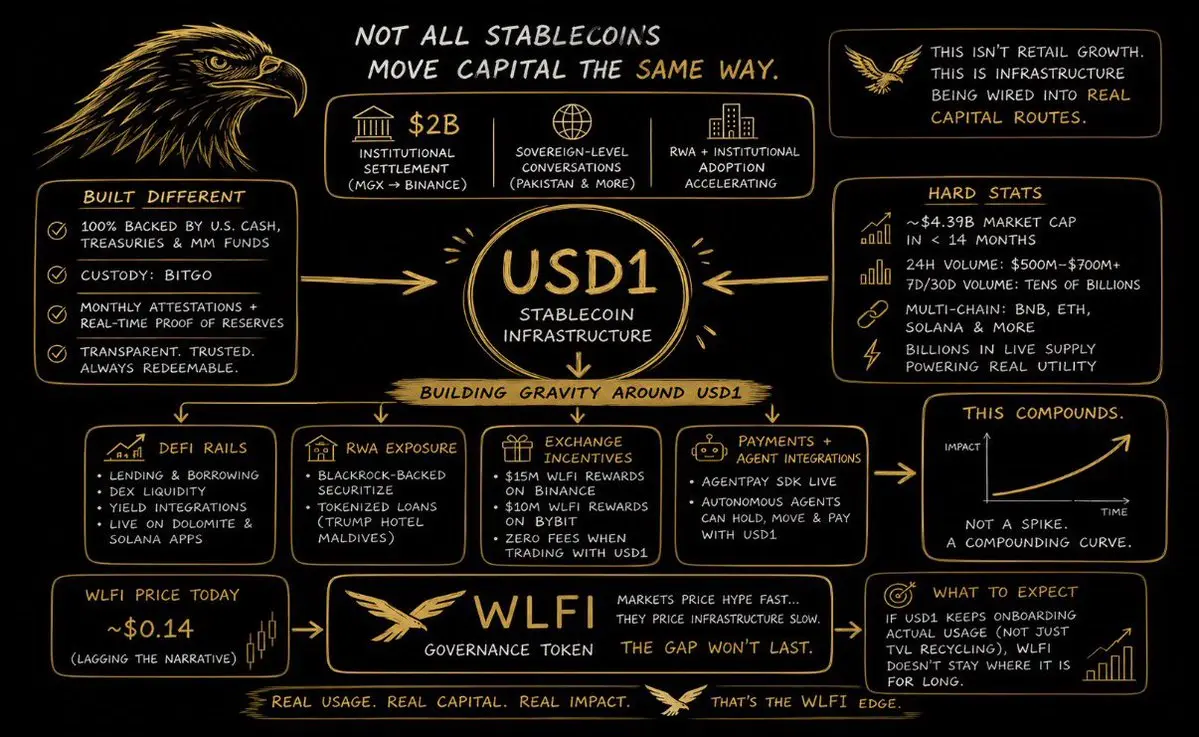
Everyone’s watching stablecoins… but not all of them are moving capital the same way.
$USD1 isn’t just growing its redirecting flows.
From a $2B institutional settlement to sovereign-level conversations, it’s clear this isn’t retail-driven expansion. This is infrastructure being quietly wired into real capital routes.
The interesting part?
While most stables compete on liquidity, WLFI is building gravity around $USD1:
→ DeFi rails
→ RWA exposure
→ Exchange incentives
→ Payment + agent integrations
That combination doesn’t spike it compounds.
As for $WLFI, price is still lagging the narrative.
USD10,01%
WLFI-2,15%
post-image
  • Reward
  • Comment
  • Repost
  • Share
Gold-linked tokens are absorbing flow while risk appetite weakens.
As of April 18:
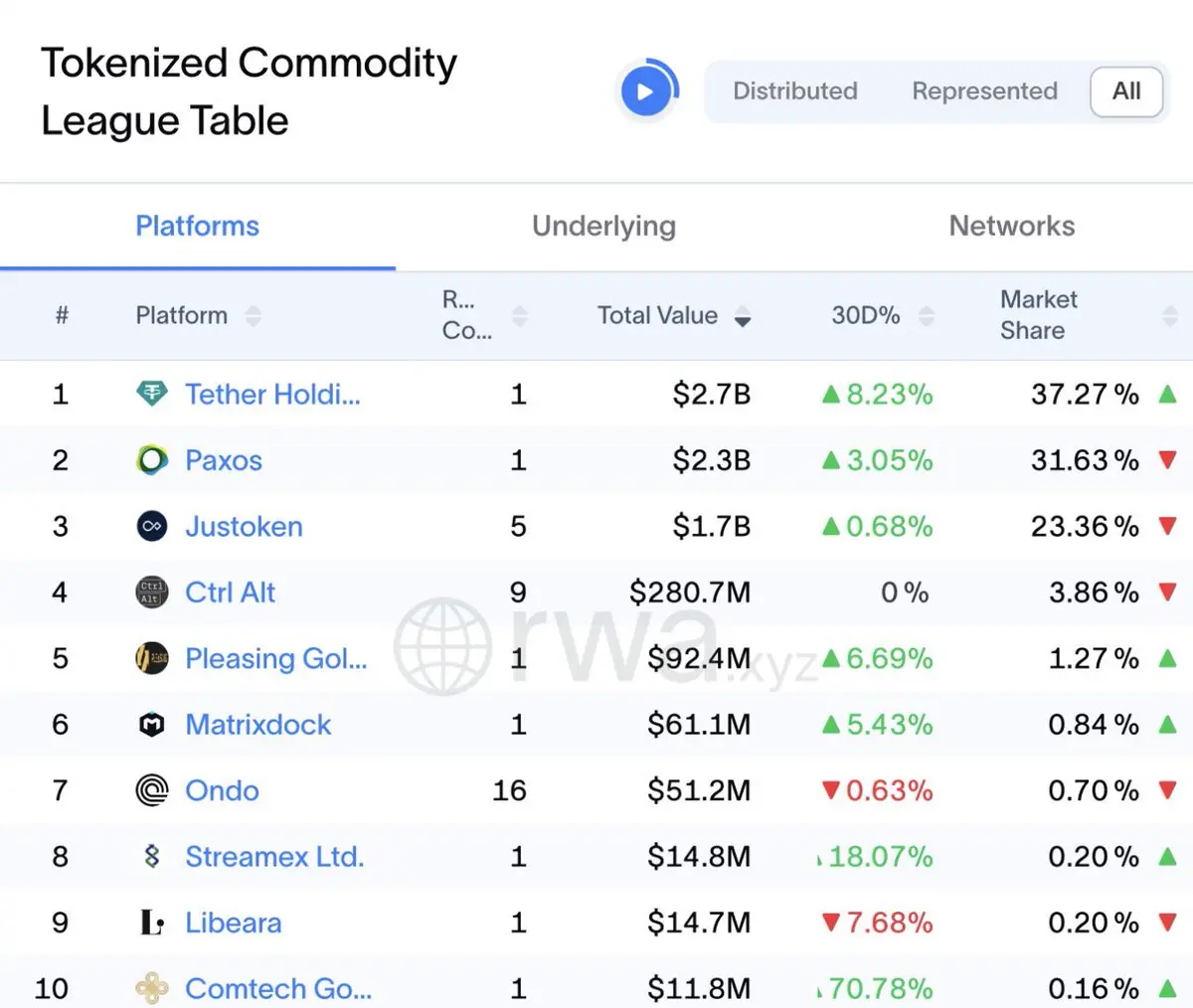
- Tether Gold 24h volume: $868.3M
- Ranked #4 on @
- Outpaced @solana by >2x
- Fear & Greed Index: 26 (Fear)
A commodity-backed asset trading above major L1s signals a shift in demand.
Supply vs flow
From DefiLlama:
- XAUT: $3.3B
- Paxos Gold: $2.3B
Total gold-backed RWA supply: $4B
With $868M daily volume:
20%+ of supply turns over in a single day.
This is active rotation, not passive holding.
What this means
During this period:
- Risk assets underperform
- Yield demand softens
Gold-backed RWAs diverge.
Flow i
XAUT-0,12%
SOL-1,07%
post-image
  • Reward
  • 1
  • Repost
  • Share
NexaCrypto:
LFG 🔥
LayerZero didn’t fail.
The way apps configured it did.
Data from Dune Analytics shows:
• 47% of OApps run a 1-of-1 DVN setup
• 2,665 active contracts analyzed (last 90 days)
That means almost half the ecosystem trusted a single verifier to approve cross-chain messages.
Now @LayerZero_Core Labs is stepping in:
It will stop signing messages for any app still using single-verifier setups.
This isn’t a warning.
It’s a forced upgrade.
Here’s the uncomfortable part.
If you’ve used anything cross-chain recently, there’s a real chance you interacted with:
A system where one signer decides whether asse
ZRO-2,88%
ENA-3,1%
ONDO-0,41%
STG-0,04%
  • Reward
  • Comment
  • Repost
  • Share
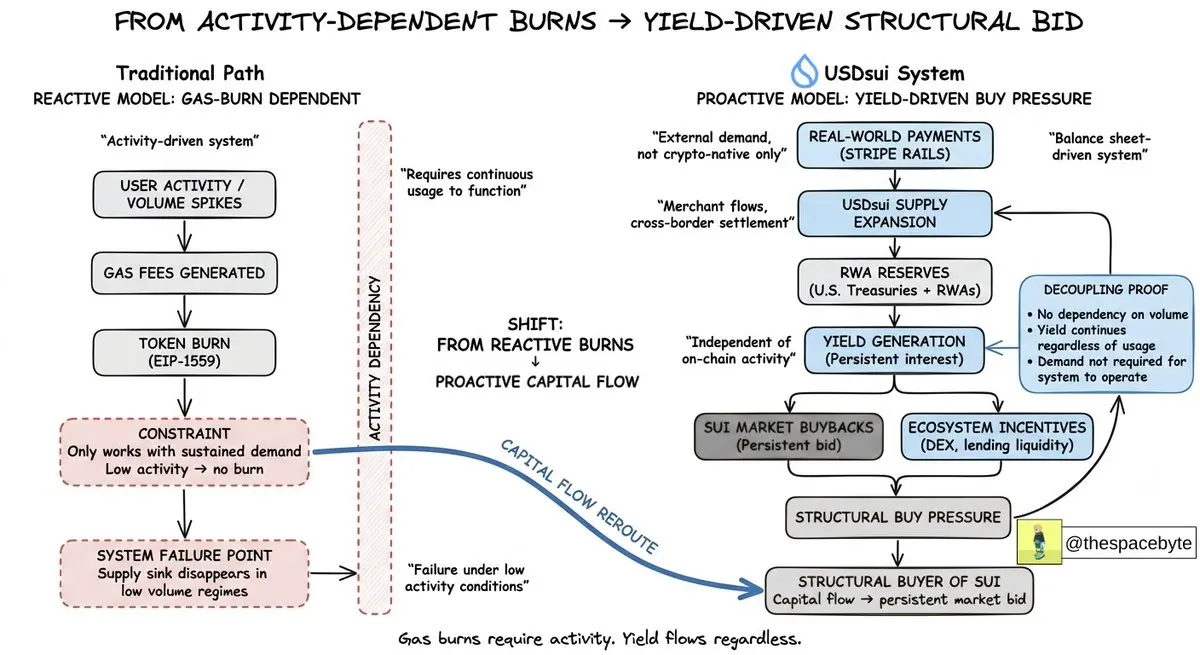
We’ve seen every L1 attempt to manufacture a “supply sink,” but most are just reflexive loops that die when volume drops. @SuiNetwork is doing something fundamentally different with USDsui.
The core alpha isn’t just that it’s a native stablecoin, it’s the underlying framework. USDsui is issued via @Stripe’s Bridge platform. Unlike USDC or USDT, where the issuer (Circle/Tether) pockets 100% of the yield from the backing Treasuries, the USDsui mechanism is designed to redirect that yield back into the ecosystem.
The Mechanism: Market-Buy vs. Gas-Burn
Traditional L1s rely on EIP-1559-style burns.
USDC0,01%
SUI-1,55%
RWA-1,41%
post-image
  • Reward
  • Comment
  • Repost
  • Share
gm.
Last week’s Kelp DAO exploit just reminded everyone
In crypto, it’s not just about making money…
It’s about understanding risk.
Stay sharp.
  • Reward
  • Comment
  • Repost
  • Share
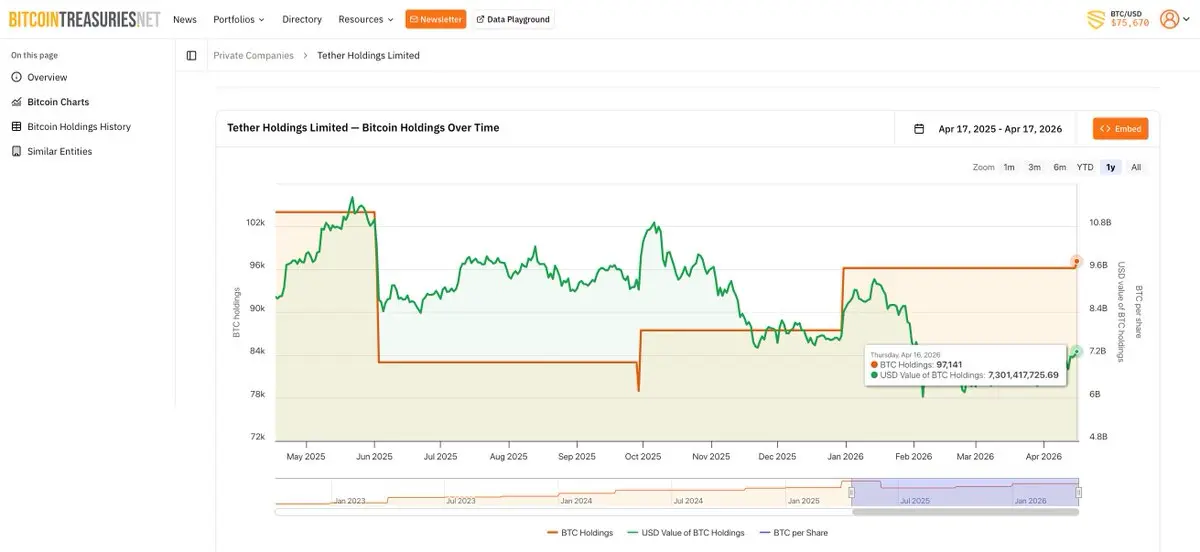
$320B supply.
@tether just recycled another $70M into 951 BTC.
Issuers are turning their own issuance engine into one of the largest structural buyers of Bitcoin.
The flywheel is no longer theoretical.
It is live, measurable, and self-reinforcing.
As of April 17, 2026, total stablecoin supply sits at $320.7B, up +0.8% over the past 7 days, and approaching new all-time highs.
• USDT: $185.7B (58% dominance)
• USDC: $78.7B
• Others (USDe, DAI, PYUSD, BUIDL, etc.): $55B
This is not retail FOMO capital.
It is the base layer liquidity used by:
• Exchanges
• DeFi protocols
• Institutions
• Corporate
BTC-0,03%
USDC0,01%
post-image
  • Reward
  • Comment
  • Repost
  • Share
Previous Iran headlines: Instant nuking.
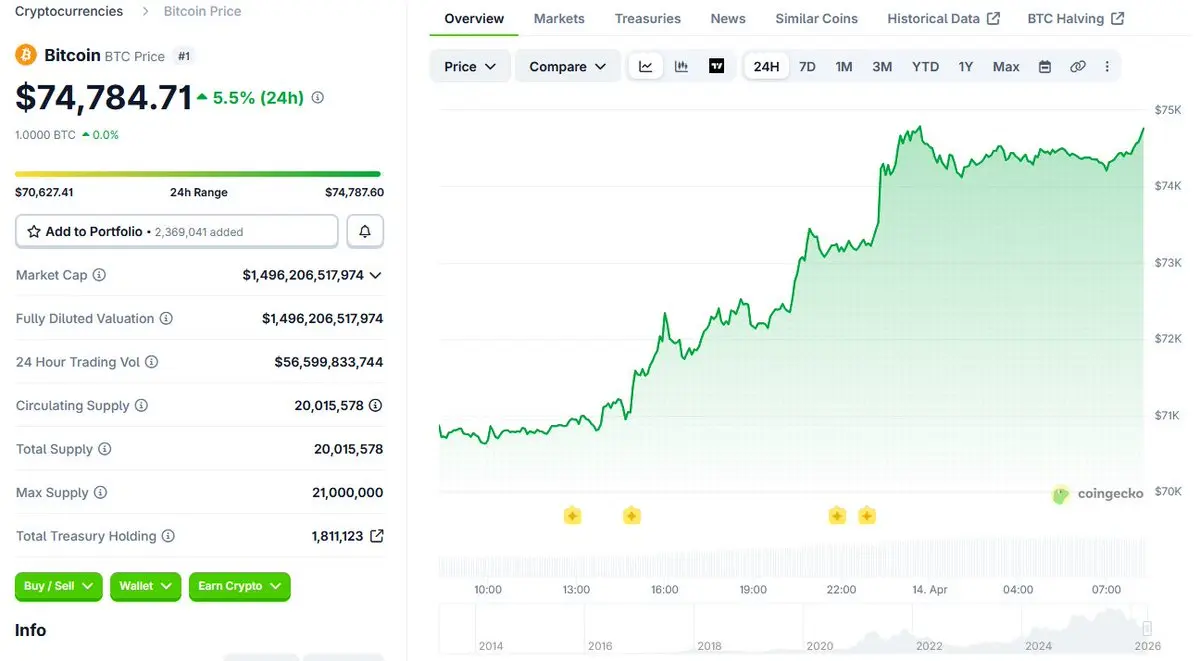
Current Iran headline: Blockade occurs, $70k support holds, shorts liquidated, price pushes $75k.
The market has officially stopped caring about the 'risk-off' narrative. We are repricing!
post-image
  • Reward
  • Comment
  • Repost
  • Share
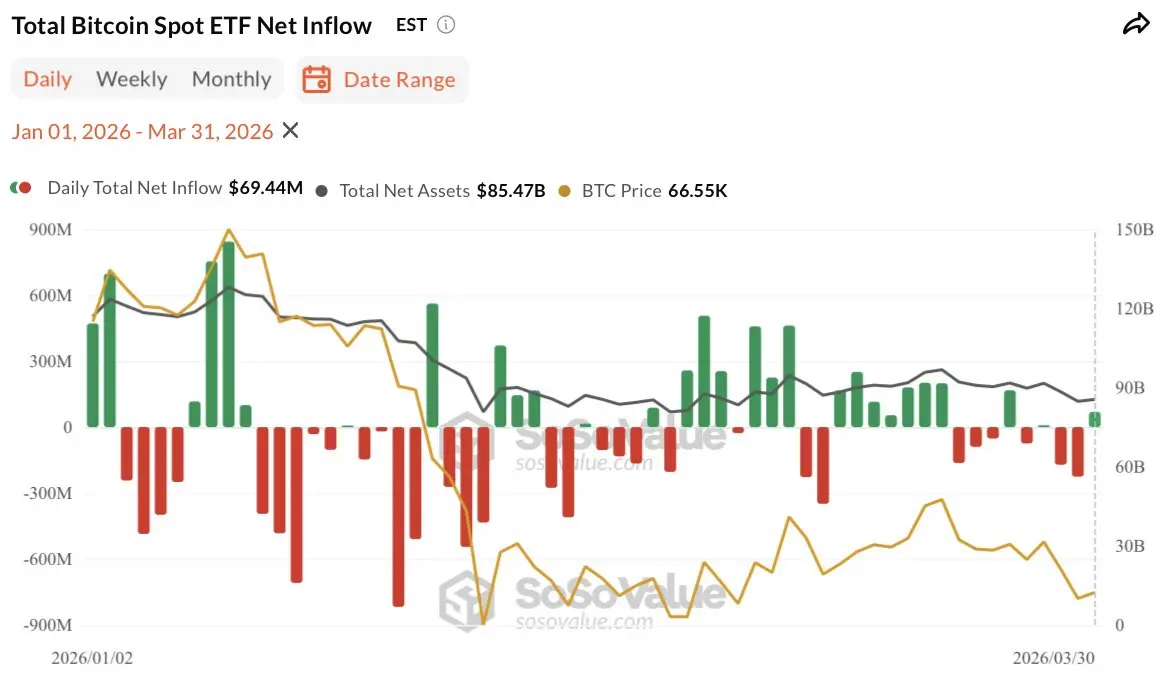
ETFs had $3.4B in outflows in Q1. Corporate treasuries bought $3.7B.
One of these $BTC buyers was more conviction-driven. You know which one.
BTC-0,03%
post-image
  • Reward
  • Comment
  • Repost
  • Share
The move wasn’t the rally.
The move was the confirmation.
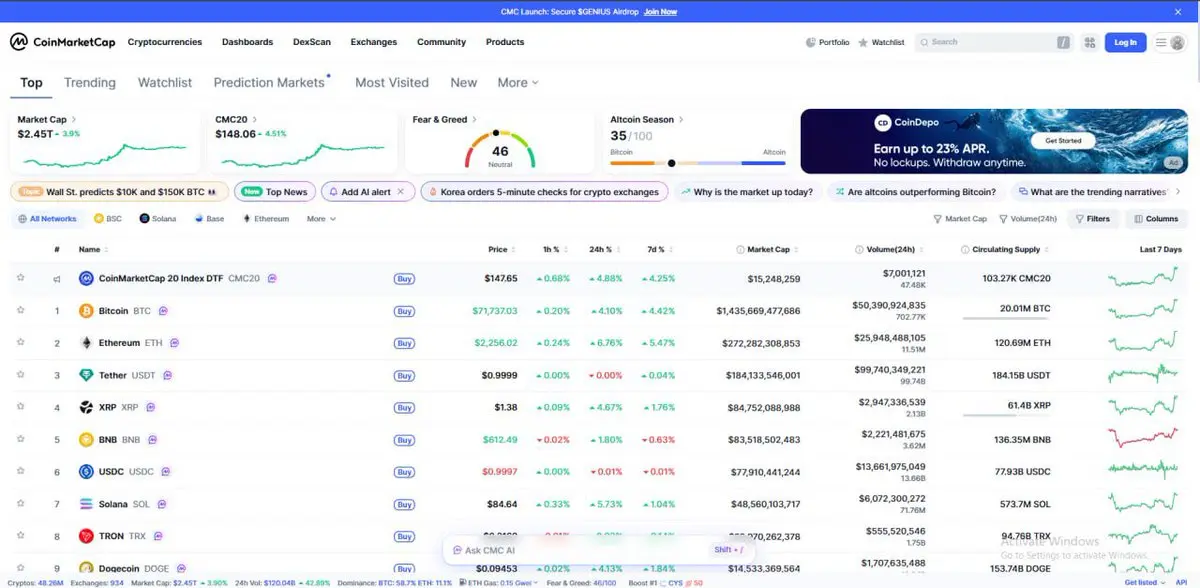
BTC pushed to $72.7K following the US Iran ceasefire headline.
ETH followed with +7.4%.
Risk assets broadly bid.
On the surface, this looks like a standard risk-on reaction.
But price wasn’t the signal.
Flows were.
$471M moved into spot Bitcoin ETFs on Monday.
That reverses nearly a month of stagnation.
This is the part that matters.
Price can move on positioning.
Flows confirm intent.
For weeks, institutional capital stayed sidelined.
Not because BTC lacked upside,
but because macro conditions were unstable.
Higher oil.
Sticky inflatio
BTC-0,03%
ETH-0,44%
post-image
  • Reward
  • Comment
  • Repost
  • Share
DeFi lending looks diversified. It isn’t.
On the surface, lending markets support dozens of assets. In practice, most of the system is backed by a very narrow base. And that base defines how risk propagates.
DeFi lending remains one of the largest sectors in crypto, with roughly $30B–$35B in total TVL, dominated by @Aave, @compoundfinance, and @SkyEcosystem. But the key question isn’t size. It’s what actually backs the loans.
Across protocols, collateral clusters into a few categories:
$ETH and $ETH derivatives
➝ Stablecoins
➝ Liquid staking tokens (LSTs)
That’s effectively the entire system
AAVE0,86%
ETH-0,44%
STETH-0,6%
USDC0,01%
  • Reward
  • Comment
  • Repost
  • Share
Two different types of Bitcoin demand are quietly building.
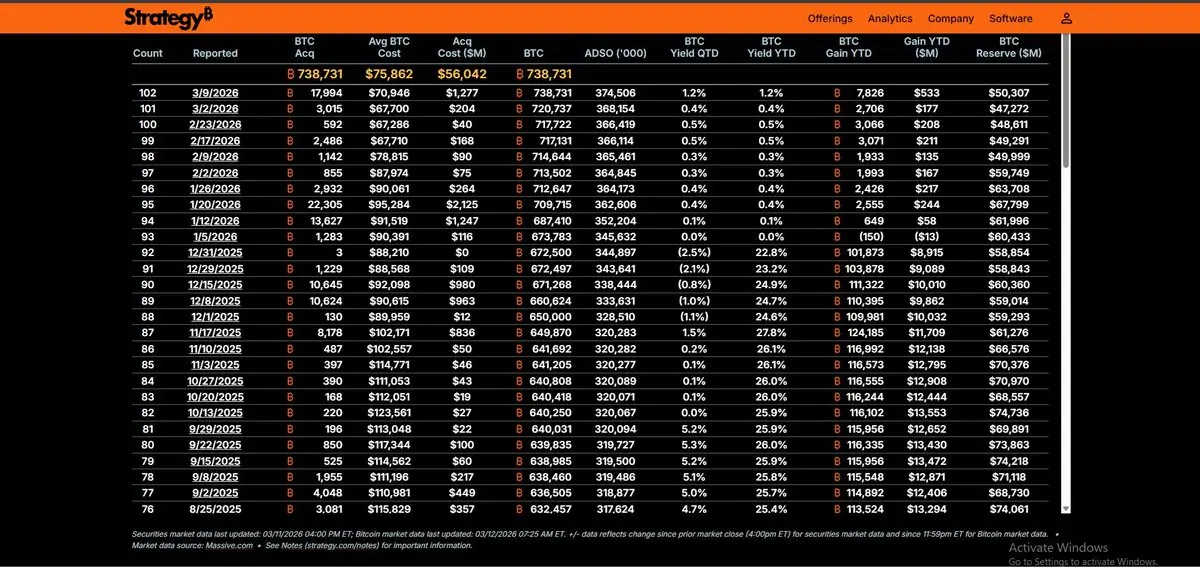
Strategy purchased 17,994 $BTC ($1.28B) between March 2–8 at an average price of $70,946, bringing total holdings to 738,731 $BTC.
That’s not trading activity.
It’s supply compression through corporate treasury accumulation.
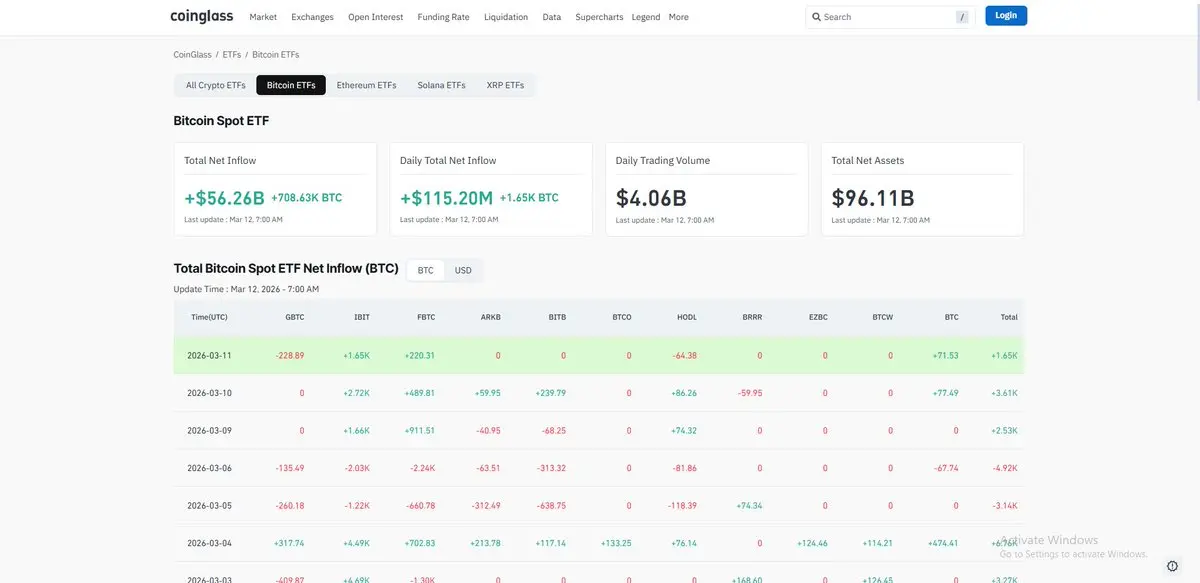
Meanwhile, Bitcoin ETFs recorded $251M of inflows on March 11, pushing March inflows to $1.56B after a rough start to the month.
Different mechanisms.
• Strategy accumulates via equity dilution, forcing long-duration conviction.
• ETF holders are institutional allocators operating within redemption windows.
The in
BTC-0,03%
post-image
post-image
  • Reward
  • Comment
  • Repost
  • Share
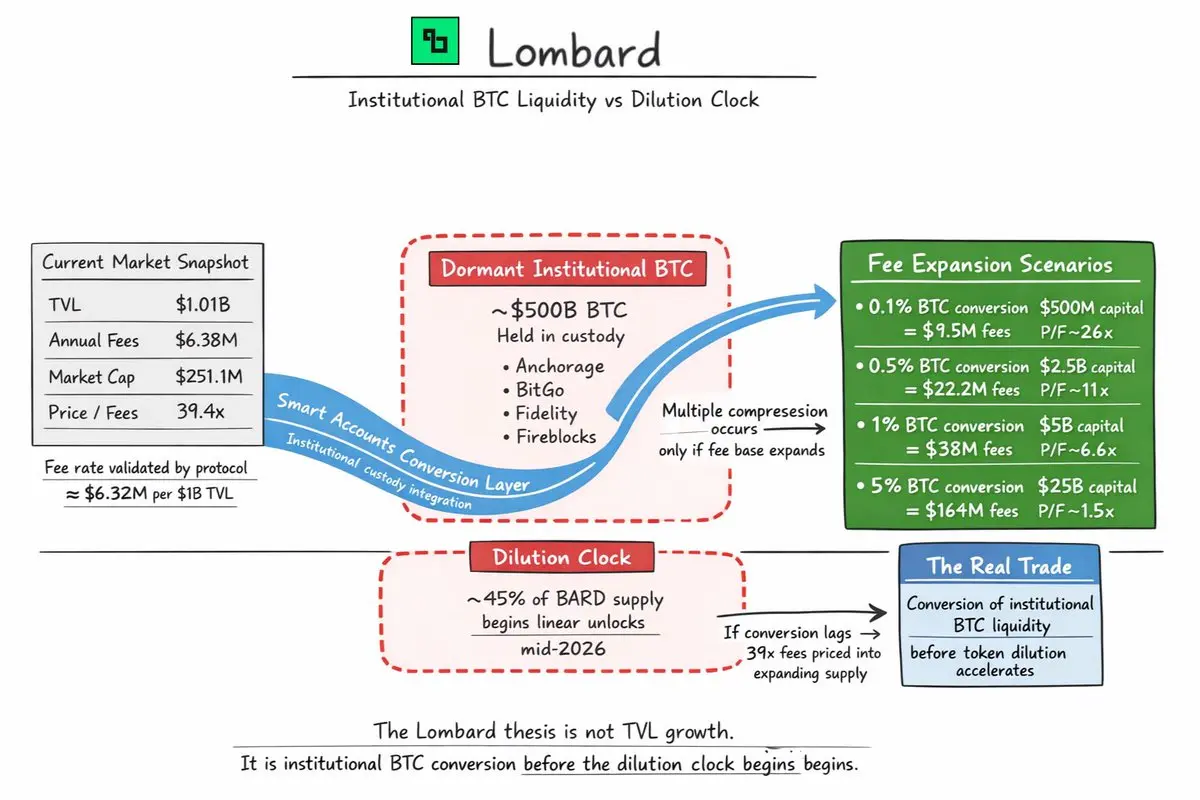
The market is pricing @Lombard_Finance like a $1B TVL protocol.
The thesis assumes something much bigger.
Current Data Snapshot:
• TVL: $1.01B
• Annual fees: $6.38M
• Market cap: $251.1M
• P/F: 39.4x
At first glance, that multiple doesn’t screen cheap.
But the more relevant variable is the fee rate Lombard has already validated.
At $1.01B TVL, the protocol is generating roughly $6.32M in fees per $1B of capital deployed.
That number becomes the anchor for every forward scenario.
Now look at the addressable pool.
Roughly $500B of Bitcoin sits in institutional custody, legally ring-fenced and l
BARD-6,11%
BTC-0,03%
post-image
  • Reward
  • Comment
  • Repost
  • Share
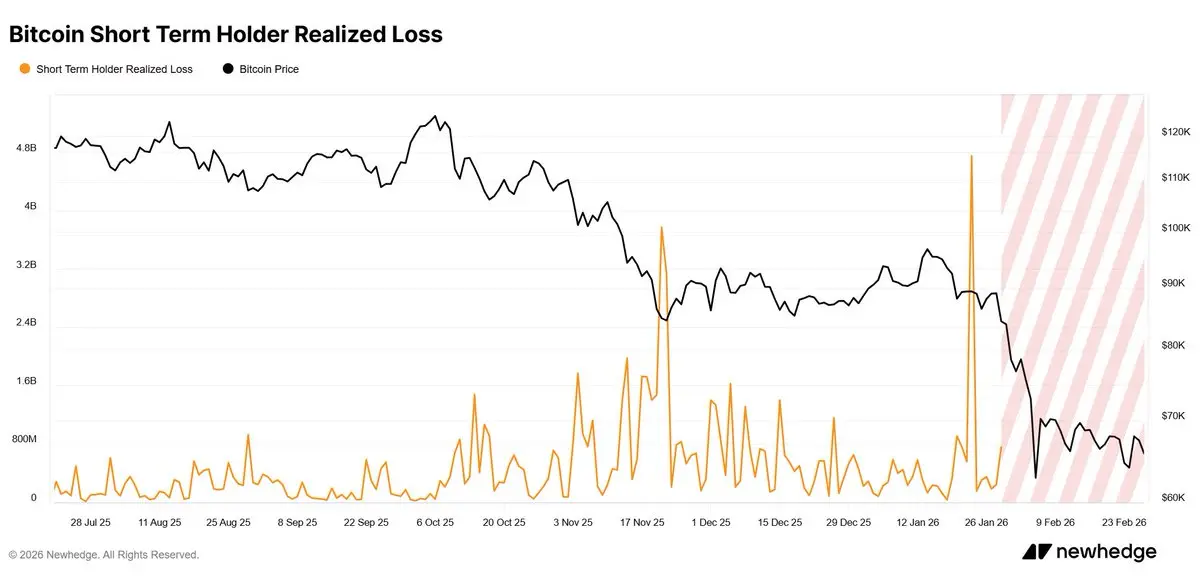
30-day realized vol is back near 0.83 as price trades around $65k.
- Short-term holder losses: $1.2B/day
- One-day STH exchange inflows: 23k $BTC at a loss
- Open interest: contracting
- Heavy cost basis: $65k–$70k
- Larger holders: still accumulating
This is not aggressive selling from strength.
It’s weak positioning being forced out as liquidity thins.
BTC-0,03%
post-image
  • Reward
  • Comment
  • Repost
  • Share
  • Pin