ChingYang

vip
Age 0.8 Yıl
Peak Tier 0
No content yet
#BuyTheDipOrWaitNow? Every cycle brings the same psychological test. Prices turn red. Timelines fill with fear. Volatility expands. And the question resurfaces:
Do you buy the dip — or wait for confirmation?
This isn’t just a trading decision. It’s a discipline test.
📉 Understanding the Nature of the Dip
Not all corrections are equal.
Before acting, ask: why is price falling?
Is it:
Macro-driven? (Interest rates, liquidity tightening, dollar strength)
News-driven? (Regulation, geopolitical headlines, ETF flows)
Structural? (Weak fundamentals, declining adoption, internal instability)
A liquid
BTC3,28%
MrFlower_XingChenvip
#BuyTheDipOrWaitNow? Every cycle brings the same psychological test. Prices turn red. Timelines fill with fear. Volatility expands. And the question resurfaces:
Do you buy the dip — or wait for confirmation?
This isn’t just a trading decision. It’s a discipline test.
📉 Understanding the Nature of the Dip
Not all corrections are equal.
Before acting, ask: why is price falling?
Is it:
Macro-driven? (Interest rates, liquidity tightening, dollar strength)
News-driven? (Regulation, geopolitical headlines, ETF flows)
Structural? (Weak fundamentals, declining adoption, internal instability)
A liquidity squeeze is different from a fundamental breakdown.
A temporary panic is different from a long-term erosion.
For example, when Bitcoin experiences pullbacks during macro tightening cycles, history shows those periods often become accumulation zones — but only when network strength and adoption remain intact.
Context defines opportunity.
🔍 Fundamentals Before Feelings
In crypto markets, analysis goes beyond candles:
Network activity trends
Developer engagement
Stablecoin inflows/outflows
Hash rate or validator growth
Ecosystem expansion
In equities, the lens shifts toward earnings, balance sheets, and sector resilience.
Red candles alone are not signals.
Data alignment is.
💰 The Case for Buying the Dip
Buying dips works best when:
The long-term thesis remains intact
Liquidity contraction is temporary
Sentiment is overly pessimistic
Risk is managed properly
One structured approach is Dollar-Cost Averaging (DCA) — spreading entries over time rather than attempting to capture a perfect bottom. Bottom picking is emotionally tempting but statistically difficult.
Gradual positioning reduces regret risk.
Discipline compounds more reliably than boldness.
⏳ The Case for Waiting
Waiting is not weakness.
Confirmation strategies may include:
Higher lows forming
Volume expansion on green candles
Funding rates stabilizing
Breakouts above resistance zones
You may sacrifice the exact bottom — but you gain probability alignment.
In volatile markets, confirmation often reduces drawdown risk significantly.
🧠 Risk Management: The Deciding Factor
The real difference between success and stress is framework.
Before volatility hits, define:
Position size limits
Maximum acceptable drawdown
Time horizon (short-term trade vs long-term investment)
Liquidity reserve percentage
Cash is not inactivity.
Cash is optionality.
Liquidity allows action when others are forced into reaction.
🔄 Cycle Psychology
Markets rotate between fear and greed endlessly.
During panic:
Volatility expands
Leverage unwinds
Sentiment collapses
During recovery:
Volatility compresses
Accumulation builds quietly
Momentum returns gradually
The strongest participants don’t react emotionally to either phase. They execute pre-defined plans.
🏁 So… Buy the Dip or Wait?
The better question is:
Does your strategy account for both outcomes?
If you believe deeply in the long-term structure of assets like Bitcoin, structured dip buying may align with your thesis.
If uncertainty dominates your analysis, waiting for confirmation may preserve capital.
There is no universal answer — only alignment between conviction, data, and risk tolerance.
Final Perspective 💡
Market success rarely comes from perfectly timing bottoms.
It comes from:
Research over reaction
Structure over impulse
Patience over panic
Volatility is inevitable.
Emotional discipline is optional.
When the cycle turns green again — and it eventually will — the advantage will belong to those who prepared, not those who guessed.

repost-content-media
  • Reward
  • Comment
  • Repost
  • Share
#TrumpGroupMullsGazaStablecoin 🧠 What’s Being Discussed
Officials connected to the Board of Peace initiative led by Donald Trump are reportedly exploring the possibility of launching a U.S. dollar–pegged stablecoin for use in Gaza.
The idea centers on creating a digital payment mechanism to support economic activity in a region where traditional banking infrastructure has been heavily disrupted and access to physical cash remains limited.
The proposal remains in the discussion phase — no formal launch framework has been publicly confirmed.
💡 Why This Matters
1️⃣ Economic Stabilization Tool
S
BTC3,28%
ETH4,06%
DEFI-7,23%
MrFlower_XingChenvip
#TrumpGroupMullsGazaStablecoin 🧠 What’s Being Discussed
Officials connected to the Board of Peace initiative led by Donald Trump are reportedly exploring the possibility of launching a U.S. dollar–pegged stablecoin for use in Gaza.
The idea centers on creating a digital payment mechanism to support economic activity in a region where traditional banking infrastructure has been heavily disrupted and access to physical cash remains limited.
The proposal remains in the discussion phase — no formal launch framework has been publicly confirmed.
💡 Why This Matters
1️⃣ Economic Stabilization Tool
Supporters argue that a dollar-backed stablecoin could provide transactional stability in an environment where banks, ATMs, and cash logistics are unreliable. A blockchain-based payment rail could enable peer-to-peer transfers, aid distribution, and small-business transactions.
2️⃣ Infrastructure Hurdles
Digital currency adoption requires stable electricity, telecommunications, and internet connectivity — all of which face constraints in Gaza. Without reliable infrastructure, implementation could face significant friction.
3️⃣ Political & Regional Complexity
Critics warn that introducing a localized digital currency could unintentionally create further economic segmentation between Gaza and the West Bank. Any monetary experiment in a politically sensitive region carries geopolitical implications beyond technology.
🌍 Broader Strategic Context
This discussion emerges amid wider reconstruction and stabilization talks. Financial innovation is being positioned as part of economic rebuilding efforts — blending geopolitics with blockchain infrastructure.
If pursued, this would represent one of the most politically sensitive stablecoin deployments to date — using digital assets not for speculation, but for regional economic coordination.
📊 Market & Crypto Implications
While the proposal does not directly impact major cryptocurrencies like Bitcoin or Ethereum, it signals a broader trend:
Stablecoins are increasingly viewed as geopolitical tools.
Dollar-backed digital assets are extending beyond trading venues.
Blockchain rails are entering policy-level discussions.
If implemented, such a move could reinforce the role of stablecoins as instruments of economic strategy — not just crypto market liquidity vehicles.
🔎 Final Perspective
#TrumpGroupMullsGazaStablecoin is still in exploratory stages.
At this point, it represents more of a strategic conversation than an operational rollout. However, it highlights a growing reality in 2026:
Digital currencies are no longer isolated to exchanges and DeFi ecosystems. They are entering geopolitical and reconstruction frameworks.
Whether this evolves into a concrete deployment will depend on infrastructure readiness, political consensus, and regulatory architecture.
For now, it remains a developing narrative — one blending crypto, policy, and global strategy.
repost-content-media
  • Reward
  • Comment
  • Repost
  • Share
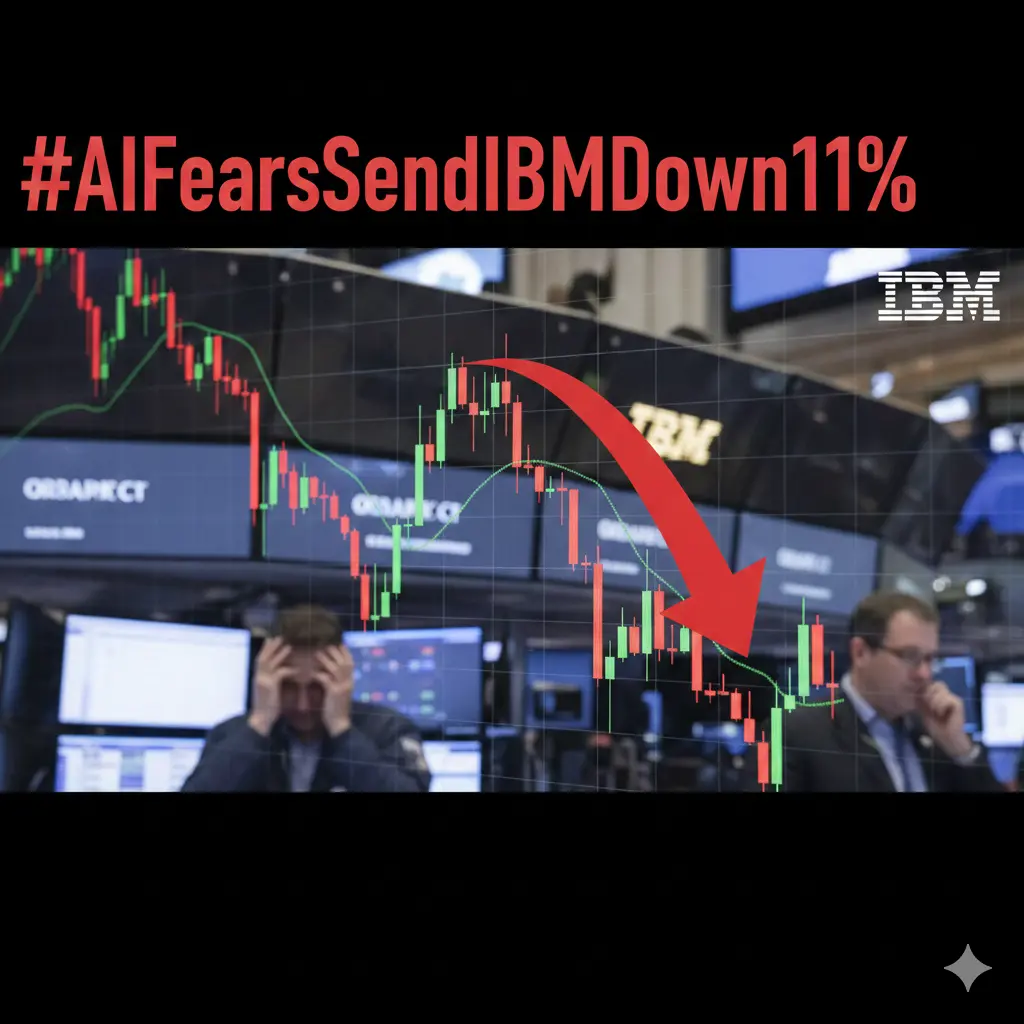
#AIFearsSendIBMDown11% Shares of IBM experienced a sharp drop of roughly 11% amid growing market concern surrounding the competitive pressure of artificial intelligence technologies and shifting enterprise technology expectations.
The sell-off reflects broader investor anxiety about how legacy technology companies will adapt to the rapid acceleration of AI infrastructure and software ecosystems. As AI models become more capable and cost-efficient, corporate clients are reassessing spending allocation between traditional enterprise software systems and next-generation AI platforms.
Market parti
MrFlower_XingChenvip
#AIFearsSendIBMDown11% Shares of IBM experienced a sharp drop of roughly 11% amid growing market concern surrounding the competitive pressure of artificial intelligence technologies and shifting enterprise technology expectations.
The sell-off reflects broader investor anxiety about how legacy technology companies will adapt to the rapid acceleration of AI infrastructure and software ecosystems. As AI models become more capable and cost-efficient, corporate clients are reassessing spending allocation between traditional enterprise software systems and next-generation AI platforms.
Market participants are particularly watching whether IBM’s AI strategy can maintain competitive momentum against newer cloud-native and machine-learning-focused rivals. The uncertainty is not necessarily about current revenue performance but about long-term positioning in an industry undergoing structural transformation.
The decline also highlights how AI narratives are increasingly influencing equity valuations. Companies perceived as slow in integrating AI capabilities are facing higher risk premiums, while firms leading AI infrastructure development are attracting stronger capital flows.
From a technical market perspective, such sharp single-session movements are often associated with sentiment compression rather than immediate fundamental deterioration. Investors are expected to monitor upcoming earnings disclosures, enterprise contract pipelines, and AI product adoption metrics for confirmation of trend direction.
The key question for the market is whether this drop represents a temporary narrative-driven correction or a signal that the competitive AI landscape is reshaping valuation expectations across the technology sector.
In the current cycle, AI is acting not only as a growth catalyst but also as a disruption filter for legacy technology business models.
repost-content-media
  • Reward
  • Comment
  • Repost
  • Share
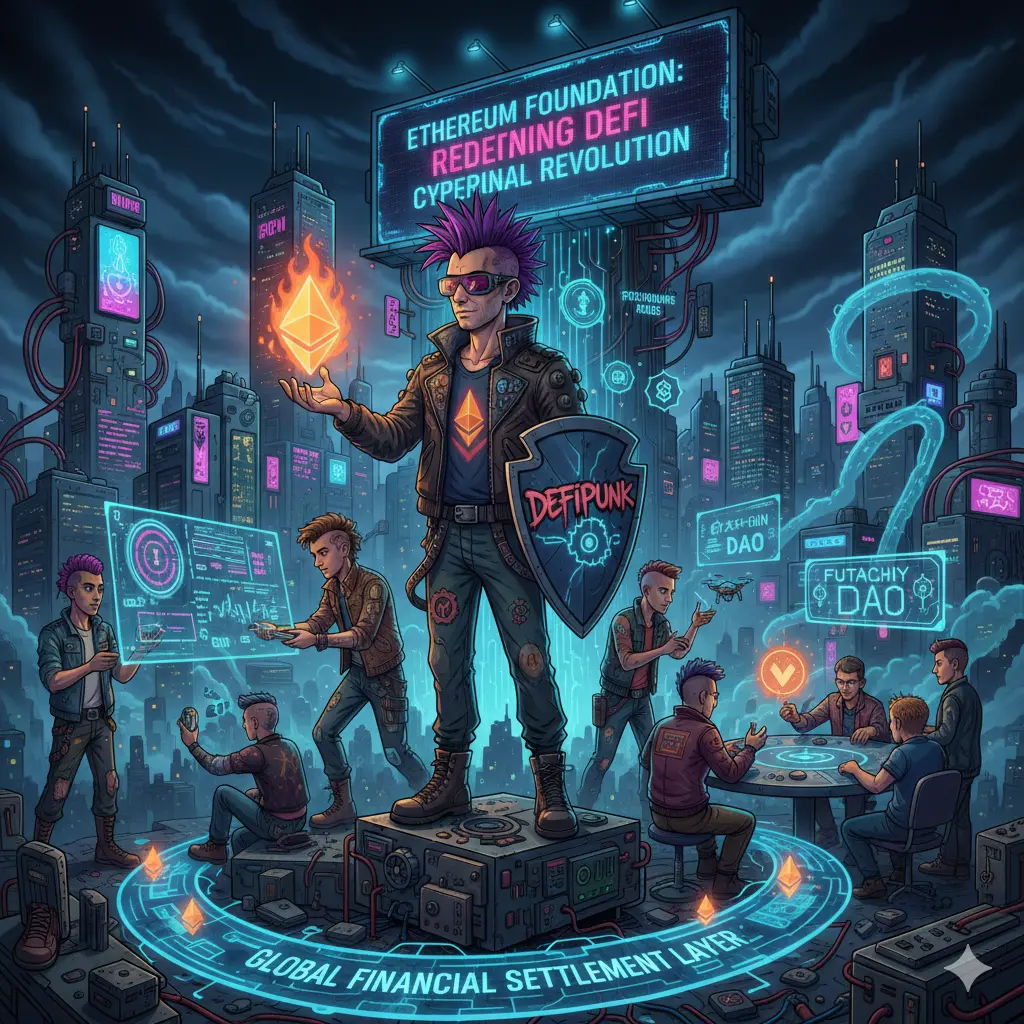
#EthereumFoundationAdvancesDeFipunk The Ethereum Foundation has introduced a new strategic direction aimed at revitalizing decentralized finance through what it calls the “DeFipunk” philosophy — a vision designed to return Ethereum development to its cypherpunk-inspired roots of privacy, autonomy, and permissionless innovation.
The newly established DeFi-focused unit under the Foundation’s App Relations division is intended to accelerate the creation of financial protocols that go beyond traditional financial replication. Instead of simply optimizing existing banking structures, the initiative
ETH4,06%
AAVE3,25%
MORPHO12,53%
SPK1,59%
MrFlower_XingChenvip
#EthereumFoundationAdvancesDeFipunk The Ethereum Foundation has introduced a new strategic direction aimed at revitalizing decentralized finance through what it calls the “DeFipunk” philosophy — a vision designed to return Ethereum development to its cypherpunk-inspired roots of privacy, autonomy, and permissionless innovation.
The newly established DeFi-focused unit under the Foundation’s App Relations division is intended to accelerate the creation of financial protocols that go beyond traditional financial replication. Instead of simply optimizing existing banking structures, the initiative promotes radically new financial primitives built around censorship resistance, self-custody, and open-source financial architecture.
Key research directions highlighted under the DeFipunk concept include zero-knowledge proof–based privacy systems enabling confidential transactions, undercollateralized lending frameworks secured through advanced cryptographic validation, and hybrid AI–on-chain financial tools that could allow users to manage derivatives exposure through intelligent automated execution. The philosophy also explores experimental governance and market coordination models such as futarchy-style decentralized autonomous organizations.
The Foundation has also signaled a more proactive treasury strategy by allocating ecosystem capital into DeFi infrastructure protocols such as Aave, Morpho, and Spark Protocol. These investments reflect a long-term commitment to strengthening liquidity architecture across the decentralized finance stack.
Market observers view the announcement as a potential catalyst for ecosystem confidence even though short-term price pressure has been observed on ETH markets. The core expectation is that deeper protocol innovation and increased DeFi total value locked (TVL) could support structural demand growth over time rather than generate immediate speculative momentum.
The DeFipunk strategy signals a philosophical shift: decentralized finance should not merely compete with traditional finance but should evolve into a financial system that cannot exist outside the Ethereum-native technological framework.
If successful, this approach could help position Ethereum as a foundational settlement and innovation layer for next-generation global finance, where privacy-preserving computation, programmable derivatives, and autonomous financial coordination become core infrastructure rather than experimental features.
repost-content-media
  • Reward
  • Comment
  • Repost
  • Share
📊 Latest Market Insights – Forward Outlook (Late February 2026)
Global markets are entering a decisive transition phase as liquidity conditions, AI-driven capital flows, and geopolitical trade adjustments intersect at the same time. While recent sessions showed attempts at stabilization in equities, underlying volatility suggests this is not yet a confirmed trend reversal. Instead, markets appear to be building toward a larger directional move that may unfold into early March.
🌍 Global Equities: Rotation Beneath the Surface
U.S. indices including the S&P 500, Nasdaq Composite, and Dow Jones
BTC3,28%
ETH4,06%
MrFlower_XingChenvip
#LatestMarketInsights 📈 Latest Market Insights – February 25, 2026
Markets remain at a critical inflection point as volatility continues across crypto and equities. While stocks are attempting stabilization, digital assets remain under sustained pressure from macro headwinds, tariff uncertainty, and liquidity tightening. With major catalysts ahead, including Nvidia earnings and further tariff developments, risk sentiment could shift rapidly.
Global Equities: Stabilization Attempt, But Fragile
U.S. equity markets staged a notable rebound after earlier heavy selling pressure. The S&P 500, Nasdaq, and Dow Jones all recovered meaningfully, supported by renewed buying in AI-linked technology stocks and dip-buyers stepping in at key technical levels. However, futures suggest a cautious tone heading into the next session, reflecting uncertainty ahead of major earnings releases.
Asian markets also participated in the rebound, led by semiconductor and AI-infrastructure names. Japan’s Nikkei and South Korea’s Kospi showed strength, supported by ongoing enthusiasm surrounding AI hardware demand and global chip supply expansion.
Despite the rebound, market dispersion remains elevated. Large-cap tech continues to drive index movement, while defensive and value sectors show relative resilience. Investors are positioning carefully ahead of upcoming catalysts rather than aggressively chasing upside.
AI Sector Focus: Nvidia Earnings as a Risk Catalyst
The AI infrastructure theme remains the central driver of equity flows. Nvidia’s upcoming Q4 earnings report is viewed as a pivotal event that could influence not only semiconductor stocks but overall market risk appetite.
Expectations remain high for continued revenue growth driven by AI data center demand. However, guidance will be critical. A strong outlook could reignite broader tech momentum and support risk assets globally. Conversely, any sign of slowing AI capex or margin compression could pressure high-multiple tech names and spill into broader markets, including crypto.
Meanwhile, AMD has gained attention following a major multi-year AI GPU supply agreement with Meta Platforms. This deal signals sustained infrastructure build-out and diversification of AI chip suppliers, reinforcing that hardware remains at the center of the AI expansion cycle.
Tariffs and Macro Cross-Currents
Trade policy continues to weigh on sentiment. The newly implemented global tariff rate began at 10%, lower than the originally announced 15%, offering temporary relief. However, the potential escalation to 15% remains an overhang for global supply chains, trade-sensitive sectors, and emerging markets.
Consumer confidence has shown modest improvement from prior lows, but labor sentiment presents caution. More respondents indicate jobs are becoming harder to obtain, raising early concerns about employment stability despite broader economic resilience.
Central bank expectations remain fluid. Markets continue to price in potential rate adjustments later in the year, but policymakers face a delicate balance between inflation management and growth preservation. This uncertainty is contributing to elevated volatility across asset classes.
Cryptocurrency Market: Deep Correction, Testing Structural Support
Crypto markets remain under significant pressure. Bitcoin continues to trade within a critical support zone around the low-to-mid $60,000 range, reflecting a sharp year-to-date decline and nearly 50% drawdown from all-time highs. Ethereum is also struggling near major technical levels, with broader altcoins showing even weaker relative performance.
Heavy liquidations during peak volatility sessions amplified downside moves, reinforcing how sensitive crypto remains to macro-driven risk flows. The correlation between crypto and equities has strengthened during this phase, confirming that digital assets are trading as high-beta risk instruments rather than independent safe havens.
However, technical analysts note that price action is testing February lows. A sustained hold in this region could form the basis of a potential double-bottom structure, allowing for a relief rally if macro conditions stabilize. A breakdown below support would open the door to deeper retracement toward prior consolidation zones.
Sentiment indicators remain in extreme fear territory, historically associated with either capitulation phases or early stages of stabilization.
Market Outlook: What to Watch Next
The immediate focus is Nvidia’s earnings report, which may determine short-term direction for equities and risk appetite globally. Strong AI guidance could lift tech and indirectly support crypto. A disappointment could intensify volatility across markets.
Further tariff clarification will also be critical. Confirmation of escalation to 15% would likely renew risk-off positioning, while expanded exemptions could stabilize sentiment.
Upcoming macro data, labor signals, and central bank commentary will shape expectations for liquidity conditions heading into March.
Overall Market Pulse
Markets are balancing between stabilization and renewed downside risk.
Equities are attempting recovery, led by AI infrastructure stocks.
Crypto remains in a corrective structure, testing key support levels.
Tariff uncertainty and labor market caution continue to cloud the macro backdrop.
Volatility remains elevated, favoring disciplined and patient positioning.
The coming sessions could define whether this phase becomes a base-building consolidation or the prelude to another volatility spike.
repost-content-media
  • Reward
  • Comment
  • Repost
  • Share
The Convert Lucky Draw event is officially live. Rewards have been upgraded—complete daily tasks to win 100 GT and 100 USDT. You can start a convert trade with as little as $1 and enjoy a fast, zero-fee trading experience. Complete simple tasks to unlock exclusive rewards and start your convert journey now. https://www.gate.com/campaigns/4042?ref_type=132
GT3,6%
MrFlower_XingChenvip
The Convert Lucky Draw event is officially live. Rewards have been upgraded—complete daily tasks to win 100 GT and 100 USDT. You can start a convert trade with as little as $1 and enjoy a fast, zero-fee trading experience. Complete simple tasks to unlock exclusive rewards and start your convert journey now. https://www.gate.com/campaigns/4042?ref_type=132
repost-content-media
  • Reward
  • 4
  • Repost
  • Share
Discoveryvip:
2026 GOGOGO 👊
View More
#GateSquare$50KRedPacketGiveaway The excitement around Gate Square is reaching a whole new level as the $50,000 Red Packet Giveaway officially enters its most dynamic phase. Hosted by Gate.io, this campaign is more than just a promotional event—it’s a strategic push to strengthen SocialFi engagement and reward active crypto communities worldwide. With participation numbers climbing rapidly, Gate Square is quickly becoming one of the most interactive social trading hubs in the industry.
This year’s Red Packet event introduces upgraded reward mechanics designed to maximize fairness and transpare
TOKEN2,19%
MrFlower_XingChenvip
#GateSquare$50KRedPacketGiveaway The excitement around Gate Square is reaching a whole new level as the $50,000 Red Packet Giveaway officially enters its most dynamic phase. Hosted by Gate.io, this campaign is more than just a promotional event—it’s a strategic push to strengthen SocialFi engagement and reward active crypto communities worldwide. With participation numbers climbing rapidly, Gate Square is quickly becoming one of the most interactive social trading hubs in the industry.
This year’s Red Packet event introduces upgraded reward mechanics designed to maximize fairness and transparency. Instead of simple random drops, the distribution now incorporates activity-based scoring, content engagement metrics, and community contribution rankings. Users who post insightful market analysis, educational threads, or participate in trending discussions significantly increase their chances of unlocking higher-tier red packets. This evolution reflects Gate.io’s broader commitment to rewarding value creation rather than passive participation.
Another major enhancement is the integration of cross-platform synergy. Participants who link their trading accounts with Gate Square profiles can qualify for additional bonus multipliers. Early data suggests that users combining social engagement with trading volume campaigns are seeing amplified reward allocations. This approach aligns with the exchange’s long-term SocialFi flywheel strategy—where community interaction fuels platform growth, and platform growth fuels community rewards.
Security and compliance measures have also been upgraded for this campaign. Enhanced verification layers ensure fair participation while preventing automated exploitation. Smart reward monitoring systems now track suspicious activity patterns in real time, maintaining the integrity of the $50K prize pool. This step reinforces trust among both retail traders and institutional observers who are increasingly watching SocialFi campaigns as indicators of exchange innovation.
Looking ahead, insiders suggest that this Red Packet event may serve as a testing ground for a larger ecosystem incentive program expected later in 2026. Rumors point toward NFT-based participation badges, loyalty staking multipliers, and seasonal leaderboard championships. If implemented, these additions could transform Gate Square into a year-round gamified engagement engine rather than a periodic promotional venue.
From a market psychology perspective, campaigns like this often generate heightened trading activity and increased token visibility. Community-driven momentum can amplify discussions around trending assets, potentially influencing short-term volatility patterns. While participants should always manage risk responsibly, events of this scale historically create bursts of liquidity and engagement across exchange ecosystems.
In conclusion, the #GateSquare$50KRedPacketGiveaway is not just a celebration—it’s a forward-looking experiment in decentralized social engagement. Whether you’re a content creator, active trader, or long-term investor, this event offers a strategic opportunity to combine networking, learning, and earning in one unified digital arena. The momentum is building fast, and those who position themselves early may benefit the most as Gate Square continues expanding its SocialFi frontier. 🚀
repost-content-media
  • Reward
  • 3
  • Repost
  • Share
Discoveryvip:
2026 GOGOGO 👊
View More
#TrumpAnnouncesNewTariffs Macro & Crypto Outlook After the February 20, 2026 Ruling
Following the landmark February 20, 2026 ruling by the Donald Trump-era tariff policy becoming legally affirmed, markets have begun digesting the implications of a broader global import duty framework. The transition from a baseline 10% global tariff to a 15% worldwide duty represents one of the most significant trade policy pivots in recent U.S. economic history — and its ramifications span macroeconomic sentiment, risk assets, and the crypto ecosystem alike.
Rather than triggering systemic financial stress, t
BTC3,28%
ETH4,06%
MrFlower_XingChenvip
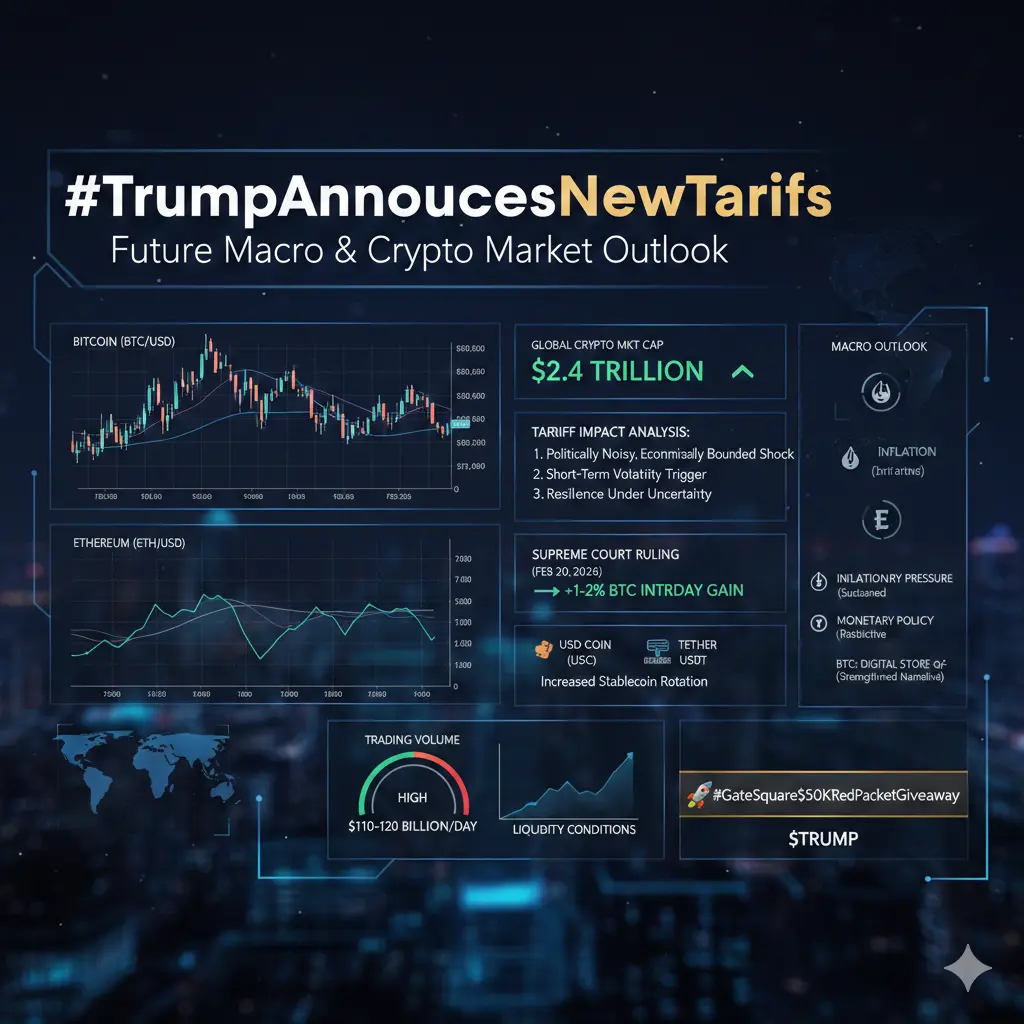
#TrumpAnnouncesNewTariffs Macro & Crypto Outlook After the February 20, 2026 Ruling
Following the landmark February 20, 2026 ruling by the Donald Trump-era tariff policy becoming legally affirmed, markets have begun digesting the implications of a broader global import duty framework. The transition from a baseline 10% global tariff to a 15% worldwide duty represents one of the most significant trade policy pivots in recent U.S. economic history — and its ramifications span macroeconomic sentiment, risk assets, and the crypto ecosystem alike.
Rather than triggering systemic financial stress, the policy shift has so far acted as a volatility amplifier amid a resilient macro backdrop. Major indices have seen episodic profit-taking around announcements, but the broader trend remains reflective of robust labor data, ongoing capital expenditure growth, and a still-supportive earnings environment in key sectors.
Crypto Market Reaction: Resilience Over Panic
The digital asset market has interpreted the tariff narrative not as an existential shock, but as a headline-driven volatility trigger. Key observations from recent price action include:
Bitcoin (BTC) remains range-bound near $67,000–$69,000, leveraging strong liquidity to dampen sharp sell-offs.
Ethereum (ETH) continues consolidating around $1,950–$2,000, with decentralized finance (DeFi) activity showing stability.
Total crypto market capitalization holds close to $2.4 trillion, signaling muted downside relative to previous macro stress periods.
Importantly, headline-induced moves have mostly stayed within 1–3% intraday swings, and technical traders are increasingly positioning around ranges rather than directionality.
Liquidity & Volume: Technical Stability Signals
Post-announcement market structure has favored deeper order books and elevated trading volumes, which have been particularly supportive during headline volatility:
Daily digital asset volume has recently hovered between $110–$120 billion, suggesting institutional participants remain engaged.
Stablecoin allocation (notably USD Coin (USDC) and Tether (USDT)) has risen as traders hedge to reduce forced liquidation risk.
These conditions have contributed to faster “headline shock recovery” cycles versus past geopolitical or monetary tightening periods.
Macro Channels: Inflation, Fed Policy, and Crypto Narrative
Tariff escalation inherently risks higher import costs, which can feed into inflation expectations — potentially influencing monetary policy stances from the Federal Reserve Board. Key macro channels to monitor include:
CPI & PCE readings over the coming quarters.
Shifts in forward rate markets reflecting potential changes in policy path expectations.
U.S. dollar (USD) strength, which often inversely correlates with risk assets including crypto.
Interestingly, escalating trade uncertainty — particularly between major economies — has reinforced part of the crypto investor narrative: digital assets as a store-of-value alternative during periods of geopolitical and policy uncertainty.
Regulatory & Institutional Headwinds
Beyond pure macro, another critical driver in the digital asset space is regulatory reform momentum:
Ongoing discussions around digital asset legislation in the U.S. and globally could shape institutional adoption curves.
Regulatory clarity often correlates with increased capital inflows from traditional asset managers.
Institutional traders are actively balancing liquidity risk, macro risk, and regulatory signaling, which has helped maintain orderly markets even amidst tariff noise.
Outlook: Volatility, Rotation, and Strategic Positioning
At this stage, the prevailing market theme is resilience under uncertainty — not panic liquidation. Traders and investors appear to be:
Focusing on volatility rotations rather than trending declines.
Utilizing range strategies in major cryptocurrencies.
Watching macro lead indicators such as inflation prints and Fed commentary for directional clues.
From a broader perspective, tariff policy — even at an elevated 15% level — is acting more as a short-term volatility catalyst than a structural growth headwind for digital assets. A bifurcated market regime is emerging: macro risk assets oscillate on geopolitical headlines, while crypto maintains structural consolidation with episodic breakout attempts.
As always, market participants should practice risk management, diversify appropriately, and remain attentive to cross-asset correlations that may evolve as macro narratives shift.
repost-content-media
  • Reward
  • 2
  • Repost
  • Share
Discoveryvip:
To The Moon 🌕
View More
#WhenisBestTimetoEntertheMarket There’s no perfect bell that rings before the market explodes upward — and no siren before it crashes. Smart investors understand that entries are built on structure, not emotion. Whether you're trading equities, commodities, or digital assets like Bitcoin and Ethereum, timing improves when strategy replaces impulse.
📌 Best Times to Consider Entering the Market:
• During Corrections or Pullbacks
Markets move in cycles. Healthy uptrends often include temporary pullbacks to key support zones. When fear rises and prices retrace to technically strong levels, risk-t
BTC3,28%
ETH4,06%
MrFlower_XingChenvip
#WhenisBestTimetoEntertheMarket There’s no perfect bell that rings before the market explodes upward — and no siren before it crashes. Smart investors understand that entries are built on structure, not emotion. Whether you're trading equities, commodities, or digital assets like Bitcoin and Ethereum, timing improves when strategy replaces impulse.
📌 Best Times to Consider Entering the Market:
• During Corrections or Pullbacks
Markets move in cycles. Healthy uptrends often include temporary pullbacks to key support zones. When fear rises and prices retrace to technically strong levels, risk-to-reward improves significantly. Smart money often accumulates when retail sentiment turns cautious.
• After Trend Confirmation
Instead of trying to catch the exact bottom, wait for confirmation signals — higher lows, breakouts above resistance, or volume expansion. Confirmation reduces probability of entering a prolonged downtrend and protects capital from “falling knife” scenarios.
• When Fundamentals Remain Strong
Price follows narrative over time. Projects with real utility, growing adoption, strong developer activity, and transparent leadership tend to outperform speculative hype cycles. Long-term conviction should be rooted in research — not social media momentum.
• With a Structured Plan (DCA Strategy)
Dollar-Cost Averaging (DCA) remains one of the most disciplined approaches. By allocating capital in intervals, you reduce emotional stress and avoid the pressure of perfectly timing the bottom. This method is especially effective in volatile environments.
🔎 Advanced Entry Considerations
• Liquidity & Volume Analysis
Rising volume on recoveries suggests accumulation. Low volume rallies may indicate weak conviction.
• Macro Environment Awareness
Interest rate policy, inflation data, and global liquidity conditions influence risk appetite. Crypto and equities often respond to shifts in broader monetary conditions.
• Risk Management First
Position sizing matters more than entry precision. Even a strong setup fails without proper capital allocation and stop-loss discipline.
🧠 Market Psychology Reminder
Greed makes you chase green candles.
Fear makes you panic sell red ones.
Discipline builds portfolios.
The best time to enter isn’t about the clock — it’s about preparation, patience, probability, and protection of capital. Markets reward structured thinking far more consistently than emotional reaction.
📊 Stay strategic. Stay patient. Let the setup come to you — not the other way around.$BTC
repost-content-media
  • Reward
  • 2
  • Repost
  • Share
ybaservip:
To The Moon 🌕
View More
#CLARITYActAdvances The momentum behind the Digital Asset Market Clarity Act is accelerating in Washington, marking one of the most decisive regulatory turning points in U.S. crypto history. The legislation aims to formally define how digital assets are classified and supervised, ending years of jurisdictional ambiguity between the U.S. Securities and Exchange Commission and the Commodity Futures Trading Commission. By clearly distinguishing which tokens qualify as securities and which fall under commodity oversight, lawmakers are attempting to replace enforcement-driven regulation with a tran
BTC3,28%
ETH4,06%
DEFI-7,23%
MrFlower_XingChenvip
#CLARITYActAdvances The momentum behind the Digital Asset Market Clarity Act is accelerating in Washington, marking one of the most decisive regulatory turning points in U.S. crypto history. The legislation aims to formally define how digital assets are classified and supervised, ending years of jurisdictional ambiguity between the U.S. Securities and Exchange Commission and the Commodity Futures Trading Commission. By clearly distinguishing which tokens qualify as securities and which fall under commodity oversight, lawmakers are attempting to replace enforcement-driven regulation with a transparent, rules-based framework.
Unlike previous proposals, the updated draft of the CLARITY Act introduces a structured asset classification pathway. Tokens that demonstrate sufficient decentralization, network functionality, and non-reliance on managerial efforts may transition from securities treatment into commodity status over time. This “evolutionary classification” model is designed to encourage innovation while preserving investor protection during early development stages. For blockchain startups, this could significantly reduce legal uncertainty and capital formation risk.
A major pillar of the legislation focuses on stablecoins. Policymakers recognize that dollar-backed tokens such as USD Coin and Tether play a systemic role in trading, payments, and decentralized finance infrastructure. The revised bill proposes reserve transparency standards, real-time attestation requirements, and explicit limitations on certain yield-generating activities unless registered under defined frameworks. Negotiators are reportedly exploring a compromise that would allow regulated yield programs under strict disclosure and capital buffer conditions, balancing innovation with banking-sector risk concerns.
Institutional access is another transformative dimension. If enacted, the CLARITY Act would provide regulatory certainty for asset managers considering expanded exposure to digital assets such as Bitcoin and Ethereum. Clear custody, reporting, and exchange registration standards could unlock pension funds, sovereign wealth funds, and traditional financial institutions that have remained cautious due to compliance ambiguity. Analysts estimate that structured clarity could catalyze significant long-term capital inflows into the sector.
The bill also introduces a coordinated oversight council for digital asset markets, aimed at reducing inter-agency conflicts and ensuring unified enforcement standards. This provision addresses prior criticism that fragmented regulatory approaches created inconsistent interpretations across jurisdictions. Additionally, enhanced consumer protection clauses would require exchanges and DeFi interfaces serving U.S. users to implement clearer risk disclosures, segregation of customer assets, and robust cybersecurity standards.
From a macro perspective, regulatory clarity could reshape the global competitive landscape. If the United States finalizes a workable digital asset framework, it may reclaim innovation momentum that has gradually shifted toward regions such as Europe and parts of Asia. International regulatory harmonization discussions are expected to intensify if the U.S. adopts a structured model that balances oversight with growth incentives.
However, unresolved debates remain. The scope of decentralized finance (DeFi) regulation is still under negotiation — particularly whether front-end developers or protocol governance participants could bear compliance obligations. Banking lobbies continue advocating for tighter controls on stablecoin issuers to mitigate systemic liquidity risks. The final text of the legislation will determine how innovation-friendly the environment ultimately becomes.
Looking ahead to upcoming Senate markup sessions, market participants are watching closely. A successful passage before mid-2026 could serve as a major confidence catalyst, reinforcing crypto’s transition from regulatory gray zone to institutional asset class. Conversely, delays or significant amendments may prolong uncertainty, slowing capital formation and ecosystem expansion.
In historical context, the advancement of the CLARITY Act may represent the maturation phase of the U.S. digital asset industry. For the first time, lawmakers are attempting to codify a unified legal structure that integrates investor protection, market integrity, and technological innovation. The coming months could define not just regulatory direction — but the long-term trajectory of Bitcoin, Ethereum, stablecoins, and the broader decentralized finance ecosystem. 🚀📊$GT
repost-content-media
  • Reward
  • 1
  • Repost
  • Share
Yunnavip:
LFG 🔥
#GateSpringFestivalHorseRacingEvent The Gate Spring Festival Horse Racing Event has officially evolved into one of the most interactive seasonal campaigns on Gate.io, blending festive celebration with gamified trading competition. Designed around the Lunar New Year spirit of momentum and prosperity, this upgraded edition introduces enhanced mechanics, larger reward pools, and more frequent race cycles to keep the community engaged throughout the event period.
Unlike traditional trading competitions, the Horse Racing Event transforms selected crypto trading pairs into virtual “racehorses.” Part
XRP2,69%
MrFlower_XingChenvip
#GateSpringFestivalHorseRacingEvent The Gate Spring Festival Horse Racing Event has officially evolved into one of the most interactive seasonal campaigns on Gate.io, blending festive celebration with gamified trading competition. Designed around the Lunar New Year spirit of momentum and prosperity, this upgraded edition introduces enhanced mechanics, larger reward pools, and more frequent race cycles to keep the community engaged throughout the event period.
Unlike traditional trading competitions, the Horse Racing Event transforms selected crypto trading pairs into virtual “racehorses.” Participants complete platform activities — including spot trading, futures trading, and daily logins — to earn racing tickets. Each ticket allows users to predict which designated trading pair will achieve the strongest percentage performance during a race window. This structure combines analytical strategy with competitive excitement, encouraging both active participation and market awareness.
🏇 How It Works (Upgraded 2026 Format)
• Complete assigned tasks such as reaching trading volume thresholds or checking in daily to collect racing tickets.
• Use tickets to select and back specific crypto pairs before each race begins.
• Races are held multiple times per week, with clearly defined start and settlement times.
• Winning predictions are determined by percentage price increase during the race period.
This year’s format introduces shorter race cycles and mid-event bonus rounds, allowing more opportunities to win rather than relying on a single large event window.
💰 Reward Structure
The 2026 edition features a significantly expanded USDT prize pool distributed across multiple tiers:
• Main USDT reward pool shared among correct predictions.
• Surprise red envelope (lucky draw) bonuses released during peak participation days.
• Tiered leaderboard prizes for users with consistent performance.
• Extra multiplier rewards for participants engaging in both spot and futures segments.
Additionally, Gate.io has integrated a transparent reward dashboard so users can track standings and estimated payouts in real time — improving fairness and competitive clarity.
📊 Strategic Angle for Traders
Beyond the festive theme, the event subtly encourages deeper market analysis. Since winners are determined by short-term percentage performance, participants benefit from monitoring volatility trends, liquidity shifts, and macro-driven momentum. High-beta pairs often outperform during bullish bursts, while strong support zones can influence recovery races. This creates an environment where informed predictions may outperform random selection.
🌏 Community & SocialFi Impact
The event also strengthens Gate Square’s SocialFi engagement. Users are sharing race strategies, discussing pair momentum, and analyzing market conditions together. Community-driven interaction has become a core part of the campaign, transforming it from a simple promotion into a collaborative celebration of trading culture.
🔮 What’s New This Season?
Insider updates suggest experimental features such as:
• NFT-based commemorative participation badges.
• Flash races triggered by sudden market volatility.
• Loyalty multipliers for long-term active traders.
These additions signal Gate.io’s broader strategy to merge gamification, trading incentives, and seasonal campaigns into a unified ecosystem engagement model.
The Gate Spring Festival Horse Racing Event isn’t just about rewards — it’s about combining strategy, timing, and festive competition into one high-energy experience. With multiple race rounds, expanding prize pools, and enhanced engagement mechanics, participants have more chances than ever to compete, analyze, and celebrate together.
🏇 Trade smart. Predict wisely. Celebrate boldly.k$XRP
repost-content-media
  • Reward
  • 1
  • Repost
  • Share
Yunnavip:
LFG 🔥
#BuyTheDipOrWaitNow? Markets are sitting at decision zones, and structure matters more than emotion right now.
Currently:
• Bitcoin trading around $67,000 – $68,000
• Ethereum trading near $2,000 – $2,100
These are not random numbers — they’re compression zones where momentum either rebuilds or breaks.
📊 Key Levels to Watch
🟠 Bitcoin (BTC)
Strong Support: $65,000 – $66,000
Major Support: $60,000 – $62,000
Resistance: $70,000 – $72,000
If BTC continues to defend the $65K area with rising spot volume and decreasing sell pressure, this zone may act as a higher-low structure within a broader upt
BTC3,28%
ETH4,06%
MrFlower_XingChenvip
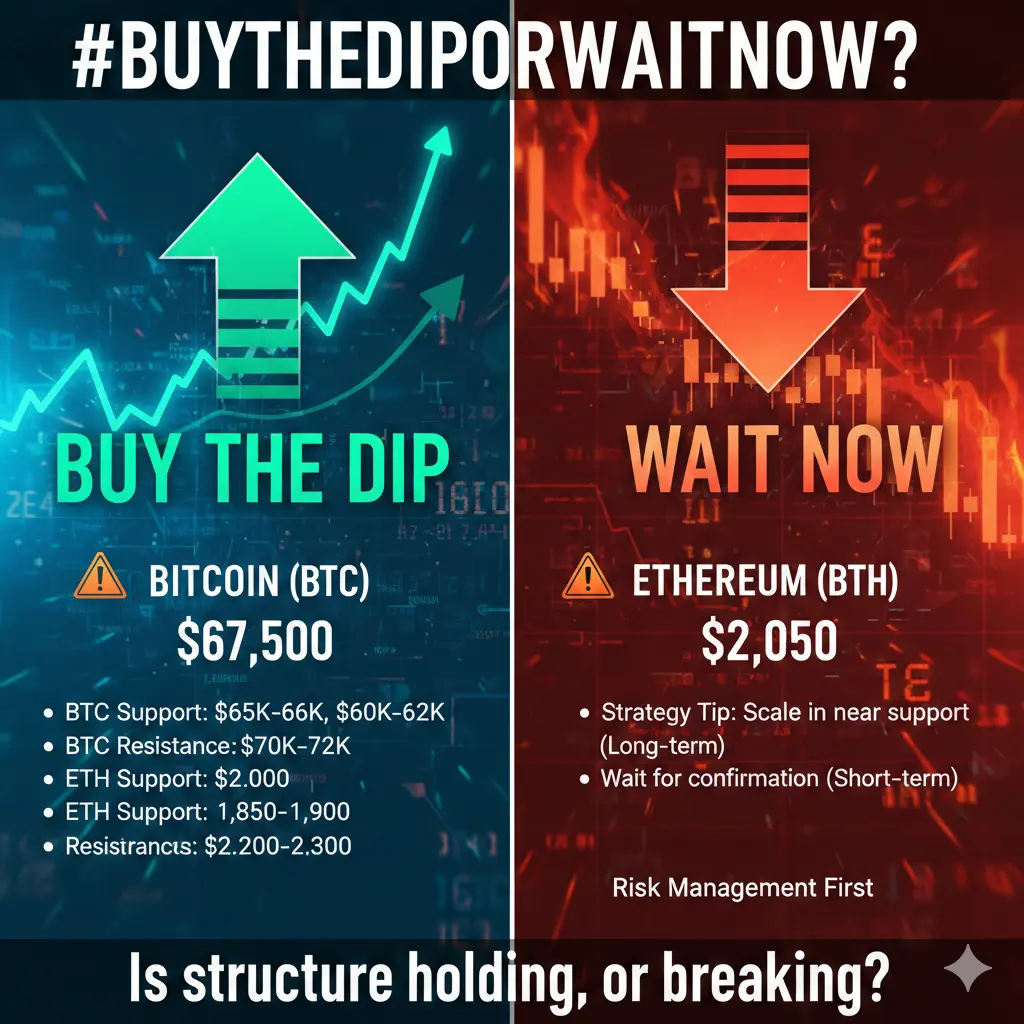
#BuyTheDipOrWaitNow? Markets are sitting at decision zones, and structure matters more than emotion right now.
Currently:
• Bitcoin trading around $67,000 – $68,000
• Ethereum trading near $2,000 – $2,100
These are not random numbers — they’re compression zones where momentum either rebuilds or breaks.
📊 Key Levels to Watch
🟠 Bitcoin (BTC)
Strong Support: $65,000 – $66,000
Major Support: $60,000 – $62,000
Resistance: $70,000 – $72,000
If BTC continues to defend the $65K area with rising spot volume and decreasing sell pressure, this zone may act as a higher-low structure within a broader uptrend.
However, a confirmed breakdown below $60K would likely shift sentiment from “healthy pullback” to “trend correction,” potentially opening liquidity pockets lower.
Key signal to watch:
• Are buyers stepping in aggressively on dips?
• Or are bounces getting weaker each time?
🔵 Ethereum (ETH)
Psychological Support: $2,000
Stronger Support: $1,850 – $1,900
Resistance: $2,200 – $2,300
ETH holding $2,000 keeps the structure neutral-to-bullish.
A strong reclaim and sustained hold above $2,200 could trigger momentum traders to re-enter.
But if $1,900 fails with heavy volume, that may increase short-term downside pressure toward deeper support.
Watch for:
• RSI divergence
• Volume spikes on rebounds
• Higher low formations on lower timeframes
💡 Strategy Perspective
For long-term investors:
Scaling into support zones (instead of one full entry) reduces timing stress. Structured accumulation works better than emotional entries.
For short-term traders:
Wait for confirmation — such as trendline breaks, bullish engulfing candles, or volume-backed reversals. Don’t anticipate the move; react to it.
Golden rule:
Never go all-in at one level. Capital preservation > perfect entry.
🧠 Bigger Question
This isn’t just “buy or wait?”
It’s:
Is market structure holding — or breaking?
If support levels continue to produce higher lows, dips may represent opportunity.
If structure weakens and key zones fail, patience becomes the stronger position.
In volatile markets, discipline beats prediction every time. 🚀
repost-content-media
  • Reward
  • 1
  • Repost
  • Share
Yunnavip:
LFG 🔥
#CelebratingNewYearOnGateSquare How Wall Street Is Redefining Bitcoin and Ethereum’s Role in Global Finance (2026 Outlook)
Bitcoin holding near $67,000 no longer triggers the euphoria or panic that once defined every major price milestone. In earlier cycles, this level would have unleashed a wave of retail FOMO, parabolic volatility, and breathless headlines. Today, the market feels structurally calmer. Volatility compression, tighter trading ranges, and disciplined capital flows suggest something fundamental has changed. The transformation is not about price — it is about positioning. Ownersh
BTC3,28%
ETH4,06%
MrFlower_XingChenvip
#CelebratingNewYearOnGateSquare How Wall Street Is Redefining Bitcoin and Ethereum’s Role in Global Finance (2026 Outlook)
Bitcoin holding near $67,000 no longer triggers the euphoria or panic that once defined every major price milestone. In earlier cycles, this level would have unleashed a wave of retail FOMO, parabolic volatility, and breathless headlines. Today, the market feels structurally calmer. Volatility compression, tighter trading ranges, and disciplined capital flows suggest something fundamental has changed. The transformation is not about price — it is about positioning. Ownership is consolidating, access points are institutionalized, and control is shifting toward regulated frameworks. The revolution is no longer loud. It is being quietly integrated.
The approval and expansion of spot Bitcoin ETFs from asset management giants like BlackRock and Fidelity Investments marked a structural inflection point. Bitcoin is no longer treated as an external speculative instrument. It now sits inside retirement accounts, pension allocations, and sovereign strategies. Institutional custody solutions, improved accounting clarity, and broader derivatives markets have transformed Bitcoin into high-quality digital collateral. In repo-style structures and structured products, BTC increasingly behaves as a volatility-managed reserve asset rather than a rebellion against fiat systems.
At the sovereign level, adoption continues to evolve beyond symbolic gestures. Countries exploring strategic digital asset reserves are no longer just experimenting — they are modeling Bitcoin as a hedge against currency debasement and geopolitical fragmentation. The precedent set by El Salvador, while controversial, accelerated global policy discussions. Meanwhile, central banks studying digital asset custody frameworks are indirectly validating Bitcoin’s durability. It is not replacing sovereign money — it is positioning itself beside it as neutral collateral in an increasingly multipolar financial world.
Ethereum’s trajectory is more complex. Unlike Bitcoin, Ethereum is not merely stored — it is deployed. The network’s transition to proof-of-stake transformed ETH into a productive asset generating protocol-level yield. This yield, originally a decentralized coordination incentive, is now becoming institutional infrastructure. Staking services offered through regulated vehicles convert native blockchain rewards into standardized financial returns. Ethereum’s yield begins to resemble a programmable benchmark rate — not unlike a digital treasury curve for on-chain capital markets.
The entrance of BlackRock into tokenized funds and Ethereum-based products signals something deeper than ETF expansion. Through tokenization initiatives, traditional assets such as treasury funds are increasingly issued on Ethereum rails. This is not decentralization overthrowing Wall Street. It is Wall Street colonizing blockchain efficiency. Settlement finality, transparency, and programmability reduce operational costs — but governance and distribution remain centralized. Ethereum becomes infrastructure, not insurgency.
The most significant structural shift lies in liquidity migration. When Ethereum staking yield is accessible through brokerage accounts, institutional allocators have reduced incentive to navigate decentralized exchanges like Uniswap. Smart-contract risk, governance exposure, and fragmented liquidity pools appear inefficient compared to compliant wrappers. As capital gravitates toward regulated yield products, DeFi faces margin compression. Innovation continues, but funding dynamics shift from permissionless experimentation toward institutionally guided scalability.
Meanwhile, regulatory posture has softened in tone but hardened in structure. The earlier enforcement-heavy stance of the U.S. Securities and Exchange Commission toward staking services created uncertainty across the ecosystem. Now, similar economic activities gain legitimacy when embedded within institutional compliance architecture. The protocol logic has not changed — the gatekeepers have. Regulation increasingly determines distribution channels rather than eliminating activity altogether.
Looking ahead to late 2026 and beyond, Bitcoin and Ethereum are forming a layered financial hierarchy. Bitcoin operates as pristine digital collateral — scarce, politically neutral, and balance-sheet friendly. Ethereum functions as the programmable yield layer — enabling tokenized assets, stablecoin settlements, and on-chain credit markets. Stablecoins themselves are becoming the connective tissue, bridging traditional liquidity with blockchain rails at scale. The conversation is no longer about “if” institutions will participate. It is about how deeply they will integrate.
The irony is unmistakable. Crypto’s foundational ethos centered on disintermediation. Yet the next phase of adoption is defined by structured access, managed custody, and fee-generating wrappers. Capital inflows accelerate, volatility dampens, and legitimacy expands — but through absorption rather than disruption. Bitcoin becomes digital gold inside portfolios. Ethereum becomes financial plumbing beneath them. Wall Street does not resist crypto. It standardizes it.
This cycle will not be remembered for explosive price spikes alone. It will be remembered as the era when crypto stopped existing outside the system and began reinforcing it. The technology remains open. The rails remain decentralized. But the dominant flows of capital increasingly pass through institutional hands.
$BTC | $ETH
repost-content-media
  • Reward
  • 1
  • Repost
  • Share
Yunnavip:
2026 gogo
#CelebratingNewYearOnGateSquare How Wall Street Is Redefining Bitcoin and Ethereum’s Role in Global Finance (2026 Outlook)
Bitcoin holding near $67,000 no longer triggers the euphoria or panic that once defined every major price milestone. In earlier cycles, this level would have unleashed a wave of retail FOMO, parabolic volatility, and breathless headlines. Today, the market feels structurally calmer. Volatility compression, tighter trading ranges, and disciplined capital flows suggest something fundamental has changed. The transformation is not about price — it is about positioning. Ownersh
BTC3,28%
ETH4,06%
MrFlower_XingChenvip
#CelebratingNewYearOnGateSquare How Wall Street Is Redefining Bitcoin and Ethereum’s Role in Global Finance (2026 Outlook)
Bitcoin holding near $67,000 no longer triggers the euphoria or panic that once defined every major price milestone. In earlier cycles, this level would have unleashed a wave of retail FOMO, parabolic volatility, and breathless headlines. Today, the market feels structurally calmer. Volatility compression, tighter trading ranges, and disciplined capital flows suggest something fundamental has changed. The transformation is not about price — it is about positioning. Ownership is consolidating, access points are institutionalized, and control is shifting toward regulated frameworks. The revolution is no longer loud. It is being quietly integrated.
The approval and expansion of spot Bitcoin ETFs from asset management giants like BlackRock and Fidelity Investments marked a structural inflection point. Bitcoin is no longer treated as an external speculative instrument. It now sits inside retirement accounts, pension allocations, and sovereign strategies. Institutional custody solutions, improved accounting clarity, and broader derivatives markets have transformed Bitcoin into high-quality digital collateral. In repo-style structures and structured products, BTC increasingly behaves as a volatility-managed reserve asset rather than a rebellion against fiat systems.
At the sovereign level, adoption continues to evolve beyond symbolic gestures. Countries exploring strategic digital asset reserves are no longer just experimenting — they are modeling Bitcoin as a hedge against currency debasement and geopolitical fragmentation. The precedent set by El Salvador, while controversial, accelerated global policy discussions. Meanwhile, central banks studying digital asset custody frameworks are indirectly validating Bitcoin’s durability. It is not replacing sovereign money — it is positioning itself beside it as neutral collateral in an increasingly multipolar financial world.
Ethereum’s trajectory is more complex. Unlike Bitcoin, Ethereum is not merely stored — it is deployed. The network’s transition to proof-of-stake transformed ETH into a productive asset generating protocol-level yield. This yield, originally a decentralized coordination incentive, is now becoming institutional infrastructure. Staking services offered through regulated vehicles convert native blockchain rewards into standardized financial returns. Ethereum’s yield begins to resemble a programmable benchmark rate — not unlike a digital treasury curve for on-chain capital markets.
The entrance of BlackRock into tokenized funds and Ethereum-based products signals something deeper than ETF expansion. Through tokenization initiatives, traditional assets such as treasury funds are increasingly issued on Ethereum rails. This is not decentralization overthrowing Wall Street. It is Wall Street colonizing blockchain efficiency. Settlement finality, transparency, and programmability reduce operational costs — but governance and distribution remain centralized. Ethereum becomes infrastructure, not insurgency.
The most significant structural shift lies in liquidity migration. When Ethereum staking yield is accessible through brokerage accounts, institutional allocators have reduced incentive to navigate decentralized exchanges like Uniswap. Smart-contract risk, governance exposure, and fragmented liquidity pools appear inefficient compared to compliant wrappers. As capital gravitates toward regulated yield products, DeFi faces margin compression. Innovation continues, but funding dynamics shift from permissionless experimentation toward institutionally guided scalability.
Meanwhile, regulatory posture has softened in tone but hardened in structure. The earlier enforcement-heavy stance of the U.S. Securities and Exchange Commission toward staking services created uncertainty across the ecosystem. Now, similar economic activities gain legitimacy when embedded within institutional compliance architecture. The protocol logic has not changed — the gatekeepers have. Regulation increasingly determines distribution channels rather than eliminating activity altogether.
Looking ahead to late 2026 and beyond, Bitcoin and Ethereum are forming a layered financial hierarchy. Bitcoin operates as pristine digital collateral — scarce, politically neutral, and balance-sheet friendly. Ethereum functions as the programmable yield layer — enabling tokenized assets, stablecoin settlements, and on-chain credit markets. Stablecoins themselves are becoming the connective tissue, bridging traditional liquidity with blockchain rails at scale. The conversation is no longer about “if” institutions will participate. It is about how deeply they will integrate.
The irony is unmistakable. Crypto’s foundational ethos centered on disintermediation. Yet the next phase of adoption is defined by structured access, managed custody, and fee-generating wrappers. Capital inflows accelerate, volatility dampens, and legitimacy expands — but through absorption rather than disruption. Bitcoin becomes digital gold inside portfolios. Ethereum becomes financial plumbing beneath them. Wall Street does not resist crypto. It standardizes it.
This cycle will not be remembered for explosive price spikes alone. It will be remembered as the era when crypto stopped existing outside the system and began reinforcing it. The technology remains open. The rails remain decentralized. But the dominant flows of capital increasingly pass through institutional hands.
$BTC | $ETH
repost-content-media
  • Reward
  • 1
  • Repost
  • Share
Yunnavip:
LFG 🔥
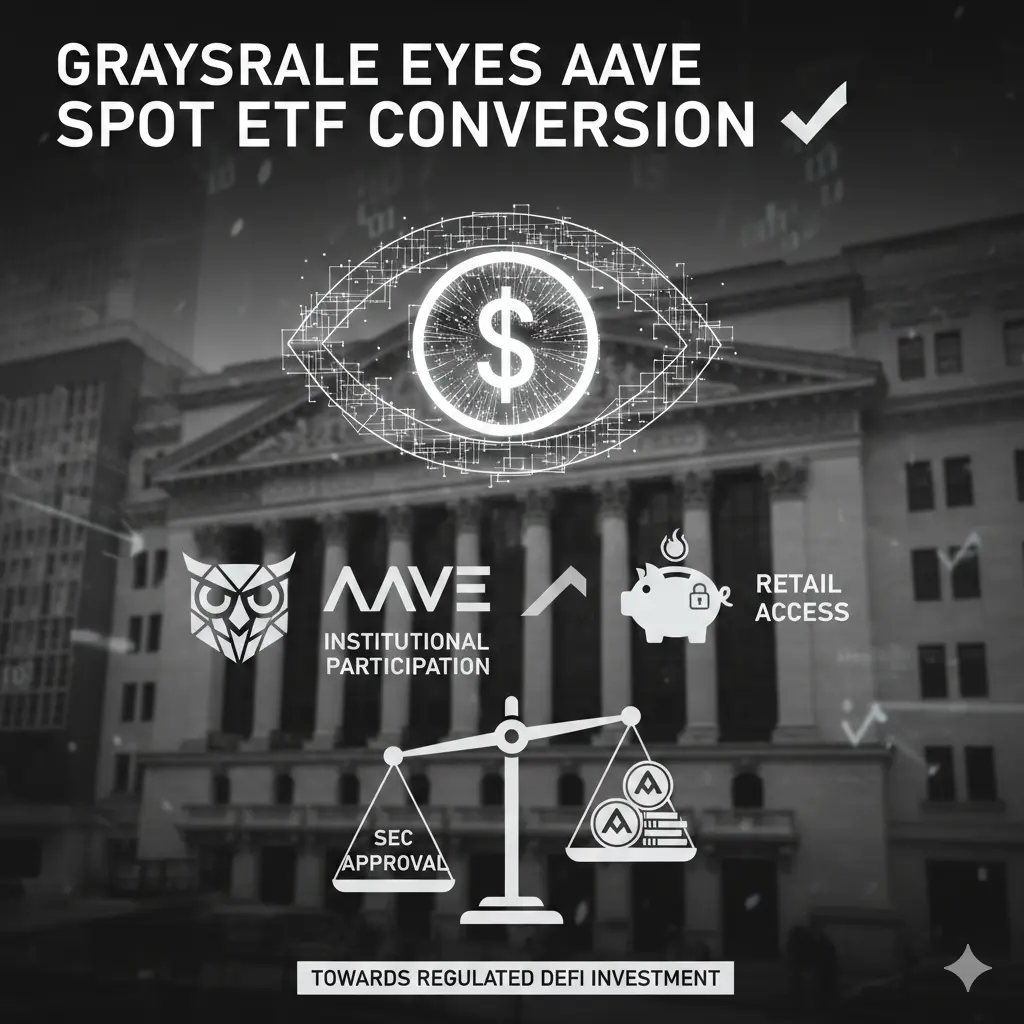
#GrayscaleEyesAVESpotETFConversion Grayscale Investments is officially pursuing approval from the U.S. Securities and Exchange Commission to convert its existing AAVE Trust into a fully regulated spot AAVE ETF. If authorized, the product would allow investors to gain direct price exposure to AAVE without managing private keys, wallets, or interacting with DeFi protocols. This represents another strategic step in the institutionalization of altcoin markets.
AAVE, the governance token of Aave, plays a central role in decentralized lending infrastructure. The protocol enables users to lend, borr
AAVE3,25%
BTC3,28%
ETH4,06%
MrFlower_XingChenvip
#GrayscaleEyesAVESpotETFConversion Grayscale Investments is officially pursuing approval from the U.S. Securities and Exchange Commission to convert its existing AAVE Trust into a fully regulated spot AAVE ETF. If authorized, the product would allow investors to gain direct price exposure to AAVE without managing private keys, wallets, or interacting with DeFi protocols. This represents another strategic step in the institutionalization of altcoin markets.
AAVE, the governance token of Aave, plays a central role in decentralized lending infrastructure. The protocol enables users to lend, borrow, and earn yield on digital assets without traditional intermediaries. By wrapping exposure to AAVE inside an ETF structure, Grayscale is effectively translating decentralized financial infrastructure into a format compatible with brokerage accounts, retirement portfolios, and institutional mandates.
If approved, the ETF would likely trade on a major U.S. exchange, similar to recent spot crypto ETFs. This provides several structural advantages: regulated custody, standardized reporting, simplified tax treatment, and institutional-grade compliance. For many investors, these features reduce operational risk compared to holding tokens directly on-chain. The convenience factor alone could significantly broaden AAVE’s investor base.
This filing also signals a broader competitive shift in the crypto ETF landscape. Following the successful launch of Bitcoin and Ethereum spot ETFs, asset managers are exploring the next wave of products targeting high-liquidity altcoins. AAVE stands out due to its strong DeFi brand, established market capitalization, and clear utility within decentralized lending markets. If the SEC approves a spot AAVE ETF, it could open the door for similar proposals involving other leading DeFi tokens.
From a market structure perspective, approval could increase institutional participation in DeFi governance assets. Pension funds, RIAs, and hedge funds that cannot directly interact with decentralized protocols would gain compliant exposure. This may enhance liquidity and price stability over time, though it also raises questions about governance concentration if large ETF issuers accumulate significant token holdings.
The regulatory context remains critical. The SEC continues to scrutinize crypto ETF applications, focusing on custody safeguards, market manipulation risks, and investor protection standards. While the regulatory tone toward digital assets has gradually evolved, each new altcoin ETF proposal faces rigorous evaluation. Approval would signal that the regulator is becoming more comfortable extending the ETF framework beyond Bitcoin and Ethereum.
Strategically, this move reflects the growing financialization of DeFi. Instead of replacing traditional finance, leading protocols are increasingly being absorbed into it. Exposure to AAVE through an ETF does not grant users participation in lending markets or governance activity directly—it grants price exposure. This distinction highlights the broader trend: access is expanding, but intermediation remains.
If successful, Grayscale’s conversion could mark a pivotal milestone in mainstream DeFi adoption. It would demonstrate that decentralized finance tokens can coexist within regulated capital markets, accelerating institutional capital inflows while reshaping how investors engage with blockchain-native assets. The outcome of this application may therefore influence the trajectory of altcoin ETFs throughout 2026 and beyond.
repost-content-media
  • Reward
  • 1
  • Repost
  • Share
Yunnavip:
LFG 🔥
#ApollotoBuy90MMORPHOin4Years Apollo Global Management has announced plans to acquire approximately $90 million worth of MORPHO tokens over a four-year period, marking one of the more structured long-term institutional entries into decentralized finance infrastructure. Rather than executing a single bulk purchase, Apollo’s phased accumulation strategy signals a measured, conviction-driven allocation aligned with long-term ecosystem growth.
Strategic Significance of the Gradual Accumulation
By spreading purchases over multiple years, Apollo reduces market disruption while aligning its exposure
MORPHO12,53%
MrFlower_XingChenvip
#ApollotoBuy90MMORPHOin4Years Apollo Global Management has announced plans to acquire approximately $90 million worth of MORPHO tokens over a four-year period, marking one of the more structured long-term institutional entries into decentralized finance infrastructure. Rather than executing a single bulk purchase, Apollo’s phased accumulation strategy signals a measured, conviction-driven allocation aligned with long-term ecosystem growth.
Strategic Significance of the Gradual Accumulation
By spreading purchases over multiple years, Apollo reduces market disruption while aligning its exposure with MORPHO’s development roadmap. This approach suggests the firm views MORPHO not as a short-term trade, but as infrastructure positioned to mature alongside the broader DeFi ecosystem. Structured accumulation programs also help mitigate volatility spikes that typically accompany large institutional entries.
Why MORPHO?
Morpho operates as an optimization layer for decentralized lending markets, enhancing capital efficiency by matching peer-to-peer liquidity with existing lending pools. Its model improves yield outcomes for lenders and borrowing rates for users without fully fragmenting liquidity. In an environment where capital efficiency and risk management are becoming central themes, Morpho’s design aligns well with institutional priorities.
Institutional Validation of DeFi Infrastructure
Apollo’s involvement reflects a broader pattern: traditional asset managers are increasingly exploring on-chain credit markets. DeFi lending protocols offer transparent collateralization, automated liquidation mechanisms, and real-time auditability—features that contrast sharply with opaque traditional credit markets. For institutions seeking programmable exposure to yield-generating digital assets, optimized lending protocols represent a logical entry point.
Market Impact and Liquidity Dynamics
A predictable four-year buying program can provide structural demand support. Gradual accumulation reduces immediate supply shocks and may dampen sell-side pressure during broader market downturns. However, the deeper impact lies in signaling. When a firm managing hundreds of billions in assets publicly commits capital to a DeFi protocol, it alters risk perception across the sector. Other allocators often interpret such moves as validation of due diligence standards and long-term viability.
Governance and Ecosystem Implications
Large token holders can influence governance proposals, incentive structures, and strategic direction. While institutional participation may strengthen protocol stability and funding, it also raises questions about decentralization balance. The long-term equilibrium will depend on how governance rights are exercised and whether token distribution remains sufficiently broad to preserve community alignment.
The Bigger Picture: Financial Convergence
Apollo’s structured MORPHO purchase reinforces a clear macro trend: DeFi is not being ignored by traditional finance—it is being studied, capitalized, and selectively integrated. As tokenized assets, on-chain credit, and blockchain settlement rails gain traction, protocols that optimize liquidity and manage risk efficiently are positioned to attract institutional capital.
In summary, Apollo’s four-year, $90 million commitment represents more than a capital allocation. It reflects a shift in perception. DeFi lending is evolving from experimental infrastructure into a strategic component of modern financial architecture. If this trend continues, institutional participation could accelerate innovation, deepen liquidity, and reshape how credit markets operate in a blockchain-enabled economy.
repost-content-media
  • Reward
  • 2
  • Repost
  • Share
Yunnavip:
To The Moon 🌕
View More
#RussiaStudiesNationalStablecoin Russia is formally studying the potential issuance of a national stablecoin, signaling a notable evolution in its digital asset strategy. While the country has already advanced work on a central bank digital currency (CBDC), this new exploration suggests policymakers are assessing whether a state-backed stablecoin could complement existing monetary tools rather than replace them.
The research is being led by the Bank of Russia, which is conducting a feasibility assessment focused on technical design, monetary implications, and systemic risk considerations. Impo
MrFlower_XingChenvip
#RussiaStudiesNationalStablecoin Russia is formally studying the potential issuance of a national stablecoin, signaling a notable evolution in its digital asset strategy. While the country has already advanced work on a central bank digital currency (CBDC), this new exploration suggests policymakers are assessing whether a state-backed stablecoin could complement existing monetary tools rather than replace them.
The research is being led by the Bank of Russia, which is conducting a feasibility assessment focused on technical design, monetary implications, and systemic risk considerations. Importantly, this is not a launch announcement. It is an exploratory phase aimed at understanding how a sovereign stablecoin might function within Russia’s financial architecture.
How It Would Differ from the Digital Ruble
Russia is already piloting the digital ruble as a CBDC directly issued and controlled by the central bank. A national stablecoin, however, could operate under a slightly different structure. While still state-backed, it may be designed for specific use cases such as cross-border trade settlements, commodity exports, or integration with blockchain-based financial systems. The distinction lies in programmability, interoperability, and possibly the involvement of regulated financial institutions in distribution.
Strategic Motivations
Several strategic drivers may be behind this study:
Sanctions resilience: A blockchain-based settlement instrument could offer alternative channels for international trade.
Cross-border efficiency: Digital settlement mechanisms may reduce friction in bilateral trade agreements.
Financial modernization: Integrating tokenized financial infrastructure into national systems aligns with broader global trends.
With global stablecoin adoption accelerating, sovereign actors are increasingly evaluating whether state-backed versions can maintain monetary control while benefiting from blockchain efficiency.
Regulatory and Economic Considerations
Any potential issuance would require comprehensive legislation covering reserve backing, issuance rights, anti-money laundering (AML) standards, and financial stability safeguards. The Bank of Russia has historically expressed caution toward privately issued stablecoins due to risks of capital flight and currency substitution. A state-backed model would aim to preserve monetary sovereignty while leveraging digital settlement rails.
Economic modeling will likely examine how a national stablecoin might affect liquidity management, inflation control, and banking sector deposits. Policymakers must balance innovation with the risk of disintermediating commercial banks or destabilizing domestic capital flows.
Global Context
Russia joins a growing list of jurisdictions studying state-backed digital currency models. While CBDCs remain the dominant approach globally, stablecoin-style structures backed by sovereign reserves are gaining attention as hybrid instruments. The move reflects a broader geopolitical and financial recalibration where digital infrastructure is increasingly viewed as strategic national infrastructure.
What Happens Next?
There is currently no official timeline for launch. If the feasibility study yields favorable conclusions, the process would likely involve multi-year pilot programs, technical sandbox testing, and phased regulatory implementation. Public-private collaboration with domestic financial institutions and technology providers would be essential.
In summary, Russia’s exploration of a national stablecoin does not signal an imminent rollout, but it underscores a meaningful policy shift. Digital currencies are no longer theoretical experiments — they are becoming integral components of national financial strategy. Whether through a digital ruble, a sovereign stablecoin, or a hybrid framework, Russia appears committed to ensuring its monetary system remains competitive in an increasingly tokenized global economy.
repost-content-media
  • Reward
  • 1
  • Repost
  • Share
Yunnavip:
Ape In 🚀
#RussiaStudiesNationalStablecoin Russia is formally studying the potential issuance of a national stablecoin, signaling a notable evolution in its digital asset strategy. While the country has already advanced work on a central bank digital currency (CBDC), this new exploration suggests policymakers are assessing whether a state-backed stablecoin could complement existing monetary tools rather than replace them.
The research is being led by the Bank of Russia, which is conducting a feasibility assessment focused on technical design, monetary implications, and systemic risk considerations. Impo
MrFlower_XingChenvip
#RussiaStudiesNationalStablecoin Russia is formally studying the potential issuance of a national stablecoin, signaling a notable evolution in its digital asset strategy. While the country has already advanced work on a central bank digital currency (CBDC), this new exploration suggests policymakers are assessing whether a state-backed stablecoin could complement existing monetary tools rather than replace them.
The research is being led by the Bank of Russia, which is conducting a feasibility assessment focused on technical design, monetary implications, and systemic risk considerations. Importantly, this is not a launch announcement. It is an exploratory phase aimed at understanding how a sovereign stablecoin might function within Russia’s financial architecture.
How It Would Differ from the Digital Ruble
Russia is already piloting the digital ruble as a CBDC directly issued and controlled by the central bank. A national stablecoin, however, could operate under a slightly different structure. While still state-backed, it may be designed for specific use cases such as cross-border trade settlements, commodity exports, or integration with blockchain-based financial systems. The distinction lies in programmability, interoperability, and possibly the involvement of regulated financial institutions in distribution.
Strategic Motivations
Several strategic drivers may be behind this study:
Sanctions resilience: A blockchain-based settlement instrument could offer alternative channels for international trade.
Cross-border efficiency: Digital settlement mechanisms may reduce friction in bilateral trade agreements.
Financial modernization: Integrating tokenized financial infrastructure into national systems aligns with broader global trends.
With global stablecoin adoption accelerating, sovereign actors are increasingly evaluating whether state-backed versions can maintain monetary control while benefiting from blockchain efficiency.
Regulatory and Economic Considerations
Any potential issuance would require comprehensive legislation covering reserve backing, issuance rights, anti-money laundering (AML) standards, and financial stability safeguards. The Bank of Russia has historically expressed caution toward privately issued stablecoins due to risks of capital flight and currency substitution. A state-backed model would aim to preserve monetary sovereignty while leveraging digital settlement rails.
Economic modeling will likely examine how a national stablecoin might affect liquidity management, inflation control, and banking sector deposits. Policymakers must balance innovation with the risk of disintermediating commercial banks or destabilizing domestic capital flows.
Global Context
Russia joins a growing list of jurisdictions studying state-backed digital currency models. While CBDCs remain the dominant approach globally, stablecoin-style structures backed by sovereign reserves are gaining attention as hybrid instruments. The move reflects a broader geopolitical and financial recalibration where digital infrastructure is increasingly viewed as strategic national infrastructure.
What Happens Next?
There is currently no official timeline for launch. If the feasibility study yields favorable conclusions, the process would likely involve multi-year pilot programs, technical sandbox testing, and phased regulatory implementation. Public-private collaboration with domestic financial institutions and technology providers would be essential.
In summary, Russia’s exploration of a national stablecoin does not signal an imminent rollout, but it underscores a meaningful policy shift. Digital currencies are no longer theoretical experiments — they are becoming integral components of national financial strategy. Whether through a digital ruble, a sovereign stablecoin, or a hybrid framework, Russia appears committed to ensuring its monetary system remains competitive in an increasingly tokenized global economy.
repost-content-media
  • Reward
  • 1
  • Repost
  • Share
Yunnavip:
Ape In 🚀
#CelebratingNewYearOnGateSquare 🏮 Happy Lunar New Year 2026 — The $50,000 Red Envelope Rain Is Live!
The festive energy is in full swing inside Gate.io as Gate Square transforms into a high-reward celebration arena. This Spring Festival, the platform is distributing $50,000 worth of Red Envelope rewards, combining cultural tradition with SocialFi mechanics. Posting isn’t just sharing — it’s claiming. And for many participants, it’s becoming one of the most engaging campaigns of the season.
From February 9 (17:00) to February 23 (24:00) UTC+8, users can participate by creating content on Gate
GT3,6%
MrFlower_XingChenvip
#CelebratingNewYearOnGateSquare 🏮 Happy Lunar New Year 2026 — The $50,000 Red Envelope Rain Is Live!
The festive energy is in full swing inside Gate.io as Gate Square transforms into a high-reward celebration arena. This Spring Festival, the platform is distributing $50,000 worth of Red Envelope rewards, combining cultural tradition with SocialFi mechanics. Posting isn’t just sharing — it’s claiming. And for many participants, it’s becoming one of the most engaging campaigns of the season.
From February 9 (17:00) to February 23 (24:00) UTC+8, users can participate by creating content on Gate Square. The structure is simple: post, engage, and unlock rewards. New users benefit from a boosted participation advantage, including certain phases offering a 100% win probability for qualifying posts. High-performing contributors can earn up to 28 GT per post, depending on engagement scoring and content quality.
🧧 Triple Prosperity Highlights
1️⃣ $50,000 Red Envelope Rain
Each qualifying post on Gate Square unlocks reward eligibility. Red packets include GT tokens, vouchers, and surprise bonuses. The event follows a first-come, first-served dynamic during active drop windows, increasing urgency and real-time participation.
2️⃣ Year of the Horse Lucky Fish Draw
Posting with #我在Gate广场过新年 automatically enters users into a premium draw pool. One lucky participant will win 50 GT plus an exclusive Spring Festival Gift Box, blending digital rewards with festive collectibles.
3️⃣ Creator Leaderboard Contest
For consistent high-quality creators, the leaderboard unlocks exclusive merchandise and bonus incentives. Rewards include Inter Milan jerseys, Red Bull co-branded jackets, VIP camping sets, branded collectibles, and additional GT or USDT vouchers. Rankings prioritize engagement quality — thoughtful analysis and originality outperform spam-style posting.
📲 Participation Requirements
• Update the Gate.io app to version 8.8.0 or above for full feature access
• Post original crypto-related content on Gate Square
• Include the required hashtag(s)
• Complete KYC to ensure smooth reward distribution
This campaign represents more than a seasonal event — it highlights how exchanges are integrating community interaction, gamification, and token incentives into one ecosystem. In the Year of the Horse 🐎, momentum and consistency define success.
The red envelopes are still raining.
The leaderboard is moving in real time.
Are you posting — or just watching prosperity pass by? 🚀🧧
repost-content-media
  • Reward
  • 3
  • Repost
  • Share
Discoveryvip:
2026 GOGOGO 👊
View More
#CelebratingNewYearOnGateSquare A powerful new phase is unfolding inside Gate.io — and this time, Gate Square isn’t just hosting a celebration, it’s activating a full-scale digital treasure hunt for 2026. 🚀
The Lunar New Year campaign has evolved into a structured SocialFi arena where creativity, analysis, and engagement convert directly into measurable rewards. In this Year of the Horse 🐎, speed, strategy, and consistency define who leads the Square.
Gate Square now operates as more than a social feed. It’s a performance-driven content engine where your ideas carry value. Market insights, e
GT3,6%
MrFlower_XingChenvip
#CelebratingNewYearOnGateSquare A powerful new phase is unfolding inside Gate.io — and this time, Gate Square isn’t just hosting a celebration, it’s activating a full-scale digital treasure hunt for 2026. 🚀
The Lunar New Year campaign has evolved into a structured SocialFi arena where creativity, analysis, and engagement convert directly into measurable rewards. In this Year of the Horse 🐎, speed, strategy, and consistency define who leads the Square.
Gate Square now operates as more than a social feed. It’s a performance-driven content engine where your ideas carry value. Market insights, educational threads, structured trading breakdowns, Web3 research, and even creative community storytelling all contribute to your reward potential. The stronger your engagement quality, the greater your visibility — and the higher your earning opportunity.
🌟 Three Major Paths to Prosperity
🌧️ Interaction Rain (Red Packets)
High-quality posts unlock Red Packet drops containing GT tokens, vouchers, and surprise bonuses. New creators receive special welcome rewards on their first qualifying post, lowering entry barriers. Experienced contributors can unlock up to 28 GT plus Position Vouchers depending on engagement strength and content depth.
🐎 Grand Prize & Lucky Draw
Every strategic post increases your eligibility for premium rewards. Participants enter draw pools featuring 50 GT tokens and exclusive Gate New Year Gift Boxes — with some tiers offering a 500 USDT voucher alternative. Each post becomes a ticket toward a larger opportunity.
🏆 Elite Leaderboard Challenge
For creators consistently delivering high-value content, the leaderboard unlocks elite prizes. Rewards include VIP camping tents, Inter Milan jerseys, exclusive Gate × Red Bull co-branded jackets, premium merchandise, and USDT bonuses. Ranking is determined by interaction quality — thoughtful discussions outperform low-effort spam.
🛠️ 4 Simple Steps to Boost Your Advantage
1️⃣ Update the Gate.io app to the latest version or log in via web for full event access.
2️⃣ Create original, structured, and insight-driven content.
3️⃣ Include #CelebratingNewYearOnGateSquare (and optionally #我在Gate广场过新年).
4️⃣ Complete KYC verification to ensure seamless reward distribution.
🔥 What’s Different in 2026?
This year introduces smarter engagement scoring. Early traction, comment quality, and meaningful discussion impact leaderboard positioning more than simple post frequency. Influence compounds over time — strategic consistency matters.
Cross-campaign stacking is also active. Users can combine Square participation rewards with select trading competitions and seasonal promotions, increasing total earning potential during the festival window.
This isn’t just a campaign — it’s a live Web3 festival where culture meets capital.
The red packets are falling.
The leaderboard is moving.
Your next post could be your breakthrough moment. 🧧✨🐎
#我在Gate广场过新年
repost-content-media
  • Reward
  • 6
  • Repost
  • Share
Discoveryvip:
To The Moon 🌕
View More
  • Pin

Trade Crypto Anywhere Anytime
qrCode
Scan to download Gate App
Community
  • 简体中文
  • English
  • Tiếng Việt
  • 繁體中文
  • Español
  • Русский
  • Français (Afrique)
  • Português (Portugal)
  • Bahasa Indonesia
  • 日本語
  • بالعربية
  • Українська
  • Português (Brasil)