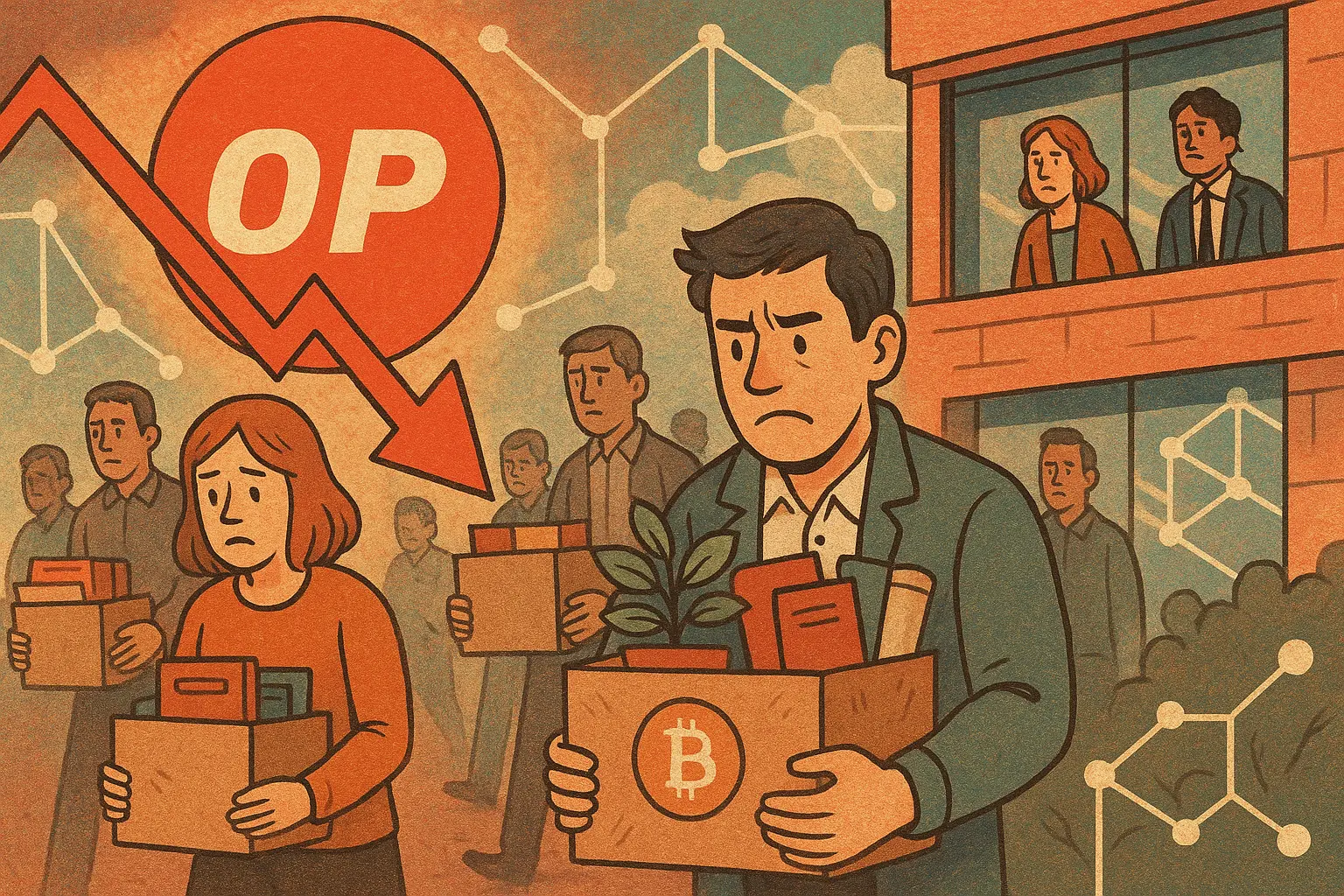
Ethereum Layer-2 Network Optimism is undergoing significant layoffs. According to multiple insiders, over 20% of the staff are affected. The news started circulating internally on Tuesday and was later discussed publicly by some affected employees on social media. Optimism’s OP token has already fallen more than 55% this year and is currently trading around $0.12, indicating clear market pressure.
Known Details of the Layoff Event
Based on leaked information, the layoffs impact multiple core departments, including protocol development teams and ecosystem building functions. The news primarily comes from internal employees’ personal posts on social media platforms rather than official announcements, suggesting the company is handling this personnel adjustment discreetly.
The exact reason for the layoffs remains unclear. Industry speculation includes possible restructuring to improve operational efficiency, responses to the overall downturn in the cryptocurrency market, or internal strategic adjustments related to the Superchain roadmap. Until official statements are made by Optimism, the true motivation cannot be confirmed.
OP Token Market Performance: The Worst Time for the Worst Event
The background to the layoffs is the ongoing decline of the OP token over several months. Market data shows that OP has dropped over 55% since the beginning of the year, currently trading around $0.12, significantly below its 2024 highs. Holders are experiencing substantial paper losses.
The simultaneous occurrence of layoffs and the token’s sharp decline may further shake investor confidence in the Optimism ecosystem. However, it’s worth noting that the decline in OP predates the layoffs and reflects broader systemic sell-off pressures in the crypto bear market rather than being solely triggered by this personnel event.
Optimism’s Strategic Position: Builder of Superchain and OP Stack
The wider industry attention on this event stems from Optimism’s key role within the Ethereum ecosystem. As one of the largest Ethereum Layer-2 networks, Optimism uses Optimistic Rollup technology to increase transaction throughput and reduce user fees.
More importantly, Optimism leads the OP Stack infrastructure project—a technical framework for building the “Superchain” ecosystem. Several major networks, including Coinbase’s Base, are deploying on this architecture. The core vision of the Superchain is to create an interconnected ecosystem of Layer-2s, with Optimism as the main driver and standard-setter.
If the layoffs affect critical protocol development and ecosystem support functions, concerns will arise about potential impacts on the pace of Superchain’s technological evolution and ecosystem expansion.
Frequently Asked Questions
Do the layoffs at Optimism mean the Superchain project faces major challenges?
There is no definitive conclusion based on current information. The layoffs could be routine efficiency adjustments or indicative of deeper strategic shifts, but until official clarification from Optimism, any assumptions are speculative. Monitoring whether key partners like Base issue supportive statements will be an important indicator of the Superchain ecosystem’s stability.
What is the main reason for the 55% decline in OP this year?
OP’s decline is closely tied to the broader downturn in the crypto market—Bitcoin has fallen over 40% from its October 2025 high, and Ethereum and most major Layer-2 tokens have experienced similar corrections. The layoffs have added caution to market sentiment, but the primary decline predates this event and is mainly driven by cyclical market factors.
Will this event affect the relationship between Optimism and Base?
Base is operated and maintained independently by Coinbase. Although built on OP Stack, Base’s operations do not directly depend on Optimism’s daily staffing levels. In the short term, Base’s normal functioning is unlikely to be impacted. However, if Optimism’s core development capacity is weakened, long-term progress on OP Stack updates and cross-chain interoperability could face some pressure.
Disclaimer: The information on this page may come from third parties and does not represent the views or opinions of Gate. The content displayed on this page is for reference only and does not constitute any financial, investment, or legal advice. Gate does not guarantee the accuracy or completeness of the information and shall not be liable for any losses arising from the use of this information. Virtual asset investments carry high risks and are subject to significant price volatility. You may lose all of your invested principal. Please fully understand the relevant risks and make prudent decisions based on your own financial situation and risk tolerance. For details, please refer to
Disclaimer.


