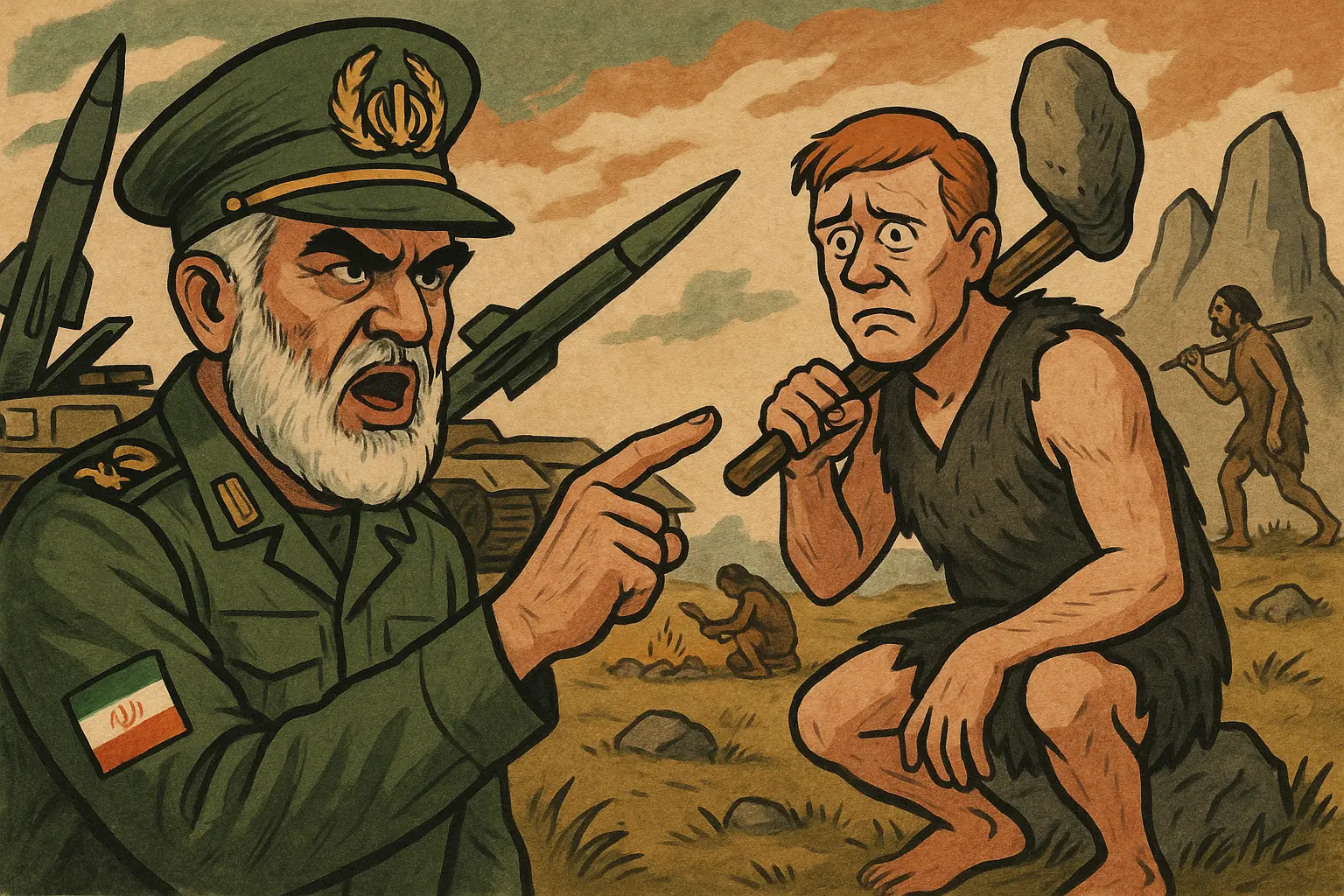
Iranian Parliament Speaker Ghalibaf’s strategic adviser launched a sharp rebuttal against Trump’s “48-hour ultimatum” on April 7, saying, “Trump has about 20 hours left—either he surrenders to Iran, or his allies will roll back to the Stone Age. We will never back down.” Earlier, at a White House press conference, Trump boasted that U.S. forces could destroy all bridges and power plants in Iran within 4 hours, and set Tuesday at 8:00 p.m. Eastern Time as the final deadline.
Iran’s Hardline Counterattack: Proactively Setting an Inverse Pressure Framework
The statement by Ghalibaf’s adviser is not merely a straightforward refusal to respond, but instead proactively redirects the pressure back to the U.S.: the binary framework of “surrender or allies back to the Stone Age” is a clear signal from Tehran to publicly adopt a hardline stance on the brink of negotiations breaking down.
Iran’s reasons for rejecting the latest ceasefire proposal are also worth noting—Tehran’s demands are not a temporary ceasefire, but a permanent end to the conflict, and the two fundamentally diverge in essence. Joint airstrikes by Israel and the United States against Iran have killed more than 25 people; Iran immediately retaliated with missile attacks targeting Israel’s mainland as well as multiple Gulf Arab countries.
Iran’s newly appointed supreme leader, Mojtaba Khamenei, also issued a statement emphasizing that “assassinations and criminal acts” cannot shake the fighting will of the Islamic Revolutionary Guard Corps; the Houthis meanwhile announced in parallel that, in coordination with Iran and Hezbollah in Lebanon, they would carry out strike operations against southern Israel, while northern Israel continues to face attacks described by outsiders as “intense firepower coverage.”
Trump White House Press Conference: Core Positions and Negotiation Bottom Lines
At the White House press conference, Trump laid out the U.S. military’s readiness plan in detail, saying that once the plan is launched, within the 4 hours from 8:00 p.m. Eastern Time on April 7 to midnight, every “bridge and power plant” inside Iran will be completely turned to rubble. U.S. Defense Secretary Hegseth also said that the strike scale against Iran on Monday would be at the highest level since the outbreak of the conflict, and that the intensity on Tuesday could be further increased.
Five Core Positions from Trump’s Press Conference
Final deadline: Tuesday at 8:00 p.m. Eastern Time; if it runs over, a large-scale infrastructure strike is triggered
Strait of Hormuz: reopening the channel is an “extremely important priority,” otherwise “back to the Stone Age”
Ceasefire conditions: must achieve an “agreement that Trump can accept”; Tehran’s counterproposal is “not good enough”
NATO criticism: calling NATO a “paper tiger,” criticizing South Korea, Australia, and Japan for not providing support
Vague stance: when asked whether to escalate the conflict, Trump candidly said, “I don’t know—it depends on what they do”
Market Chain Reaction: Soaring Energy Prices Hit Global Assets
The rapid escalation of the Iran-U.S. conflict directly impacts the global energy market. During Trump’s press conference, WTI crude reached as high as $114 per barrel before falling back to around $112; Brent crude rose to $111 per barrel and then stabilized at $109.
Compared with the early-year levels, WTI crude has posted a cumulative gain of 95% and Brent crude is up as much as 80%, indicating that the Middle East geopolitical conflict has already created a structural shock to the global energy market. During Trump’s press conference, U.S. stocks briefly flipped from gains to losses, and later regained the gains by the end of the trading day.
The Strait of Hormuz carries about one-fifth of the world’s oil transportation; if it is closed or a tolling plan is implemented, further increases in energy costs will intensify inflation expectations, reduce the Federal Reserve’s room to cut interest rates, and create a short-term dampening effect on risk assets, including the crypto market.
Frequently Asked Questions
What exactly does Iran’s “anti-ultimatum” refer to?
Iranian Parliament Speaker’s strategic adviser claimed that Trump has about 20 hours left and must either “surrender to Iran, or his allies will roll back to the Stone Age.” This is a hardline reverse response to Trump’s 48-hour ultimatum, showing Tehran’s clear stance of refusing to back down under U.S. military pressure.
Why is the Strait of Hormuz key in this conflict?
The Strait of Hormuz is a vital shipping route for about one-fifth of the world’s oil; if it is closed or passage is disrupted, it will directly hit the global energy supply chain, drive up oil prices, and intensify inflation pressure—making it one of the most central points of interest and bargaining in Iran-U.S. negotiations.
How does the escalation of the Iran-U.S. conflict affect the crypto market?
Escalation of geopolitical conflict typically triggers short-term risk-asset selloff sentiment, putting early pressure on the crypto market. Rising oil prices strengthen inflation expectations, which then narrows the room for interest-rate cuts and suppresses high-volatility assets. However, if conditions continue to deteriorate, some funds may also seek allocation into non-sovereign assets.
Disclaimer: The information on this page may come from third parties and does not represent the views or opinions of Gate. The content displayed on this page is for reference only and does not constitute any financial, investment, or legal advice. Gate does not guarantee the accuracy or completeness of the information and shall not be liable for any losses arising from the use of this information. Virtual asset investments carry high risks and are subject to significant price volatility. You may lose all of your invested principal. Please fully understand the relevant risks and make prudent decisions based on your own financial situation and risk tolerance. For details, please refer to
Disclaimer.


