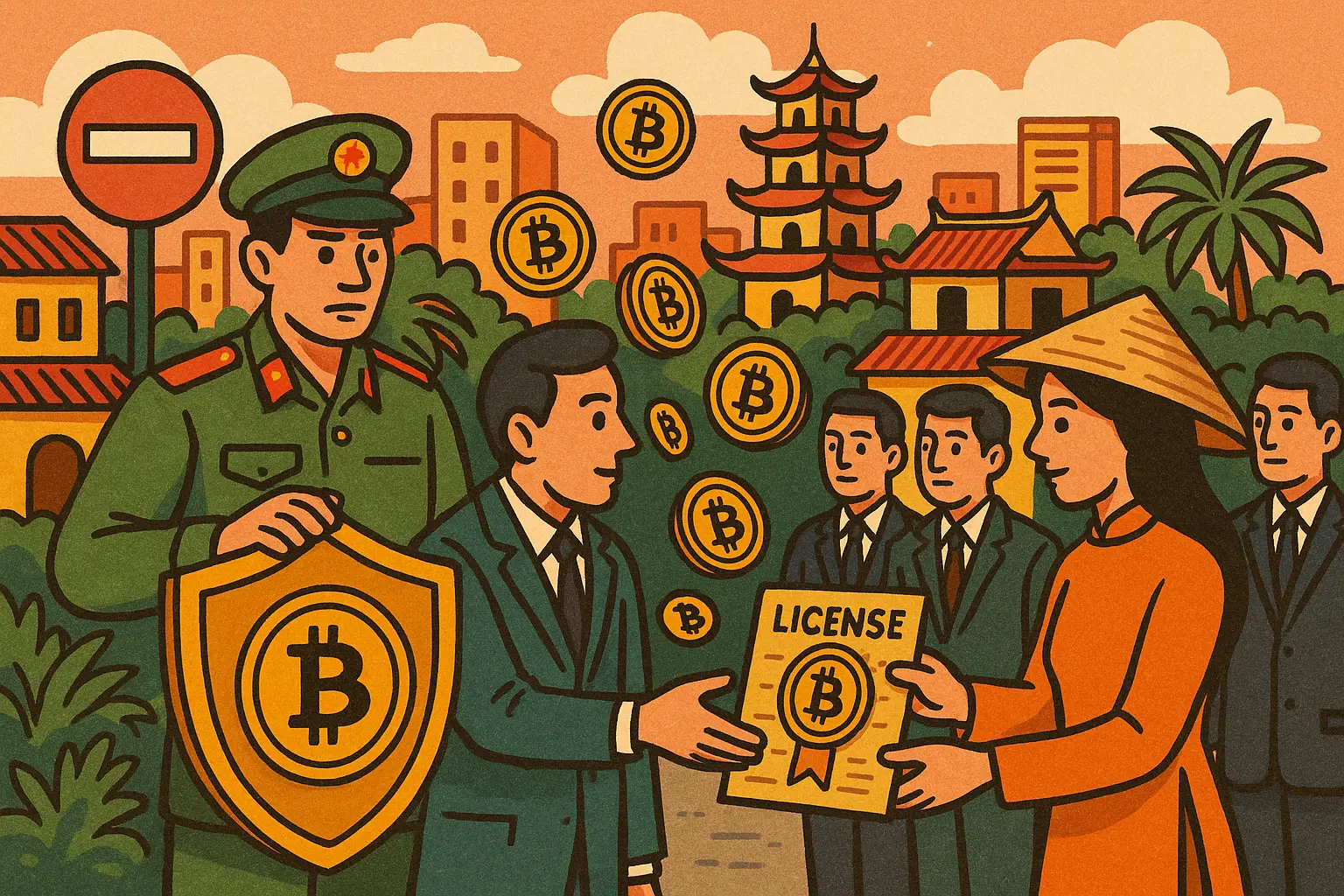
According to a Tuesday report by Reuters, five companies in Vietnam have passed the initial qualification review and are competing for the country’s first compliant cryptocurrency exchange licenses. Meanwhile, regulators are drafting regulations that may prohibit Vietnamese citizens from using overseas exchanges. Vietnam ranks fourth globally in the latest Chainalysis Global Crypto Adoption Index, with an estimated total transaction volume of $200 billion over the next 12 months until June 2025, yet it lacks a domestic regulatory framework.
Background of the Five Candidate Institutions: Banks, Brokerages, and Corporate Groups Competing Simultaneously
According to Reuters, the following five companies have entered the first-round review for Vietnam’s initial crypto exchange licenses:
Techcombank Affiliate: One of Vietnam’s leading private banks, which has actively expanded into digital financial services in recent years.
VPBank Affiliate: One of Vietnam’s largest private commercial banks; VPBank has confirmed to Reuters that it has submitted a license application.
LPBank Affiliate: A mid-sized commercial bank in Vietnam.
VIX Securities: A domestic Vietnamese brokerage with experience in capital market regulation compliance.
Sun Group: A well-known large Vietnamese conglomerate, which has confirmed to Reuters that it has submitted a license application.
Cointelegraph has reached out to these institutions for interviews regarding these matters but has not received any official responses as of the time of publication.
Overseas Platform Ban and Rapid Evolution of Vietnam’s Crypto Regulatory Framework
Vietnam opened applications for crypto exchange licenses in January 2026, aligning with a new law that first defines crypto assets as “property,” explicitly prohibiting their use as legal tender or payment tools. Regulators are concerned about the increasing use of cryptocurrencies and stablecoins, especially regarding potential capital outflows.
Vietnam’s regulatory framework features the following core points:
Mandatory Domestic Trading: A five-year pilot starting September 2025 requires all trading to be settled in Vietnamese dong (VND).
Eligibility Restrictions: Licensing is limited to companies officially registered within Vietnam.
Asset Restrictions: The framework bans the issuance of fiat-backed assets (such as USDC, USDT, etc.) and only permits cryptocurrencies backed by real, non-financial assets.
Ongoing Offshore Ban: Regulators are drafting regulations to prohibit Vietnamese citizens from using overseas crypto platforms, aiming to centralize market activity on domestic compliant platforms.
Notably, the capital requirement set by the Vietnamese Ministry of Finance is very high—approximately $379 million—resulting in no companies having formally applied for digital asset trading pilots as of October last year. The five companies currently in the first-round review indicate a preliminary market signal that the capital thresholds are being adjusted or that the approval process is underway.
Taxation Framework and Future Outlook
In February this year, Vietnam drafted a crypto trading tax plan, equating digital asset buying and selling to stock and securities trading:
Individual Investors: Each crypto transaction conducted on licensed platforms is taxed at 0.1%, with related transfers still exempt from VAT.
Corporate Investors: Profits from crypto trading, after deducting costs and expenses, are subject to a 20% corporate income tax.
This tax framework signifies Vietnam’s shift from a “legal gray area tolerating crypto trading” to a “formal regulated asset subject to clear taxation,” providing a more defined compliance basis for upcoming domestic exchanges.
Frequently Asked Questions
Why does Vietnam want to ban overseas crypto exchanges?
The main driver is the need to control capital outflows. Vietnamese regulators worry that large sums of money are flowing out through overseas exchanges, weakening the domestic financial system’s capital retention. By mandating trading on licensed domestic platforms and settling in VND, authorities can better monitor cross-border capital flows and ensure transactions are taxed locally.
Does Vietnam’s ban on stablecoins mean USDT and USDC cannot be used in Vietnam?
Under the current framework, fiat-backed stablecoins like USDT and USDC are excluded from the list of compliant assets in the domestic trading pilot. However, the overseas platform ban has not yet been officially implemented, and Vietnamese users can still use stablecoins on platforms like Binance. The final enforcement depends on the specific provisions of the overseas ban and law enforcement efforts.
Why are the five candidates mainly banks and large enterprises rather than crypto-native companies?
Vietnam’s regulatory design favors traditional institutions—its high capital requirement of about $379 million effectively excludes most crypto-native startups, leaving only well-capitalized banks and corporate groups able to meet the standards. This approach also reflects the Vietnamese authorities’ strategy to leverage the compliance capabilities and risk management of established financial institutions to oversee the crypto market.
Disclaimer: The information on this page may come from third parties and does not represent the views or opinions of Gate. The content displayed on this page is for reference only and does not constitute any financial, investment, or legal advice. Gate does not guarantee the accuracy or completeness of the information and shall not be liable for any losses arising from the use of this information. Virtual asset investments carry high risks and are subject to significant price volatility. You may lose all of your invested principal. Please fully understand the relevant risks and make prudent decisions based on your own financial situation and risk tolerance. For details, please refer to
Disclaimer.


