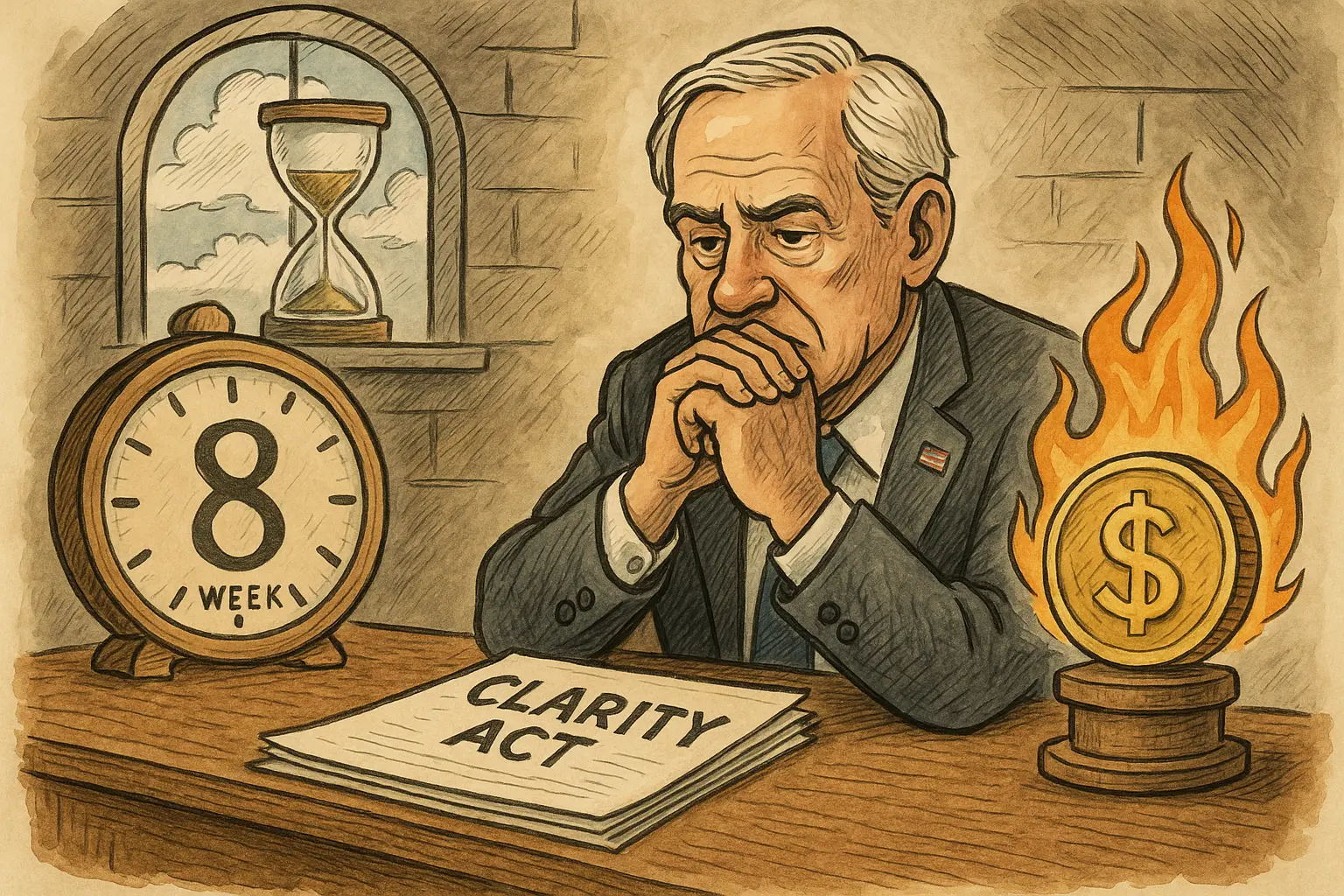
The CLARITY Act, which was supported by both parties in the House of Representatives in July 2025, is still pending in the Senate Banking Committee, with no scheduled hearings yet. Last week, the banking industry rejected a compromise proposal supported by the White House for stablecoin rewards. Currently, a tentative alternative being considered is allowing limited rewards for transactional stablecoins. With only about 8 to 10 weeks of effective legislative time remaining before the 2026 midterm elections, the legislative agenda is effectively constrained.
Core Obstacle: Banks Reject White House Proposal, Dispute Over Stablecoin Yields Continues
The fundamental deadlock stems from a structural disagreement: banks fear that allowing stablecoins to generate interest or rewards could lead to a large outflow of deposits from traditional banking systems; cryptocurrency companies argue that reward mechanisms are a standard part of digital asset markets and should not be outright banned.
The White House-supported stablecoin reward compromise was clearly rejected by banks last week. Banks remain unwilling to introduce any products that might compete with traditional deposits. Negotiators are exploring a layered approach: permitting limited stablecoin rewards for payments or transactions, while strictly restricting interest on idle balances. Since the committee review has not yet been scheduled, the bill cannot proceed to a full Senate vote, effectively putting the legislative process on hold.
Three Legislative Windows Before the Midterm Elections: A Realistic Assessment
If the CLARITY Act is to become law during this session, it must pass before the November 2026 midterm elections. However, only a few practical windows remain:
Spring Window (March to May): Currently the best opportunity, but excluding recess periods from March 30 to April 10, May 4 to 8, and May 25 to 29, the actual available time is only about 8 to 10 weeks. If negotiators can resolve the stablecoin reward dispute in the coming weeks, hearings could be scheduled in late March or April, with a full Senate vote possible before the end of spring.
Early Summer Window (June to July): The window narrows as senators leave Washington for election campaigns; the Senate plans to recess from June 29 to July 10. If the Senate version differs from the House text, additional bicameral negotiations will be required.
Last Chance in September: The final realistic opportunity before the elections, but politically the most challenging; with the Senate recess from October until November 6, this window is essentially unavailable.
Bill Status and Remaining Unresolved Disputes
Beyond stablecoin yield rules, the CLARITY Act includes several contentious provisions, such as ethical standards and anti-illegal finance clauses. Additionally, Trump has prioritized the passage of the SAVE Act, creating competitive pressure within the limited Senate legislative agenda.
According to Reuters, even if the bill passes in spring, differences between the Senate and House versions will require conference negotiations before being sent to the President, further extending the timeline. Market prediction platform Polymarket currently estimates a 70% chance of the CLARITY Act passing in 2026, reflecting cautious optimism about long-term prospects despite the current deadlock.
Frequently Asked Questions
Q: Why has the CLARITY Act been stuck in the Senate Committee?
A: The core issue is disagreement over stablecoin yield rules: banks worry that allowing stablecoins to earn interest could lead to deposit outflows. The White House-supported compromise was rejected by banks last week. With no scheduled hearings, the bill cannot proceed to a full Senate vote.
Q: What other legislative opportunities exist before the 2026 midterm elections?
A: There are three windows: spring (March-May), which is the best chance with about 8-10 weeks of effective time; early summer (June-July), which is secondary; and September, the last opportunity. October is largely unavailable due to Senate recess.
Q: How is progress on the stablecoin reward compromise?
A: Negotiators are exploring a layered design: allowing limited rewards for payments or transactions, with strict restrictions on interest on idle balances. Banks remain cautious about any structure resembling deposit interest. Negotiations are ongoing but have not yet reached consensus.
Disclaimer: The information on this page may come from third parties and does not represent the views or opinions of Gate. The content displayed on this page is for reference only and does not constitute any financial, investment, or legal advice. Gate does not guarantee the accuracy or completeness of the information and shall not be liable for any losses arising from the use of this information. Virtual asset investments carry high risks and are subject to significant price volatility. You may lose all of your invested principal. Please fully understand the relevant risks and make prudent decisions based on your own financial situation and risk tolerance. For details, please refer to
Disclaimer.


