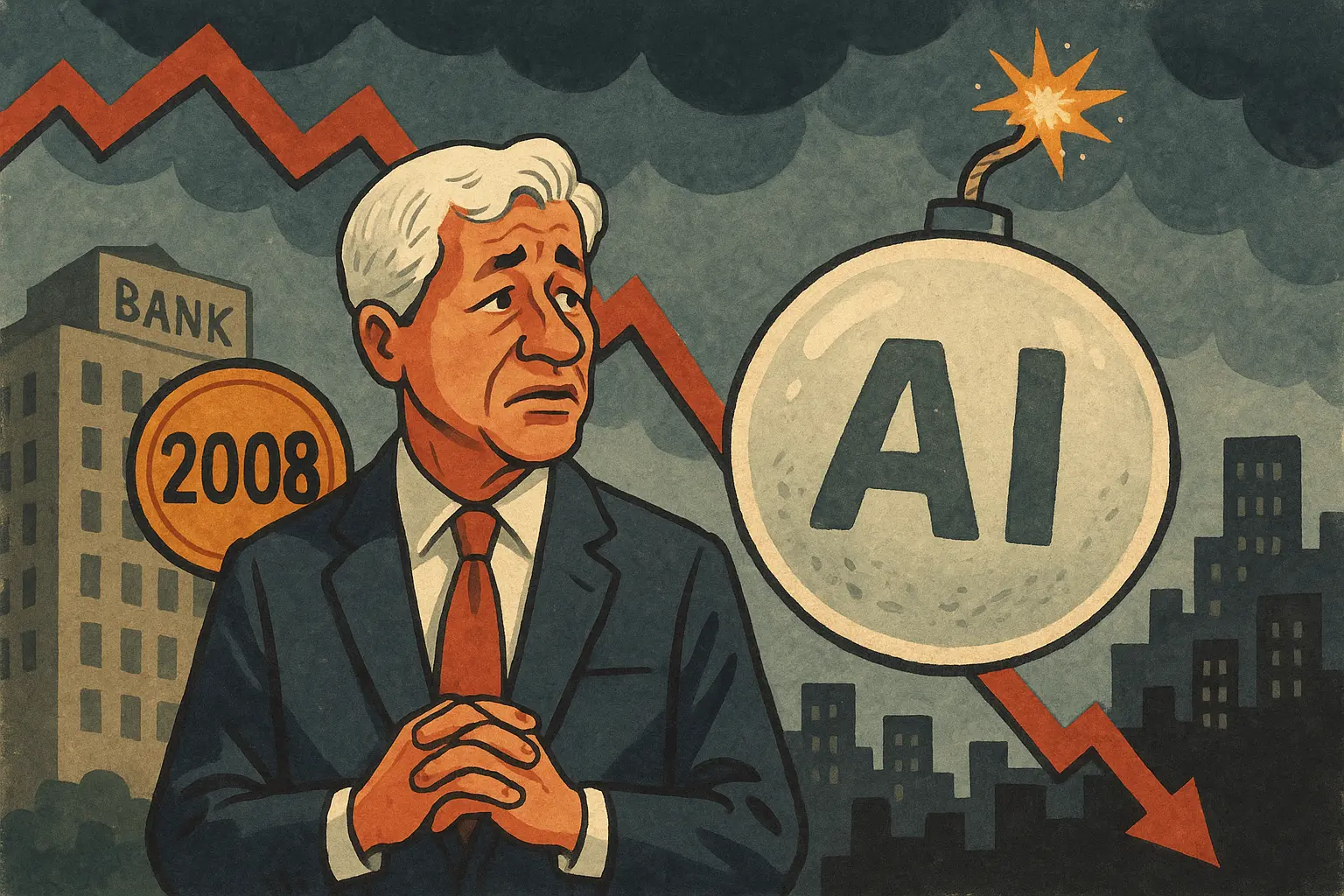
JPMorgan Chase CEO Jamie Dimon warned on February 24 that the current high-risk lending behaviors and credit environment in the financial markets are very similar to those seen from 2005 to 2007 before the 2008 financial crisis, and that the credit cycle will ultimately worsen again. Meanwhile, a recent client survey by Bank of America shows that AI bubble concerns have overtaken traditional credit risks as investors’ top worry for the first time.
Dimon’s Warning: Specific Signs of Precursor to the 2008 Financial Crisis
Based on his experience leading JPMorgan through the 2008 financial crisis, Dimon pointed out that current asset prices are high, trading volumes are rising, market sentiment is overly optimistic, and some financial institutions are taking on high-risk loans to pursue net interest income. These signs are very similar to those before the 2008 crash.
He cited the bankruptcies of auto loan company Tricolor Holdings and auto parts supplier First Brands Group last year, describing the spread of hidden risks with the phrase “finding a cockroach often means there are more.” JPMorgan has recognized a $170 million loss on loans to Tricolor Holdings.
Five Major Warning Signs Dimon Identifies as Precursors to 2008
Widespread high-risk lending: Some financial institutions are taking on reckless high-risk loans to chase short-term net interest income.
High asset prices and trading volumes: Market sentiment is overly optimistic, closely resembling the environment from 2005 to 2007.
Established expectations of credit cycle deterioration: Dimon is confident that the credit cycle will worsen again, though he cannot predict the exact timing.
Structural disruption in the software industry due to AI: Deep changes brought by AI could make the software sector the next area impacted by credit risks.
Early signs of default chain effects: Cases like Tricolor Holdings’ bankruptcy indicate systemic spread of high-risk lending.
AI Bubble Becomes the Biggest Concern in Credit Markets: U.S. Bank Survey Reveals
Against the backdrop of Dimon’s warning, a recent U.S. bank client survey shows a structural shift in market concerns. Currently, 23% of respondents list the AI bubble threat as their top worry, a significant jump from 9% in the December survey last year, indicating that this issue has rapidly become a core market focus in just a few months.
The survey’s main focus is on the borrowing scale of cloud giants. Investors expect tech leaders like Microsoft, Amazon, Meta, and Google to issue $285 billion in debt this year, up about 36% from the $210 billion estimated in December. Concerns over the AI bubble have officially replaced traditional credit bubbles as the biggest hidden risk for credit market investors.
In contrast, only 10% of respondents worry about AI causing corporate淘汰, and almost no one considers geopolitical conflicts or central bank policy errors as primary risks, highlighting that market fears are highly concentrated on structural overvaluation issues related to AI.
Dimon stated that AI’s impact will lead JPMorgan to scrutinize certain loans more strictly, but he believes the overall credit loss impact will be limited. The software industry is most likely to be the first to face credit risks amid this transformation.
Frequently Asked Questions
Q: Why does Dimon believe current market conditions resemble those before the 2008 financial crisis?
A: Dimon points out that the characteristics of the 2005–2007 market—rising asset prices, excessive optimism, widespread high-risk lending—are all present again. The default cases of high-risk loans like Tricolor Holdings further suggest that the deterioration of the credit cycle may have already begun. He expects the decline to be inevitable but cannot specify when.
Q: Why has the AI bubble suddenly become the biggest hidden risk in the credit market?
A: The U.S. bank survey shows investors are concerned about the large-scale debt issuance by cloud giants like Microsoft, Amazon, Meta, and Google for AI investments. If the expected returns from AI investments are not fully realized, the $285 billion in new debt issuance this year could exert systemic pressure on the entire credit market.
Q: Why is AI considered the biggest structural threat to the software industry since the 2008 financial crisis?
A: AI’s automation capabilities directly disrupt traditional software service business models, causing demand shrinkage and pricing pressures for companies relying on manual development. This structural upheaval often amplifies corporate default risks during credit cycle downturns, creating chain effects similar to those triggered by subprime mortgage crises in 2008.
Disclaimer: The information on this page may come from third parties and does not represent the views or opinions of Gate. The content displayed on this page is for reference only and does not constitute any financial, investment, or legal advice. Gate does not guarantee the accuracy or completeness of the information and shall not be liable for any losses arising from the use of this information. Virtual asset investments carry high risks and are subject to significant price volatility. You may lose all of your invested principal. Please fully understand the relevant risks and make prudent decisions based on your own financial situation and risk tolerance. For details, please refer to
Disclaimer.


