


Bitcoin falls below $63,000, analysts warn: it may soon drop to $60,000 or even lower
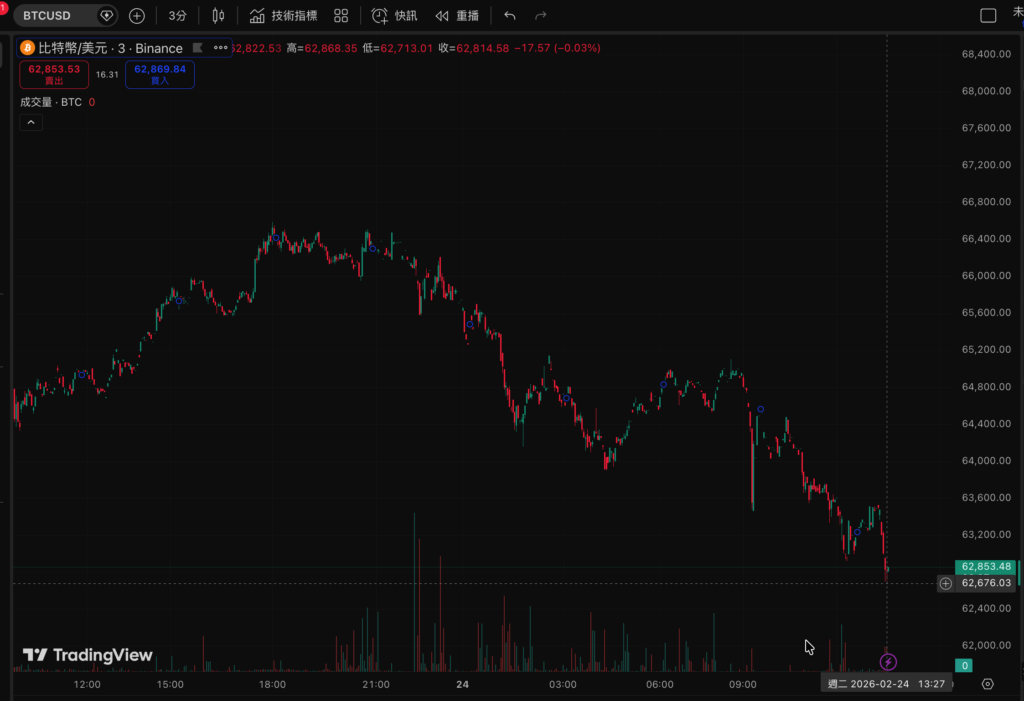
Bitcoin continues to weaken on Monday, dropping below $63,000 during trading and nearly halving from the October 2025 all-time high of approximately $126,000. The entire February crypto market has been in extreme panic, with the Fear and Greed Index dropping to 5 at one point. Under pressure from leveraged liquidations, ETF fund outflows, and miner sell-offs, analysts warn that the price could short-term dip to $60,000 or even lower.
(Background: Bitcoin sharply dropped to $65,000, Ethereum fell below $1,900, and the entire February market was in extreme panic.)
(Additional context: Bitcoin has fallen 23% in the first 50 trading days of this year, marking the worst start in history.)
Table of Contents
Toggle
- Triple Pressure: Leverage, ETFs, Miners
- February Panic Sets Record, Worst Start of 2026
- Analysts: Fear of Dropping to $60,000 or Lower
Today (24th), during Asian trading hours, Bitcoin continued last week’s downward trend, falling below $63,000 to a new low since the flash crash on February 5. As of press time, BTC is around $62,800, down about 4% in 24 hours.
Triple Pressure: Leverage, ETFs, Miners
Matthew Sigel, Head of Digital Asset Research at VanEck, explained that this sell-off was not triggered by a single event but by multiple factors occurring simultaneously:
- Leverage Liquidations: Open interest in futures and perpetual contracts was previously high, leading to a cascade of liquidations as prices fell. Over the past week, crypto liquidations totaled $3 to $4 billion, with Bitcoin futures accounting for an estimated $2 to $2.5 billion.
- ETF Fund Reversal: The US spot ETFs that bought large amounts of Bitcoin last year have turned into net sellers this year, indicating a significant shift in institutional demand.
- Miner Forced Selling: Miners transitioning to AI computing power, affected by the sharp decline in AI concept stocks, faced tightening financing conditions and were forced to sell BTC to support capital expenditures and operations, adding to spot selling pressure during market fragility.
February Panic Sets Record, Worst Start of 2026
According to previous reports, Bitcoin declined 23% in the first 50 trading days of 2026, marking the worst start in recorded history. The Fear and Greed Index remained in “extreme fear” territory throughout February, with a low of 5, reminiscent of the 2022 bear market.
On-chain data also shows continued capital outflows. During the most severe single-day sell-off, short-term holders realized losses of about $1.14 billion, while long-term holders suffered approximately $225 million in losses. Daily net realized losses once surged to $1.5 billion.
Analysts: Fear of Dropping to $60,000 or Lower
CryptoQuant previously analyzed that Bitcoin has been in a technical bear market for over two months, weakening after falling below the 365-day moving average. A meaningful rebound is expected only if prices drop to the $56,000–$60,000 range. Bloomberg strategist Mike McGlone is more pessimistic, predicting Bitcoin could first fall to $50,000 in 2026, with an extreme scenario of dropping to $10,000.
However, some bulls believe that from a historical cycle and institutional long-term allocation perspective, the current extreme panic could actually set the stage for a reversal. Investors should closely monitor Federal Reserve policy movements and ETF fund flow changes as key indicators of market bottoming.
Related Articles
In the past 24 hours, the total liquidation on the entire network's contracts reached $311 million, mainly from long positions.
Stripe: Stablecoins are becoming a fundamental part of the global payment infrastructure