
Revolut applies for a Peruvian banking license, targeting a $49.3 billion remittance market. In 2024, net profit is expected to increase by 130% to £790 million, with stablecoin trading volume projected to reach $10.5 billion in 2025, competing with Mercado Libre and Nubank in Latin America’s $1.5 trillion crypto market.
Revolut applies for Peruvian banking license to lock in remittance market
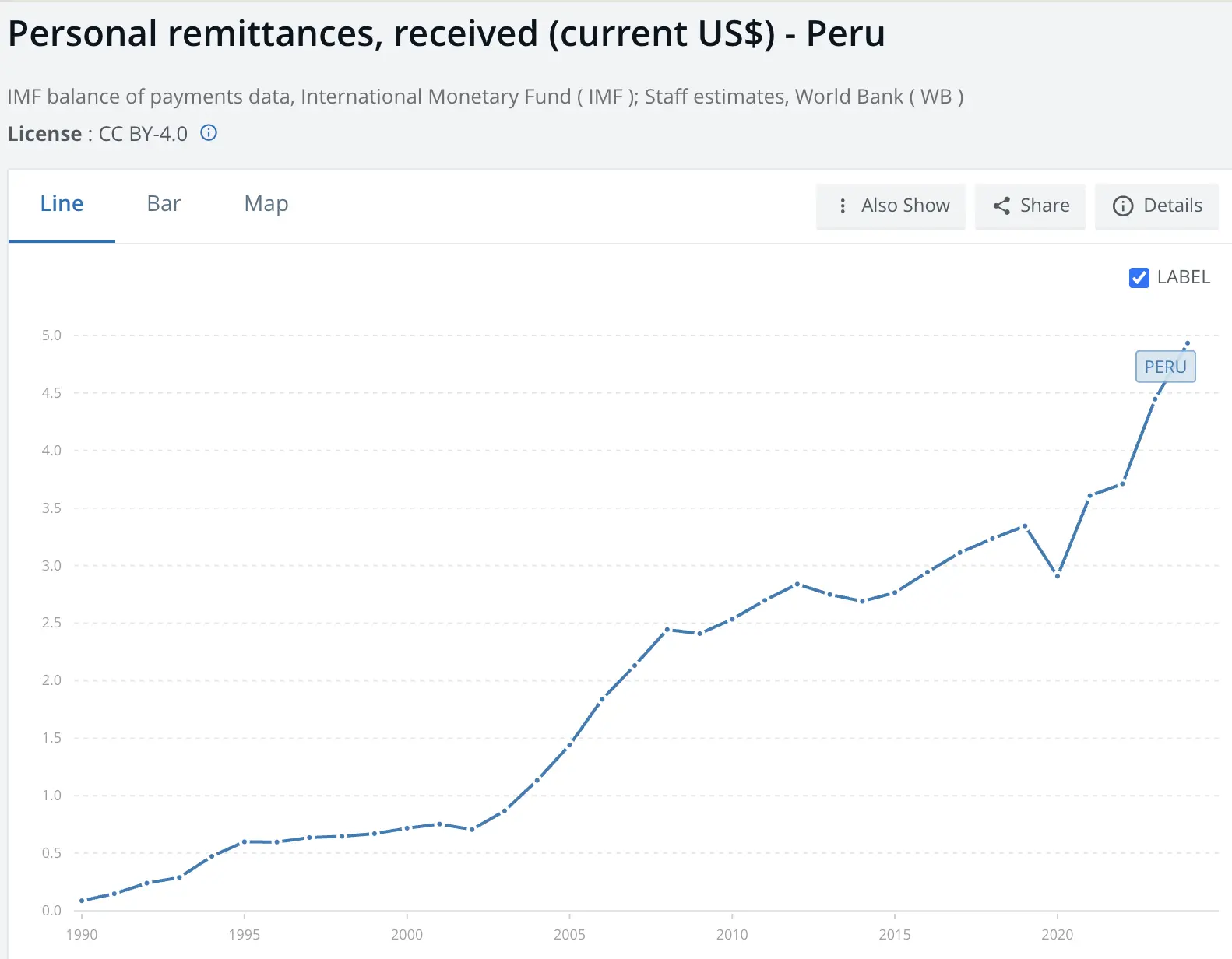
(Source: World Bank)
According to a Bloomberg report on Monday, London-based digital bank and payments company Revolut has applied for a full banking license in Peru as part of its expansion plans in Latin America. If approved, the license will allow the company to operate as a regulated bank in Peru, bringing it into its regional market list after Mexico, Colombia, and Brazil.
This London-headquartered fintech is further expanding into Latin America amid increasing competition among digital banks in the region. Bloomberg states that Revolut’s plan mainly targets existing banks rather than emerging fintech competitors. This positioning demonstrates Revolut’s confidence: it believes its technological advantages and user experience are sufficient to challenge local traditional banks without fearing direct competition from other fintech startups.
Revolut has identified remittances and cross-border payments as key components of its local strategy, noting that about 1 million people in Peru rely on foreign remittances. According to the World Bank, Peru’s personal remittance total in 2024 is $4.93 billion. This market size is highly attractive, as remittance services often involve high fees, and Revolut’s low-cost model could gain significant advantages in this field.
Revolut Peru CEO Julien Labrot stated that this expansion aims to increase competition and improve access to financial services in the local market. Peru’s banking penetration rate is relatively low, with many people lacking bank accounts or only using basic cash services. For these populations, Revolut’s digital-first approach and low-threshold account opening process could offer more user-friendly financial services than traditional banks.
Three Key Features of the Peruvian Remittance Market
Large scale: $4.93 billion in personal remittances in 2024
High dependency: about 1 million people (3% of the population) rely on foreign remittances
Fee pain points: traditional banks and remittance companies charge fees of 5-10%
Revolut’s entry into this market is carefully timed. Latin America’s remittance industry has long been dominated by traditional companies like Western Union, with high fees and cumbersome processes. In recent years, with the proliferation of smartphones and digital payment habits, the region is experiencing a fintech revolution. Revolut’s low fees, instant transfers, and user-friendly app experience directly address the pain points of traditional remittance services.
2024 Net Profit Up 130%, Crypto Business as Growth Engine
Revolut, founded in 2015, has recently expanded its cryptocurrency services alongside overall platform growth. In April 2025, the company announced record-breaking results, with 2024 net profit up 130% to £790 million (about $1.06 billion), driven by strong customer growth and a rebound in crypto trading activity.
This explosive growth indicates that Revolut’s business model is maturing. From early losses to high profitability, Revolut has proven that digital banks can turn profitable without physical branches. The revival of crypto trading is a key driver, as crypto transaction fees far exceed traditional payments, contributing substantial revenue.
In October 2025, Revolut launched a stablecoin exchange service pegged 1:1 to the US dollar, allowing users to convert USD into USDC and USDT. The timing coincides with surging demand for stablecoins, especially in emerging markets, where stablecoins are seen as tools to hedge against local currency devaluation and capital controls. According to independent analyst Alex Obchakevich, stablecoin payment volume on Revolut’s platform is expected to grow 156% annually by 2025, reaching about $10.5 billion.
If realized, this would make Revolut one of the world’s largest stablecoin payment platforms. The $10.5 billion volume translates to roughly $875 million per month, surpassing many mid-sized crypto exchanges’ spot trading volumes. More importantly, these transactions are mainly used for actual payments and remittances rather than speculation, giving Revolut’s stablecoin business greater sustainability.
Strategically, combining stablecoins with remittance services is Revolut’s killer app in Latin America. Traditional remittances involve multiple intermediary banks, currency exchanges, and international wire transfers, often taking days and incurring high fees. Using stablecoins, funds can be transferred cross-border within minutes at a fraction of the cost. Once Revolut obtains a banking license in Peru, it can establish a full stablecoin remittance channel: US users convert USD to USDC, send instantly to Peru, and local users convert USDC to local currency for withdrawal.
Latin American Fintech Stablecoin Competition Heats Up
Revolut’s promotion of stablecoins reflects a broader trend among Latin American fintechs toward stablecoins and crypto services. In August 2024, Mercado Libre launched a USD-pegged stablecoin called Meli Dollar through its financial arm Mercado Pago in Brazil, its largest market, allowing trading within the Mercado Pago app.
Latin America’s largest digital bank, Nubank, is also developing USD stablecoin payment methods linked to its credit card products. Argentine crypto wallet and payments company Lemon completed a $20 million Series B funding round in October to expand its regional operations. The company has already launched in Peru and reports issuing over 1 million wallets in less than a year.
Latin American Fintech Stablecoin Competition Landscape
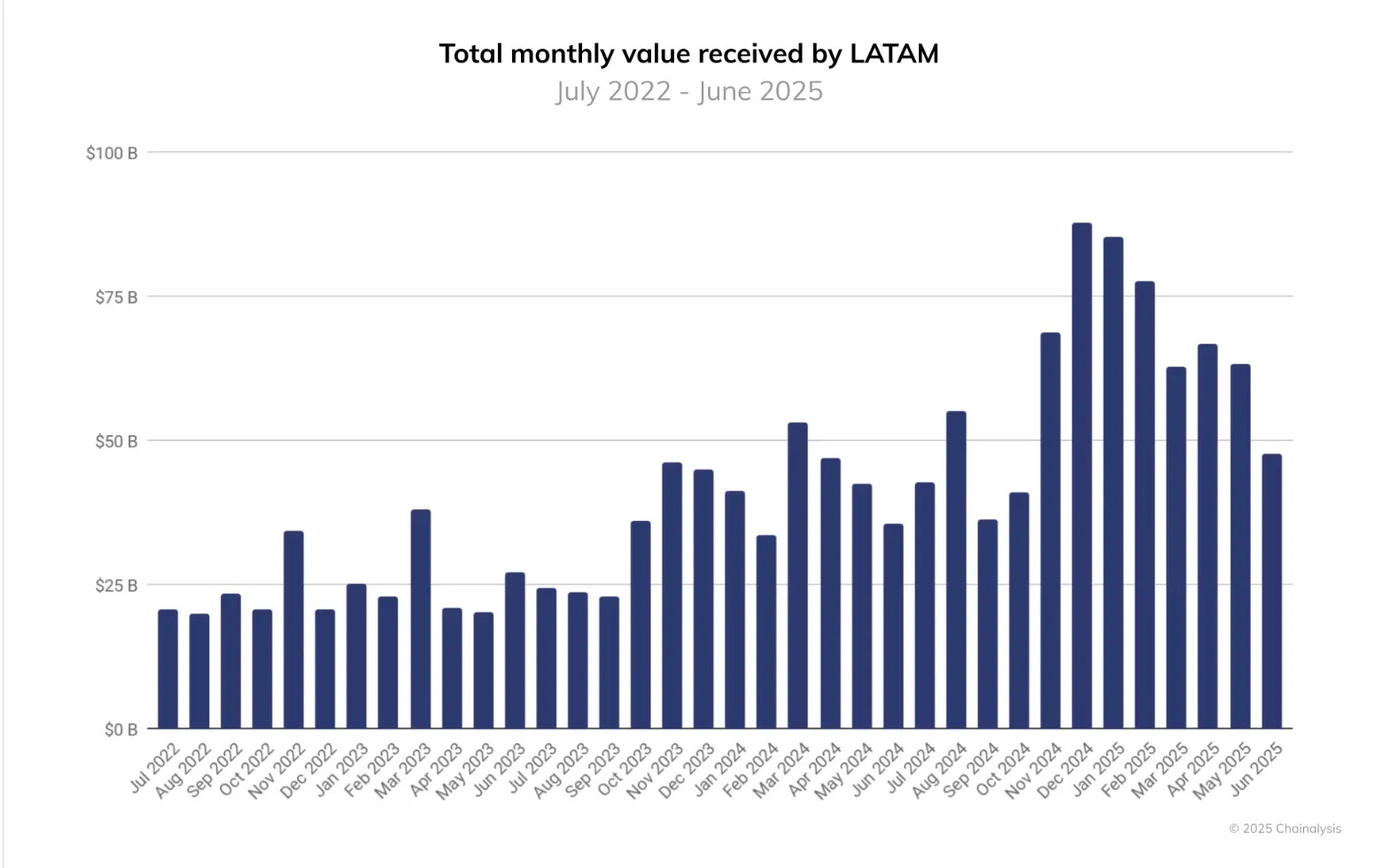
(Source: Chainalysis)
Revolut: applying for a Peruvian banking license, stablecoin payment volume projected at $10.5 billion
Mercado Libre: launched Meli Dollar stablecoin in Brazil
Nubank: developing USD stablecoin payments linked to credit cards
Lemon: completed $20 million Series B funding, issued 1 million wallets in Peru
This intense competition reflects the unique needs of the Latin American market. Many countries face currency devaluation, high inflation, and capital controls, making USD stablecoins ideal for hedging and cross-border payments. According to a Chainalysis report, from July 2022 to June 2025, Latin America’s crypto trading volume approached $1.5 trillion, highlighting the region’s enormous demand for crypto financial services.
From a regulatory perspective, Latin American countries generally have a relatively open attitude toward cryptocurrencies. Brazil, Mexico, Argentina, and others have established crypto regulatory frameworks, providing clear legal environments for compliant fintech operations. Peru is also gradually improving its digital financial regulation, creating favorable conditions for Revolut’s banking license application.
In terms of user demand, Latin Americans show high acceptance of digital financial services. Many lack bank accounts but own smartphones, and this “leapfrogging” makes digital-first financial services more attractive than traditional banking. Revolut’s app offers multi-currency accounts, real-time exchange, crypto trading, and stablecoin payments—an all-in-one platform that is especially convenient for users frequently engaged in cross-border transfers.
Revolut’s Long-term Strategy in Latin America
Revolut’s expansion in Latin America is not opportunistic short-term behavior but a carefully planned long-term strategy. From Mexico to Colombia, Brazil, and now Peru, Revolut is systematically covering major Latin American economies. This step-by-step approach allows it to deeply understand each market’s unique needs and tailor products and services accordingly.
Peru, as Latin America’s seventh-largest economy, though smaller than Brazil or Mexico, has a remittance market with particular characteristics making it an ideal testing ground. The Peruvian diaspora mainly resides in the US, Spain, and Chile, creating concentrated remittance sources. Success here could enable rapid replication across other Latin American countries.
From a competitive standpoint, Revolut faces dual pressures from local and international players. Locally, traditional banks and emerging fintechs in Peru will not sit idly by as outsiders enter the market. Internationally, giants like Nubank and Mercado Libre are expanding rapidly. However, Revolut’s global brand, technological strength, and crypto integration give it a differentiated advantage.


