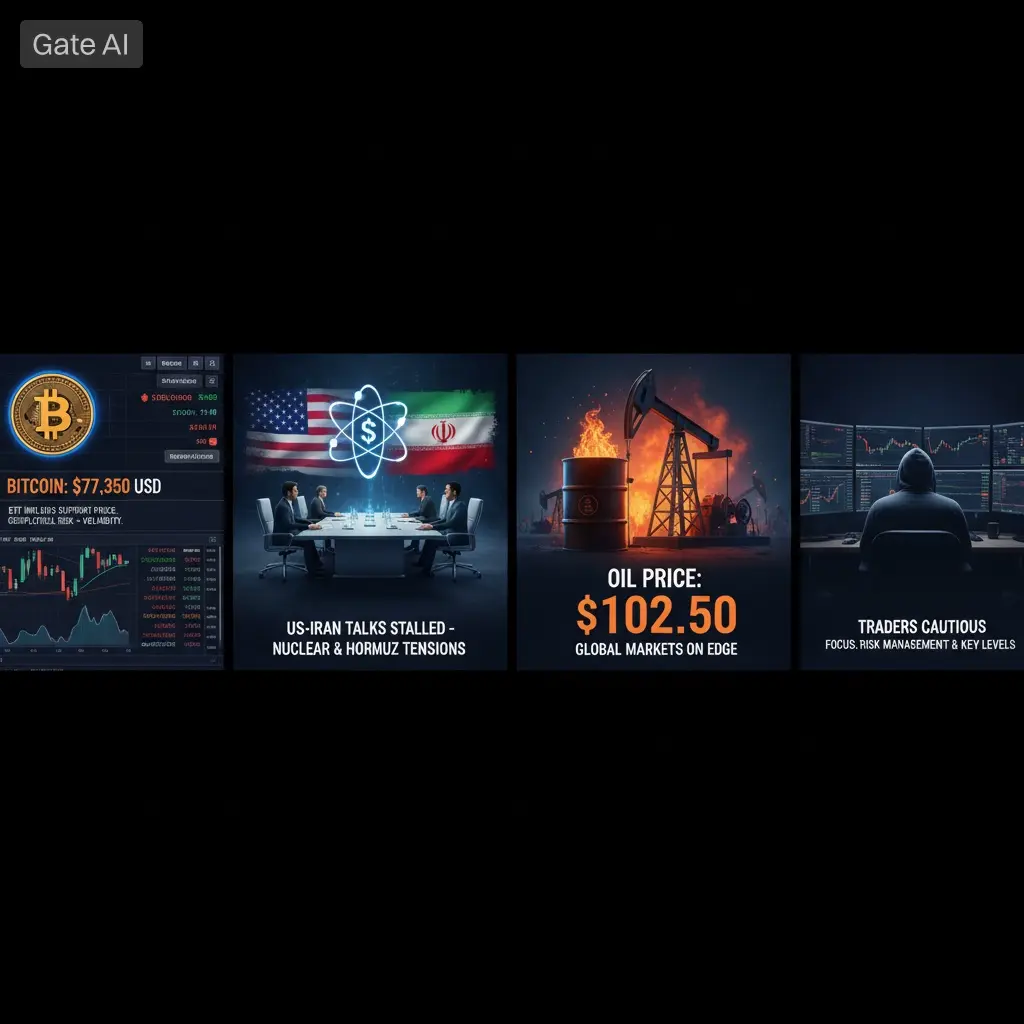

#US-IranTalksStall
US–Iran Talks Stall | Geopolitical Breakdown & Market Impact
The negotiations between the United States and Iran have entered a complete deadlock, driven by structural disagreements, escalating security actions, and internal political fragmentation on both sides. What was expected to be a fragile diplomatic pathway has now shifted into a high-risk standoff with global economic consequences.
Why the Talks Have Stalled
1. Nuclear Enrichment Deadlock
At the core of the dispute is Iran’s nuclear enrichment program.
The United States demands complete dismantling or strict long-term limits.
Iran insists on maintaining nuclear sovereignty and operational independence.
Hardline factions within Iran, particularly linked to the IRGC, view negotiations as a strategic concession that weakens national leverage. This has created a non-negotiable political red line.
2. Military Pressure & Naval Blockade
Tensions escalated sharply after the United States enforced a naval blockade on Iranian ports following disruptions in the Strait of Hormuz.
Iran considers this action a violation of ceasefire terms
The US frames it as strategic containment and pressure enforcement
The result is a reciprocal escalation with no diplomatic exit ramp
This has effectively frozen negotiation momentum.
3. Internal Power Fragmentation in Iran
Iran’s political structure is currently divided:
Hardliners oppose diplomacy entirely under current conditions
IRGC-aligned voices reject any compromise on Hormuz sovereignty
Foreign policy leadership reportedly sees negotiations as non-viable under Supreme Leader constraints
This internal divergence has weakened Iran’s ability to present a unified negotiating position.
4. Breakdown of Mediation Channels
External mediation attempts, including regional diplomatic efforts, have failed to restart dialogue.
A second round of talks collapsed before formal continuation
The ceasefire window has expired
Both sides have reverted to defensive and preparatory postures
The situation has entered what analysts describe as a “no deal, no war” equilibrium.
5. Hardline US Positioning
The United States has adopted an uncompromising stance:
No easing of sanctions or blockade without a comprehensive agreement
Public signaling emphasizes leverage dominance
Diplomatic flexibility has significantly narrowed
This has created a structural impasse where neither side is willing to initiate concessions.
Strait of Hormuz: The Core Pressure Point
The Strait of Hormuz remains the most critical geopolitical chokepoint in global energy flows.
Roughly 20% of global oil and LNG passes through it
Current conditions reflect partial closure and restricted passage
Both Iran and the US maintain opposing control narratives over access rights
Market consensus suggests prolonged disruption risk, with expectations that normalization may not occur in the near term.
Oil Market Shockwave
Current Market Levels
Brent Crude: Above $104–107
WTI Crude: Around $101–102
Key Drivers
Supply disruption risk from Hormuz instability
Rapid surge in global shipping and freight costs
Refining pressure impacting diesel and jet fuel markets
Persistent geopolitical risk premium embedded in pricing
Institutional Outlook Range
Forecasts vary widely depending on escalation scenarios:
Bullish stress scenario: Potential spikes above $110+
Base normalization outlook: Mid-$70s to $90 range over time
Bearish resolution case: Return toward $60–$70 levels in 2026–2027 cycle
The divergence reflects extreme uncertainty around maritime stability.
Bitcoin Market Response
Current Positioning
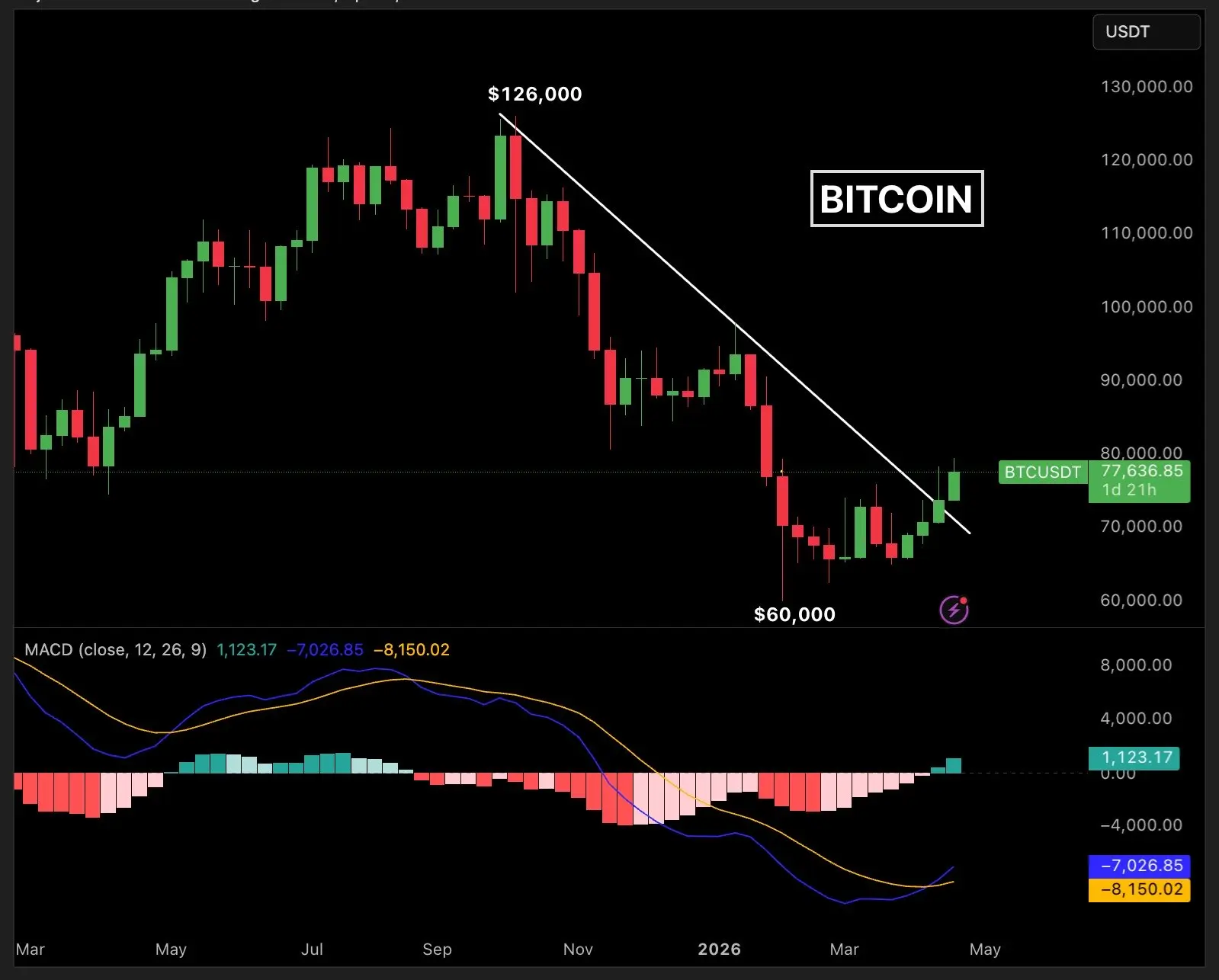
BTC: ~$77,500 range
Short-term trend: Volatile but relatively stable
Monthly performance: Strong recovery momentum despite macro risk
Key Market Dynamics
1. Oil-Driven Macro Correlation
Bitcoin has shown a delayed reaction to oil shocks:
Oil spikes first
Risk assets, including crypto, adjust afterward
2. Relative Resilience
Compared to equities and commodities, Bitcoin’s reaction has been relatively muted, suggesting partial pricing-in of geopolitical risk.
3. Institutional Support
Strong ETF inflows continuing across US spot Bitcoin products
Large-scale accumulation by institutional players reinforces structural demand
Liquidity absorption is acting as a stabilizing force
4. Market Sentiment
Sentiment remains in fear territory
However, underlying positioning shows persistent bullish conviction
Key Technical Zones (BTC)
Support: $73,000 – $74,000
Resistance: $78,000 – $80,000
Breakout extension: Above $80,000 toward higher liquidity zones
Breakdown risk: Below $73,000 opens deeper correction scenario
Strategic Market Implications
If Oil Remains Above $110
Increased inflation pressure
Risk-off behavior across equities and crypto
Bitcoin likely retests lower support zones
If Diplomatic Progress Resumes
Rapid oil correction expected
Risk assets rebound strongly
BTC reclaims upside momentum toward $80K+ range
Trading & Risk Framework
Conservative Positioning
Reduce exposure during headline volatility
Maintain cash reserves for opportunistic entries
Prioritize capital preservation over aggressive leverage
Hedge downside risk through structured protection strategies
Aggressive Positioning
Range trading between key support/resistance levels
Oil remains leading indicator for macro risk direction
Breakout confirmation required before directional conviction
Key Market Signals to Watch
1. Oil Price Direction (Primary Indicator)
2. ETF Inflow Strength in Bitcoin Markets
3. USD Strength (DXY trend impact on risk assets)
4. Diplomatic Headlines on Hormuz or Nuclear Talks
5. Shipping and Freight Market Stress Indicators
The US–Iran standoff has transitioned from diplomatic tension into a structural geopolitical risk event with direct macroeconomic transmission.
The Strait of Hormuz remains the central pressure point
Oil markets are pricing sustained disruption risk
Bitcoin is balancing institutional inflows against macro uncertainty
Global markets remain in a reactive, headline-driven phase
Until a clear resolution emerges, volatility will remain elevated, with oil acting as the primary leading indicator for broader risk sentiment.
#USIranTalksStall #Geopolitics #OilMarkets #CryptoAnalysis
US–Iran Talks Stall | Geopolitical Breakdown & Market Impact
The negotiations between the United States and Iran have entered a complete deadlock, driven by structural disagreements, escalating security actions, and internal political fragmentation on both sides. What was expected to be a fragile diplomatic pathway has now shifted into a high-risk standoff with global economic consequences.
Why the Talks Have Stalled
1. Nuclear Enrichment Deadlock
At the core of the dispute is Iran’s nuclear enrichment program.
The United States demands complete dismantling or strict long-term limits.
Iran insists on maintaining nuclear sovereignty and operational independence.
Hardline factions within Iran, particularly linked to the IRGC, view negotiations as a strategic concession that weakens national leverage. This has created a non-negotiable political red line.
2. Military Pressure & Naval Blockade
Tensions escalated sharply after the United States enforced a naval blockade on Iranian ports following disruptions in the Strait of Hormuz.
Iran considers this action a violation of ceasefire terms
The US frames it as strategic containment and pressure enforcement
The result is a reciprocal escalation with no diplomatic exit ramp
This has effectively frozen negotiation momentum.
3. Internal Power Fragmentation in Iran
Iran’s political structure is currently divided:
Hardliners oppose diplomacy entirely under current conditions
IRGC-aligned voices reject any compromise on Hormuz sovereignty
Foreign policy leadership reportedly sees negotiations as non-viable under Supreme Leader constraints
This internal divergence has weakened Iran’s ability to present a unified negotiating position.
4. Breakdown of Mediation Channels
External mediation attempts, including regional diplomatic efforts, have failed to restart dialogue.
A second round of talks collapsed before formal continuation
The ceasefire window has expired
Both sides have reverted to defensive and preparatory postures
The situation has entered what analysts describe as a “no deal, no war” equilibrium.
5. Hardline US Positioning
The United States has adopted an uncompromising stance:
No easing of sanctions or blockade without a comprehensive agreement
Public signaling emphasizes leverage dominance
Diplomatic flexibility has significantly narrowed
This has created a structural impasse where neither side is willing to initiate concessions.
Strait of Hormuz: The Core Pressure Point
The Strait of Hormuz remains the most critical geopolitical chokepoint in global energy flows.
Roughly 20% of global oil and LNG passes through it
Current conditions reflect partial closure and restricted passage
Both Iran and the US maintain opposing control narratives over access rights
Market consensus suggests prolonged disruption risk, with expectations that normalization may not occur in the near term.
Oil Market Shockwave
Current Market Levels
Brent Crude: Above $104–107
WTI Crude: Around $101–102
Key Drivers
Supply disruption risk from Hormuz instability
Rapid surge in global shipping and freight costs
Refining pressure impacting diesel and jet fuel markets
Persistent geopolitical risk premium embedded in pricing
Institutional Outlook Range
Forecasts vary widely depending on escalation scenarios:
Bullish stress scenario: Potential spikes above $110+
Base normalization outlook: Mid-$70s to $90 range over time
Bearish resolution case: Return toward $60–$70 levels in 2026–2027 cycle
The divergence reflects extreme uncertainty around maritime stability.
Bitcoin Market Response
Current Positioning
BTC: ~$77,500 range
Short-term trend: Volatile but relatively stable
Monthly performance: Strong recovery momentum despite macro risk
Key Market Dynamics
1. Oil-Driven Macro Correlation
Bitcoin has shown a delayed reaction to oil shocks:
Oil spikes first
Risk assets, including crypto, adjust afterward
2. Relative Resilience
Compared to equities and commodities, Bitcoin’s reaction has been relatively muted, suggesting partial pricing-in of geopolitical risk.
3. Institutional Support
Strong ETF inflows continuing across US spot Bitcoin products
Large-scale accumulation by institutional players reinforces structural demand
Liquidity absorption is acting as a stabilizing force
4. Market Sentiment
Sentiment remains in fear territory
However, underlying positioning shows persistent bullish conviction
Key Technical Zones (BTC)
Support: $73,000 – $74,000
Resistance: $78,000 – $80,000
Breakout extension: Above $80,000 toward higher liquidity zones
Breakdown risk: Below $73,000 opens deeper correction scenario
Strategic Market Implications
If Oil Remains Above $110
Increased inflation pressure
Risk-off behavior across equities and crypto
Bitcoin likely retests lower support zones
If Diplomatic Progress Resumes
Rapid oil correction expected
Risk assets rebound strongly
BTC reclaims upside momentum toward $80K+ range
Trading & Risk Framework
Conservative Positioning
Reduce exposure during headline volatility
Maintain cash reserves for opportunistic entries
Prioritize capital preservation over aggressive leverage
Hedge downside risk through structured protection strategies
Aggressive Positioning
Range trading between key support/resistance levels
Oil remains leading indicator for macro risk direction
Breakout confirmation required before directional conviction
Key Market Signals to Watch
1. Oil Price Direction (Primary Indicator)
2. ETF Inflow Strength in Bitcoin Markets
3. USD Strength (DXY trend impact on risk assets)
4. Diplomatic Headlines on Hormuz or Nuclear Talks
5. Shipping and Freight Market Stress Indicators
The US–Iran standoff has transitioned from diplomatic tension into a structural geopolitical risk event with direct macroeconomic transmission.
The Strait of Hormuz remains the central pressure point
Oil markets are pricing sustained disruption risk
Bitcoin is balancing institutional inflows against macro uncertainty
Global markets remain in a reactive, headline-driven phase
Until a clear resolution emerges, volatility will remain elevated, with oil acting as the primary leading indicator for broader risk sentiment.
#USIranTalksStall #Geopolitics #OilMarkets #CryptoAnalysis