


Futures
Access hundreds of perpetual contracts
TradFi
Gold
One platform for global traditional assets
Options
Hot
Trade European-style vanilla options
Unified Account
Maximize your capital efficiency
Demo Trading
Futures Kickoff
Get prepared for your futures trading
Futures Events
Join events to earn rewards
Demo Trading
Use virtual funds to experience risk-free trading
Launch
CandyDrop
Collect candies to earn airdrops
Launchpool
Quick staking, earn potential new tokens
HODLer Airdrop
Hold GT and get massive airdrops for free
Launchpad
Be early to the next big token project
Alpha Points
Trade on-chain assets and earn airdrops
Futures Points
Earn futures points and claim airdrop rewards





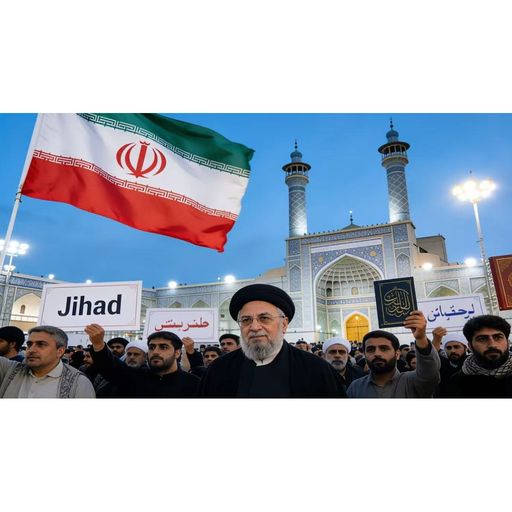

Iran war chokes aid corridors, obstructing global relief efforts
Summary
Aid routes disrupted by Iran war, delaying shipments
Dubai aid hub badly affected
Aid for Gaza and Sudan held up
Shipments for Africa forced to take lengthy Cape route
GENEVA, March 6 (Reuters) - Key humanitarian air, sea and land routes are being constricted by disruption from the war in the Middle East, delaying life-saving shipments to some of the world’s worst crises, 10 aid officials have told Reuters.
The U.S.–Israeli war on Iran entered its seventh day on Friday, convulsing global markets and disrupting supply chains with airspace closures and the halt of shipping through the critical Strait of Hormuz.
The Reuters Iran Briefing newsletter keeps you informed with the latest developments and analysis of the Iran war. Sign up here.
Aid to Gaza and Sudan is grinding to a halt and costs are soaring for help to the hundreds of millions suffering hunger crises around the world.
“People in dire need of assistance will have to wait longer for food,” said Jean-Martin Bauer, Director of Food Security at the World Food Programme.
Already, tents, tarpaulins and lamps destined for the Israeli-occupied Palestinian territories of Gaza and the West Bank have become stuck in the supply chain, the International Organization for Migration said.
DUBAI AID HUB HOBBLED BY AIR AND SEA RESTRICTIONS
Aid groups say higher operational costs are straining budgets already facing massive donor cuts. The IOM said shipping firms were demanding emergency surcharges of approximately $3,000 per container.
Humanitarian groups stocking goods for rapid regional deployment at warehouses in Dubai’s Humanitarian Hub face challenges moving supplies onto transit routes.
The International Federation of Red Cross and Red Crescent Societies cannot move trauma kits to help the Iranian Red Crescent with search and rescue from its Dubai hub, where they sit in a 10 million Swiss franc ($13 million) emergency stockpile, said Cecile Terraz, a director at the IFRC.
The group cannot move stock through Jebel Ali port - the region’s largest container terminal, which was set on fire by the debris of an intercepted missile - from where cargo normally moves onto planes or into the Strait of Hormuz.
The World Health Organization’s Dubai hub operations are also frozen, regional director Hanan Balkhy said, obstructing 50 emergency requests from 25 countries and hampering operations such as polio vaccination.
Ripple effects farther afield are also likely.
Famine-struck Sudan is particularly exposed due to additional restrictions since February 28 on the Suez Canal and the Bab el-Mandeb Strait at the southern entrance to the Red Sea, the UNHCR said.
“We are particularly concerned about Africa,” said a spokeswoman, adding that some cargoes were being sent around the Cape of Good Hope. The route takes up to three weeks longer.
Costs for fuel, transportation and insurance are also rising, and Terraz said the IFRC may have to cut deliveries to the Iranian Red Crescent.
Emma Maspero, senior manager in Copenhagen of the supply division of the U.N. children’s body UNICEF, said she hoped flights carrying perishable humanitarian goods such as vaccines could be prioritised amid the airspace restrictions. ($1 = 0.7799 Swiss francs)
Reporting by Olivia Le Poidevin and Emma Farge in Geneva; Additional reporting by Max Hunder in Kyiv and Louise Rasmussen in Copenhagen; Editing by Kevin Liffey
Our Standards: The Thomson Reuters Trust Principles., opens new tab
Share
X
Facebook
Linkedin
Email
Link
Purchase Licensing Rights
Emma Farge
Thomson Reuters
Emma Farge reports on the U.N. beat and Swiss news from Geneva since 2019. She has produced a string of exclusives on diplomacy, the environment and global trade and covered Switzerland’s first war crimes trial. Her Reuters career started in 2009 covering oil swaps from London and she has since written about the West African Ebola outbreak, embedded with U.N. troops in north Mali and was the first reporter to enter deposed Gambian dictator Yahya Jammeh’s estate. She co-authored a winning story for the Elizabeth Neuffer Memorial Prize on Russia’s diplomatic isolation in 2022 and was also part of a team of journalists nominated in 2012 as Pulitzer finalists in the international reporting category for coverage of the Libyan revolution. She holds a BA from Oxford University (First) and an MSc from the LSE in International Relations. She is currently on the board of the press association for UN correspondents in Geneva (ACANU).
Email
Linkedin
Link