

Trade
Basic
Futures
Futures
Hundreds of contracts settled in USDT or BTC
TradFi
Gold
Trade global traditional assets with USDT in one place
Options
Hot
Trade European-style vanilla options
Unified Account
Maximize your capital efficiency
Demo Trading
Futures Kickoff
Get prepared for your futures trading
Futures Events
Participate in events to win generous rewards
Demo Trading
Use virtual funds to experience risk-free trading
Earn
Launch
CandyDrop
Collect candies to earn airdrops
Launchpool
Quick staking, earn potential new tokens
HODLer Airdrop
Hold GT and get massive airdrops for free
Launchpad
Be early to the next big token project
Alpha Points
Trade on-chain assets and enjoy airdrop rewards!
Futures Points
Earn futures points and claim airdrop rewards
Investment
Simple Earn
Earn interests with idle tokens
Auto-Invest
Auto-invest on a regular basis
Dual Investment
Buy low and sell high to take profits from price fluctuations
Soft Staking
Earn rewards with flexible staking
Crypto Loan
0 Fees
Pledge one crypto to borrow another
Lending Center
One-stop lending hub
VIP Wealth Hub
Customized wealth management empowers your assets growth
Private Wealth Management
Customized asset management to grow your digital assets
Quant Fund
Top asset management team helps you profit without hassle
Staking
Stake cryptos to earn in PoS products
Smart Leverage
New
No forced liquidation before maturity, worry-free leveraged gains
GUSD Minting
Use USDT/USDC to mint GUSD for treasury-level yields

More


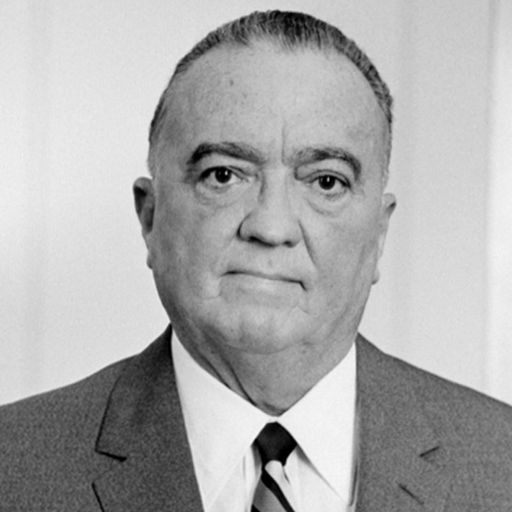




What is the FOMC: The key factor that influences the global money market
Every time the U.S. Federal Open Market Committee (FOMC) holds a meeting, investors worldwide focus on the outcome because even small decisions can significantly change the stock market, gold prices, currency markets, and especially the bond market. But what exactly is the FOMC, and why do its movements have such a huge impact on the global economy?
What is the FOMC and Why Is It Important for Investors?
The FOMC, or Federal Open Market Committee, is a governing body of the U.S. Federal Reserve responsible for setting the country’s monetary policy. It consists of 12 senior officials who decide on actions in the open market to achieve two main economic goals.
The first goal is to maintain price stability, meaning controlling inflation at sustainable levels. The second is to promote maximum employment, monitored through non-farm payroll figures. The importance of the FOMC lies in its policy decisions, which influence interest rates and U.S. government bond yields. Since the U.S. bond market exceeds $51 trillion—making it the largest in the world—changes in policy send signals worldwide.
Composition and Main Responsibilities of the Monetary Policy Committee
To understand the FOMC more deeply, it’s essential to know who makes up the committee. Its policy decisions are based on data and the judgment of each member, not just assumptions. Therefore, analyzing each meeting may require considering individual members’ perspectives.
Who Has the Power to Decide in the FOMC?
The FOMC includes 12 members divided as follows: 7 from the Federal Reserve Board of Governors, 1 from the New York Fed branch (who is the Chair of the FOMC), and 4 others appointed from the remaining Federal Reserve districts. These positions rotate annually, giving each member a chance to influence decisions.
Currently, Jerome H. Powell serves as Chair, with John C. Williams from the New York Fed as Vice Chair. Other members include Michael S. Barr, Michelle W. Bowman, Lisa D. Cook, Austan D. Goolsbee, Patrick Harker, Philip N. Jefferson, Neel Kashkari, Adriana D. Kugler, Lorie K. Logan, and Christopher J. Waller. Each has different educational backgrounds and experiences, bringing diverse viewpoints to policy decisions.
Frequency and Duration of FOMC Meetings
The FOMC meets eight times a year, roughly every six weeks. Each meeting lasts two days, and on the final day, the committee announces the results and issues a statement to the public. Typically, the announcement is made at 2:00 p.m. local U.S. time or around 2:00 a.m. Thailand time.
Investors eagerly await these meetings because markets tend to be highly volatile during and immediately after the announcements. Smart investors prepare for potential policy shifts.
Policy Tools Used by the FOMC to Control the Money Market
To achieve its goals of price stability and employment, the FOMC employs several policy tools, mainly categorized as Open Market Operations (OMOs), which include three primary methods:
First Tool: Buying U.S. Treasury Bonds — This injects liquidity directly into the financial system. It’s often used to stimulate economic growth or avoid slowdown. However, it risks causing excessive inflation and expanding the Fed’s balance sheet.
Second Tool: Selling U.S. Treasury Bonds — This does the opposite, removing liquidity from the system. It’s used to curb overheating in the economy, leading to lower inflation and a shrinking balance sheet.
Third Tool: Adjusting the Federal Funds Rate (FFR) — The most impactful tool. The FFR is the overnight interest rate at which banks lend to each other. When the FFR is high, banks reduce borrowing, decreasing money circulation. Conversely, a low FFR encourages borrowing, increasing liquidity.
With these tools, the FOMC can control liquidity and stability in the financial system, supporting economic growth and employment.
Reading the Dot Plot: A Future Policy Indicator
Besides monitoring policy changes, investors should pay attention to the Dot Plot, a key tool for predicting future policy directions.
The Dot Plot is a graph showing each FOMC member’s view of appropriate interest rates for upcoming meetings. By analyzing this, investors can gauge the likely path of interest rate adjustments. The Dot Plot is a powerful forecasting tool for monetary policy.
Why Is the FOMC Important for Investors?
When asked what the FOMC is, the answer is that it’s a monetary policy committee with significant influence over the global financial system. In Thailand, it’s similar to the Monetary Policy Committee (MPC), which meets regularly to set interest rates.
All investors, regardless of their market segment, need to closely follow FOMC movements because even small decisions can send signals that change the entire financial landscape. Understanding what the FOMC is and how to interpret tools like the Dot Plot is crucial for portfolio management and smart investing.