


Futures
Access hundreds of perpetual contracts
TradFi
Gold
One platform for global traditional assets
Options
Hot
Trade European-style vanilla options
Unified Account
Maximize your capital efficiency
Demo Trading
Introduction to Futures Trading
Learn the basics of futures trading
Futures Events
Join events to earn rewards
Demo Trading
Use virtual funds to practice risk-free trading
Launch
CandyDrop
Collect candies to earn airdrops
Launchpool
Quick staking, earn potential new tokens
HODLer Airdrop
Hold GT and get massive airdrops for free
Launchpad
Be early to the next big token project
Alpha Points
Trade on-chain assets and earn airdrops
Futures Points
Earn futures points and claim airdrop rewards


More




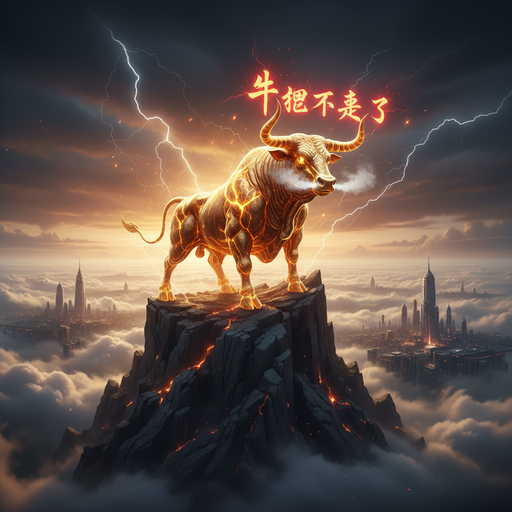

Ethereum is a decentralized smart contract and decentralized application (DApp) platform. It is not just a digital currency but more like a "world computer" maintained by a global network.
Core Positioning
· Nature: Programmable blockchain platform
· Key Innovation: Turing-complete smart contracts
· Token Name: Ether (ETH)
· Consensus Mechanism: Proof of Stake (PoS)
Operational Core
· Ethereum Virtual Machine (EVM): A global virtual computer running on thousands of computers (nodes) worldwide, ensuring smart contracts execute identically across all nodes.
· Smart Contracts: Programmable code deployed on the blockchain that automatically executes when conditions are met, forming the foundation of all DApps.
· Gas Fees: Transaction or operation fees paid to execute on the network, denominated in ETH, used to incentivize network maintainers.
Main Application Scenarios
· Decentralized Finance (DeFi): Building financial services without traditional banking intermediaries, such as lending and trading.
· Non-Fungible Tokens (NFT): Representing ownership of unique digital or physical assets, such as artwork and collectibles.
· Decentralized Autonomous Organizations (DAO): Organizations managed by smart contracts, with decision-making carried out through token holder voting.
Development History and Upgrades
Ethereum has undergone continuous evolution, with the two most significant upgrades being:
· "The Merge": In 2022, transitioned from energy-intensive Proof of Work (PoW) to Proof of Stake (PoS), reducing energy consumption by approximately 99.95%.
· EIP-1559 Mechanism: Introduced a transaction fee burning mechanism, which can reduce ETH circulation during network congestion, increasing its scarcity.
Advantages and Challenges
· Main Advantages:
· Strong Network Effect: The largest developer community and the richest DApp ecosystem.
· High Security and Decentralization: Hundreds of thousands of validators, with the network enduring long-term tests.
· Clear Upgrade Path: Continuous performance improvements through Layer 2 scaling solutions and future sharding technology.
· Current Challenges:
· Scalability Limitations: Mainnet transaction speeds are relatively slow, with high fees during peak times.
· Facing Competition: Other blockchains compete in transaction speed and cost.
· Regulatory Uncertainty: Facing constantly changing regulatory environments worldwide.
💡 How to understand the value of Ethereum?
Simply put, Ethereum's value is closely linked to the prosperity of its ecosystem. You can think of Ethereum as a digital kingdom:
· ETH is the "currency" and "fuel" of this kingdom: Anything you want to do in this kingdom (transactions, playing DApps, issuing assets) requires spending ETH as a fee.
· The more prosperous the kingdom, the higher the demand: As more DeFi, NFT, gaming, and other applications are built and used, the demand for ETH as a payment fee and staking asset increases.
· The "fuel" itself is partially burned: Due to the EIP-1559 mechanism, part of the fees are burned, which effectively reduces the overall supply of ETH.
🔮 Future Outlook
Ethereum's long-term goal is to become a decentralized public infrastructure supporting global applications. Future upgrades focus on further increasing network capacity through sharding and continuously optimizing user experience for Layer 2 solutions.
#感谢关注