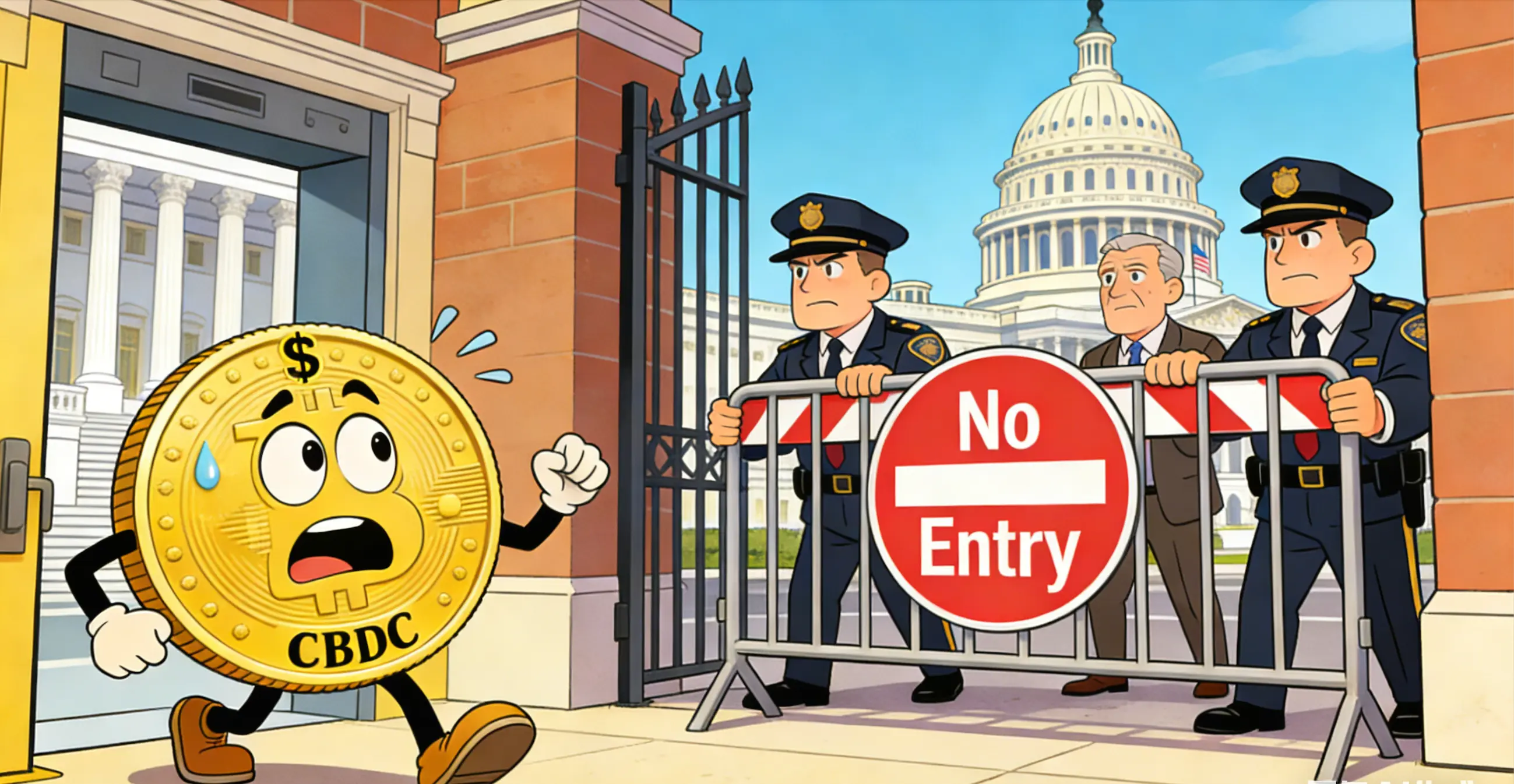
 Congress may be nearing passage of legislation that would permanently prohibit the Federal Reserve from issuing a central bank digital currency, according to TD Cowen Washington Research Group.
Senator Ted Cruz has filed an amendment to the 21st Century ROAD to Housing Act that would make permanent an existing temporary ban on a Fed-issued digital dollar, a move analysts say would benefit stablecoin issuers but could create additional obstacles for passing the broader CLARITY Act crypto market structure legislation.
Legislative Push for Permanent CBDC Ban
Cruz Amendment Details
Senator Ted Cruz introduced an amendment to the housing package known as the 21st Century ROAD to Housing Act that would permanently ban the Federal Reserve from issuing a central bank digital currency. The amendment would replace a temporary ban currently in effect through 2030 with a permanent prohibition.
The housing legislation is expected to receive a Senate vote as early as the week of March 9, 2026. If passed with the Cruz amendment included, the bill would head to the House of Representatives for consideration.
Congressional Momentum
Last week, a group of lawmakers signed a letter urging House and Senate leadership to permanently ban a CBDC. Congressman Ralph Norman, one of the signatories, stated that unlike cash, a CBDC could allow the government to track transactions and monitor how Americans spend their money, characterizing it as “overreach at its core.”
The U.S. House of Representatives previously passed the Anti-CBDC Surveillance State Act in 2025, which prohibited the Fed from issuing a CBDC directly to individuals. Cruz had introduced a Senate version of that legislation and has continued pushing for a permanent ban.
TD Cowen Analysis and Implications
Policy Continuity Assessment
Jaret Seiberg, managing director at TD Cowen’s Washington Research Group, noted in a March 9, 2026 analysis that the Cruz amendment largely reinforces the Federal Reserve’s current stance. The central bank has repeatedly stated it has no plans to issue a digital dollar and would not proceed without explicit congressional authorization.
“We expect a ban on a central bank cryptocurrency to be included in the housing bill that gets to the President’s desk as soon as next month. It is more likely that the ban is permanent than temporary,” Seiberg wrote.
He added: “We agree that the Federal Reserve has no immediate plans to issue a digital dollar. Yet that could change over time based on who wins the White House in 2028 and who becomes Federal Reserve chair in 2030. It is why a ban is helpful.”
Impact on Stablecoin Issuers
Seiberg said a permanent CBDC ban would broadly benefit stablecoin issuers by removing any doubt about whether the Federal Reserve might eventually issue its own digital dollar and disrupt their business models. This clarity could encourage further investment and innovation in the private stablecoin sector.
Potential Obstacle for CLARITY Act
However, the analyst warned that the permanent ban could affect prospects for the crypto market structure bill known as the CLARITY Act, which is already facing hurdles to enactment.
“This also could become an excuse not to enact the Clarity Act this year, as lawmakers can say they passed the GENIUS Act on stable coins and the ban on Fed-issued digital dollars. That is a lot of congressional focus on one industry,” Seiberg said.
He concluded: “We are not saying this closes the door on Clarity. It just joins the list of obstacles to action. And each new obstacle makes enactment a bit less likely.”
Regulatory Context
GENIUS Act Framework
The GENIUS Act, passed in July 2025, established federal standards for payment stablecoins including one-to-one reserve backing and a ban on issuers directly paying yield. The legislation represented a major step in creating regulatory clarity for private digital dollar alternatives.
Fed’s Stance on CBDC
Federal Reserve officials have consistently maintained that they have no plans to issue a digital dollar without explicit authorization from Congress. The central bank has conducted research and experimentation on CBDC technology but has not signaled any intention to proceed with issuance under current leadership.
FAQ: CBDC Ban and Crypto Legislation
Q: What is the current status of the proposed permanent CBDC ban?
A: Senator Ted Cruz has filed an amendment to the 21st Century ROAD to Housing Act that would permanently prohibit the Federal Reserve from issuing a digital dollar, replacing a temporary ban currently in effect through 2030. The housing bill is expected to receive a Senate vote as early as this week.
Q: How would a permanent CBDC ban affect stablecoin issuers?
A: According to TD Cowen analysts, a permanent ban would benefit stablecoin issuers by eliminating uncertainty about potential future competition from a Fed-issued digital dollar, providing regulatory clarity for private sector stablecoin development.
Q: Why might the CBDC ban complicate passage of the CLARITY Act?
A: Lawmakers could argue they have already addressed digital asset policy through the GENIUS Act (stablecoin regulation) and a CBDC ban, reducing urgency to pass additional crypto market structure legislation. This adds to existing obstacles facing the CLARITY Act.
Q: What is the Federal Reserve’s position on issuing a digital dollar?
A: The Federal Reserve has repeatedly stated it has no plans to issue a digital dollar and would not proceed without explicit authorization from Congress. The Cruz amendment would codify this stance permanently.
Disclaimer: The information on this page may come from third parties and does not represent the views or opinions of Gate. The content displayed on this page is for reference only and does not constitute any financial, investment, or legal advice. Gate does not guarantee the accuracy or completeness of the information and shall not be liable for any losses arising from the use of this information. Virtual asset investments carry high risks and are subject to significant price volatility. You may lose all of your invested principal. Please fully understand the relevant risks and make prudent decisions based on your own financial situation and risk tolerance. For details, please refer to
Disclaimer.


