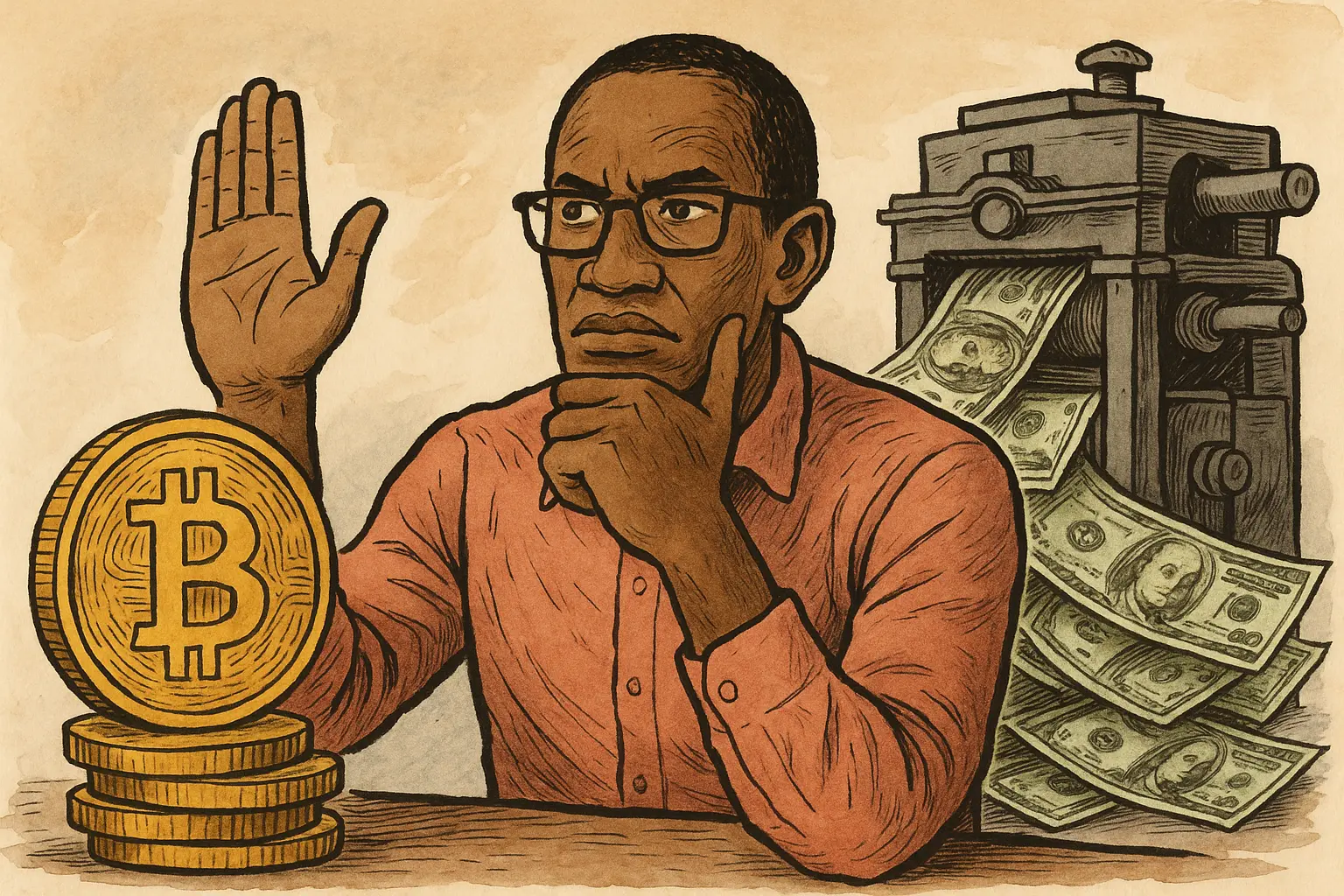
Legendary trader Arthur Hayes stated on the Coin Stories podcast on Tuesday that although he previously predicted Bitcoin would reach $250,000 by 2026, he will not be investing any funds into Bitcoin under the current market conditions. He clearly outlined his waiting criteria: only when the Federal Reserve loosens monetary policy and begins printing money will he consider re-entering the market.
Hayes’ Logic for Waiting: Printing Money Is the True Catalyst for Bitcoin

(Source: Natalie Brunell)
Hayes’ core argument is based on a direct correction of the mainstream market narrative. He points out that many believe “war benefits Bitcoin,” but this is not entirely accurate; a more precise statement should be “money printing benefits Bitcoin.” War itself does not directly cause Bitcoin prices to rise; rather, it is the monetary expansion measures taken by central banks in response to war that drive Bitcoin higher.
Hayes states that in the context of the ongoing US-Iran conflict, this logic will eventually play out: “The longer this conflict lasts, the more likely the Fed will need to print money to support America’s war effort.” Once the Fed adopts easing policies, improved liquidity will serve as a strong catalyst for Bitcoin. His plan to enter the market is therefore straightforward: “I will buy Bitcoin only when central banks start printing money.”
This waiting strategy is based on the premise that Hayes is currently uncertain whether Bitcoin has already bottomed out — and before confirmation of a bottom, he prefers to observe rather than speculate.
Downside Risks for Bitcoin: Three Key Judgments from Hayes
Hayes’ assessment of short-term downside risks is relatively cautious, highlighting several risk scenarios to watch:
-
Escalation of war leading to sell-offs: If the US-Iran conflict intensifies, stock markets and Bitcoin could experience large-scale synchronized sell-offs, with investors flocking to safe-haven assets like the US dollar.
-
Risk of falling below $60,000 and triggering liquidations: Hayes warns that if Bitcoin drops below $60,000, it could trigger “massive chain liquidations,” amplifying the downward move. Bitcoin briefly touched $60,000 on February 6 before rebounding slightly, indicating this level has technical significance.
-
Unquantifiable geopolitical uncertainty: Ongoing geopolitical tensions create market pressures that are difficult to assess with traditional analysis frameworks.
Hayes’ Long-Term Forecast vs. Other Analysts’ Views
It’s worth noting that Hayes’ cautious stance applies only to the current short-term timeframe. He still maintains a long-term forecast of Bitcoin reaching $250,000 by 2026 and adds that he expects Bitcoin “won’t stay below $100,000 for many years.”
In contrast, some analysts are more optimistic about the short-term trend. Michael van de Poppe recently pointed out that the “strong rally” in the Nasdaq will be bullish for Bitcoin: “There’s almost no reason to believe there’s uncertainty anymore. Based on this principle, I think Bitcoin and altcoins will have more room to rise in the coming period.”
This divergence also highlights a typical feature of the current market: a tug-of-war between strong psychological support and geopolitical downside pressures, leading top analysts’ judgments to diverge significantly.
Frequently Asked Questions
Why did Arthur Hayes shift from a Bitcoin bull to a temporary observer?
Hayes’ cautious stance is not a change in his long-term outlook but a tactical response to the current market environment. His logic is: without resolution of the US-Iran conflict and without the Fed initiating easing policies, Bitcoin faces geopolitical risk asset sell-offs rather than the liquidity-driven rally he expects long-term. He is waiting for “trigger conditions” to appear, rather than abandoning his bullish thesis.
What exactly does Hayes mean by “the Fed printing money”?
Hayes refers to a shift from the Fed’s tightening mode (raising or maintaining high interest rates) to actual easing policies, such as rate cuts or expanding the balance sheet (quantitative easing). In his analysis, such policies are typically triggered by war-related fiscal pressures — when governments need to borrow large sums to fund military operations, central banks often provide liquidity. This environment of “money printing” has historically been a common backdrop for major Bitcoin bull markets.
If Bitcoin falls below $60,000, does it mean a long-term trend reversal?
Hayes mentions that $60,000 is an important short-term technical level; falling below it could trigger chain liquidations. However, he emphasizes that he expects Bitcoin “won’t stay below $100,000 for many years,” indicating he believes that even if a deeper short-term correction occurs, the long-term trend remains intact. Potential liquidations below $60,000 are more of a technical short-term shock rather than a sign of fundamental deterioration.
Disclaimer: The information on this page may come from third parties and does not represent the views or opinions of Gate. The content displayed on this page is for reference only and does not constitute any financial, investment, or legal advice. Gate does not guarantee the accuracy or completeness of the information and shall not be liable for any losses arising from the use of this information. Virtual asset investments carry high risks and are subject to significant price volatility. You may lose all of your invested principal. Please fully understand the relevant risks and make prudent decisions based on your own financial situation and risk tolerance. For details, please refer to
Disclaimer.


