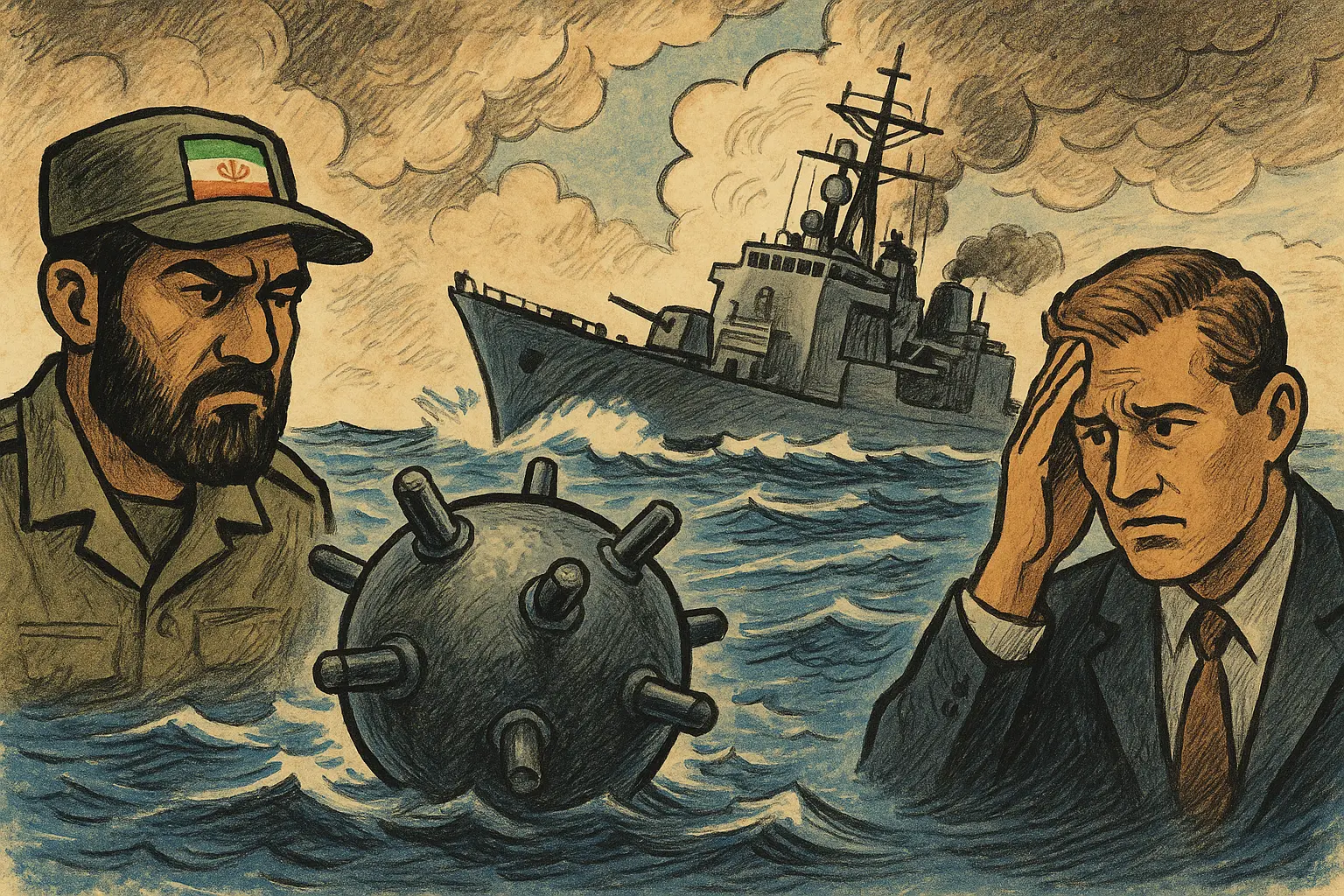
“TACO Trading” (Trump Always Chickens Out) bets that President Trump will ultimately concede or reach a quick deal during a crisis. However, as Iran begins laying mines in the Strait of Hormuz, JPMorgan Private Bank strategist Jacob Manoukian warns that the U.S.-Iran conflict has already taken on numerous potential trajectories beyond anyone’s control, putting the core assumptions of TACO trading to a severe test.
TACO Trading Logic: Why Wall Street Believes Trump Will Concede
The core belief behind the TACO strategy is based on a historical pattern: President Trump, when facing costly standoffs, typically resolves crises through negotiations or unilateral concessions rather than allowing conflicts to escalate to levels that could damage the market. From trade wars to multiple diplomatic crises, this repeated pattern has led many investors to adopt an instinctive “buy the dip and wait for Trump to concede” approach.
During the early stages of the Iran conflict, the TACO logic was widely cited—Trump explicitly stated that military action would last about four to five weeks, providing the market with a clear timeframe. As long as investors believe the conflict will end within a predictable period, they feel confident buying during market dips, expecting a rebound once the situation normalizes.
JPMorgan analysts do not entirely dismiss this logic. Manoukian states that reaching an agreement within two to three weeks remains possible for two reasons: first, Trump may want to prevent oil prices from rising excessively before the midterm elections; second, Iran and its surrounding countries have limited weapons and resource supplies, making prolonged high-intensity standoffs unsustainable.
The Strait of Hormuz Mines: Bringing TACO Strategy into Unknown Territory
However, Iran’s move to lay mines in the Strait of Hormuz injects an unpredictable variable into the situation. The Strait of Hormuz is one of the world’s most critical oil transit routes, with about 20% of global oil supplies passing through this narrow channel. Intelligence reports indicate dozens of mines have been laid, and the Islamic Revolutionary Guard Corps (IRGC) controls up to 90% of the mine-laying vessels globally, theoretically capable of significantly increasing mine deployment in the central waters of what is called the “Death Valley.”
On March 10, Trump demanded on Truth Social that all mines be “immediately” cleared and warned that if the issue is not resolved promptly, Iran will face unprecedented military consequences. Meanwhile, U.S. officials confirmed that the U.S. Navy has not yet escorted ships through the closed strait, indicating the situation has not yet reached a critical escalation point but also highlighting the high uncertainty in current negotiations.
This is the danger of the TACO trade: mines are not like tariffs that can be temporarily halted; once triggered or causing casualties, the trajectory of the situation will no longer be under the control of any single decision-maker.
JPMorgan’s Warning and Alternative Investment Suggestions
Manoukian’s main warning to TACO traders is that the outcome of this conflict has too many potential directions, and no one party can fully control the course. “As strategists, our concern is that there are many potential developments, and these are beyond anyone’s control,” he said.
For investors seeking to protect capital in turbulent markets, Manoukian offers an counterintuitive suggestion: shift into infrastructure assets, including power plants, roads, and bridges. He notes that up to 80% of wealthy family offices do not hold such stocks, and in an environment where supply chains and energy markets face risks, infrastructure investments can provide relatively risk-averse, steady returns.
Frequently Asked Questions
Q: How does the TACO trading strategy manifest in the cryptocurrency market?
The crypto application of TACO involves buying assets like Bitcoin during geopolitical events such as the Iran conflict, betting that Trump’s eventual concessions and a risk appetite rebound will trigger a crypto rally. On Tuesday, Bitcoin rose 2.32% to $70,581, and Japan’s Nikkei 225 rebounded over 3% after Monday’s sharp decline, partially confirming the TACO logic. However, Iran’s mine-laying actions significantly increase the risks of such bets.
Q: Why do mines in the Strait of Hormuz pose systemic risks to financial markets?
The Strait accounts for about 20% of global oil transportation. Closure or disruption could lead to sustained high energy prices, persistent inflation pressures, reduced Federal Reserve easing, and widespread supply chain impacts. Unlike tariffs, mines are physical military actions; their clearance could trigger accidental escalation, complicating market pricing.
Q: Why are JPMorgan’s recommended infrastructure assets considered resilient against market risks?
Infrastructure assets like power plants, roads, and bridges typically generate income from long-term government contracts or utility fees, making them less correlated with market sentiment. In high geopolitical risk and rising energy cost environments, companies controlling energy distribution or logistics infrastructure may benefit, providing a hedge. JPMorgan suggests these assets can serve as stabilizers in portfolios during periods of increased uncertainty.
Disclaimer: The information on this page may come from third parties and does not represent the views or opinions of Gate. The content displayed on this page is for reference only and does not constitute any financial, investment, or legal advice. Gate does not guarantee the accuracy or completeness of the information and shall not be liable for any losses arising from the use of this information. Virtual asset investments carry high risks and are subject to significant price volatility. You may lose all of your invested principal. Please fully understand the relevant risks and make prudent decisions based on your own financial situation and risk tolerance. For details, please refer to
Disclaimer.


