A little-known fact amid the global oil price surge caused by military actions by the US-Israel coalition against Iran, near-blockade of the Strait of Hormuz, and the resulting chaos: Taiwan actually has its own oil production. The Chuhuangkeng Oil and Gas Field in Gongguan Township, Miaoli County, has been in operation for over 160 years since the Qing Dynasty era, making it the oldest active oil field in the world.
(Previous summary: Crude oil prices surged 9%, then Trump intervened! Navy escort through the Strait of Hormuz + DFC war risks, Bitcoin rebounded past 71,000 USD)
(Additional background: Trump called to “Make Iran Great Again,” bombing nuclear facilities, causing nearly $1 billion in crypto liquidations)
Table of Contents
Toggle
- The Beidrick Well, two years later than this one, is the only still operating
- The anticline structure is key: why is there oil specifically in Miaoli
- Over 90% of Taiwan’s energy still relies on imports
As the global market struggles with soaring oil prices triggered by Middle East tensions, Taiwan’s CPC Corporation shared a rarely known piece of news this week: Taiwan itself has an old oil well, which has been drilled since the Qing Dynasty era and continues to produce today.
This well is located in Chuhuangkeng, Gongguan Township, Miaoli County. As of 2026, it is still in production, over 160 years since its first extraction. It is Asia’s first oil well and the second oldest in the world.
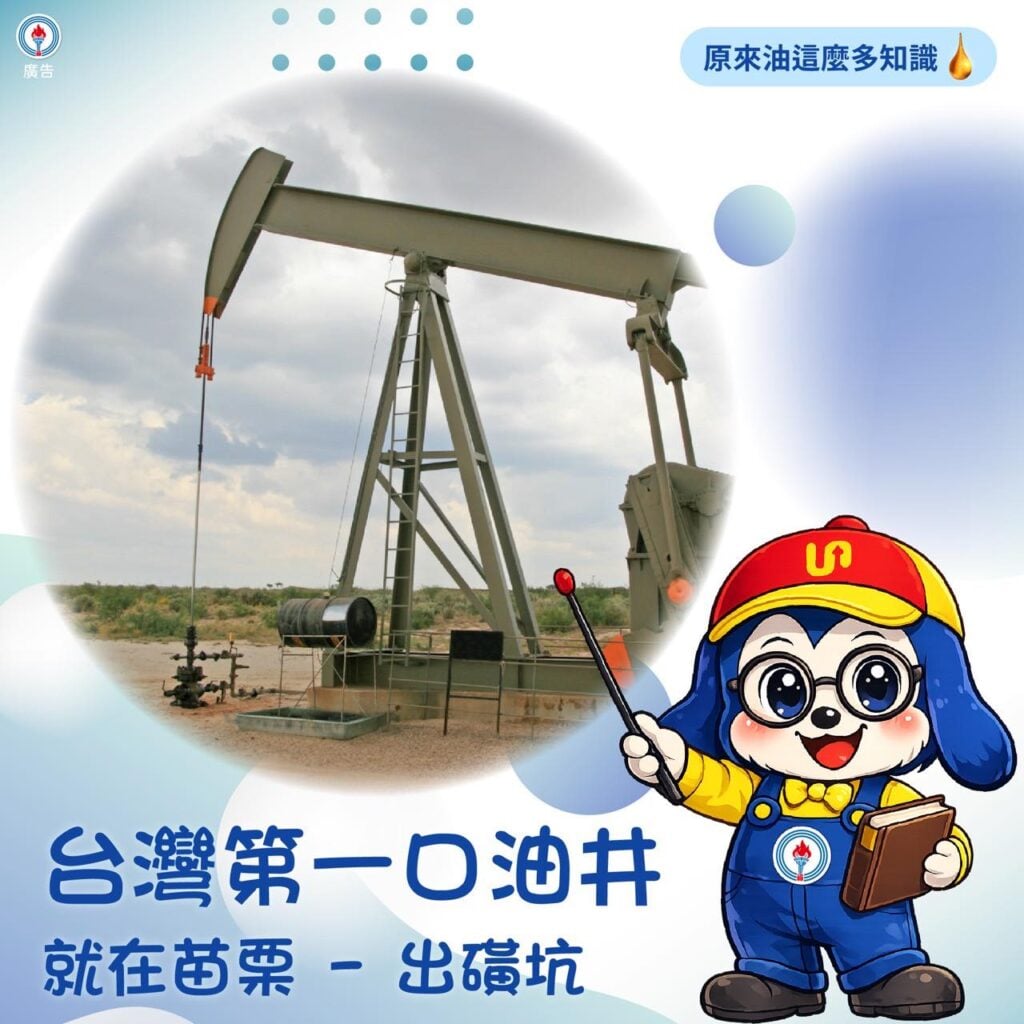
Image source: Taiwan CPC Corporation
The Beidrick Well, two years later than this one, is the only still operating
In the history of the global oil industry, the most frequently cited starting point is the Drake Well in Pennsylvania, USA, drilled in 1859. However, this “father of the petroleum industry” has long ceased production and is now a museum.
In contrast, the Chuhuangkeng well is still regularly inspected by CPC’s drilling personnel, located in the hilly area between Houlong Creek and Longchuan Mountain. While its output is insufficient to significantly reduce Taiwan’s dependence on imports, the well quietly continues to operate, making it the oldest known oil and gas field in the world still in actual production.
In 1861, during the Qing Dynasty’s rule over Taiwan, Qiu Gou discovered natural oil and gas seepage at Miaoli, leading to the start of oil extraction in Taiwan. Counting from that point, Chuhuangkeng is only two years behind Drake Well, and its continuous operation secures its place in today’s energy history map: the world’s oldest still-producing oil and gas field.
The anticline structure is key: why is there oil specifically in Miaoli
The presence of oil and gas at Chuhuangkeng hinges on geological structure. The area features a typical anticline: layers of rock are compressed and bent upward, forming a natural “cap” that traps oil and gas underground. Coupled with specific permeability conditions of the strata, this allows hydrocarbons to be sealed underground for long periods.
During Japanese rule, Taiwan also saw several oil wells discovered in Hsinchu and Miaoli; similarly, resources of oil and natural gas were found in Chiayi and Tainan’s Xinying area in the south. Offshore, the Changkang Gas Field off Hsinchu’s coast was once productive but ceased in 1995 due to resource depletion, representing a brief attempt at offshore oil and gas extraction in Taiwan.
To preserve this history, CPC established an oil mine display museum at Chuhuangkeng in 1981, which was renovated and renamed the “Taiwan Oil Mine Display Museum” in 1990, and fully refurbished again in 2019. Today, it serves both as a cultural heritage site and a tourist attraction, one of the few places where visitors can see drilling equipment still in operation—an active historical site.
Over 90% of Taiwan’s energy still relies on imports
While the story of Chuhuangkeng is fascinating, the reality is harsh. After more than a century of extraction, Taiwan’s domestic oil and gas fields are in the late stages of production. Current assessments show that over 90% of Taiwan’s fossil fuels are imported, with domestic production contributing almost nothing to the overall energy supply.
This explains why the situation in the Strait of Hormuz is not just a distant geopolitical issue for Taiwan. About 20% of global oil trade passes through this strategic waterway. If it remains blocked, Taiwan’s energy costs will be directly impacted: not only gasoline prices at the pump but also electricity supply, industrial production, and the rapidly expanding data centers’ power costs.
The century-old oil well at Chuhuangkeng witnesses the beginning of Taiwan’s energy history and starkly contrasts with the current reality: an island with the world’s oldest oil well, yet still heavily dependent on energy imports.
Disclaimer: The information on this page may come from third parties and does not represent the views or opinions of Gate. The content displayed on this page is for reference only and does not constitute any financial, investment, or legal advice. Gate does not guarantee the accuracy or completeness of the information and shall not be liable for any losses arising from the use of this information. Virtual asset investments carry high risks and are subject to significant price volatility. You may lose all of your invested principal. Please fully understand the relevant risks and make prudent decisions based on your own financial situation and risk tolerance. For details, please refer to
Disclaimer.


