Ethereum co-founder Vitalik Buterin revealed that the Ethereum Foundation has staked 72,000 ETH using a simplified distributed validation technology called “DVT-lite,” aiming to make institutional-grade staking “one-click” easy.
(Background: Vitalik revisits DVT (Distributed Validation Technology) to address Lido centralization issues)
(Additional context: Ethereum staking market shows net inflow again! Queue lengths far exceed withdrawals, possibly the prelude to the 2026 bull market?)
Table of Contents
Toggle
- What is DVT-lite?
- One-click staking: lowering institutional barriers
- Staking demand remains strong
On Monday, Vitalik Buterin announced on X that the Ethereum Foundation used a simplified version of distributed validation technology—referred to as “DVT-lite”—to stake 72,000 ETH in February. These assets are now in the validator queue, with official staking expected to begin on March 19.
What is DVT-lite?
In traditional solo staking, all computations are performed by a single computer. If that machine crashes, is hacked, or disconnects, the validator faces slashing risk.
Full DVT splits the private key across multiple computers that continuously communicate to maintain security—very secure but complex to set up.
DVT-lite takes a compromise approach: multiple computers share the same validator key. If one fails, another can quickly take over, resulting in almost no downtime and minimal slashing risk.
Buterin explained that with DVT-lite, users only need to “choose which computers run the node, create a configuration file to share the same key among them, and everything will be automatically set up.”
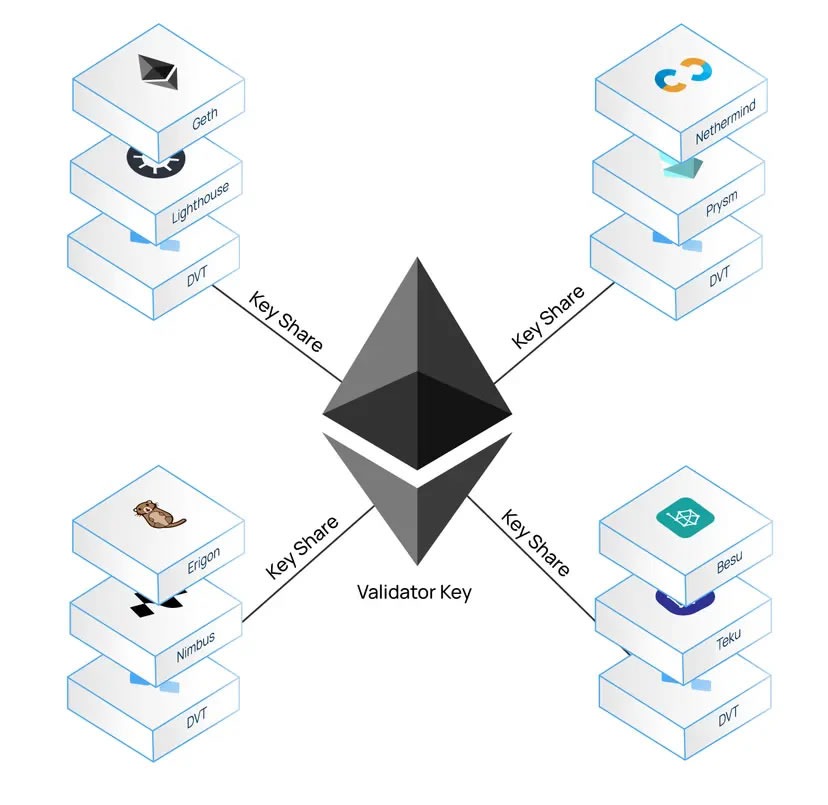
Illustration of basic DVT architecture. Source: Ethereum Foundation
One-click staking: lowering institutional barriers
Buterin emphasized that the idea that “running infrastructure is terrifyingly complex” and that “every participant must be a professional” is “terrible and anti-decentralization—we need to actively address this.”
He advocates for tools like “Docker containers” or “Nix images” that allow each node to be staked with “one click” or a single command, automating the process.
We want control of staking nodes to be highly decentralized, and the first step to achieve that is making it simple.
Buterin also plans to soon use DVT-lite himself and hopes more ETH holders can participate in staking through this method.
Staking demand remains strong
Despite ETH prices remaining in consolidation, staking demand has not waned. According to ValidatorQueue data, currently 3.2 million ETH are in the validator queue, with a wait time of 55 days; only 29,000 ETH are in the withdrawal queue, with a wait of about 12 hours.
There are currently 37.5 million ETH staked across the network, worth approximately $76.5 billion at current prices, accounting for 31% of the total supply.

Disclaimer: The information on this page may come from third parties and does not represent the views or opinions of Gate. The content displayed on this page is for reference only and does not constitute any financial, investment, or legal advice. Gate does not guarantee the accuracy or completeness of the information and shall not be liable for any losses arising from the use of this information. Virtual asset investments carry high risks and are subject to significant price volatility. You may lose all of your invested principal. Please fully understand the relevant risks and make prudent decisions based on your own financial situation and risk tolerance. For details, please refer to
Disclaimer.


