Straits of Hormuz shipping flow approaches zero, WTI surges 35% weekly, Taiwan CPC announces a 1.5 yuan increase in gasoline prices on March 9, with global supply disruptions and inflation pressures looming.
(Background: Oil prices jump 9% after Trump intervenes! Navy escorts through Hormuz + DFC war risks, BTC defies trend to surpass $71,000)
(Additional context: Is Iran’s blockade of Hormuz just show? Experts: Tehran will bleed first, analyzing market impact and chain reactions)
Table of Contents
Toggle
- Multiple Middle Eastern countries initiate production cuts
- CPC forecasts a 1.5 yuan increase in gasoline on Monday
- Short-term monitoring of restart progress, focus on stagflation risks long-term
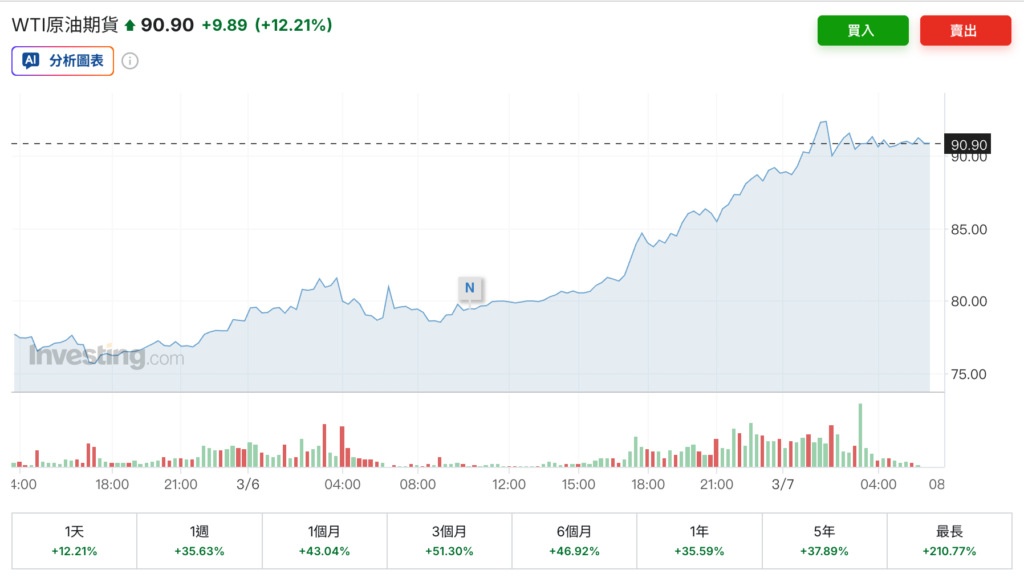
Oil tanker flow through the Strait of Hormuz is nearly halted, causing rare supply shocks. U.S. WTI crude futures soared 35.6% this week, breaking $90 per barrel for the first time since 1983, setting a weekly record; Brent crude futures are also around $93 per barrel.
About 20% of global shipping crude oil passes through Hormuz, with visible ship flow near zero, immediately reflecting war premiums in prices.
Multiple Middle Eastern countries initiate production cuts
Due to severe disparities in oil storage capacity among producing nations, several countries have recently announced cuts:
Iraq has suspended 1.5 million barrels per day, Kuwait announced precautionary cuts on the 7th, with expected daily reductions to increase. Abu Dhabi National Oil Company also issued a statement saying it is managing offshore oil production to meet storage needs.
Qatar’s Energy Minister Saad al-Kaabi told the Financial Times that if the strait remains blocked long-term, oil prices could reach $150, and Gulf exporters will activate force majeure clauses.
The White House proposed a $20 billion “Oil Tanker Insurance Plan” to financially lower risk premiums. However, analyst Natasha Kaneva believes the market’s focus has shifted from sentiment to “actual losses”:
If ships cannot pass safely, no amount of insurance can deliver oil to end users.
CPC forecasts a 1.5 yuan increase in gasoline on Monday
U.S. national average gasoline prices rose $0.27 in a week, reaching recent highs.
Taiwan CPC and Formosa Plastics announced last night that starting Monday, March 9, gasoline and diesel prices will each increase by 1.5 and 1.1 yuan per liter, respectively, with some stabilization measures absorbing part of the increase. But if international oil prices continue to rise, domestic refining costs will climb again.
The natural gas market is also tightening. After Qatar’s LNG exports were hindered, Asian benchmark prices surged over 40% in a week.
Short-term monitoring of restart progress, focus on long-term stagflation risks
Whether the Strait of Hormuz can resume safe navigation in the short term is the only effective way to suppress prices; if the blockade persists for weeks, the market will enter a physical shortage phase. Central banks face dual pressures from supply shocks and rising inflation, limiting policy options.
Current data shows that shipping fleets and oil tanker insurance have not yet returned to normal, and geopolitical tensions are escalating. Without breakthrough diplomatic progress, this energy tightening could become a long-term backdrop, with the global economy paying a “new normal” of higher energy costs.

Disclaimer: The information on this page may come from third parties and does not represent the views or opinions of Gate. The content displayed on this page is for reference only and does not constitute any financial, investment, or legal advice. Gate does not guarantee the accuracy or completeness of the information and shall not be liable for any losses arising from the use of this information. Virtual asset investments carry high risks and are subject to significant price volatility. You may lose all of your invested principal. Please fully understand the relevant risks and make prudent decisions based on your own financial situation and risk tolerance. For details, please refer to
Disclaimer.


