The Central Bank of Kazakhstan recently announced that it would set up an investment portfolio of up to $350 million to invest in cryptocurrency companies and other instruments providing exposure to digital assets, using gold, and part of its foreign reserves to this end.
Kazakhstan To Invest Up to $350 Million In Cryptocurrency Companies
Central banks are beginning to include crypto in their reserve structures.
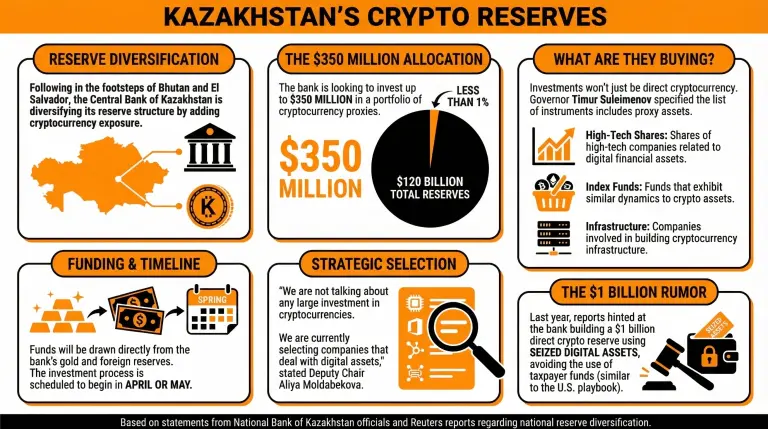
Following in the footsteps of Bhutan and El Salvador, the Central Bank of Kazakhstan is reportedly investing to diversify its reserve structure, adding cryptocurrency exposure to its balances.
According to Reuters, the bank is looking to invest up to $350 million in a portfolio of cryptocurrency proxies for diversification purposes.
During a briefing on interest rates, National Bank of Kazakhstan governor Timur Suleimenov stated:
“We are currently developing a list of instruments in which we will invest. This includes not only cryptocurrency itself.”
He specified that these investments would include “shares of high-tech companies related to cryptocurrencies and digital financial assets, index funds, and other instruments that exhibit similar dynamics to crypto assets.”
The funds for these will come from the bank’s gold and foreign reserves, and will begin in April or May, according to Central Bank Deputy Chair Aliya Moldabekova.
She declared:
“We are not talking about any large investment in cryptocurrencies. We are currently selecting companies that deal with digital assets. For example, those involved in cryptocurrency infrastructure. We are currently in the process of selecting such companies.”
As the bank holds over $120 billion in reserves, the investments would account for less than 1% of the bank’s holdings.
The move comes after reports that hinted at the central bank building a $1 billion crypto reserve emerged last year. At that time, Suleimenov stressed that the bank was considering creating a direct cryptocurrency reserve, using seized digital assets to start it, following the playbook that the U.S. established without investing taxpayers’ funds towards this goal. Nonetheless, he did not expand on the strategies that the institution would follow.
FAQ
- What action is the Central Bank of Kazakhstan taking regarding cryptocurrencies?
Kazakhstan’s Central Bank is investing up to $350 million in a diversified portfolio that includes cryptocurrency exposure.
- What types of investments will the Central Bank of Kazakhstan include?
The bank plans to invest in shares of high-tech companies, index funds, and other financial instruments related to cryptocurrencies.
- How will the funding for these investments be sourced?
The investments will be funded from the bank’s gold and foreign reserves, which total over $120 billion.
- What was the previous plan regarding a direct cryptocurrency reserve?
Last year, the bank considered creating a $1 billion crypto reserve using seized digital assets, drawing inspiration from U.S. practices.
Disclaimer: The information on this page may come from third parties and does not represent the views or opinions of Gate. The content displayed on this page is for reference only and does not constitute any financial, investment, or legal advice. Gate does not guarantee the accuracy or completeness of the information and shall not be liable for any losses arising from the use of this information. Virtual asset investments carry high risks and are subject to significant price volatility. You may lose all of your invested principal. Please fully understand the relevant risks and make prudent decisions based on your own financial situation and risk tolerance. For details, please refer to
Disclaimer.


