The younger generation, especially Gen Z, is emerging as the main driving force behind the growth of peer-to-peer (P2P) cryptocurrency transactions.
According to a survey from the cryptocurrency exchange NoOnes, Gen Z currently accounts for 72% of total P2P crypto transactions, while Millennials follow closely with 24%, and Gen X makes up only 4%.
Regional Trends: Asia Leads in P2P Transactions
Geographically, Asia is leading with 74% of P2P usage, far ahead of other regions. Latin America and Africa rank second and third with 62% and 54%, respectively. In contrast, Europe and North America report the lowest adoption rates, highlighting a clear global disparity in cryptocurrency usage trends.
Cryptocurrency Boom and Digital Payments
Data from NoOnes reflects a broader growth trend that Chainalysis documented last year. According to Chainalysis, cryptocurrency activity in the Asia-Pacific (APAC) region grew nearly 70% in 2025, from $1.4 trillion to $2.4 trillion — the highest annual growth ever. Additionally, Latin America and Africa are among the top three regions with the highest cryptocurrency adoption rates worldwide.
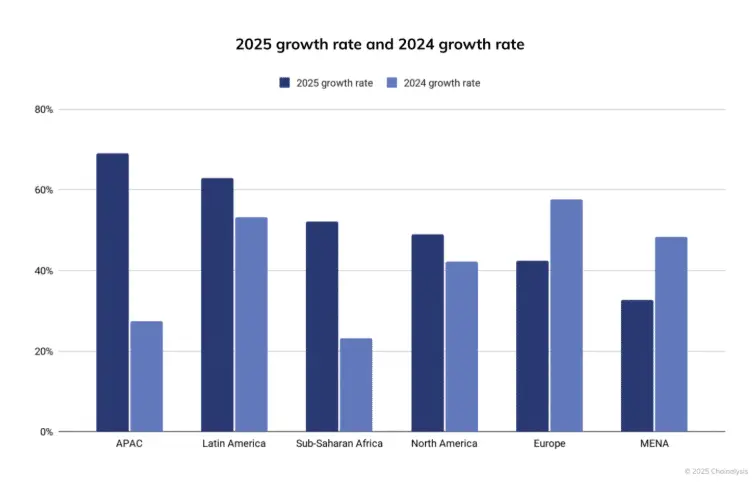 Source: Chainalysis It’s not surprising that Gen Z leads this trend, as younger generations tend to adopt new technologies quickly. Notably, NoOnes emphasizes that mobile crypto usage has surged thanks to advanced security mechanisms like biometric authentication and two-factor authentication. This indicates that crypto companies should focus on a “mobile-first” strategy to better reach this active demographic.
Interestingly, some major platforms like Hyperliquid have yet to launch dedicated mobile apps, despite achieving significant success after three years of operation. Expanding through mobile applications could be a sustainable long-term strategy.
P2P Transactions in the Overall Landscape
While P2P payments are being embraced strongly by the younger generation, their growth rate still lags behind other payment methods such as card payments or business-to-consumer (B2C) transactions.
Recent data shows that card payments have become a popular and convenient payment method, allowing users to spend cryptocurrencies for daily needs. Over the past three years, card payments have grown an impressive 106%, reaching $1.6 billion, while P2P payments have only increased by 5%.
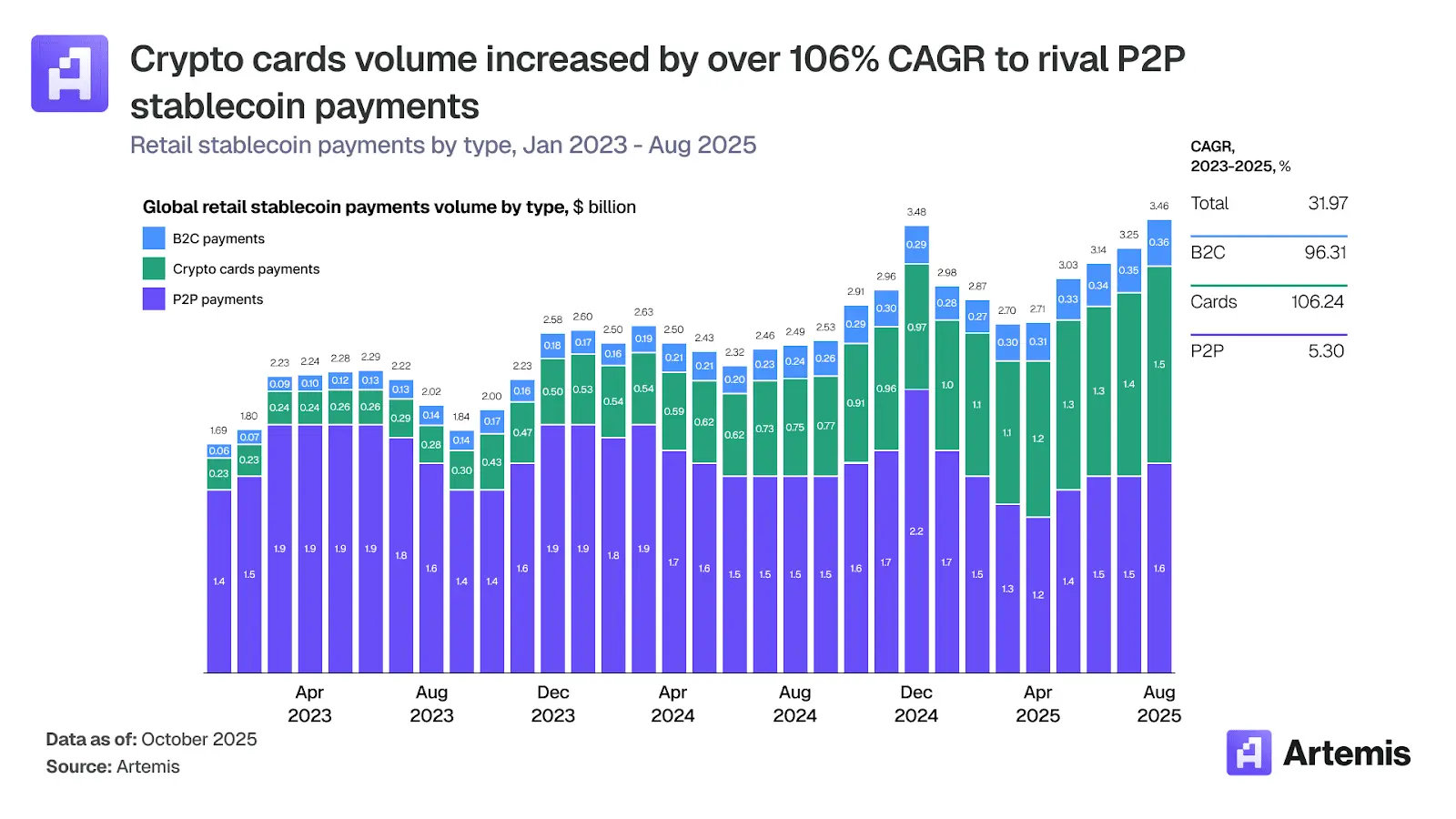 Source: Artemis However, it remains to be seen whether crypto cards can surpass P2P payments in the future. Currently, stablecoin B2B payments dominate transaction value, followed by P2P and card payments in third place.
Overall, the development of cryptocurrency transactions, especially P2P, reflects a significant shift in how the world approaches new financial technologies. The younger generation, along with the mobile device boom, will continue to be key drivers of innovation and expansion in this field.
Mr. Giáo
Disclaimer: The information on this page may come from third parties and does not represent the views or opinions of Gate. The content displayed on this page is for reference only and does not constitute any financial, investment, or legal advice. Gate does not guarantee the accuracy or completeness of the information and shall not be liable for any losses arising from the use of this information. Virtual asset investments carry high risks and are subject to significant price volatility. You may lose all of your invested principal. Please fully understand the relevant risks and make prudent decisions based on your own financial situation and risk tolerance. For details, please refer to
Disclaimer.


