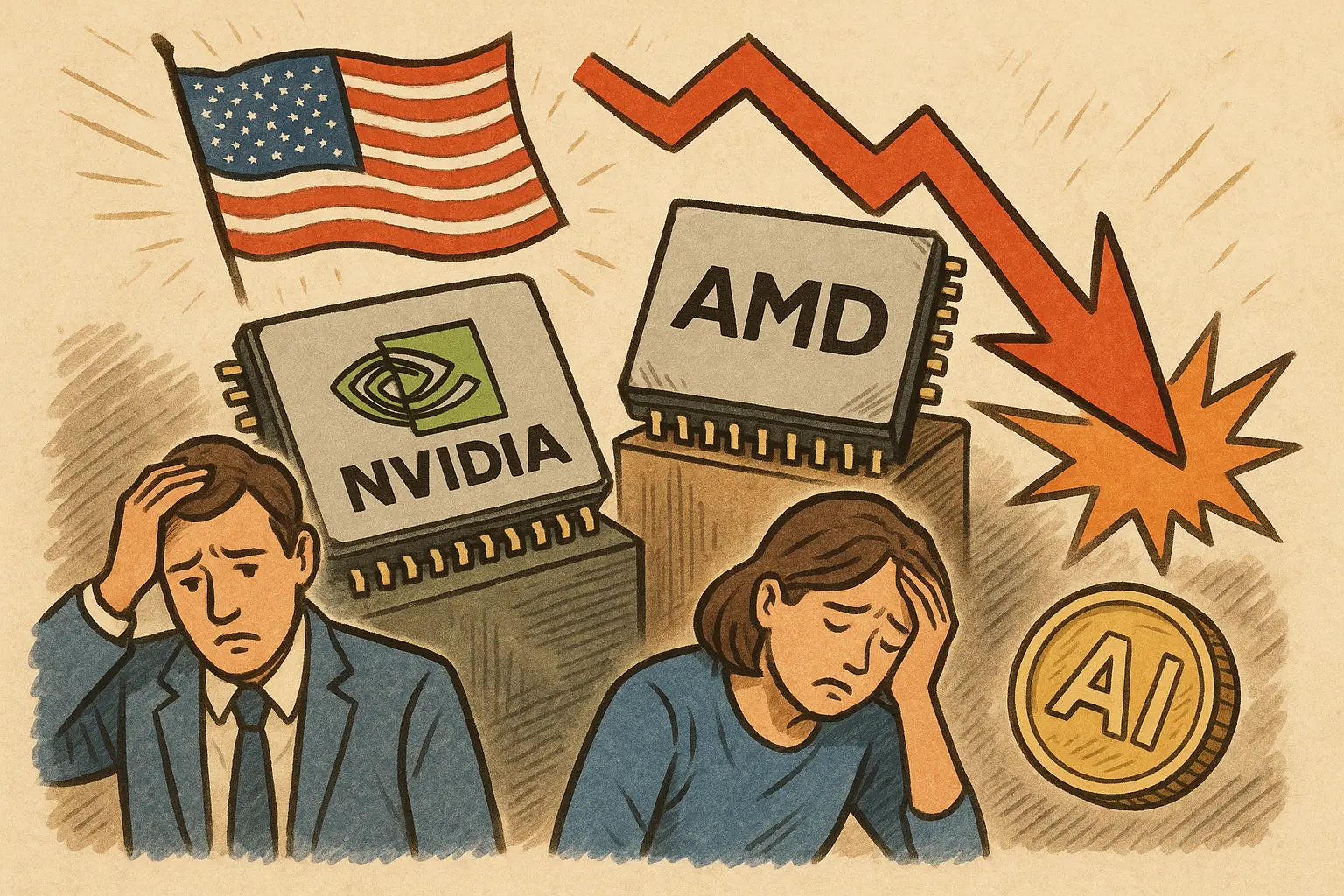
According to Bloomberg, a draft regulation proposed by the Trump administration in the United States plans to require companies to obtain prior approval from the U.S. Department of Commerce before exporting nearly any AI accelerators worldwide, directly impacting the global AI chip supply chain. Following the announcement of the draft, Nvidia’s stock price dropped 1.8%, AMD fell 2.2%, and several AI-related crypto tokens declined by approximately 5% simultaneously.
Core Provisions of the Draft Regulation: An Analysis of the Tiered Licensing System
This draft introduces a three-tier licensing mechanism based on the scale of chip exports, using Nvidia’s GB300 GPU as a benchmark:
Small-scale exports (≤1,000 units of GB300 GPU): Simplified review process with relatively low administrative hurdles.
Medium to large clusters (more than 1,000 units): Require prior approval from the Department of Commerce and may involve on-site inspections.
Very large deployments (over 200,000 units, equivalent to the scale of NScale and Microsoft’s contracts): Require formal agreements with the host country’s government and matching “co-investment” from the U.S. government.
Notably, this draft effectively overturns the Biden administration’s “AI proliferation rules.” Previously, officials criticized Biden’s rules as overly cumbersome, but the new draft’s licensing system creates administrative bottlenecks that observers believe could cause even greater practical friction than the previous policies.
Market Chain Reaction: Chip Stocks Decline and AI Crypto Tokens Face Dual Pressure
The market reaction in chip stocks directly reflects investor concerns about the impact of export restrictions on corporate revenue prospects. Nvidia, the world’s largest AI accelerator supplier, fell 1.8%, AMD declined 2.2%, and Micron, a major memory chip manufacturer, dropped the most at 3.4%.
The decline in AI crypto tokens reveals a clear logical chain: export restrictions → slowdown in overseas data center construction → narrowing expectations for growth in decentralized AI computing networks → downward pressure on related tokens’ valuations. Tokens such as Bittensor (TAO), Near Protocol (NEAR), Render, and Virtuals Protocol (VIRTUAL) each declined about 5%, confirming the direct transmission of AI infrastructure policies to the crypto market.
Reshaping the Global AI Chip Landscape: A Binary Dilemma
The deeper impact of this draft extends beyond short-term stock market fluctuations, involving structural adjustments in global AI infrastructure investment patterns. If the draft is officially enacted, countries building AI data centers will face a significant binary dilemma: either purchase U.S.-authorized American-made AI chips or turn to Huawei accelerators—though U.S. warnings suggest the latter may violate trade restrictions.
The licensing system’s bureaucratic approval bottlenecks could cause substantial delays to hundreds of millions of dollars in data center expansion plans across Europe, the Middle East, and Asia, reshaping the geographic distribution of global AI infrastructure investments. Previously, the Trump administration also used chip export controls as leverage in negotiations with the EU over digital service taxes, further embedding AI chip policies into broader geopolitical strategic frameworks.
Frequently Asked Questions
Q: What are the core requirements of the new U.S. AI chip export regulation draft?
The draft mandates that companies must obtain prior approval from the U.S. Department of Commerce before exporting nearly any AI accelerators globally. Nvidia’s GB300 GPU exports are categorized into three tiers based on volume: under 1,000 units for simplified review; larger volumes require pre-approval plus on-site inspections; over 200,000 units require formal agreements with the host government and matching U.S. government investments.
Q: Why did AI crypto tokens decline after the announcement of the new chip export regulation?
The valuation logic of AI crypto tokens (such as Bittensor, Render, Near Protocol) partly depends on the continued expansion of global AI computing infrastructure. Export restrictions slow down overseas data center construction, reducing expectations for growth in decentralized AI networks, leading to a roughly 5% decline in related tokens.
Q: What does the Pentagon listing Anthropic as a “supply chain risk” imply?
This is the first time a U.S. government agency has labeled a domestic tech company as a “supply chain risk,” indicating that federal oversight of AI has expanded from external threats to include domestic AI companies. While specific policy impacts remain unclear, this move is seen as a significant signal of the broadening scope of U.S. AI regulation.
Disclaimer: The information on this page may come from third parties and does not represent the views or opinions of Gate. The content displayed on this page is for reference only and does not constitute any financial, investment, or legal advice. Gate does not guarantee the accuracy or completeness of the information and shall not be liable for any losses arising from the use of this information. Virtual asset investments carry high risks and are subject to significant price volatility. You may lose all of your invested principal. Please fully understand the relevant risks and make prudent decisions based on your own financial situation and risk tolerance. For details, please refer to
Disclaimer.


