As the cryptocurrency market evolves, meme coins have shifted from simple tokens driven by community culture and humor to a prominent sector within the crypto asset landscape.
Since the Dogecoin meme coin craze began, these tokens have attracted significant user and capital interest, thanks to robust community consensus, social media virality, and easy access for new participants. While most meme coins lack tangible use cases, some projects are exploring ways to add real utility through ecosystem development, moving meme coins from “community narrative” to “ecosystem narrative.” Shiba Inu (SHIB) emerged against this backdrop.
What Is Shiba Inu (SHIB)?
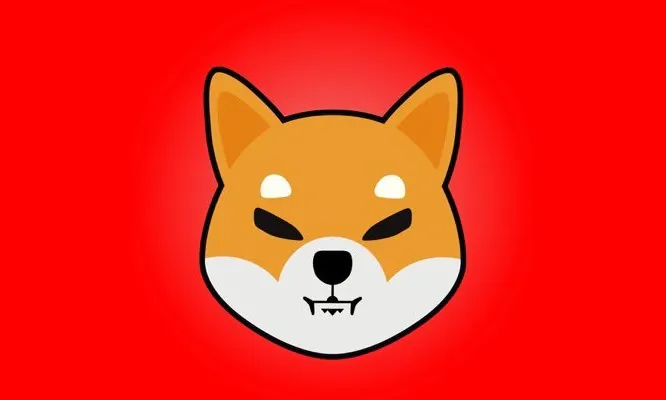
Shiba Inu (SHIB) is a decentralized meme coin project built on Ethereum, launched in 2020 by the anonymous developer Ryoshi. SHIB quickly gained traction with its “Dogecoin Killer” positioning and vibrant community culture, becoming a flagship in the meme coin sector.
Unlike many meme coins driven solely by market sentiment, Shiba Inu is building a comprehensive blockchain ecosystem with products like the Layer2 network Shibarium, the decentralized exchange ShibaSwap, and the governance token BONE. Today, SHIB is not just a key asset in the meme coin market—it’s a leading example of how community-driven crypto projects evolve.
The Origin and Evolution of Shiba Inu
Shiba Inu launched in August 2020, with founder Ryoshi positioning it as a decentralized community experiment aimed at creating a meme coin ecosystem fully powered by its community.
In its early stages, SHIB gained rapid attention with the “Dogecoin Killer” label and built a large user base through social media. The SHIB team then sent a significant portion of tokens to Ethereum founder Vitalik Buterin, who burned most of them, further reinforcing the token’s scarcity narrative.
As the user base grew, Shiba Inu expanded from a single meme token into a broader ecosystem, launching products like ShibaSwap, BONE, LEASH, and Shibarium, steadily increasing its ecosystem value.
What Is SHIB’s Tokenomics?
SHIB features a tokenomics model based on an ultra-large total supply and a continuous burn mechanism. The initial total supply was 1 quadrillion tokens, making individual tokens highly affordable and accessible to retail investors.
To reduce circulating supply and strengthen deflationary expectations, the Shiba Inu ecosystem introduced token burns, including trading fee burns and community-driven burns. As more tokens are burned, market expectations for SHIB’s scarcity increase.
Within the ecosystem, SHIB serves as the primary value transfer token, BONE is used for governance and Gas payments, and LEASH acts as a scarce incentive asset. This multi-token architecture underpins the entire Shiba Inu ecosystem.
What Makes Up the Shiba Inu Ecosystem?
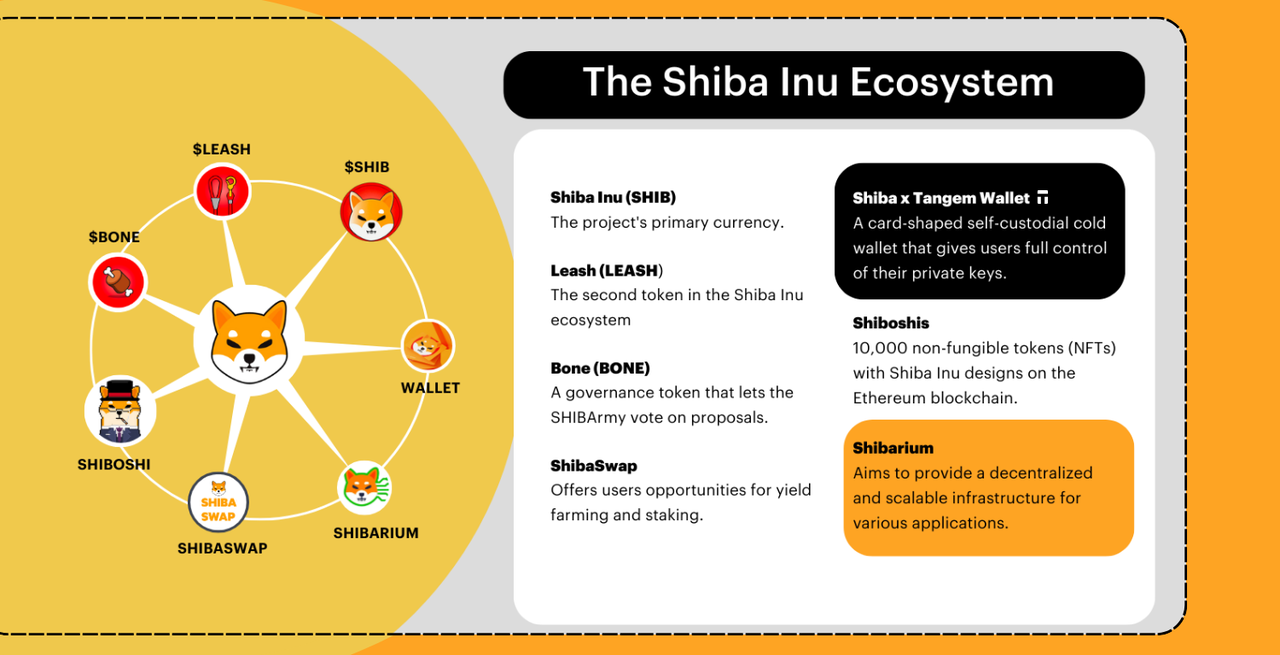
The Shiba Inu ecosystem has evolved from a single token to a comprehensive suite of products and tokens.
SHIB
SHIB is the ecosystem’s core token, serving as the main vehicle for value transfer, payments, and community incentives—the foundation of the entire ecosystem.
BONE
BONE is the governance token and the Gas token for the Shibarium network, used for transaction fees and community governance participation.
LEASH
LEASH is a scarce asset with a capped supply, used primarily for premium equity incentives and community rewards.
ShibaSwap
ShibaSwap is Shiba Inu’s decentralized exchange, enabling users to swap tokens, participate in yield farming, and stake assets.
Shibarium
Shibarium is Shiba Inu’s Layer2 network, designed to reduce transaction costs, boost processing efficiency, and create more on-chain use cases for SHIB.
How Does Shibarium Boost SHIB’s Ecosystem Value?
Shibarium is a cornerstone of the Shiba Inu ecosystem, leveraging Layer2 scaling to lower transaction costs and enhance network performance.
On Ethereum’s mainnet, high transaction fees limit high-frequency meme coin usage. Shibarium addresses this with lower Gas costs, improving user experience and enabling more DeFi, payment, and on-chain applications.
Importantly, Shibarium’s transaction activity fuels SHIB burns, directly connecting network usage to the token’s deflationary mechanism. This shifts SHIB’s value from being sentiment-driven to an “ecosystem utility-driven growth” model.
What Are SHIB’s Primary Use Cases?
As the ecosystem grows, SHIB’s use cases have expanded well beyond simple trading.
SHIB can be used for crypto payments and community rewards. In DeFi scenarios like ShibaSwap, users can earn returns through staking and yield farming. SHIB also serves as an ecosystem asset for NFT and gaming applications.
These use cases increase SHIB’s real-world utility, helping it move beyond its meme coin roots and strengthening its long-term ecosystem foundation.
What Factors Impact SHIB’s Price?
SHIB’s price is influenced by community sentiment, the burn mechanism, ecosystem development, and broader market trends.
Community sentiment is a major driver—social media activity and user growth often spark short-term demand spikes. The burn mechanism reinforces deflationary expectations by reducing supply.
Ecosystem developments like Shibarium and ShibaSwap impact market perceptions of SHIB’s long-term value. Additionally, overall crypto market trends—especially Bitcoin’s performance—significantly affect SHIB’s price.
Shiba Inu vs Dogecoin: Meme Coin Comparison
Shiba Inu (SHIB) and Dogecoin (DOGE) are both leading meme coins, but they differ substantially in technology, ecosystem development, and value proposition. Dogecoin launched earlier and became the original meme coin thanks to its brand and payment utility, while Shiba Inu is pursuing long-term growth through a more diverse ecosystem.
| Comparison |
Shiba Inu (SHIB) |
Dogecoin (DOGE) |
| Network |
Built on Ethereum |
Independent blockchain |
| Ecosystem |
Shibarium, ShibaSwap, BONE |
Primarily for payments |
| Supply Model |
Ultra-large supply + burns |
Unlimited issuance |
| Core Value |
Ecosystem expansion |
Payment utility |
| Growth Driver |
Ecosystem adoption |
Community consensus |
Dogecoin has a clear first-mover and brand advantage in the meme coin space, while Shiba Inu is exploring new value paths through ecosystem building. They represent two distinct meme coin models: “payment asset” and “ecosystem asset.”
What Are SHIB’s Advantages and Risks?
SHIB’s primary strengths are its strong community base and rapidly expanding ecosystem. As a well-known meme coin, SHIB enjoys high brand recognition and an active user community, providing a solid foundation for ecosystem growth.
However, SHIB faces significant risks. Its price is highly sensitive to market sentiment and is much more volatile than mainstream assets. While the ecosystem is expanding, SHIB’s long-term value still hinges on real adoption of Shibarium and other applications.
For these reasons, SHIB is best suited for investors with a higher risk tolerance who are optimistic about the meme coin ecosystem’s future.
What Is SHIB’s Future Potential?
SHIB’s future depends on sustained growth in ecosystem applications and community engagement.
If Shibarium attracts more users and developers and continues to drive SHIB burns, the token’s value foundation will grow stronger. Expanding payment, DeFi, and NFT use cases will also boost real demand for SHIB.
However, competition in the meme coin space is intense, and SHIB faces ongoing challenges from other community projects. Ultimately, SHIB’s future value will depend not just on market hype, but on successful ecosystem execution.
FAQs
Is SHIB a Meme Coin?
Yes, SHIB started as a meme coin, but it has evolved into an ecosystem with Layer2, DEX, and governance features. It’s no longer just a meme token driven by community hype.
How Does SHIB Differ from Dogecoin?
Dogecoin is primarily a payment-focused meme coin, while SHIB has built an ecosystem that includes Shibarium and ShibaSwap, offering broader DeFi and governance capabilities.
Does SHIB Have Long-Term Investment Value?
SHIB’s long-term value depends on how quickly the ecosystem grows, user adoption, and the effectiveness of its token burn mechanism. Continued ecosystem expansion will further strengthen SHIB’s value.
What Are the Risks of SHIB?
SHIB’s main risks include high price volatility, reliance on market sentiment, and uncertainty around ecosystem development. Investors should carefully assess these risks before participating.