Within the Reserve Protocol, the stability of RTokens depends not only on a basket of collateral assets but also on an additional risk buffer layer. RSR, as the protocol’s native utility token, plays crucial roles in governance, staking, and risk absorption—serving as an essential mechanism for maintaining the stablecoin system.
As decentralized stablecoin protocols continue to advance, relying solely on collateral assets to ensure stability is increasingly inadequate for managing risks in complex market environments. Reserve Protocol addresses this by introducing the RSR staking mechanism, which provides extra protection against collateral volatility and enables parameter adjustments and system upgrades via governance.
What Role Does RSR Play in Reserve Protocol?
RSR serves as both a governance token and a risk buffer asset within Reserve Protocol.
On one side, RSR holders have governance rights, allowing them to participate in critical decisions such as adjusting collateral standards, modifying parameter settings, and approving protocol upgrades. This governance capability ensures the protocol can adapt dynamically to changing market conditions.
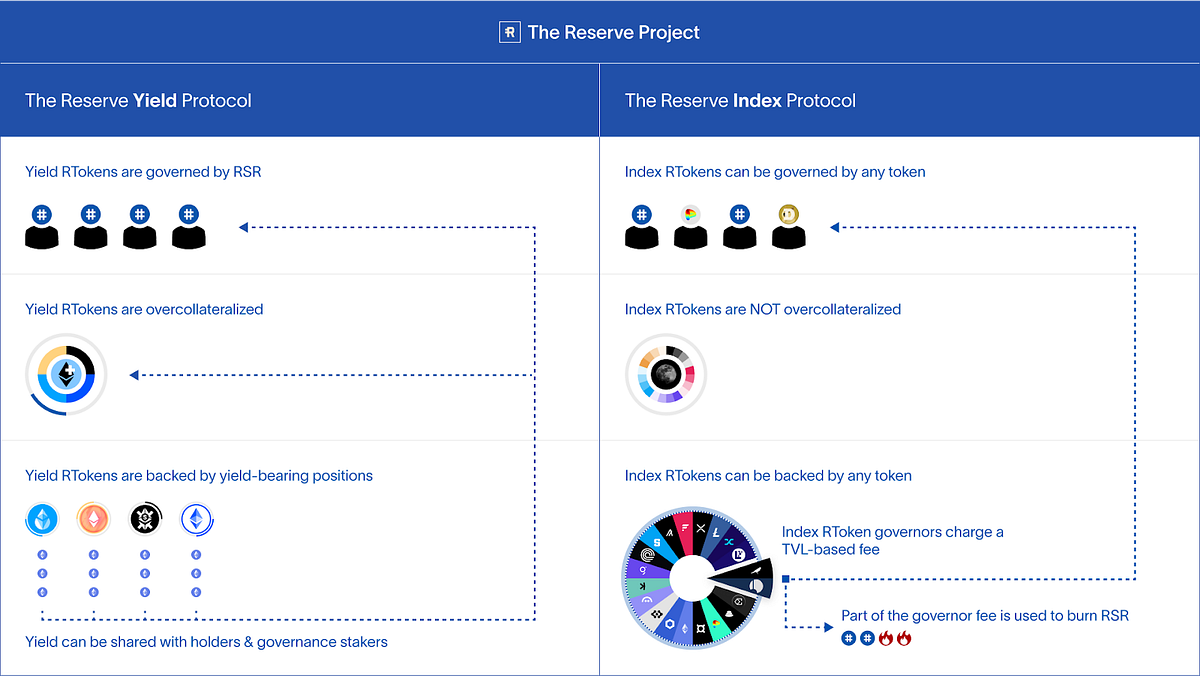
Image source: Reserve Protocol
On the other side, RSR acts as the protocol’s risk buffer asset. When the collateral asset value of an RToken falls short, staked RSR is sold to cover the reserve gap and restore system stability.
RSR is therefore more than just a governance token—it is a fundamental part of Reserve Protocol’s risk management framework.
How Does RSR Participate in Governance?
Reserve Protocol employs on-chain governance, enabling RSR holders to take part in protocol decision-making.
Participants can propose and vote on protocol parameters, such as changing collateral asset allocation requirements, adjusting over-collateralization ratios, or updating protocol modules. This collective governance ensures that protocol rules are shaped by token holders, not a single centralized entity.
Such a mechanism enhances transparency and allows the community to continually optimize the stablecoin system in response to market shifts.
How Does the RSR Staking Mechanism Work?
RSR holders can stake their tokens to specific RTokens, providing risk protection for those stablecoins.
Once staked, RSR serves as the insurance reserve for the designated RToken. If the stablecoin’s collateral assets remain stable, stakers earn a share of protocol income as return.
This model effectively lets RSR holders provide insurance for the stablecoin system and receive rewards for assuming risk. Each RToken can have its own independent RSR staking pool, creating distinct risk protection structures.
This flexibility allows Reserve Protocol to develop differentiated risk models for various stablecoins.
What Is Reserve Protocol’s Risk Buffer Mechanism?
The risk buffer mechanism is a key feature that gives Reserve Protocol’s stablecoins extra payment protection.
If collateral asset values drop and reserves become insufficient to cover circulating RTokens, the protocol activates the risk buffer mechanism—selling staked RSR to acquire new reserve assets.
This means the RSR staking layer acts as the system’s “second line of defense”:
The first line of defense is the collateral asset basket;
The second line of defense is the RSR risk buffer layer.
This dual-layer structure enables the protocol to maintain greater stability amid market volatility.
How Does RSR Absorb Collateral Asset Risk?
RSR absorbs risk by bearing losses from insufficient collateral through staked assets.
For example, if an RToken’s collateral asset price drops sharply and the system’s asset value falls short, the protocol sells a portion of staked RSR to cover the reserve deficit.
This process transfers market risk to RSR stakers, preserving the asset support ratio for stablecoin holders.
Mechanistically, RSR functions as the risk bearer for the stablecoin system, allowing the protocol to remain stable even if collateral assets fail.
Where Does RSR Staking Return Come From in Reserve Protocol?
RSR staking returns are primarily derived from RToken protocol income distribution.
When users mint or redeem RTokens, the protocol charges fees. A portion of these fees is distributed to RSR stakers who provide risk protection for the corresponding RToken.
Thus, RSR staking returns fundamentally come from the stablecoin system’s operational income—not from additional token issuance.
This structure tightly links return and risk:
-
When the system operates smoothly, stakers earn returns
-
When the system faces losses, staked assets absorb the risk
This mechanism ensures a clear incentive structure.
Why Is RSR Vital to Reserve Protocol?
Reserve Protocol’s stablecoin system requires not only collateral asset backing but also a way to address collateral failure risk—RSR is central to this risk management architecture.
Through governance, RSR holders continually optimize protocol structure; through staking, RSR provides a risk buffer for RTokens; through income distribution, RSR incentivizes participants to accept system risk.
This enables Reserve Protocol to establish a comprehensive decentralized stablecoin governance and insurance framework. RSR is the critical link connecting governance, risk management, and incentive distribution.
Summary
RSR is the core utility token of Reserve Protocol, responsible for governance voting, risk buffering, and income distribution. Via the staking mechanism, RSR delivers additional payment protection for RTokens and assumes risk compensation duties when collateral asset values are insufficient.
This design empowers Reserve Protocol’s stablecoin system with asset support, risk management, and governance capabilities—building a robust decentralized stablecoin infrastructure.
FAQs
Is RSR a stablecoin?
No. RSR is the utility token of Reserve Protocol, used for governance and risk buffering, not for directly maintaining price stability.
What Is the Purpose of RSR Staking?
RSR staking provides risk protection for RTokens, supplementing reserve assets when collateral assets are insufficient.
Where Does RSR Staking Return Come From?
Primarily from protocol fees generated by RToken minting and redemption.
Why Does RSR Bear Risk?
Because RSR is designed as the risk buffer layer for the stablecoin system, absorbing losses from collateral asset value declines.
How Is RSR Different from Ordinary Governance Tokens?
Beyond governance, RSR serves as a risk buffer for stablecoins, making its functions more complex than those of ordinary governance tokens.







