As stablecoins become an integral part of the DeFi ecosystem, Reserve Protocol delivers a modular stablecoin issuance framework, empowering any community or organization to create asset-backed currencies with independent collateral structures. This approach not only increases the flexibility of stablecoin systems but also advances decentralization within stablecoin governance.
With the evolution of on-chain finance, stablecoin design has moved beyond simple fiat pegs toward programmable, value-stable protocols. Reserve Protocol is at the forefront of this shift, providing new models for stablecoin issuance and risk management across the digital asset marketplace.
What Is Reserve Protocol?
Reserve Protocol is a decentralized platform for issuing asset-backed stablecoins. Its primary goal is to enable users to create stablecoins supported by a diversified basket of digital assets, rather than relying solely on a single US dollar reserve.

Within Reserve Protocol, stablecoins are known as RTokens. Each RToken is backed by an independent collateral portfolio—such as stablecoins, tokenized government bonds, or other on-chain assets. This architecture allows the protocol to issue a range of stablecoins tailored to different use cases, including payment stablecoins, yield-generating stablecoins, or community-specific currencies.
This design makes Reserve Protocol a foundational stablecoin infrastructure, not just a single stablecoin project.
How Does Reserve Protocol Work?
Reserve Protocol’s core mechanism is built around asset collateralization, over-collateralization, and a risk buffer.
When users create or mint RTokens, they deposit predefined collateral assets into the protocol. The protocol then issues a corresponding amount of stablecoins, maintaining value through a diversified collateral portfolio.
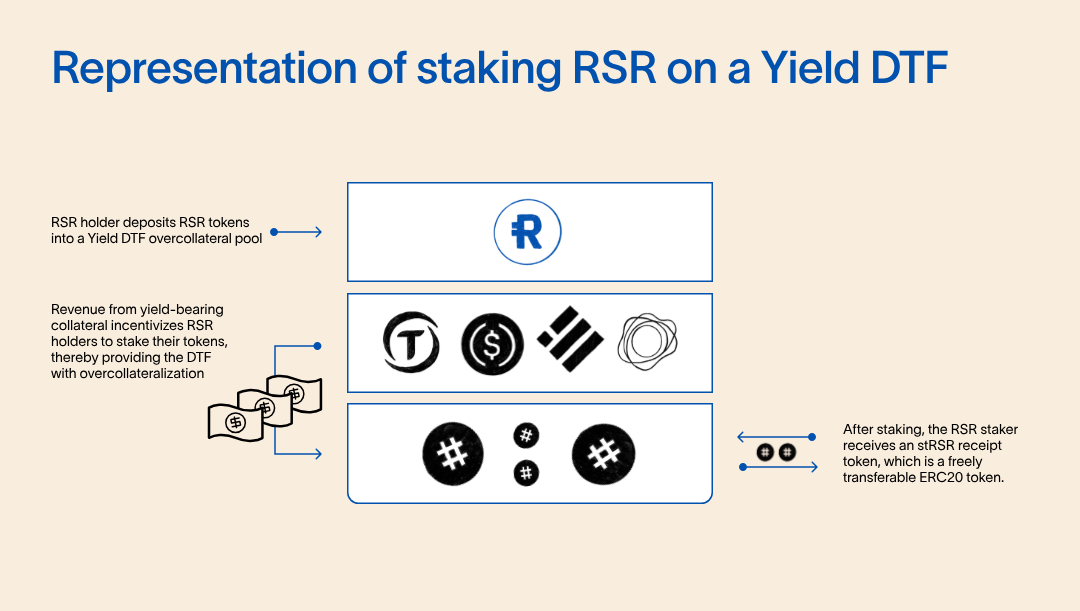
If collateral values fall, the protocol’s risk buffer mechanism absorbs losses. RSR holders can stake RSR on specific RTokens to provide insurance coverage. In the event of under-collateralization, staked RSR is sold to replenish reserves, ensuring the stablecoin’s solvency.
This structure gives the stablecoin system an automatic self-correction capability during market volatility.
What Is the Role of the RSR Token?
RSR is the native utility token of Reserve Protocol, serving three primary functions:
-
Governance: RSR holders can participate in protocol governance, including adjusting collateral portfolios, modifying risk parameters, and approving protocol upgrades.
-
Staking Insurance: Users can stake RSR to a specific RToken, providing default protection for that stablecoin and earning protocol returns.
-
Risk Absorption: When collateral assets incur losses, staked RSR acts as the first line of defense to cover reserve shortfalls.
RSR is not designed to maintain a stablecoin peg, but rather plays a crucial role in protocol governance and risk management.
What Are the Core Components of Reserve Protocol?
Reserve Protocol is structured around three core components: RTokens, the Collateral Basket, and the RSR Staking Layer.
- RTokens: Stablecoins issued by the protocol, each with its own collateral portfolio.
- Collateral Basket: Defines the types and ratios of assets supporting each stablecoin, which may include multiple stablecoins or other on-chain assets to reduce concentration risk.
- RSR Staking Layer: Provides additional insurance for RTokens, giving the protocol a risk buffer when collateral assets experience stress.
This layered approach allows Reserve Protocol to flexibly accommodate a wide range of stablecoin design requirements.
What Are the Application Scenarios for Reserve Protocol?
Reserve Protocol’s primary use cases are decentralized stablecoin issuance and on-chain value management.
In DeFi, developers can use Reserve Protocol to issue stablecoins for lending, payments, or asset management. Some RTokens can be configured with yield-bearing collateral, making them yield-generating stablecoins on-chain.
The protocol is also suitable for community currencies. DAOs or project teams can create stablecoins for specific purposes—such as payments, incentives, or governance—using Reserve Protocol.
Thanks to its modular architecture, the protocol’s applications span payment tools, asset storage, and core on-chain financial infrastructure.
How Is Reserve Protocol Different from Traditional Stablecoins?
Traditional stablecoins like USDC, USAT, or MakerDAO rely on centralized entities holding fiat reserves—such as US dollar deposits or short-term Treasury bills—with stability derived from off-chain custodial assets.
In contrast to MakerDAO, Reserve Protocol issues stablecoins backed by on-chain collateral and provides an extra risk buffer through RSR staking. The main differences are:
| Comparison |
Traditional Stablecoin |
Reserve Protocol |
| Collateralization |
Centralized fiat reserves |
On-chain asset portfolios |
| Governance |
Centralized management |
Decentralized governance |
| Risk Buffer |
Reserve institution |
RSR staking |
| Stablecoin Design |
Single model |
Customizable RTokens |
These distinctions make Reserve Protocol better suited for programmable, governable stablecoin systems.
Advantages and Potential Limitations of Reserve Protocol
Reserve Protocol’s key strengths are its modular design and decentralized governance. It enables any community to build custom stablecoins and reduces single-point risk through diversified collateral.
The RSR staking mechanism adds a risk buffer, enhancing protocol resilience.
However, the system’s complexity is a potential limitation. Compared to traditional stablecoins, Reserve Protocol includes multi-layered asset structures, governance parameters, and risk management features, raising the barrier to user understanding.
Additionally, if collateral assets are highly correlated, the system may still face systemic risks under extreme market conditions.
Summary
Reserve Protocol provides a decentralized, modular framework for stablecoin issuance, allowing on-chain stablecoins to move beyond single fiat reserves and maintain stability through diversified collateral and the RSR risk buffer.
By integrating RTokens, Collateral Baskets, and governance mechanisms, Reserve Protocol expands the design possibilities for stablecoins in DeFi. As on-chain financial infrastructure evolves, asset-backed stablecoin protocols like Reserve are driving the next wave of stablecoin innovation.
FAQs
Is RSR a stablecoin?
No. RSR is the utility token of Reserve Protocol, used for governance, staking, and risk absorption. It is not itself a stablecoin.
What are the stablecoins in Reserve Protocol?
Stablecoins in Reserve Protocol are called RTokens, which are asset-backed and issued based on a diversified collateral portfolio.
What is the purpose of RSR staking?
RSR staking provides insurance for RTokens, supporting reserves when collateral values fall short.
Is Reserve Protocol fully decentralized?
Reserve Protocol features decentralized governance and asset structure design, but the collateral for each RToken is determined by its creator’s configuration.
What is the biggest difference between Reserve Protocol and traditional stablecoins?
The main difference is that Reserve Protocol allows customized collateral portfolios and provides an additional risk buffer through RSR staking, while traditional stablecoins typically rely on centralized fiat reserves.







