In today’s blockchain landscape, the demand for “trusted execution” is rising across DeFi, RWA (real-world assets), and prediction market scenarios. Traditional architectures often rely on centralized oracles or intermediaries, creating trust and compliance challenges. Manadia seeks to overcome these barriers by delivering standardized protocols and toolkits.
Viewed from a broader digital asset perspective, Manadia is more than just infrastructure—it serves as a “trusted execution layer,” integrating data input, AI-driven decision-making, and value settlement into a closed-loop system, providing foundational support for the convergence of Web3 and AI.
Source: mana.app
What Is Manadia (UMXM): Project Definition and Development Background
Manadia positions itself as a “unified trusted execution infrastructure,” designed to give complex on-chain applications built-in trust, privacy, and automatic settlement capabilities. Unlike conventional Web3 projects, it’s not a single protocol or tool, but a comprehensive system architecture supporting diverse use cases.
Its development is rooted in the limitations Web3 faces in high-value scenarios. For example, in financial derivatives or RWA assets, on-chain systems often can’t directly handle complex real-world data or guarantee authenticity and privacy, preventing full decentralization for many applications.
Manadia tackles the core challenge of “on-chain trusted execution” by integrating data injection, privacy computing, and automated execution mechanisms, enabling applications to access these capabilities without building complex custom logic.
Fundamentally, Manadia is constructing a foundational layer for “trusted data + verifiable execution,” which can evolve into next-generation Web3 infrastructure and trusted execution models.
Manadia’s Core Ecosystem and Product Structure
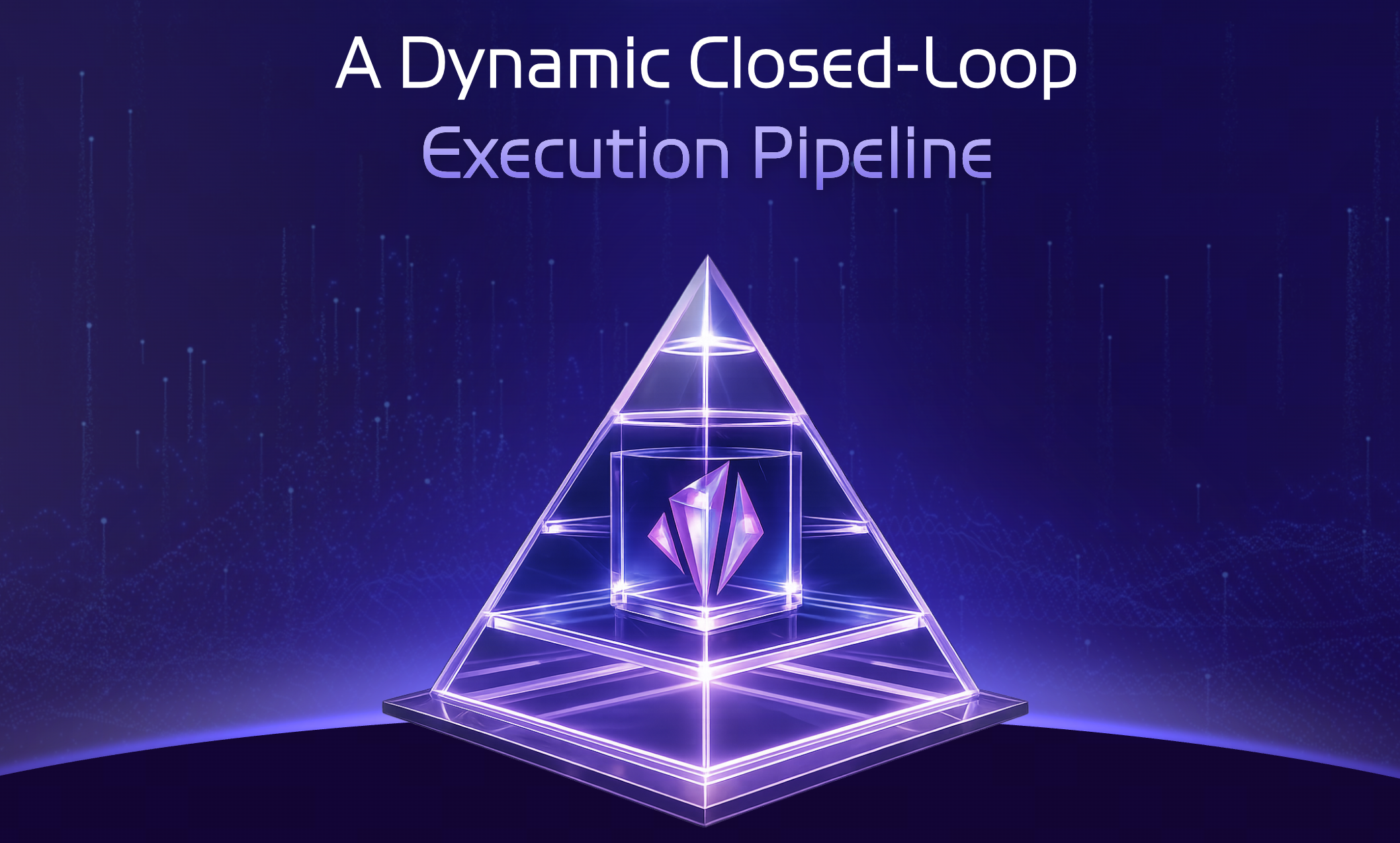
Manadia’s ecosystem centers on three key modules: data, execution, and settlement—forming a complete execution loop.
The data layer leverages the VERITAS protocol to securely inject real-world data. This system aggregates multiple data sources, applies deviation penalties, and combines AI with manual arbitration to deliver deterministic on-chain results for complex events.
The execution layer is powered by AI Agents, which operate as independent economic participants running continuously on-chain. These Agents handle task decomposition, data processing, and cross-system collaboration, moving beyond one-off computation.
The settlement layer uses privacy-enhancing technologies (such as zero-knowledge proofs) to automate value transfers. This “proof without disclosure” model allows transactions to be verified without revealing sensitive details.
Altogether, Manadia establishes a complete ecosystem of “data input → AI decision-making → privacy settlement,” effectively serving as a Web3 execution architecture and AI collaboration system.
Manadia’s Technical Architecture and Operating Mechanism
Technically, Manadia employs a modular architecture to support cross-chain and multi-system collaboration.
A key mechanism is the persistent execution capability of AI Agents. Unlike static logic in traditional Smart Contracts, Agents maintain long-term states (such as Merkle tree-based structures) and update decisions through ongoing interactions.
The data layer’s VERITAS protocol delivers anti-manipulation data input, ensuring trustworthiness via multi-source validation and deviation penalties, while incorporating AI assistance and manual arbitration for on-chain determinism in complex events.
For privacy, Manadia utilizes zk-SNARKs, ring signatures, and other cryptographic methods, enabling users to verify transactions without disclosing sensitive information—creating “verifiable but invisible” data flows.
The system also supports multi-chain integration, connecting EVM and non-EVM networks through standardized interfaces for seamless collaboration with DeFi, AI, and data systems. This architecture extends to cross-chain protocol design and privacy computing infrastructure.
UMXM Token Functions and Uses
UMXM is the core token within the Manadia ecosystem, supporting network operations and incentives.
UMXM is primarily used to pay for network services—including data validation, AI computation, and resource consumption during privacy settlements—making it the system’s “value circulation medium.”
UMXM also incentivizes participants such as node operators, data providers, and Agent executors, ensuring ongoing network activity.
In some scenarios, UMXM enables governance or parameter adjustments, allowing holders to influence system evolution. Its multi-functional design combines payment, incentive, and governance features—extending to utility token models and network incentive mechanisms.
UMXM Tokenomics Overview
UMXM’s tokenomics are based on “usage-driven and incentive coordination,” with the token mechanism aligning data, hashrate, and execution resources.
Supply-side tokens enter the market through initial distribution and ecosystem incentives to support long-term growth. On the demand side, UMXM usage is directly tied to network activity—such as data calls, AI execution, and settlement needs.
This model emphasizes “real usage drives value,” meaning token demand is rooted in system functionality rather than speculative trading.
Incentive mechanisms reward nodes and participants, ensuring stable resource supply. The overall structure reflects a typical Web3 infrastructure token model, extending to token supply-demand dynamics and incentive design logic.
Manadia’s Application Scenarios and Ecosystem Expansion
Manadia is built to support a range of high-value scenarios across multiple sectors.
In finance, it enables derivative settlement and clearing, reducing reliance on intermediaries through trusted data and automated execution. In RWA scenarios, it supports asset verification and on-chain confirmation, enhancing transparency and trust.
For prediction markets, the VERITAS protocol provides complex event outcomes, allowing markets to process real-world data. In the AI domain, Agents serve as automated participants for complex tasks.
Its cross-chain capabilities connect different ecosystems, enabling broader application expansion. These scenarios extend to Web3 application deployment and cross-system collaboration models.
Manadia’s Advantages and Potential Risks
Manadia’s strengths lie in its integrated system design. By unifying data, execution, and settlement, it reduces development complexity and boosts trust.
Its privacy-enhancing features make it ideal for high-value applications, delivering verifiability alongside data security. The introduction of AI Agents opens new possibilities for automation.
However, there are potential risks.
High system complexity may increase development and adoption barriers. Its value depends heavily on ecosystem adoption—limited application deployment could restrict token demand. Cross-chain and privacy mechanisms may also introduce technical and compliance challenges.
These factors position it as a “high potential, high complexity” infrastructure project, relevant to Web3 risk assessment and technical complexity analysis.
Summary
Manadia (UMXM) is a Web3 infrastructure that merges AI, privacy computing, and blockchain, creating a closed-loop system for trusted data input, intelligent execution, and privacy settlement—solving key challenges for high-value on-chain applications.
Unlike conventional Web3 projects, its innovation is embedding “trusted execution” as a foundational capability, allowing developers to achieve advanced functions without building complex logic.
As Web3 and AI continue to converge, execution-layer infrastructures like Manadia may become essential for decentralized applications.
FAQ
What does Manadia (UMXM) do?
Manadia is a Web3 infrastructure integrating AI and privacy computing, designed for trusted data processing and automated value settlement.
What is the function of the UMXM token?
UMXM is mainly used for paying network service fees, incentivizing participants, and potentially governance.
What are Manadia’s main application scenarios?
Scenarios include financial derivatives, RWA assets, prediction markets, and AI automation for high-value applications.
How does Manadia differ from traditional blockchain?
Manadia offers not only on-chain records, but also data validation, AI execution, and privacy settlement—serving as a higher-level execution infrastructure.
What is Manadia’s core value?
Manadia’s core value is providing a trusted execution environment without third-party reliance, enabling secure on-chain operation of complex applications.