Market Dynamics Have Shifted—Passive Holding Alone No Longer Suffices
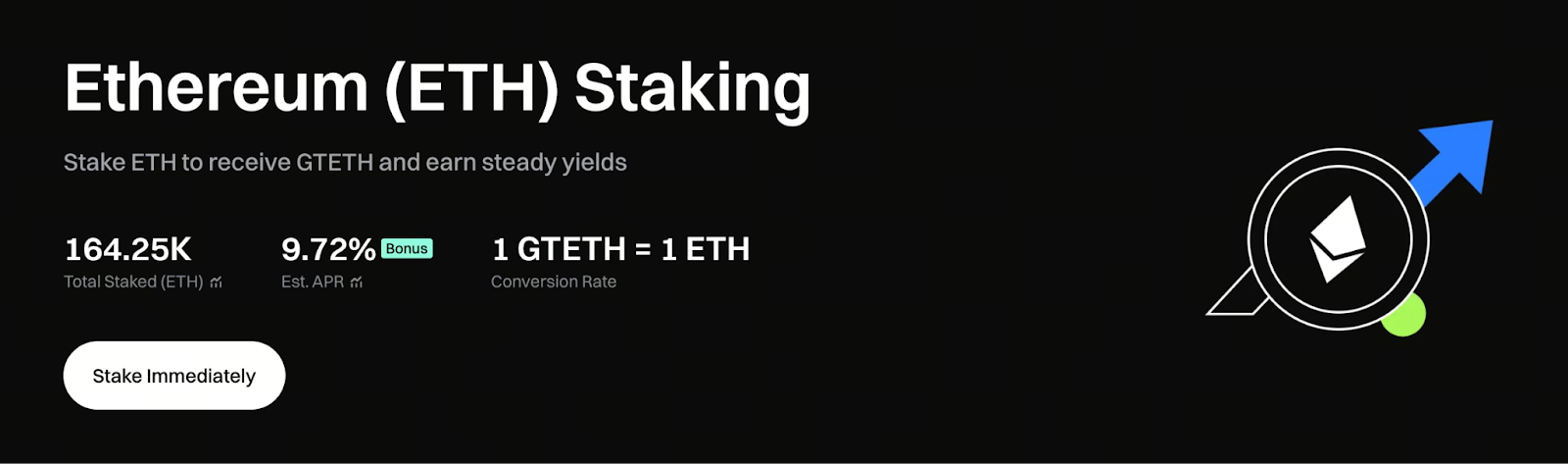
Previously, crypto investment strategies were built on long-term holding and waiting for value appreciation. Today, the market has entered an era of rapid rotation. Price swings are frequent, and capital flows change in an instant. The real risk is no longer just picking the wrong direction—it’s whether your assets can be reallocated quickly and efficiently.
In this environment, an asset’s core value comes not only from its yield, but also from its liquidity and operational flexibility. This is especially relevant for ETH holders. Traditional staking models may offer stability, but they sacrifice the most crucial factor—market responsiveness.
Structural Constraints of Traditional ETH Staking
Once you participate in ETH staking, several unavoidable issues arise. After assets are locked, you can’t adjust your position in response to market changes. Even if the market shifts dramatically, you can only passively endure it. Locked ETH can’t be used for other investments or strategies, resulting in significantly lower capital efficiency. While staking yields exist, they’re often isolated from your overall asset management system, making it difficult to include them in a complete, dynamic strategy. Instead of boosting asset efficiency, staking becomes a liquidity constraint in high-frequency markets.
The Logic Behind GTETH
GTETH isn’t just ETH wrapped with a staking layer—it’s a redefinition of ETH’s structure as an asset. When you convert ETH to GTETH, staking is no longer a separate action; it’s embedded directly into the asset’s mechanism. In other words, GTETH is an ETH-mapped asset that automatically accumulates yield. You’re not holding tokens waiting to be unlocked—you’re holding an asset unit that grows continuously.
Yield Automatically Reflected in Price—No Claims or Actions Needed
GTETH uses a yield-inclusive model, where all returns are directly reflected in the asset price—no application or manual claiming required.
Yields come from two main sources:
- Staking rewards from the Ethereum PoS network.
- Additional GT incentives provided by Gate.
As long as you hold GTETH, these returns accumulate automatically. All data is available on-chain, ensuring transparency and verifiability. Investors don’t need to perform any extra management tasks.
No More Trade-Off Between Yield and Liquidity
The most critical difference between GTETH and traditional staking is the complete removal of lock-up restrictions. Holders can redeem GTETH for ETH at any time, trade it directly on the market, or adjust their asset allocation strategies—none of which interrupt the yield stream.
This marks the first time ETH can generate returns while maintaining full liquidity. Investors no longer have to choose between yield and flexibility—both are achievable.
ETH Evolves from a Storage Asset to a Strategic Tool
With the GTETH framework, ETH is no longer a passive yield instrument but a strategic asset that can be flexibly deployed. Whether for short-term hedging, waiting for market opportunities, or adjusting portfolio structure, GTETH allows you to maintain operational flexibility without interrupting returns. ETH transitions from a long-term storage asset to a unit that actively participates in strategic decision-making.
Clear Return Structure—Long-Term Efficiency Made Simple
GTETH’s sources of yield are straightforward, comprising two main components:
- Ethereum PoS annualized yield of approximately 2.72%
- Gate’s GT incentives of around 7%
All returns are reflected in the asset value when you redeem for ETH, making it easier to calculate total yields and compare long-term performance with other investment options.
Start staking ETH with Gate now and begin your on-chain yield journey: https://www.gate.com/staking/ETH?ch=ann46659
VIP Level Directly Influences Compounding
In the GTETH system, fee rates are adjusted according to your Gate VIP level:
- VIP 5–7: 20% fee discount
- VIP 8–11: 40% fee discount
- VIP 12–14: 60% fee discount
Short-term differences may be subtle, but over the long run and with compounding, the fee structure can significantly impact actual returns.
Beyond LST—A Comprehensive ETH Asset Management Tool
Most liquid staking tokens still rely on lock-up mapping. GTETH, however, is closer to a comprehensive ETH asset management solution. It doesn’t require a lock-up commitment or restrict capital mobility, yet it continues to accumulate returns. This gives ETH three essential attributes: yield, liquidity, and strategic flexibility—enabling ETH to be dynamically managed as an asset class for the first time.
Summary
GTETH isn’t about making staking more complicated—it’s about integrating staking into the asset itself. With built-in yield and no lock-up restrictions, GTETH gives ETH both yield generation and market agility. In a market where volatility is the norm, asset competitiveness is defined not just by who earns more, but by who can move faster and adapt more flexibly. GTETH is designed for this new market rhythm as the next evolution of ETH.