As a financial instrument that combines the structure of a fund with the trading flexibility of a stock, ETFs play an important role in modern capital markets, supporting asset allocation, liquidity provision, and price discovery. Understanding how ETFs are built and how they function helps clarify their role and limits within the broader financial system.
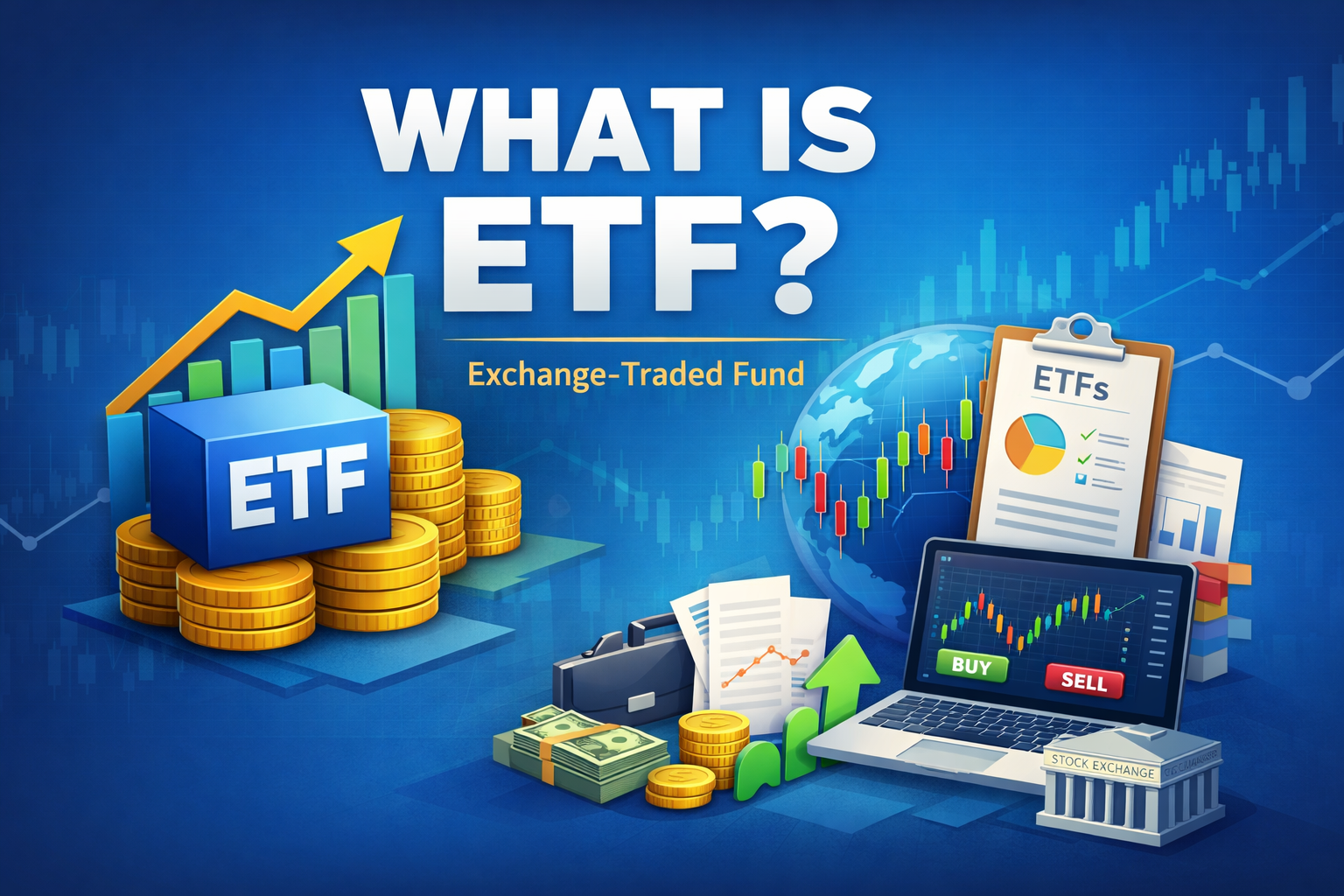
What Is an ETF?
At its core, an ETF is a fund. Unlike traditional open-ended mutual funds, however, it can be bought and sold on an exchange in real time, just like stock. Investors do not need to subscribe to or redeem shares directly with the fund company; instead, they trade ETF shares on the secondary market.
Most ETFs follow a passive management approach, aiming to replicate the performance of a specific index. For example, an equity index ETF holds constituent stocks in proportion to their index weights so that its net asset value closely tracks the index. There are also actively managed ETFs, where a portfolio manager adjusts holdings according to a defined strategy, while still operating within the ETF market structure.
Key features of ETFs include diversification, trading flexibility, and relatively high transparency. Through a single product, investors gain exposure to a basket of assets, which can help reduce the impact of volatility on any single holding on the overall portfolio.
How Do ETFs Work? The Coordination Between Primary and Secondary Markets
The operation of an ETF relies on the interaction between the primary and secondary markets.
In the secondary market, individual investors buy and sell ETF shares on an exchange. Prices fluctuate throughout the trading day based on supply and demand, similar to stocks, allowing for intraday trading.
The primary market, by contrast, involves transactions between authorized participants (APs) and the fund company. Authorized participants can deliver a basket of securities to the fund in exchange for ETF shares, known as creation, or return ETF shares to the fund in exchange for underlying securities, known as redemption.
If the ETF’s market price deviates from its net asset value, authorized participants may engage in arbitrage. By creating or redeeming shares, they help push the market price back toward its net asset value. This mechanism enhances price stability and supports overall market efficiency.
The Market Structure of ETFs: The Roles of Fund Companies, Market Makers, and Investors
The ETF ecosystem involves several key participants.
Fund companies design the product and manage the underlying assets, ensuring the portfolio aligns with its stated objective and regularly disclosing holdings.
Authorized participants handle creations and redemptions in the primary market and conduct arbitrage when price discrepancies arise, helping maintain market efficiency.
Market makers provide continuous bid and ask quotes in the secondary market, narrowing spreads and supporting liquidity.
Investors trade ETF shares in the secondary market, and their activity reflects market expectations and capital flows.
This layered structure allows ETFs to balance trading flexibility with the stability of an underlying asset pool.
What Are the Main Types of ETFs?
ETFs can be categorized by asset class and investment strategy.
Equity ETFs track indices for specific countries, sectors, or themes and are the most common type.
Bond ETFs hold fixed income instruments, offering exposure to the bond market.
Commodity ETFs typically track the price of assets such as gold or energy products.
Sector or thematic ETFs focus on particular industries or investment themes.
More complex structures include actively managed ETFs, leveraged ETFs, and inverse ETFs.
While each type serves different allocation needs, all operate under the same fundamental ETF market framework.
Comparing ETFs, Mutual Funds, and Stocks
Although ETFs, mutual funds, and stocks can all be used in portfolio construction, they differ significantly in structure and trading mechanics.
| Comparison Dimension | ETF | Mutual Fund | Stock |
| Asset Structure | A basket of assets | A basket of assets | A single company |
| Trading Method | Traded in real time on an exchange | Subscribed and redeemed at end of day net asset value | Traded in real time on an exchange |
| Pricing Mechanism | Market supply and demand plus an arbitrage mechanism | Priced at net asset value | Market supply and demand |
| Level of Diversification | Typically high | Typically high | Depends on the performance of a single company |
| Source of Liquidity | Secondary market trading plus creations and redemptions by authorized participants | Fund company | Secondary market trading |
Overall, ETFs resemble stocks in terms of trading flexibility and mutual funds in terms of diversified asset structure. What makes them distinct is the combination of these characteristics, supported by a primary market arbitrage mechanism that helps maintain price alignment with net asset value.
Advantages and Limitations of ETFs
ETFs offer several advantages, including flexible trading, transparency, and built-in diversification. Investors can adjust their positions throughout the trading day in response to market conditions.
Passive ETFs generally have lower management costs and clearly defined holdings, making it easier to understand sources of risk.
However, ETFs also have limitations. During periods of extreme market volatility, their market prices may temporarily diverge from net asset value. Certain complex products, such as leveraged ETFs, may carry path dependency risk.
Recognizing these structural characteristics helps identify appropriate use cases as well as potential constraints.
Key Metrics for Evaluating ETFs
When evaluating an ETF, investors typically focus on the following indicators:
Tracking error, which measures the deviation between the ETF and its target index.
Expense ratio, which affects long term holding costs.
Liquidity and trading volume, which indicate ease of trading.
Assets under management, which can influence product stability and market attention.
Bid ask spread, which reflects transaction costs.
Together, these metrics provide insight into an ETF’s operational efficiency and market performance.
The Role of ETFs in Financial Markets
In modern financial markets, ETFs support liquidity management, asset allocation, and price discovery.
Institutional investors often use ETFs to adjust exposure quickly, while retail investors rely on them for diversified investment access.
ETFs are also widely used for hedging risk or expressing market views. As index-based investing continues to expand, their influence within the market has grown accordingly.
The Extension of ETFs Into Digital Asset Markets
As digital asset markets have developed, the ETF structure has been applied to crypto-related investments. Digital asset ETFs typically track specific cryptocurrencies or related indices, allowing investors to gain exposure through traditional brokerage accounts.
This structure lowers technical barriers and operates within established regulatory frameworks. However, pricing remains influenced by the performance of the underlying assets and prevailing market supply and demand.
The expansion of ETFs into digital assets illustrates how this financial structure can adapt across different asset classes.
Conclusion
ETFs combine the structural features of a fund with the liquidity of exchange trading. Through coordination between the primary and secondary markets, they facilitate price discovery and share creation and redemption. Their ecosystem includes fund companies, authorized participants, market makers, and investors. Different types of ETFs address diverse allocation needs and increasingly serve as a bridge between traditional finance and digital asset markets. Understanding their operating logic and evaluation metrics provides a clearer view of their role within capital markets.
FAQ
Do all ETFs track an index?
Most ETFs track an index, but actively managed products also exist.
Why do ETF prices stay close to net asset value?
The primary market creation and redemption mechanism supports price stability through arbitrage.
What is the biggest difference between an ETF and a stock?
An ETF holds a basket of assets, while a stock represents ownership in a single company.
Do ETFs carry risk?
ETF risks stem from the underlying assets they hold and overall market volatility.
How do digital asset ETFs differ from traditional ETFs?
Their structure is similar, but the underlying assets are cryptocurrencies or related indices.