As DeFi trading volumes surge, users conducting token swaps on-chain must consider not only price, but also elevated Gas costs and potential slippage losses. During periods of network congestion, Trading Fees for a standard transaction can increase substantially, which is particularly disadvantageous for small-volume traders. Additionally, because trade orders are publicly visible in the on-chain mempool, they are vulnerable to MEV strategies such as frontrunning and sandwich attacks, often resulting in less favorable Fill Prices.
Against this backdrop, enhancing trade execution efficiency has become a central focus for DeFi infrastructure development. The Fusion mechanism introduced by 1inch directly targets Gas costs, slippage, and MEV risk throughout the on-chain swap process. By implementing a new order execution model, it delivers a more efficient trading experience and advances the evolution of decentralized trading toward lower costs and higher performance.
What Is 1inch Fusion?
1inch Fusion is an advanced Smart Contract-based swap mechanism that enables users to complete token swaps by submitting order requests, while third-party participants handle on-chain trade execution. Unlike traditional Swap transactions, users do not pay Gas fees directly; instead, the order executor absorbs these costs.
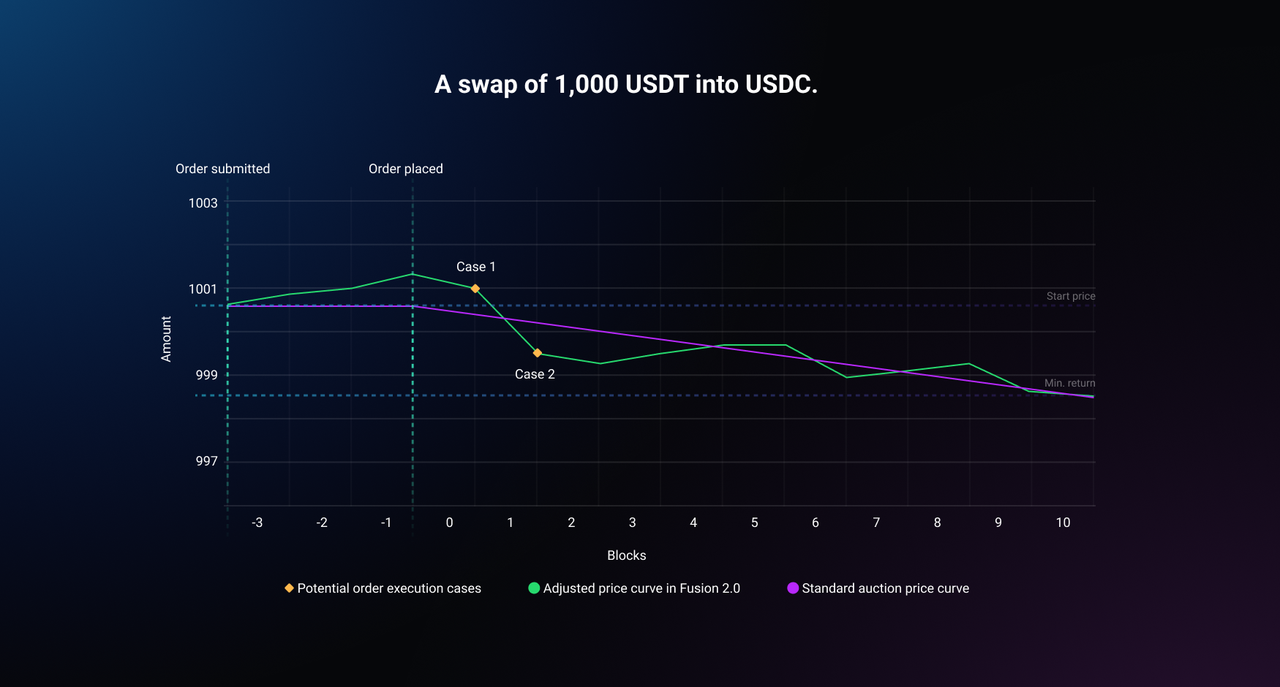
Fusion’s core innovation is its integration of offer aggregation and order execution. Users simply set their swap parameters, and the system automatically matches them with the optimal execution path, with executors finalizing the trade. This not only streamlines the user experience but also maximizes trading efficiency.
How Does 1inch Fusion Work?
Within the 1inch Fusion framework, after a user submits a swap order, the system does not immediately broadcast the order on-chain. Instead, network Resolvers—typically professional market makers or Liquidity Providers—compete to execute the order. These Resolvers provide offers based on the order’s terms and vie for the right to fulfill the trade.
Once a Resolver wins the execution right, it completes the on-chain transaction and covers all required Gas costs. This competitive environment among multiple Resolvers drives higher offer quality and helps users secure more favorable Fill Prices. For users, the process is both simplified and highly efficient.
Why Does 1inch Fusion Offer Zero Gas Fee Swaps?
The “zero Gas fee” feature of 1inch Fusion means that Gas costs required for trade execution are shifted to Resolvers, not eliminated outright. On-chain execution still incurs Gas fees, but these are absorbed by the order executor, so users do not pay them directly.
This approach significantly lowers users’ direct trading expenses on-chain, especially when network fees are high. For users making smaller swaps, this model minimizes Trading Fee erosion of Returns and boosts capital efficiency.
How Does 1inch Fusion Minimize Slippage and MEV Risk?
Traditional DEX trades expose user orders in the public on-chain mempool, making them easy prey for arbitrage bots. When bots engage in frontrunning or sandwich attacks, users often suffer worse Fill Prices.
Fusion’s architecture reduces the duration orders are exposed to the public market by enabling Resolvers to compete off-chain for order execution. This greatly lowers the risk of MEV exploitation. Additionally, competition among executors usually results in better offers for users, further mitigating slippage losses. Fusion, therefore, not only reduces trading costs but also enhances order execution quality.
How Is 1inch Fusion Different from Standard Swaps?
In standard Swap models, users must pay on-chain Gas fees themselves and directly face slippage risks during execution. With Fusion, all complex execution processes are handled by Resolvers, allowing users to focus solely on the swap outcome.
This distinction makes Fusion’s user experience more akin to centralized platforms: users are freed from managing on-chain fees and complex trade path optimization. For those prioritizing convenience and cost efficiency, Fusion delivers a more user-friendly on-chain swap solution.
What Does 1inch Fusion Mean for Users?
For DeFi users, 1inch Fusion’s most significant advantage is lowering the barrier to on-chain trading. Previously, Gas fees and slippage issues impacted trading decisions, but Fusion’s optimized execution mechanism gives users greater cost control and better pricing.
Such improvements are vital for the mainstream adoption of on-chain trading. Fusion not only enhances accessibility for everyday users but also brings decentralized trading efficiency closer to that of centralized platforms, paving the way for further DeFi growth.
Summary: How Does 1inch Fusion Optimize the On-Chain Trading Experience?
1inch Fusion uses a Resolver bidding system to transfer on-chain execution costs to professional participants, reducing Gas expenses and slippage risk for users. Compared to traditional Swaps, this model delivers a superior trading experience without increasing operational complexity.
As DeFi trading infrastructure continues to evolve, execution efficiency is becoming the key to user satisfaction. 1inch Fusion streamlines order execution and mitigates MEV risk, offering a highly efficient solution for on-chain swaps and reinforcing 1inch’s leadership in decentralized trading aggregation.
FAQs
Is 1inch Fusion Truly Zero Gas Fee?
1inch Fusion does not eliminate Gas costs; instead, Resolvers pay Gas on behalf of users, so users do not directly incur these fees.
Why Is 1inch Fusion More Efficient Than Standard Swaps?
Fusion enables Resolvers to bid for order execution, optimizing trading routes, reducing user execution costs, and lowering slippage and MEV risks.
Is 1inch Fusion Secure?
Fusion reduces MEV risk by minimizing order exposure in the public mempool; however, users should remain aware of on-chain trade and Smart Contract risks.
Who Should Use 1inch Fusion?
Fusion is ideal for on-chain traders seeking to reduce Gas costs, minimize slippage, and enhance trading efficiency.







