I’ve been deep in scaling research since 2015. Sharding, plasma, app chains, rollups—I’ve worked through all the iterations. Started AltLayer in 2021 focusing on app rollups and rollup-as-a-service. I’ve worked closely with every major rollup stack and team in the ecosystem. So when Vitalik posts something that fundamentally reframes how we should think about L2s, I pay attention. Yesterday’s Vitalik’s post was one of those moments.
What Vitalik did is not easy. Admitting that core assumptions from 2020 didn’t play out as expected—that takes a certain kind of honesty most leaders avoid. The rollup-centric roadmap was built on the premise that L2s would function as “branded shards” of Ethereum. Four years of market data show something different. L2s evolved into independent platforms with their own economic incentives. Ethereum L1 scaled faster than expected. The original framing doesn’t match reality anymore.
It would have been easier to keep defending the old narrative. To keep pushing teams toward a vision that the market had already rejected. But that’s not what good leadership looks like. Better to acknowledge the gap between expectation and reality, propose a new path, and move forward toward a brighter future. That’s exactly what this post does.
What Vitalik actually diagnosed
The post identified two converging realities that necessitate strategic adjustment. First, L2 decentralization has progressed more slowly than hoped. Only three major L2s have reached Stage 1 (Arbitrum, OP Mainnet, Base), and some L2 teams have explicitly stated they may never pursue full decentralization due to regulatory requirements or business model constraints. This is not a moral failing. It reflects the economic reality that sequencer revenue is a primary business model for L2 operators.
Second, Ethereum L1 has scaled substantially. Fees are low. The Pectra upgrade doubled blob capacity. Further gas limit increases are planned through 2026. When the original rollup roadmap was designed, L1 was expensive and congested. That assumption no longer holds. L1 can now handle significant transaction volume at reasonable cost, which changes the value proposition of L2s from “necessary for usability” to “optional for specific use cases.”
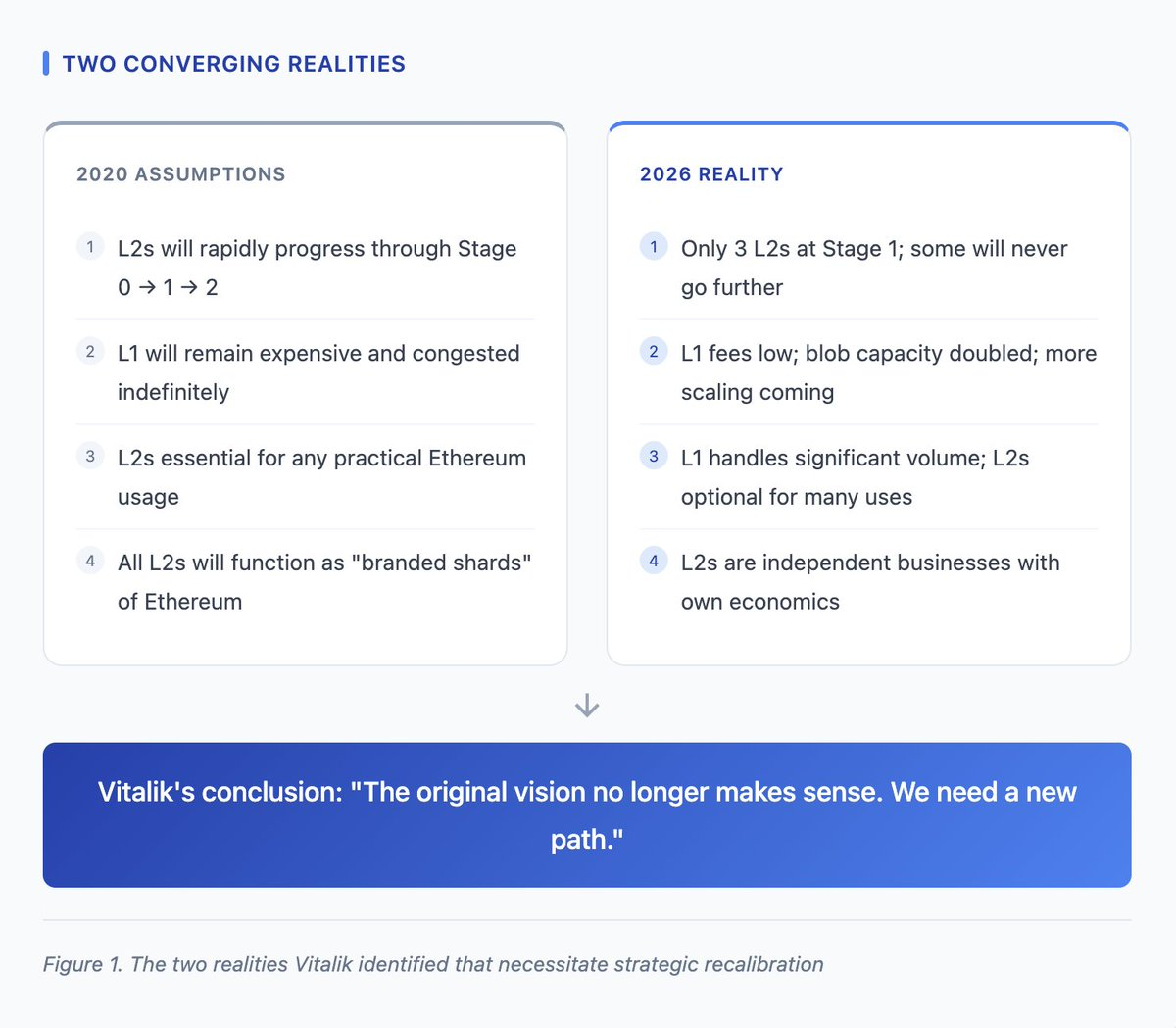
Figure 1. The two realities Vitalik identified that necessitate strategic recalibration
The trust spectrum reframing
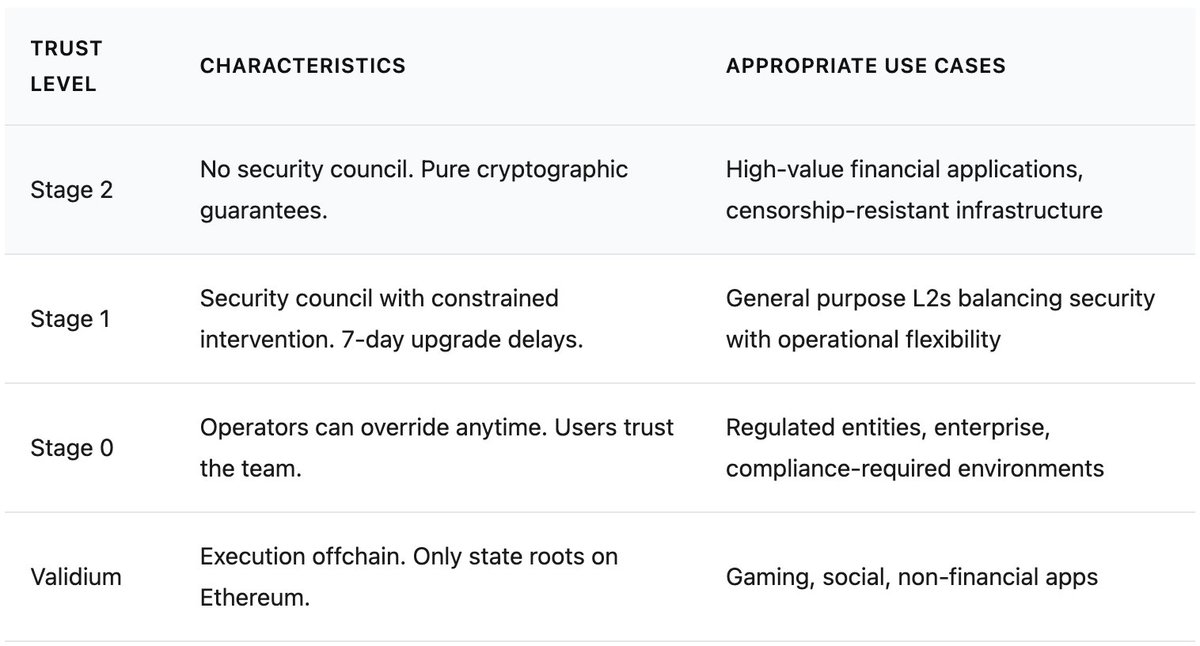
Vitalik’s key conceptual contribution is reframing L2s as existing on a spectrum rather than a single category with uniform obligations. The “branded shard” metaphor implied that all L2s should aspire to Stage 2 decentralization and function as extensions of Ethereum with its values and security guarantees. The new framing acknowledges that different L2s serve different purposes, and Stage 0 or Stage 1 can be legitimate endpoints for projects with specific requirements.
This reframing is strategically important because it removes the implicit judgment that L2s not pursuing full decentralization are somehow failing. A regulated L2 serving institutional customers who require asset freeze capabilities is not a broken version of Arbitrum. It is a different product for a different market. By legitimizing this spectrum, Vitalik enables L2s to be honest about their positioning rather than making decentralization promises they have no economic incentive to keep.
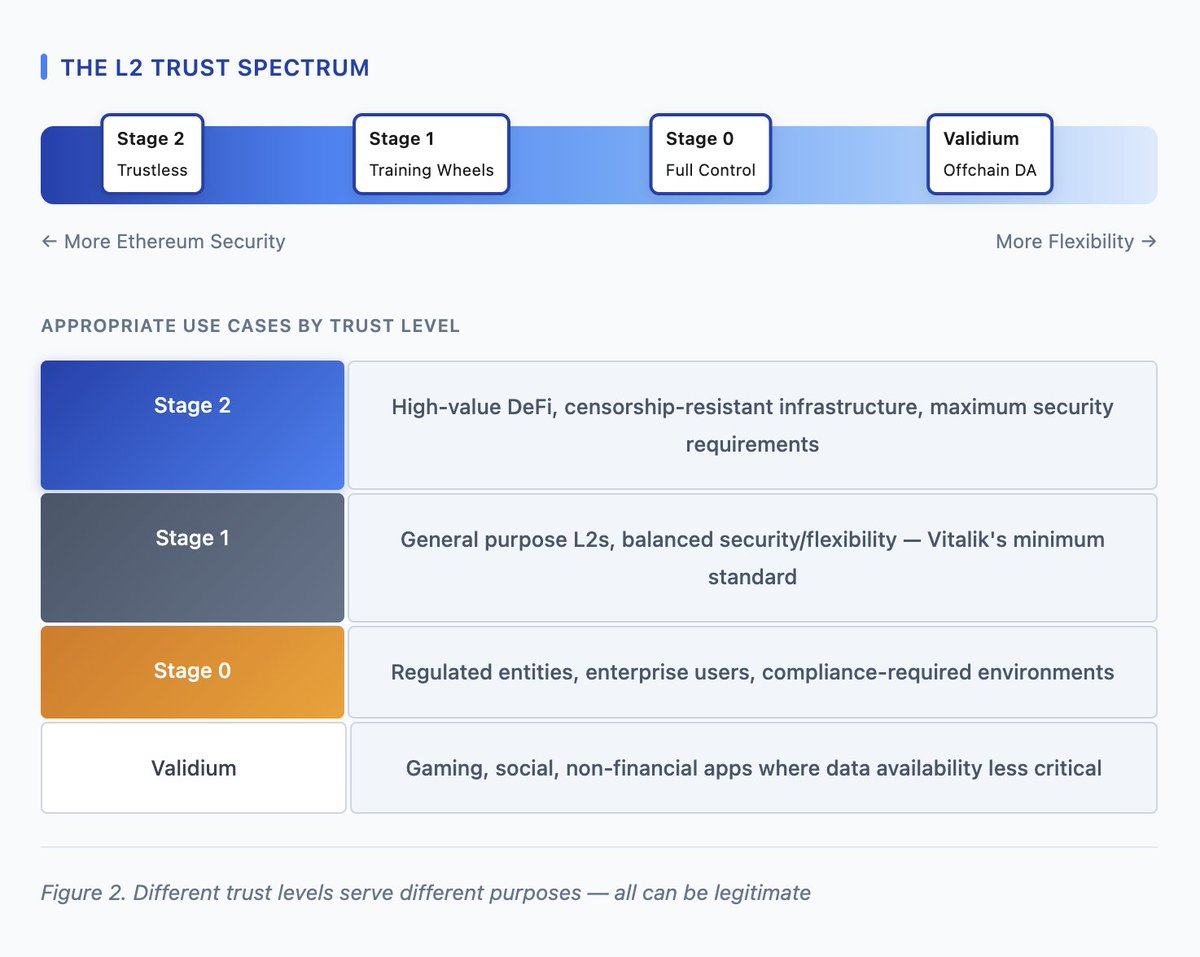
Figure 2. Different trust levels serve different purposes — all can be legitimate
The native rollup precompile proposal
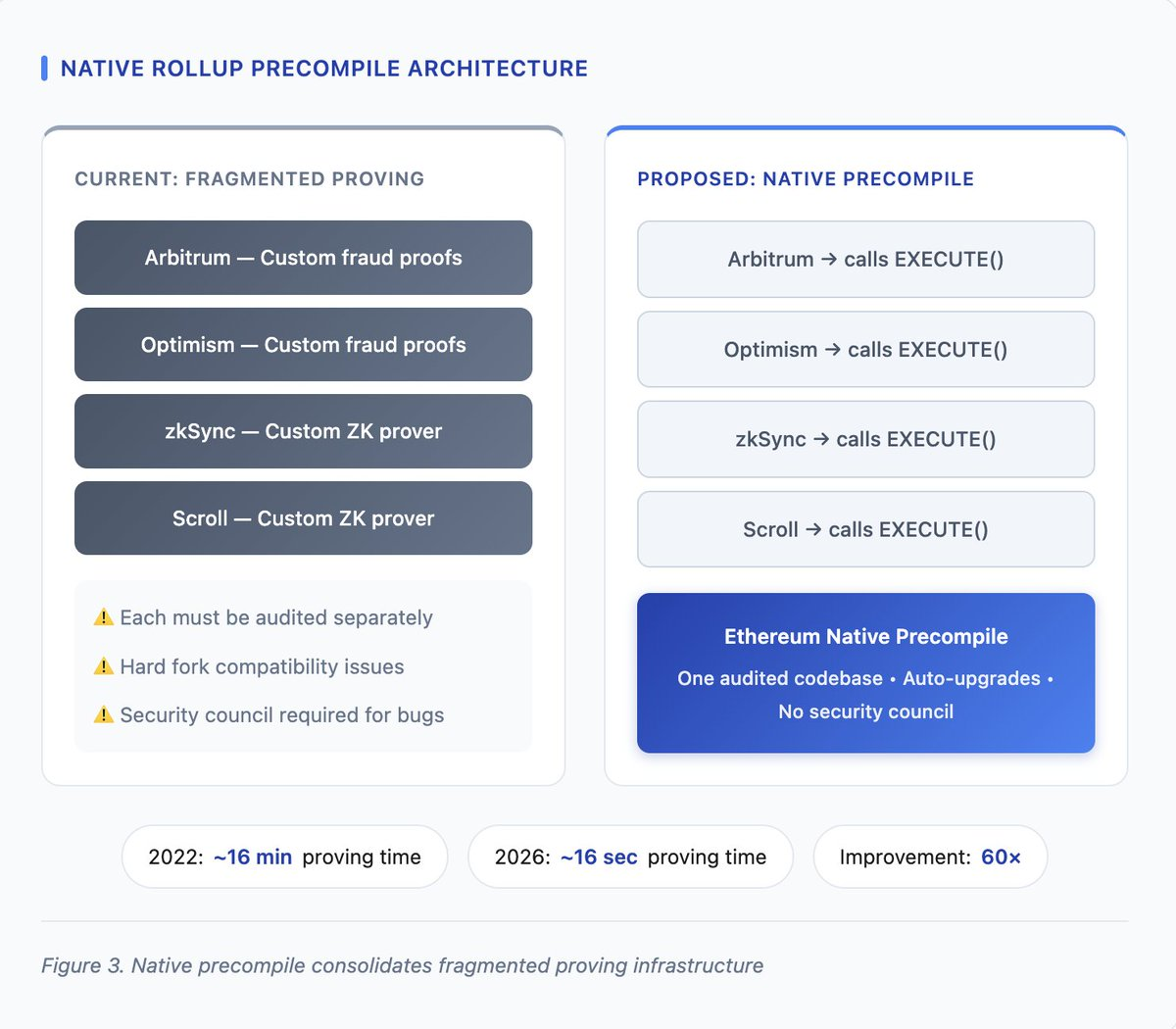
The technical centerpiece of Vitalik’s post is the native rollup precompile. Currently, each L2 implements its own system for proving state transitions to Ethereum. Optimistic rollups use fraud proofs with 7-day challenge periods. ZK rollups use validity proofs with custom circuits. Each implementation must be audited independently, can have bugs, and requires updates when Ethereum hard forks change EVM behavior. This fragmentation creates security risks and maintenance burden across the ecosystem.
A native rollup precompile would be a function built directly into Ethereum that verifies EVM execution. Instead of each rollup maintaining custom provers, they would call this shared infrastructure. The benefits are substantial: one audited codebase instead of dozens, automatic compatibility with Ethereum upgrades, and the ability to eliminate security councils once the precompile is battle-tested.
The synchronous composability vision
The ethresear.ch post details a mechanism for synchronous composability between L1 and L2s. Currently, moving assets or executing logic across L1 and L2 boundaries requires waiting for finality (7 days for optimistic rollups, hours for ZK rollups) or trusting fast bridges with counterparty risk. Synchronous composability would allow transactions to atomically use both L1 and L2 state, reading and writing across boundaries in a single transaction that either fully succeeds or fully reverts.
The proposed mechanism uses three block types: regular sequenced blocks for low-latency L2 transactions, slot-ending blocks that mark boundaries, and based blocks that can be constructed permissionlessly after slot-ending blocks. During the based block window, any builder can construct blocks that interact with both L1 and L2 state.
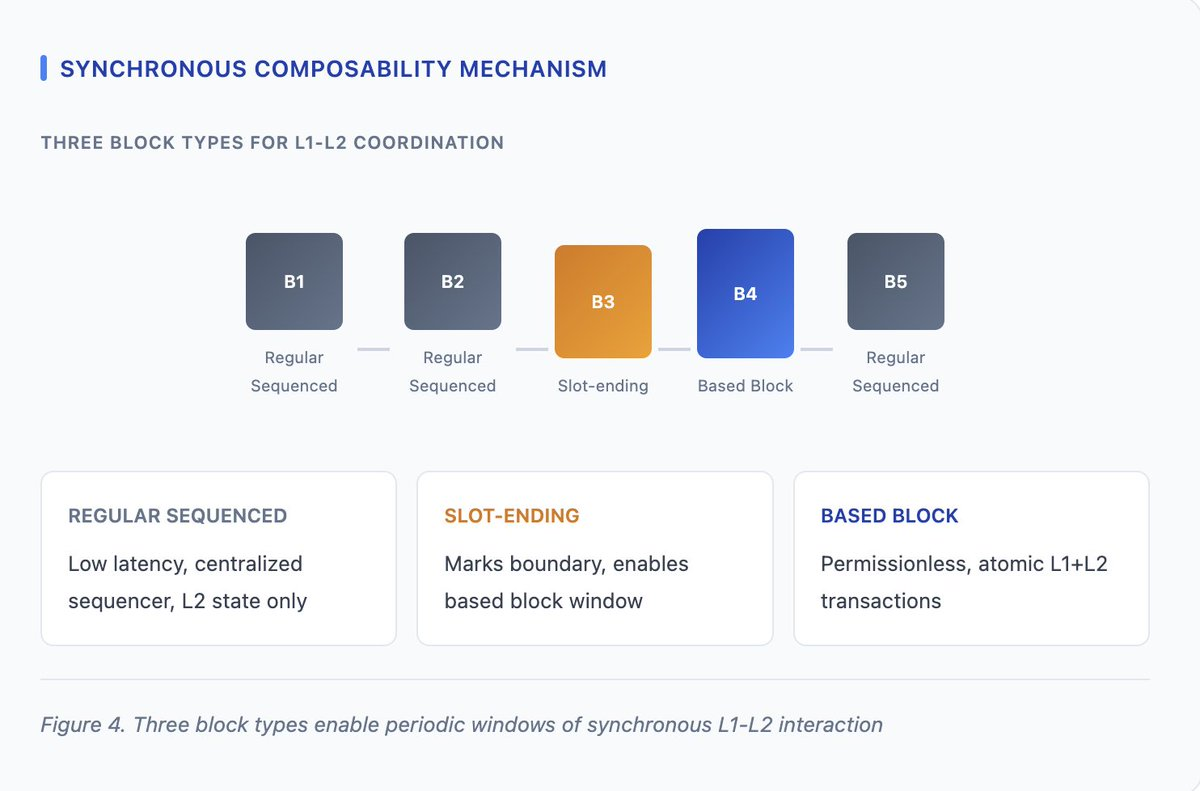
Figure 4. Three block types enable periodic windows of synchronous L1-L2 interaction
How L2 teams responded
The major L2 teams responded within hours, and their responses reveal healthy strategic diversity. This is exactly what Vitalik’s trust spectrum framing enables: different teams can pursue different positions without pretending they are all on the same path to the same destination.
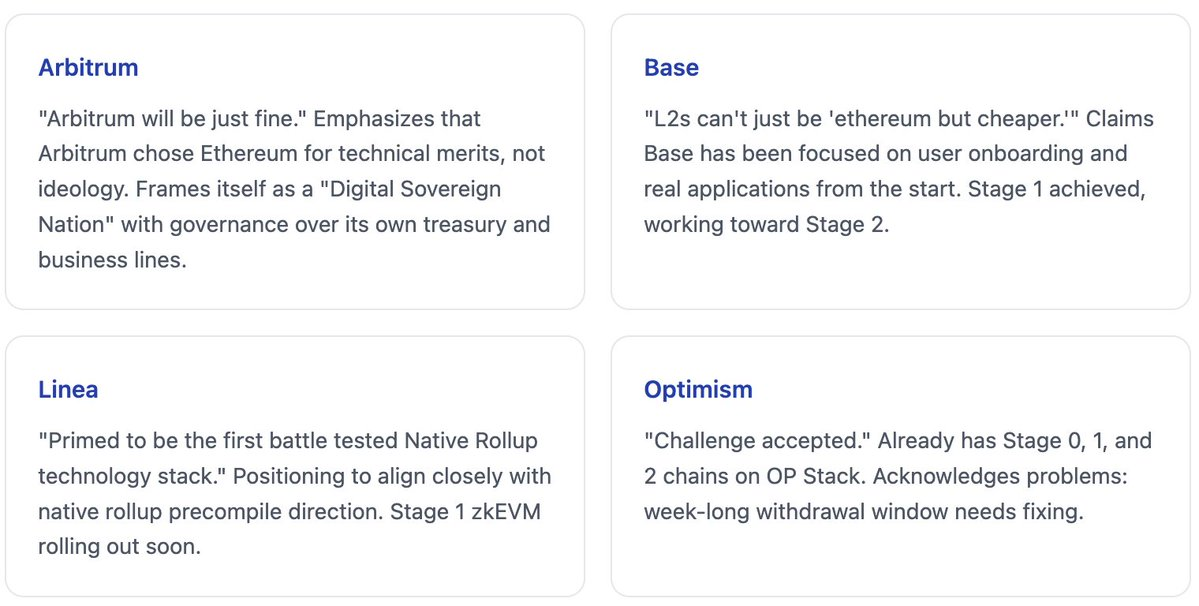
The diversity of responses is healthy. Arbitrum positions as independent and self-sufficient. Base emphasizes applications and users. Linea aligns closely with Vitalik’s native rollup direction. Optimism acknowledges challenges while claiming progress. None of these positions are wrong. They represent different strategies for different market segments, which is exactly what the trust spectrum framing legitimizes.
The economic reality Vitalik acknowledged
One of the most important aspects of Vitalik’s post is the implicit acknowledgment of L2 economics. When he notes that some L2s “may never want to go beyond Stage 1” due to “regulatory needs” requiring “ultimate control,” he is acknowledging that L2s are businesses with legitimate economic interests that diverge from the idealized “branded shard” model. Sequencer revenue is real. Regulatory compliance requirements are real. The expectation that L2s would give up these interests for ideological alignment was never realistic.
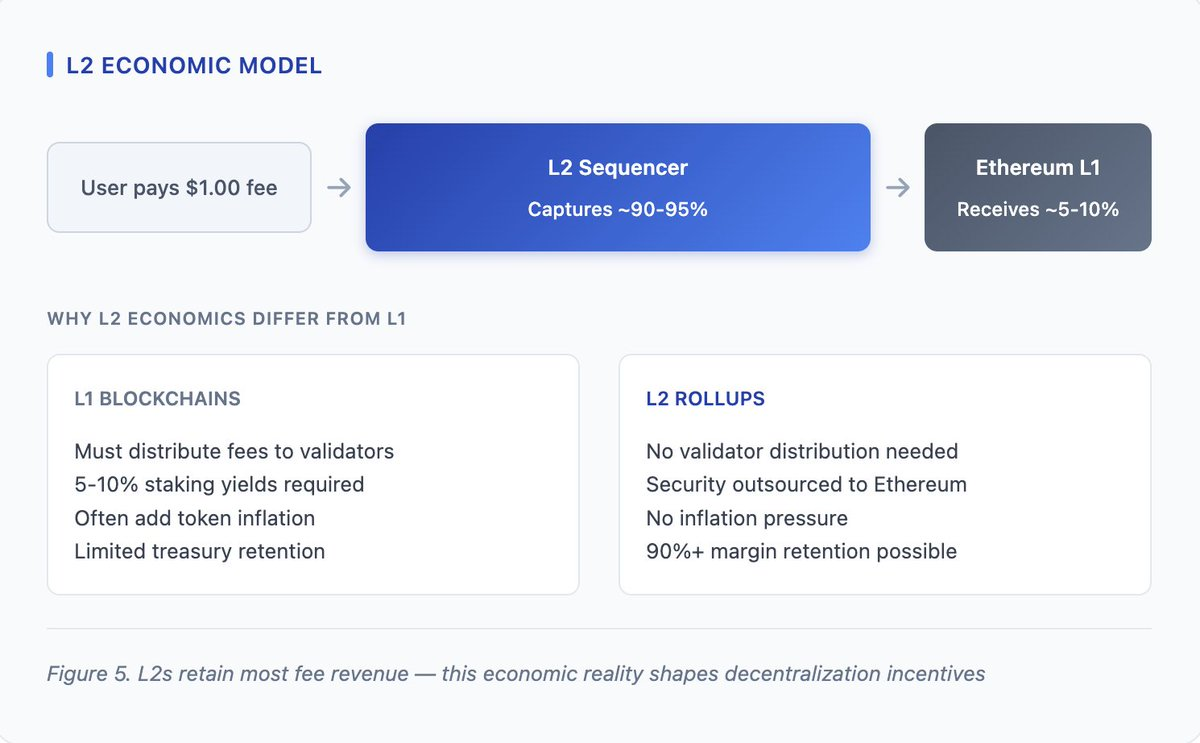
Figure 5. L2s retain most fee revenue — this economic reality shapes decentralization incentives
The path forward Vitalik outlined
Vitalik’s post is constructive rather than merely diagnostic. He outlines several concrete directions for L2s that want to remain valuable as L1 scales. These are not mandates. They are suggestions for how L2s can differentiate when “cheaper Ethereum” is no longer sufficient.
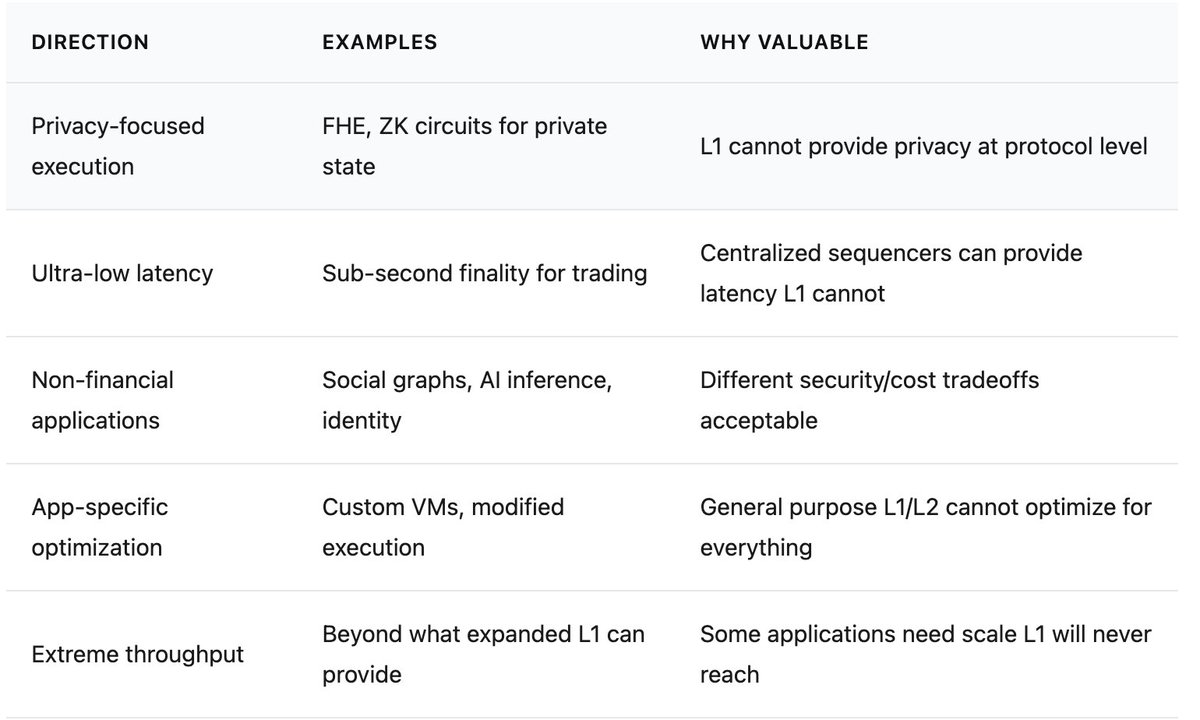
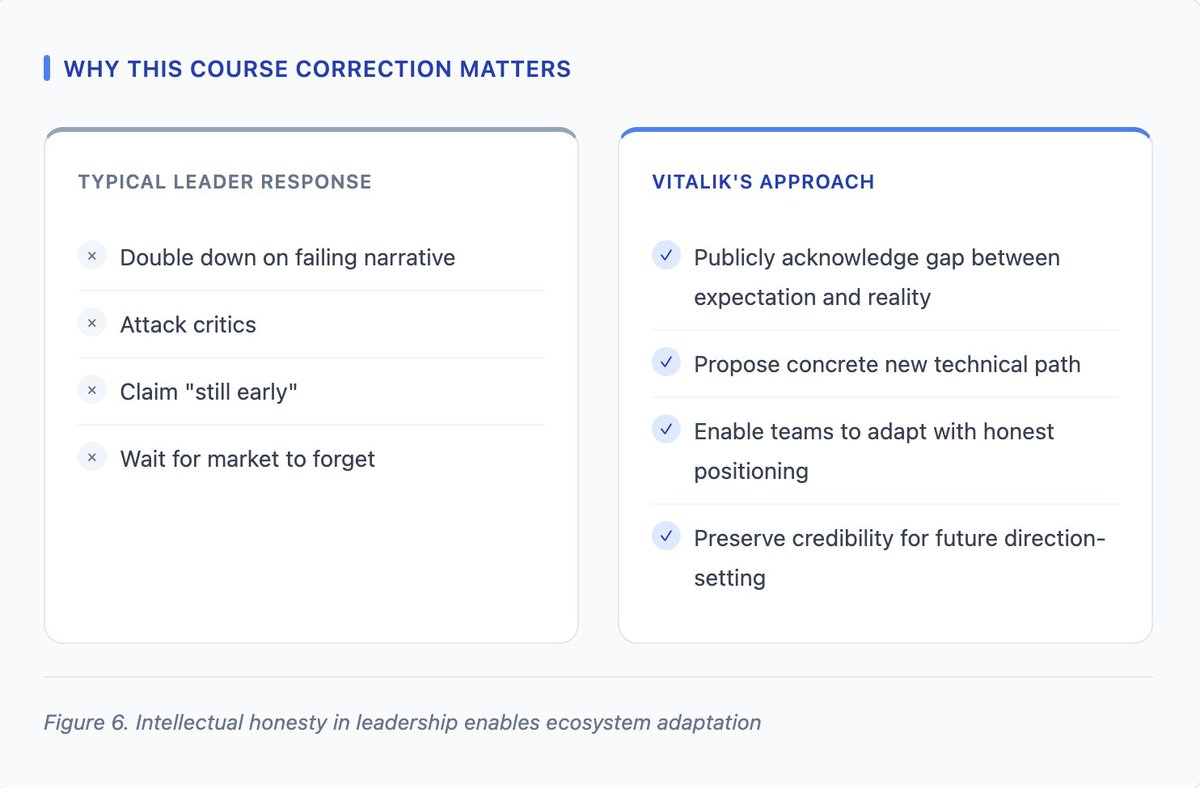
Figure 6. Intellectual honesty in leadership enables ecosystem adaptation
Summary
Vitalik Buterin’s February 2026 post represents a strategic recalibration of Ethereum’s approach to L2s. The core insight is that L2s evolved into independent platforms with legitimate economic interests rather than “branded shards” with obligations to Ethereum. Rather than fighting this reality, Vitalik proposes embracing it through a trust spectrum that legitimizes diverse approaches, native rollup infrastructure that strengthens L1-L2 integration for those who want it, and synchronous composability mechanisms for cross-layer interaction.
The L2 ecosystem responses show healthy diversity. Arbitrum emphasizes independence. Base emphasizes applications. Linea aligns with native rollup direction. Optimism acknowledges challenges while shipping improvements. This diversity is the intended outcome of the trust spectrum framing: different teams can pursue different strategies without pretending they are all on the same path.
For Ethereum, this course correction preserves credibility by acknowledging reality rather than defending outdated assumptions. The technical proposals are feasible given ZK-EVM maturity. The strategic proposals create space for the ecosystem to evolve productively. This is what adaptive leadership looks like in technology: recognizing when circumstances have changed and proposing new paths forward rather than doubling down on strategies the market has rejected.
After a decade in scaling research and four years running a rollup infrastructure company, I’ve seen plenty of leaders refuse to adapt when the facts changed. It never ends well. What Vitalik did here was hard—admitting publicly that the vision from 2020 needs updating. But it’s the right call. Holding onto a narrative that the market has moved past doesn’t help anyone. The path forward is clearer now than it was last week. That’s worth something.
Disclaimer:
- This article is reprinted from [yq_acc]. All copyrights belong to the original author [yq_acc]. If there are objections to this reprint, please contact the Gate Learn team, and they will handle it promptly.
- Liability Disclaimer: The views and opinions expressed in this article are solely those of the author and do not constitute any investment advice.
- Translations of the article into other languages are done by the Gate Learn team. Unless mentioned, copying, distributing, or plagiarizing the translated articles is prohibited.