When Leverage Is No Longer Just About Margin and Position Size
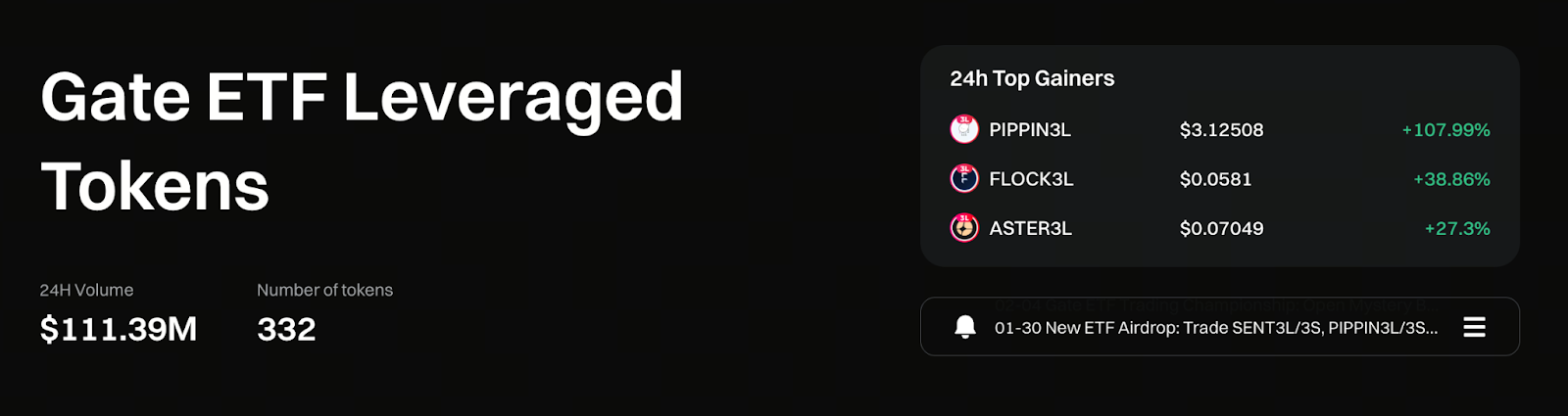
For many, leveraged trading conjures images of opening derivatives accounts, calculating margin requirements, and the ever-present threat of forced liquidation. Although this traditional approach offers high operational flexibility, it also raises the bar for technical expertise and adds significant psychological stress.
Gate’s Leveraged ETF delivers a radically different experience. Users don’t have to manage margin or manually adjust leverage levels. Instead, they participate in amplified price movements through spot-style trading, making leverage an embedded product feature rather than an operational skill.
Start trading Gate Leveraged ETFs now: https://www.gate.com/leveraged-etf
How Is the Fixed Leverage Maintained?
Each Leveraged ETF specifies a fixed target multiple—for example, 3x or 5x. This is typically achieved using underlying perpetual contracts to deliver the desired magnification. When market volatility causes actual leverage to stray from the target, a daily rebalancing mechanism automatically adjusts the portfolio, keeping leverage within the defined range.
This design isn’t about seeking higher risk—it’s about keeping leverage controlled and predictable. Investors don’t need to monitor maintenance margins or add collateral due to sudden price swings.
Why Is Forced Liquidation Not a Concern?
Unlike traditional derivatives trading, Leveraged ETFs do not have a forced liquidation mechanism.
The main reasons are:
-
Users do not borrow funds directly or create margin positions
-
Leverage risk is reflected in the ETF’s net asset value, not in individual accounts
-
The rebalancing mechanism adjusts positions before extreme risk escalates
As a result, risk is expressed through NAV fluctuations, not account liquidations. While price changes still amplify gains and losses, the risk structure is fundamentally different from traditional leveraged positions.
Trending vs. Sideways Markets: Key Differences
The daily rebalancing mechanism can create a compounding effect during strong market trends. In persistent uptrends or downtrends, profits are incorporated into the new base, producing a compounding amplification.
In sideways or range-bound markets, repeated rebalancing may erode NAV, causing actual results to diverge from simple multiple calculations. Therefore, leveraged ETFs are best suited for clearly trending markets, not for extended periods of consolidation.
Maximizing Capital Efficiency
Derivatives trading generally requires margin, locking up some capital. By contrast, Leveraged ETFs use a spot trading model—your invested funds directly achieve the leverage effect, with no need for additional collateral or borrowing.
Additionally, these products charge a fixed daily management fee (e.g., 0.1%), which covers hedging, funding, and rebalancing costs to ensure smooth operation. For investors seeking leveraged exposure while maintaining liquidity, Leveraged ETFs provide a compelling alternative.
Leverage Still Magnifies Volatility
Even with simplified operations, Leveraged ETFs are tools that amplify price swings. In favorable markets, returns can accumulate rapidly; in adverse markets, losses increase just as quickly. Understanding the product structure, assessing market conditions, and practicing sound risk management remain essential for using these products effectively.
Conclusion
Leveraged ETFs make accessing leveraged returns more intuitive. With fixed leverage and automatic rebalancing, Gate Leveraged ETFs transform professionally managed leveraged positions into straightforward, tradable products. This doesn’t remove risk—it reframes it. When investors understand how these products function and allocate capital prudently, leverage becomes a strategic asset, not a source of stress.
**