Issuance Models Are Redefining Market Rules
In the early crypto market, exchange listings were almost synonymous with project success. Now, that model is being disrupted. More teams are choosing to deploy tokens directly on public blockchains, launching initial liquidity and price discovery through decentralized markets instead of waiting for centralized platform approval.
This transformation is pivotal: market power is shifting from platforms back to capital. Pricing is no longer dictated by exchanges, but emerges from the collective actions of all on-chain participants. For projects, this means they can quickly test their narratives. For investors, true first-mover opportunities often arise on-chain—long before centralized listings.
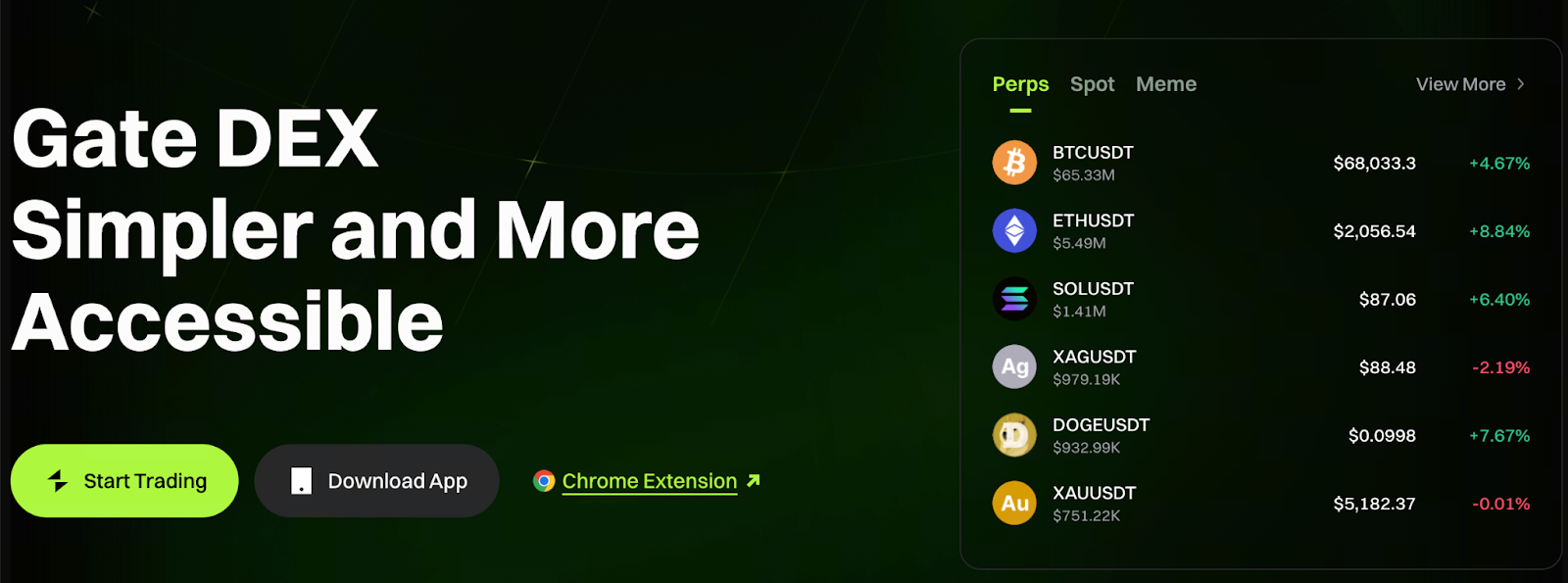
Experience seamless on-chain trading now at Gate DEX: https://web3.gate.com/
The Real Barrier: Fragmented Information
In theory, anyone with a wallet can trade on-chain. In practice, the process is much more complex. Users often need to manage several tools at once:
- Finding token contracts on community platforms
- Verifying authenticity with a blockchain explorer
- Checking liquidity on data platforms
- Switching back to a DEX to execute swaps
This fragmented workflow makes on-chain trading feel like assembling a toolkit. It’s unfriendly for newcomers and significantly increases the risk of errors.
Gate DEX: Core Value Proposition
Gate DEX doesn’t just add features—it unifies previously fragmented on-chain information into a single access point. Once on the platform, users can manage the entire process through a unified interface:
- Explore the latest on-chain assets
- Monitor market trends and liquidity in real time
- Execute trades directly
This experience makes on-chain trading feel less like engineering and more like the intuitive operations of a traditional trading platform. The learning curve is lowered, and information gaps are reduced.
From Discovery to Execution: Minimizing Time Lag
In early markets, speed is a competitive edge—many opportunities exist only for a brief moment. Those who can confirm information and act fastest secure the best cost structure. Gate DEX puts data monitoring and trading access on the same screen, so users don’t need to switch between platforms. This dramatically shortens the gap between decision and execution.
On-Chain Data Makes Risk Understandable
The key feature of on-chain markets is the transparency of all capital flows. With Gate DEX’s integrated on-chain data, users can track:
- Whether capital is consistently flowing into a token
- If trading volume is unusually concentrated or rapidly increasing
- Whether a small number of addresses exert high market control
This data doesn’t guarantee returns, but it grounds decisions in structural information—not just community sentiment or influencer opinions.
Tool Evolution Doesn’t Eliminate Risk
No matter how smooth the process, new assets remain highly uncertain. Insufficient liquidity, unclear project details, and rapid sentiment shifts are all common risks in early on-chain markets. The platform’s value lies in lowering participation barriers—not eliminating investment risk. Users should still manage their allocations and avoid excessive leverage or chasing price spikes based on short-term gains.
On-Chain Trading Is Going Mainstream
On-chain trading was once the domain of engineers and technical users. As interfaces mature, processes standardize, and platforms integrate, this model is opening to everyday traders. Gate DEX marks the shift to platform-level access for on-chain markets—no longer a loose collection of tools, but a core part of the trading ecosystem.
Conclusion
The focus of new asset issuance has moved from centralized exchanges to on-chain platforms, reshaping the market landscape. By integrating asset discovery, data analytics, and trade execution, Gate DEX turns a fragmented process into something intuitive and manageable. As the on-chain ecosystem expands, one-stop platforms like this are becoming vital hubs connecting new projects and market capital.