While the entire crypto industry remains frozen in a prolonged winter and countless VC firms stand by, a16z—famously dubbed “Silicon Valley’s wildest venture capitalist”—has once again taken aim.
According to Fortune, a16z crypto is raising approximately $2 billion for its fifth fund, targeting completion in the first half of 2026. Although this is just half the size of the $4.5 billion “giant” fund from 2022, it’s still enough to command attention in the current market. For comparison, leading Web3 VC Dragonfly announced a fourth fund of only $650 million on February 17.
a16z’s investment approach in Web3 is uniquely bold, consistently betting early on every major sector. Fortune reports this fundraising is under a tight three-month window and will focus exclusively on blockchain-related projects.
So, what exactly are they seeing?
The Venture Capital Revolution of Two Programmers
To understand a16z’s decisions today, we need to revisit the winter of 2009.
The financial crisis still hung over Silicon Valley, and pessimism was widespread. Marc Andreessen and Ben Horowitz, both financially independent technologists, chose to launch a venture capital firm at the worst possible moment. Their first fund targeted $300 million, with the two founders personally committing $15 million.
How did the VC community react? “This is a stupid idea, absolutely shouldn’t be done,” Ben Horowitz later recalled.
Beyond the perception that $300 million was too aggressive, a16z’s fundraising memo included a statement that provoked laughter among peers: “We believe technical talent is the primary resource, so we will build a platform team to serve founders.” At the time, competitors believed this would increase overhead, drag down returns, and violate the traditional VC principle of “small and focused.”
Today, nearly every mainstream VC has adopted this “stupid idea.” This is a16z’s DNA: the courage to say “yes” when everyone else says “no.”
In 2009, a16z invested $65 million in the acquisition of Skype. eBay was embroiled in a patent dispute with Skype’s founders, and most considered the risk excessive. Less than two years later, Microsoft acquired Skype for $8.5 billion.
In 2010, Benchmark partner Matt Cohler mocked a16z for buying Facebook and Twitter shares on the secondary market, calling it “pork futures speculation.” The outcome? Groupon IPO’d at $17.8 billion, Facebook at $104 billion, Twitter at $31 billion.
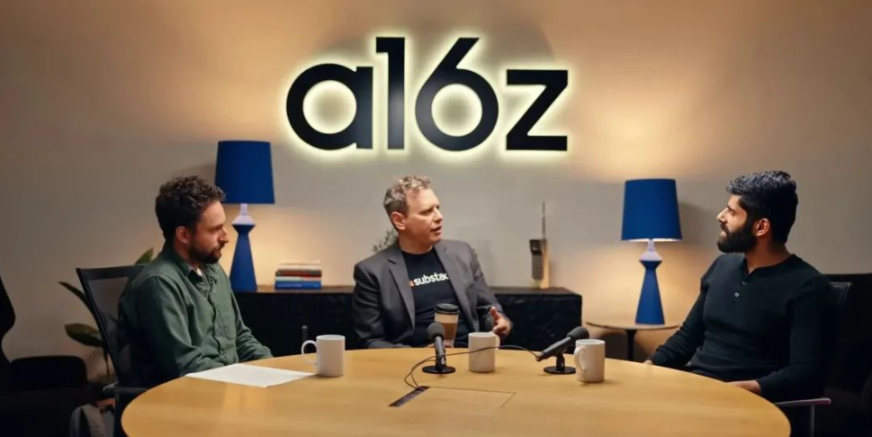
In 2015, a New Yorker journalist relayed industry skepticism: for a16z’s first four funds to return 5–10x, the portfolio would need to reach hundreds of billions in value. Marc Andreessen dismissed this with a gesture: “Nonsense. We’re here to hunt elephants, to chase the big game!”
Today, the combined value of a16z’s first four fund portfolios stands at $853 billion, far exceeding initial expectations. “Hunting elephants” became a classic VC meme, and the founders have repeatedly inspired entrepreneurs: true innovation often looks “stupid” at first.
That’s the intuition of an elephant hunter.
Early Moves in Crypto
In 2013, when most still saw Bitcoin as a “geek’s toy,” a16z led Coinbase’s Series B funding. Ethereum hadn’t even launched yet.
Eight years later, Coinbase debuted on Nasdaq, reaching a market cap of $85.8 billion. a16z cashed out $4.4 billion and still holds a 7% stake.
This wasn’t luck—it was foresight.
In 2018, as crypto entered its first major bear market and Bitcoin fell from nearly $20,000 to just over $3,000, a16z launched its first crypto fund—Crypto Fund I—with a $300 million size.
This time, no one questioned their aggressive approach. The fund’s investments silenced Web3 skeptics. Between 2018 and 2021, a16z’s crypto fund invested in MakerDAO (now Sky), Compound, Uniswap, Solana, Avalanche, NEAR, dYdX, Dapper Labs, OpenSea, and Axie Infinity.
DefiLlama data shows Sky, Compound, and Uniswap have a combined TVL exceeding $11.4 billion—nearly 12% of all DeFi TVL. Many names from four or five years ago have faded, but their influence persists in today’s Web3 landscape.
By the end of 2021, the first fund’s holdings had grown 11x from its original size, making it one of a16z’s best-performing funds. Even after a 40% drop in 2022, investors continued to profit.

Crypto Fund I’s success made a16z the standout among crypto VCs. In 2020, the second fund totaled $515 million. In 2021, the third fund reached $2.2 billion. In 2022, the fourth fund hit $4.5 billion. With over $7.6 billion raised, a16z became the world’s largest crypto venture capital firm. Later investments in Optimism, LayerZero, Lido, and EigenLayer have also become sector leaders.
Of course, a16z has chased trends and made mistakes. In the prediction market battle, a16z bet heavily on Kalshi; investments in Celo, Chia, Dfinity, and Farcaster have, in hindsight, faced misjudgments.
This cycle, a16z has been negative on inscriptions and memes, and its multi-million and hundred-million-dollar “VC coins” have suffered unprecedented setbacks. Yet L2, LSD, restaking, and interoperability—the only truly “Web3 native” narratives—have all been captured by a16z.
You might call them elitist, but you can’t call them incompetent.
a16z, nearly crowned in Web3, has always attracted controversy.
In 2015, former partner Benedict Evans joked that a16z was a media company making money through venture capital. The phrase became an industry classic.
In 2021, a16z launched Future.com, a centralized media platform aiming to build a tech “content empire.” After 18 months, the project was shut down. Instead of abandoning its media strategy, a16z pivoted—from centralized media to a decentralized “media ecosystem.”
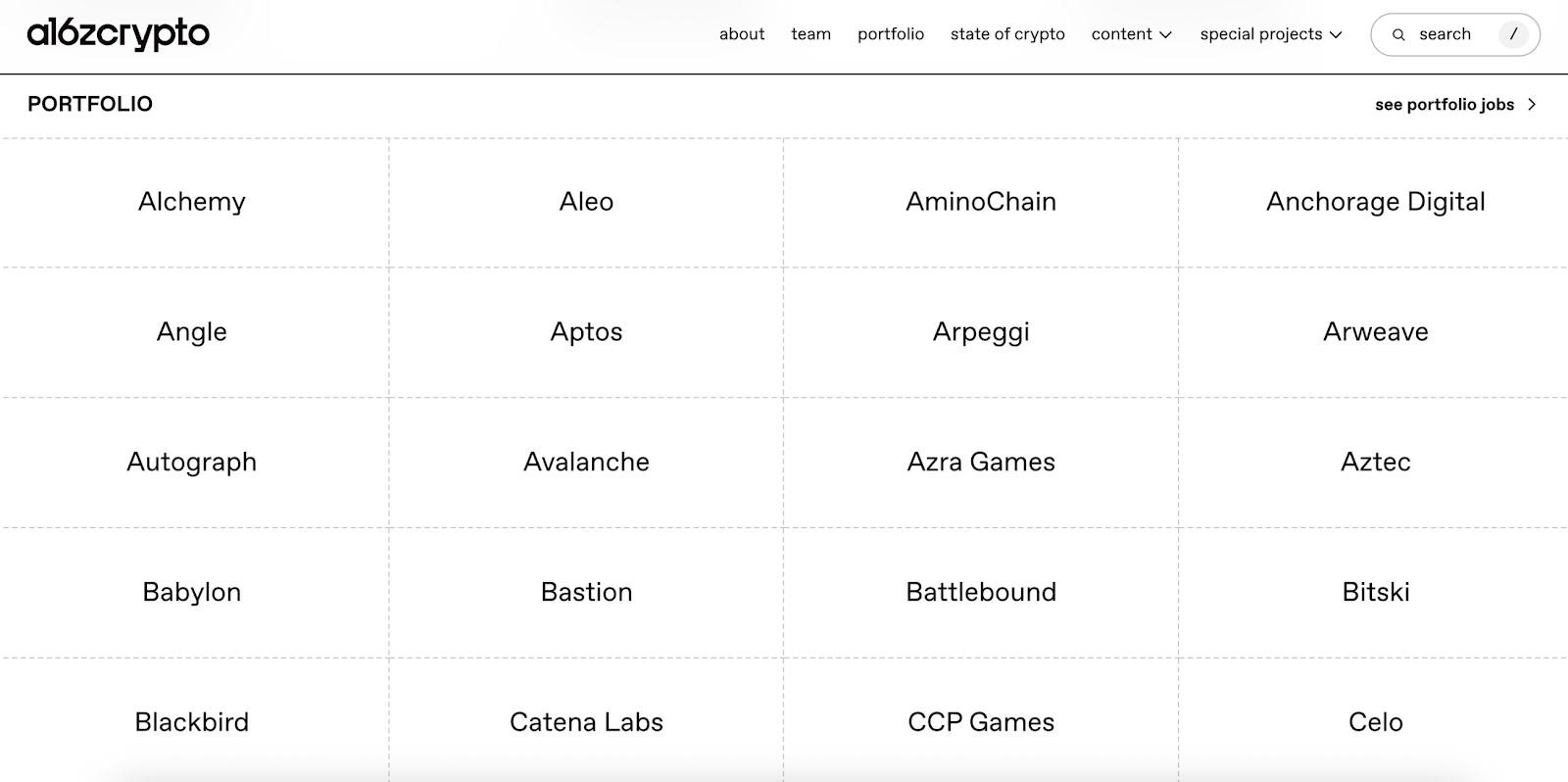
In April 2025, a16z acquired Erik Torenberg’s podcast network, Turpentine—a classic acquisition plus talent recruitment deal. a16z expanded its media and network business, and Erik Torenberg joined to lead the media team. Seven months later, a16z officially launched a16z New Media.
In its article “What is New Media?”, a16z states its goal is to build the best turnkey media operation in venture capital, helping portfolio founders win narrative battles—and crucially, bypass traditional media.
In the AI era, product development barriers are nearly zero, but storytelling has become a top priority. Giants like Anthropic, OpenAI, Netflix, and Microsoft are aggressively expanding their communications and storytelling teams. If you’ve seen frequent posts about being left behind without AI, many originate from these companies.
In an era where products can be built in hours, those who can sell through storytelling will survive.
Many criticize a16z for lacking substance and simply helping portfolio companies tell stories, waiting for buyers. Now, storytelling is a rare asset in the AI era. Perhaps a16z’s ability to spot trends early is part of their own narrative, but I recently heard an interesting story:
a16z is a nerd-friendly VC, eager to find talented people overlooked due to poor social skills. These individuals are often not eloquent but have wild ideas—ideas most see as impossible or contrary to mainstream thinking. Their shortcomings make it hard to stand out, but a16z brings them together.
When like-minded people meet, intense chemistry emerges, fueling a16z’s unconventional success.
The logic is simple: these people don’t need to face complex business battles directly—they serve as strategists behind the generals. Their vision and calm thinking always find new paths. Most importantly, no one here rejects strange ideas at the outset. Outsiders might think they’re crazy, but the team knows it could be the best answer.
Where Will the $2 Billion Go?
Since October 2024, the crypto market has sharply corrected, with over $2 trillion in market cap wiped out. Many crypto VCs are withdrawing.
a16z is doubling down.
Chris Dixon has repeatedly stated that a16z crypto still holds 95% of its historical investments. They believe selling high-quality assets too early is the worst decision in venture capital. Dixon sees blockchain as the next foundational layer of the internet, believing crypto is in a long “foundation phase”—like the 1943 neural network paper was for today’s AI, true mainstream adoption will take decades.
“We’re thinking in terms of centuries,” says a16z partner Katherine Boyle.
From this perspective, the current market downturn is the best time to position. Valuations are more reasonable, quality projects are easier to access, and there’s less competition. More importantly, a16z may have spotted the next sector poised for explosive growth.
Fortune’s report highlighted key points: a16z doesn’t want fundraising to drag out and will invest only in blockchain-related projects.
We can infer: a16z has seen new trends and wants to move quickly, but a few hundred million isn’t enough—they need at least $2 billion.
Many speculate they’ll invest in stablecoins, RWA tokenization, payments, Crypto+AI, and other familiar sectors. But I believe they’ve spotted something different—unfortunately, we don’t know what it is yet.
Chris Dixon’s February 7 tweet offered clues:
We anticipated financial applications would lead, so we invested in Coinbase, MakerDAO, Compound, Uniswap, and Morpho—but non-financial apps will eventually catch up;
Financial apps led not by chance, but by sequence—only when enough people join will new apps emerge;
Crypto’s long-standing lack of regulation and legislation has led the industry astray; once regulation lands, good coins will drive out bad ones;
It’s those chaotic years that create ultimate brilliance—just as with the internet and AI.
Perhaps a16z has spotted one or a series of new promising sectors, or perhaps this $2 billion will be reinvested in projects we think are dead, or spent accumulating chips in the secondary market.
a16z is there, continuing to do things many can’t understand. But will you, sitting in front of the screen, choose to believe this time?
The Power of Belief
Is a16z a Web3 evangelist or a shrewd harvester?
There’s no definitive answer.
a16z has certainly reaped huge returns from crypto’s rise—just the Coinbase investment brought over $7 billion in profit. But without early bets from institutions like a16z, and their real financial support for seemingly crazy founders, could Web3 have grown to its current scale?
Their post-investment services helped countless startups through tough times. Their policy lobbying secured a more favorable regulatory environment. Their content output educated generations of entrepreneurs and developers.
In this atypical cycle, we’ve seen resistance to VCs. a16z once used a large UNI reserve to try to make LayerZero Uniswap’s cross-chain interoperability solution, but the market rallied around Wormhole simply to oppose VCs.
At the end of 2021, Musk joked on X, “Has anyone seen Web3? I can’t find it.” Jack Dorsey sarcastically replied, “It might be somewhere between A and Z.”
Looking back, these jabs hit the mark. Web4.0 is already being discussed, but Web3 still hasn’t defined itself. Many major crypto VC partners have left, many crypto project founders have exited, and many investors are turning to stocks and commodities.
a16z chose to believe in Web3.
I’ve had moments of doubt in the past year or two, but whenever times get tough, I remember the advice from successful business leaders: focus on what the smartest people in the world are doing, and follow them.
Right now, the smartest people are definitely working on AI, but some are still openly committed to crypto. Like you, I don’t see obvious potential or hope; we seem unable to see the future. All we can do is watch closely when the new $2 billion fund starts deploying, tracking its investments.
After all, in the past 15 years, this “elephant hunter” has proven one thing: while others debate whether elephants exist, they’ve already pulled the trigger.
Statement:
-
This article is republished from Foresight News. Copyright belongs to the original author [Eric]. If you have any objections to the reprint, please contact the Gate Learn team, and the team will handle it promptly according to relevant procedures.
-
Disclaimer: The views and opinions expressed in this article are solely those of the author and do not constitute any investment advice.
-
Other language versions of this article are translated by the Gate Learn team. Without mentioning Gate, you may not copy, distribute, or plagiarize translated articles.







