Ten BTC Crowned as Kings
This article was published on November 4, 2023, when BTC was priced at $34,522. The content remains unchanged. @ mablejiang recommended that I repost it, so I did. I am not enrolled in X’s creator program and will not earn any revenue from views. I do not operate a community, offer investment advice, or hold any position regarding future market trends. If you find any value in these words, I am sincerely glad for you.
Main content below
The storm is brewing.
1,284 days ago, I released a video about Bitcoin halving, predicting that the price would reach $55,000 after the event.
That was April 17, 2020, when Bitcoin closed at $7,125.
Years have passed, and another halving is approaching—specifically, it will occur sometime in April or May 2024.
This is the fourth halving in Bitcoin’s history and the last chance for everyday investors. It’s like a narrow gap in the ancient city wall at sunset—just wide enough for a thumb. Once this door closes, the last opportunity to get in disappears.
Xiao Feng’s greatest regret was not being able to save Ah Zhu: “I am a Khitan. What grand ambitions could I have?”
The vase falls into the well; there’s no turning back.
My greatest regret is that after nearly a decade of focused entrepreneurship, I still haven’t accumulated enough coins—and the game is ending. That, too, is fate.
Defining Scarcity
Saifedean Ammous, an Arab scholar, wrote “The Bitcoin Standard” in 2018. In it, he discusses the “stock-to-flow” model—essentially, the relationship between inventory and annual production.
Inventory refers to the total quantity of a commodity.
Annual production is the total amount produced each year.
Dividing inventory by annual production yields the SF ratio.
In the chart, gold’s SF is 62, silver’s is 22. This means it would take 62 years to produce the current amount of gold, 22 years for silver, and just 0.4 years for platinum. These figures highlight how scarce these resources are.

So, are these assets used as money because they’re scarce? In contrast, platinum and palladium have SF values at or below 1, meaning they aren’t as scarce.
Indeed, gold preserves value better than any other metal listed.
Everyday goods—food, smartphones, computers, cars—have SF values well below 1. In other words, they’ve never been scarce. Why? Because as long as there’s demand, more can be produced. When people start hoarding, prices rise, prompting more production, which ultimately drives prices back down.
This is basic supply and demand.
So, we can easily conclude: the higher a commodity’s SF, the better it preserves value and resists dilution.
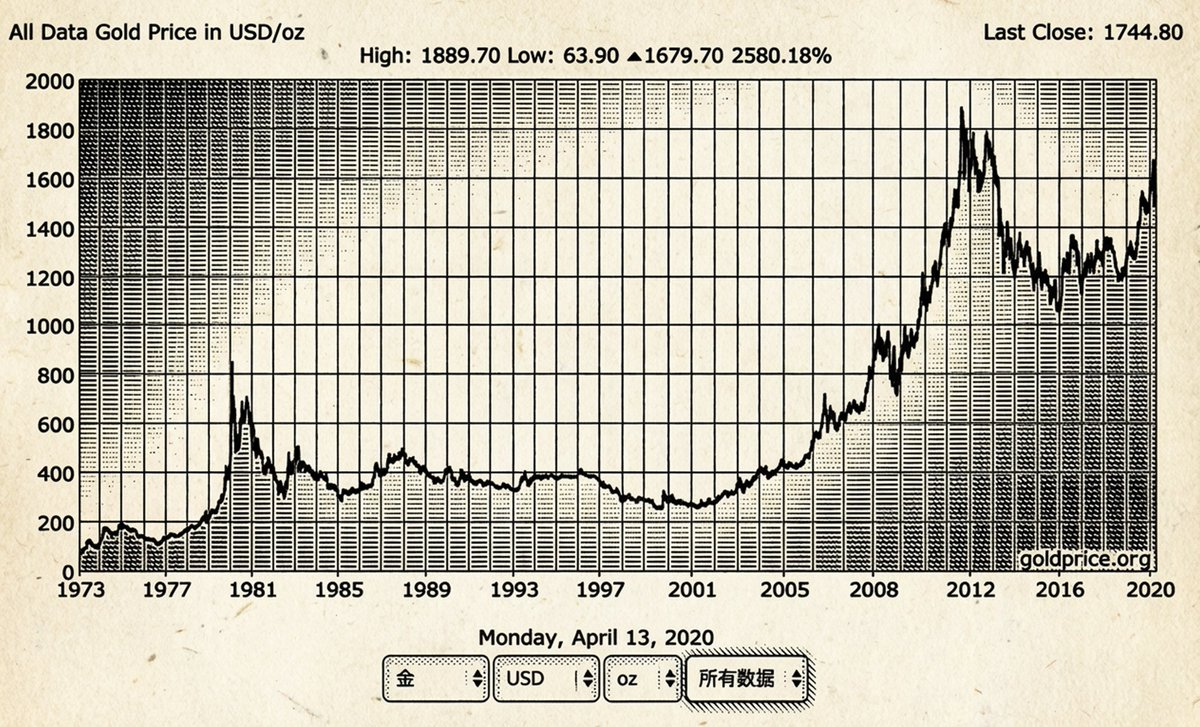
Consider gold: in 1972, it was $46 per ounce; in 2020, it reached $1,744 per ounce—a 37.9x increase. Why not produce more gold to meet demand? Because mining is limited by technology and cost. If the cost outweighs the profit, no one will pursue it.
What about Bitcoin’s SF? Around 19.5 million Bitcoins have been mined globally. However, a research report notes that over 1.6 million are permanently lost.
So, only about 17.9 million Bitcoins are actually usable. With current annual production, Bitcoin’s SF is roughly 54—similar to gold.
In a few months, Bitcoin’s SF will rise to 108, and annual inflation will drop to about 0.9%. This makes Bitcoin the most scarce asset in human history since gold.
Halving is the fundamental reason for Bitcoin’s changing supply—nothing else.
This supply dynamic determines price.
Some people get excited hearing about a Bitcoin ETF, as if approval would immediately send prices soaring.
I suggest you ignore media hype and look deeper.
Whether BlackRock’s Bitcoin ETF is approved isn’t important, nor is the timing.
What matters is the expectation of “Bitcoin ETF approval,” which acts as bait to boost market confidence and gradually builds momentum, quietly pushing the price above $45K in the future.
You may think we’re still in a bear market, but it may have quietly ended without you noticing.
This momentum will continue—it’s not just your household water pipe.
BlackRock and other ETF approvals are like the Suez Canal (Arabic: قناة السويس), connecting old money with new pools. The scale of capital from traditional finance is enormous—far beyond most people’s imagination. For them, Bitcoin isn’t too expensive; it’s too cheap and too small.
The Suez Canal, vast and powerful, links Europe and Asia with a north–south waterway. Ships no longer need to round Africa’s Cape of Good Hope; fleets depart from London or Marseille, head to Mumbai, and return loaded with gold, silk, and spices.
Darius I, king of Persia, completed the final segment of the Suez Canal in 500 BC. He erected a granite stele inscribed with:
I am a Persian. Setting out from Persia, I conquered Egypt. I ordered this canal dug from the river called the Nile that flows in Egypt, to the sea that begins in Persia. When the canal had been dug as I ordered, ships went from Egypt through this canal to Persia, even as I intended.
That’s the power of a channel.

The impact of a Bitcoin ETF approval isn’t about the present—it’s about the next decade. Once fiat gateways open, time does the rest.
By 2025, we may see Bitcoin at $100K+.
Bitcoin is gradually becoming like Manhattan real estate—a marker of social status. People choose Bitcoin not for faster transfers but because it’s valuable.
It’s valuable because it embodies the core consensus of the crypto ecosystem—serving as a store of value and a status symbol coveted by all.
Bitcoin demonstrates your strength, stability, loyalty, and conviction. It’s like a courtyard home in Beijing’s Second Ring, a historic mansion on Shanghai’s Hengshan Road, or a villa on Hong Kong’s Mid-Levels.
Its value is determined by those with true purchasing power, just as Berkshire Hathaway’s Class A shares trade at $530,000 each—capital flocks to them, and retail investors struggle to buy even one share.
Ten coins make you a lord.
The Price Anchoring Game
If you don’t understand how Bitcoin’s price is anchored, you haven’t truly understood Bitcoin.
Let’s start with land, then return to Bitcoin.
Everyone’s played Monopoly, but few grasp its essence.
The Federal Reserve plays a role similar to the bank in Monopoly—it doesn’t aim to win, but to provide enough funds to keep the game running.
For the Fed, the right amount of assets is whatever best enables it to fulfill its duties.
Monopoly is a land speculation game—its core is resource monopoly, and the game ends with a single winner; everyone else loses.
Victory comes from monopoly, not competition.
Where does a central empire’s fiscal revenue come from?
No different from Monopoly:
- State-owned enterprises
- Publicly owned land
- Monopolized financial systems
A centralized government cares about two things:
1) How to control society through a top-down bureaucracy;
2) How to extract revenue via land, taxes, and finance to support the bureaucracy.
All nations are similar; history and geography don’t differ much.
Take the Tang Dynasty: the government implemented the equal-field system—every male received 80 mu of public land and 20 mu of perpetual private land. In their prime, people farmed and paid taxes, performed labor, and a portion of the harvest went to the government; upon death, land was reclaimed. Local governments also held commercial land and capital.
Eventually, the system collapsed as land concentrated in the hands of bureaucrats and aristocrats.
For example, during Emperor Gaozong’s reign, Wang Fangyi held dozens of hectares. By Empress Taiping’s time, she owned vast tracts of fertile land, renting them to poor farmers, who surrendered most of their crops to the elite, and the government took another cut. Many fled to the countryside to escape forced labor. The government first registered these fugitives, then ordered them to pay taxes, forcing them to sell land or homes, or transfer them to neighbors—this cycle continued until there was nowhere left to escape.
When the game fails, start a new round.
Thus, dynastic change and peasant uprisings redistribute resources.
Modern times are similar. In East Asia, asset values are mostly tied to land—this is the government’s game, with housing as the vehicle.
The US values capital efficiency, so their national pastime is the stock market, with the 401K pension system as the reservoir of purchasing power.
These are different price anchoring games, and there are countless similar “copies” worldwide: Rolex, Hermès Birkin bags, Yu-Gi-Oh cards, limited edition blind boxes—the same logic applies.
New York is highly developed and dense, right?
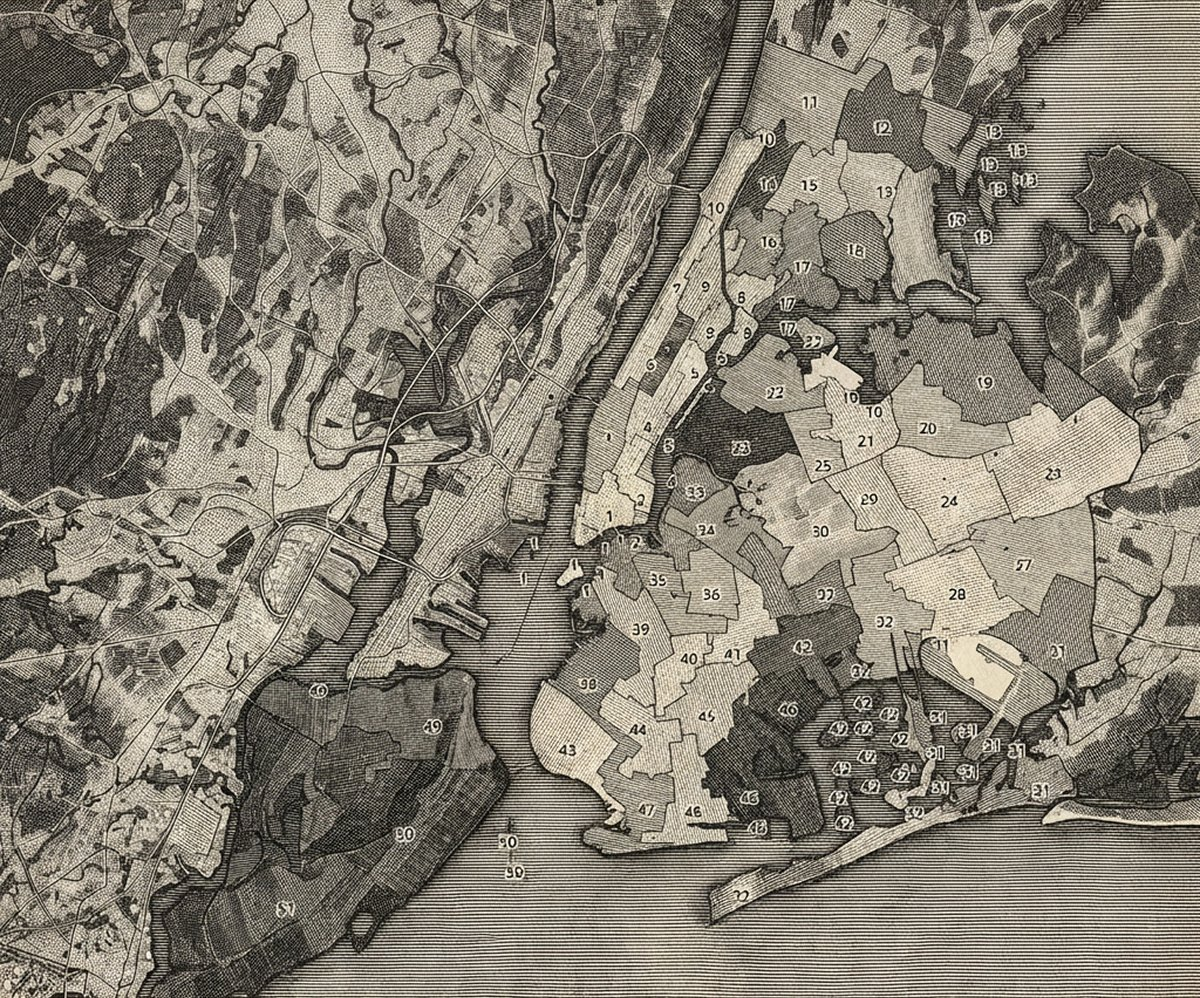
Yet it still has over 25,000 idle or underused parcels—25,000 in total (the light-colored areas in the map are vacant land).
Some have proposed a 3.5% tax on these lands, which could generate an additional $429.9 million in revenue for the city.
Meanwhile, Beijing—the most densely populated city in northern China—covers 16,000 square kilometers, but its developed area is only 2,000 square kilometers. The land development rate is just 12.5%, stingier than Hong Kong’s 25%.
Beijing could easily provide everyone with a villa. According to China’s planning standard of 10,000 people per square kilometer, full development could accommodate 160 million people.
So why don’t these governments build freely and house everyone?
Because in this game, land is a means of production. The monopolist must maintain its scarcity to keep the game running.
This is what price anchoring means.
If you want to win, you must understand Bitcoin’s role in the crypto game…
Bitcoin is like land—the only difference is that it lacks a supreme will; the system is maintained by algorithm and consensus.
In other words, it’s nearly unbreakable.
Bitcoin’s greatest anchor is the consensus around its 21 million total supply.
It’s easy to divide Bitcoin holders into the “coin-holding class” and the “coinless class.”
Globally, there are 8.45 billion people and 21 million coins—each person would get only 0.0026 BTC, clearly insufficient.
You might question this consensus, dismiss it as mere talk, and wonder if it’s possible to start anew.
Many have tried—and failed.
The Bitcoin fork craze of recent years was just people launching “private servers,” but now those forked coins are dead and gone, serving as monuments to those naive ideas.
If consensus were so easy to change, the world’s wealthy wouldn’t cling to Manhattan—they’d just buy land in Ohio and build a new city. But is that realistic?
Establishing a value framework takes ages, and once built, it rarely changes for a century.
Who Stole Your Coins
Some people see the cheat code to win, yet still exit the game prematurely.
Hoarding Bitcoin seems simple, but for some, it’s harder than reaching the stars.
Every game has obstacles.
In past cycles, those who set up the game repeatedly used various altcoin narratives.
People talk up Bitcoin but buy altcoins instead.
This is exactly what market makers want—you hand over your chips, get worthless coins, and they get Bitcoin. Both parties call each other fools.
New chains, platform tokens, forked coins, meme coins, storage tokens, algorithmic stablecoins—major traps.
Don’t judge an asset by a few days or months of performance. In bull markets, plenty “outperform Bitcoin.” But set aside the influencers writing sales pitches—how many truly made big gains by holding altcoins long-term? Over a yearly cycle, how many really beat Bitcoin? Listen to their bragging.
In 2017, the public chain narrative was “surpass Bitcoin”; in 2021, it became “surpass Ethereum.” Primary market PVP, secondary market storytelling to lure retail investors.
In this market, only Bitcoin is truly decentralized.
Buying any altcoin means joining an unfair game.
Web3 teams, especially those launching anonymous tokens, are fundamentally anti-human.
If you can fork a project and tweak the UI for massive profit, no one will stick around long-term.
The original intent? Quick money.
Tokens corrupt startup teams. In traditional internet ventures, teams work hard for years, raising Series A, B, C, cashing out a bit each round and improving their lives. Nothing wrong with that.
But in crypto, the pace is: start mining today, list tomorrow, dump the next day, hand the project to the community.
Finding a team genuinely building is as hard as finding gold in a cesspit.
That’s why the game is unequal.
To win, you need strategy.
Strategy isn’t about short-term gains, macroeconomics, or the size of the pot. Success depends on making the right choices. Every time you buy, ask yourself:
- Should I join this game?
- How much should I bet?
- Is my entry point optimal?
- Can I force my opponents to fold?
If your decisions are better than your opponent’s, your strategy works.
You might not win the most each round, but if you persist, your chances add up and eventually pay off.
In my experience, only one strategy offers positive expected value: accumulate coins in batches during bear markets and sell at the top in bull markets.
Altcoins are best at making you believe they’re as enduring as Bitcoin. Narratives and lies intertwine until you believe it, and swap your Bitcoin for other tokens that are worthless long-term.
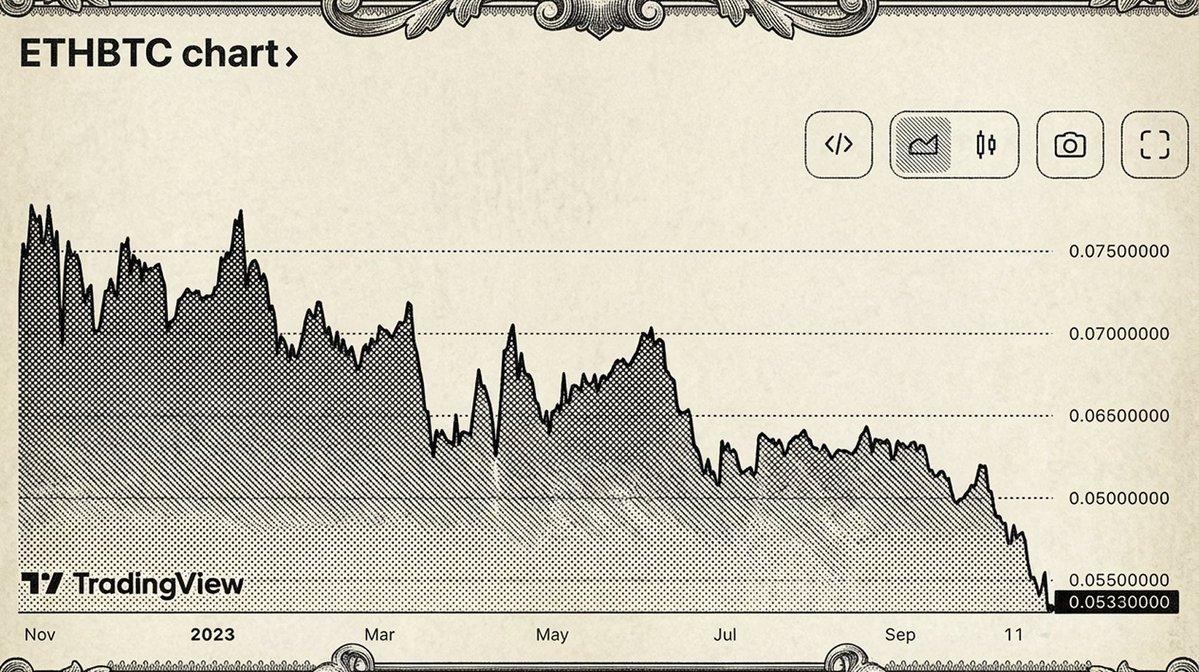
Over the past year, the ETH/BTC exchange rate has been the perfect trap—beneath every red line lies a pile of corpses.
I have no doubt that when the next bull market arrives, Ethereum will reach new highs. But if you choose assets on a 10-year timeline, there’s only one choice in crypto: Bitcoin.
As long as the crypto market thrives, Bitcoin won’t fade.
If Bitcoin is ever disproven, the entire crypto market will vanish.
Understanding Your Base Position
If you want to hold Bitcoin, you must clearly understand the quality of your assets.
Two mainstream views:
1) Bitcoin is a safe-haven asset, surging first during turmoil.
2) Government protects retail investors.
Both are wrong.
Bitcoin remains a risk asset and will continue to be for a long time. In 2020 and 2021, governments printed money and injected liquidity, driving a global asset bull market. Bitcoin’s speculative nature fit perfectly with the flood of fiat liquidity.
The government’s goal is never to protect retail investors, but to ensure everyone contributes enough taxes and labor before their resources are reclaimed by the system. The government isn’t a “person”—it’s a machine that maintains its system by monopolizing resources within its jurisdiction.
The most important component of this machine is fiat currency.
In 1260, Kublai Khan began issuing paper money.
The paper was made from mulberry bark. From the wood and rough outer bark, they extracted a thin white inner layer. After processing, it became a kind of paper—though black in color.
They cut the paper into various sizes.
Each piece represented real gold and silver. Why? Because officials signed and stamped each note.
Once ready, the Khan’s appointed officer would take his jade seal, dip it in bright cinnabar, and stamp the note. That red mark instantly turned the paper into real currency.
Anyone who dared counterfeit such notes faced execution.
The backing for paper money was state authority.
But state authority has a fatal flaw: it lacks restraint.
Who regulates the issuance of paper money?
No one.
Once money enters the credit standard, issuance is at the central bank’s discretion—even the debt ceiling can be freely adjusted. “Ceiling” is meaningless if it can be changed at will.
Economists weave complex theories and models to persuade us that central bank money issuance is self-restrained. But one glance at the Federal Reserve’s balance sheet shows that since the credit era began, these “restraints” are meaningless.
When resources are scarce, printing money becomes the main way to ease tensions. I remember as a child, a steamed bun cost 0.25 yuan; now in Shenzhen, it costs three yuan or more. The currency has depreciated 12-fold. If we accept a 12-fold increase in bun prices, why not another 12-fold depreciation in the future?
We’ve grown accustomed to paying bills and receiving salaries this way, to the numbers in bank accounts and credit card statements.
Only when the system collapses do we start to question the real value behind those numbers.
In short, government money printing borrows time from all cash holders, hoping future productivity will repay the debt. Whether that’s possible isn’t the current government’s concern.
Bitcoin serves as the ultimate anti-inflation tool.
Its essence is to “rug” fiat currency.
The long night is coming. From tonight onward, you stand watch until death. Give your life and honor to the Night’s Watch—tonight and every night.
Remember to hold onto your Bitcoin.
Statement:
- This article is reprinted from [ohyishi]. Copyright belongs to the original author [ohyishi]. If you have any objections to the reprint, please contact the Gate Learn team, which will handle the matter promptly according to relevant procedures.
- Disclaimer: The views and opinions expressed in this article are solely those of the author and do not constitute investment advice.
- Other language versions of this article are translated by the Gate Learn team. Unless Gate is mentioned, do not copy, distribute, or plagiarize any translated article.
Share


Related Articles

In-depth Explanation of Yala: Building a Modular DeFi Yield Aggregator with $YU Stablecoin as a Medium
BTC and Projects in The BRC-20 Ecosystem

What Is a Cold Wallet?

Blockchain Profitability & Issuance - Does It Matter?

What is the Altcoin Season Index?